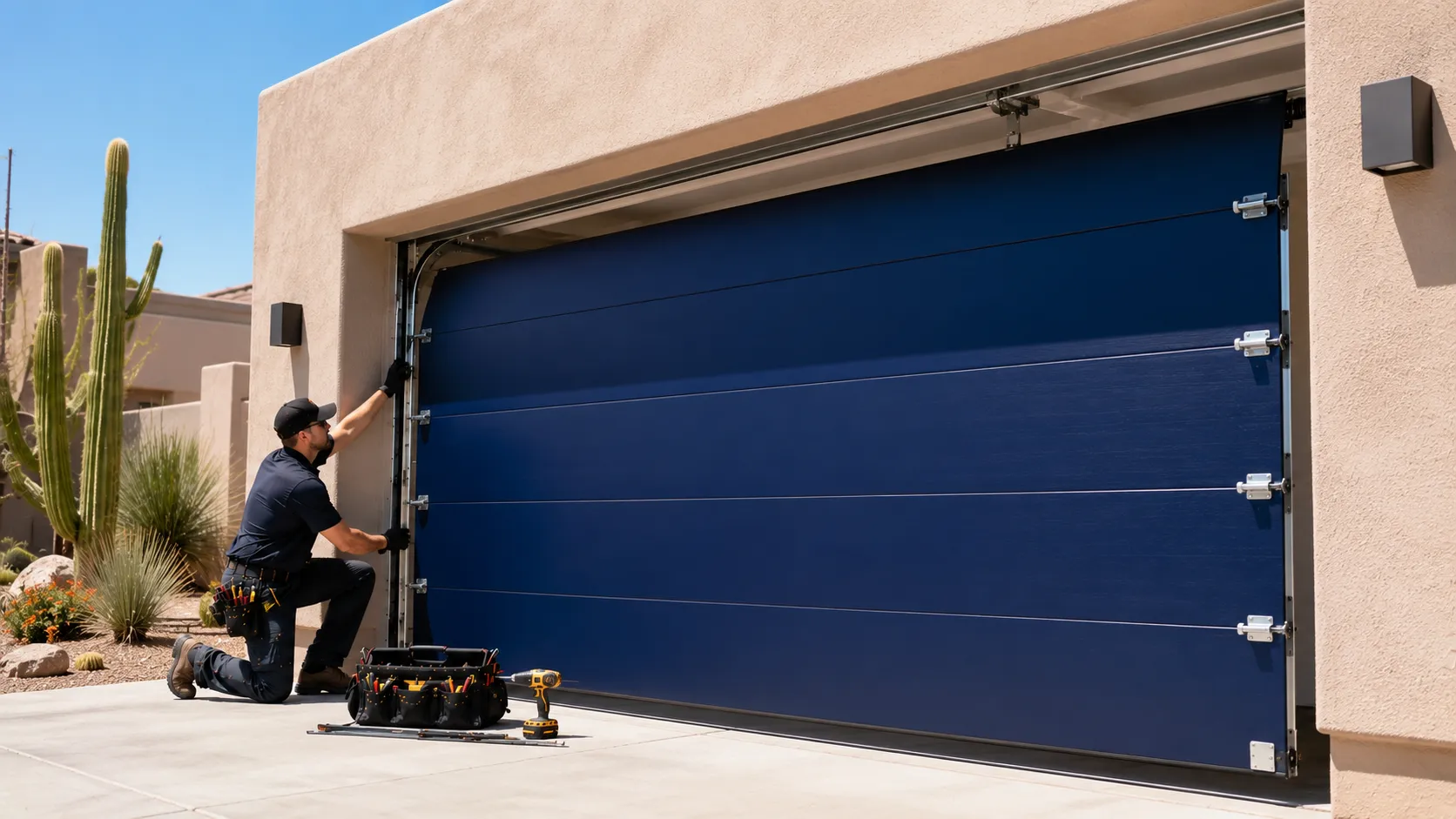
What You Are Seeing
The door won't open, or it opens partway and stalls. Maybe you hear a bang from the garage and now the door won't budge at all, or the opener runs but the door doesn't move with it. In a lot of Matthews houses this shows up as a door that feels twice as heavy as it used to, one you have to muscle up by hand.
Most of what we get called for across Matthews and the surrounding 17 named areas traces back to the same root cause: a torsion spring that's finally worn out, or cables and rollers that have outlived the hardware around them. Given that the bulk of the housing stock here went up between 1974 and 2006, with a median build year around 1998, a lot of original springs and openers are now 25 to 45 years into a job they were built to do for maybe 10,000 cycles. They're aging out on schedule, just not all at once.
Sometimes it's quieter than that. A door that used to close smoothly now shudders on the way down, or the opener grinds for a second before it catches. That grinding is usually a gear or a drive component that's worn past the point of adjustment, not something you can fix with a shot of lubricant.
Why This Fails Locally
Matthews sits in a cold-moderate climate band, which means the garage door hardware here goes through real seasonal swings - not the brutal freezes of further north, but enough cold to stiffen grease, contract steel, and add load to a spring that's already fatigued. A torsion spring near the end of its life will often hold through a mild fall and then let go on the first properly cold morning, because cold steel is less forgiving of stress it's already carrying.
The other half of it is simply the age of the stock. Houses built in the 1980s and 90s across this side of Mecklenburg County mostly came with steel doors on standard torsion setups and chain-drive openers that were fine for their era but were never designed to run three decades without a spring or cable replacement. If your house dates from that window, and most in this area do, the hardware is due whether or not it's shown a symptom yet.
We're not saying every stalled door is a spring. A worn sensor or a misaligned track can look the same from the driveway. But the pattern we see across Matthews, from the neighborhoods near the center of town out toward Stallings and Mint Hill, lines up closely with build year more than with anything else.
What the Fix Involves
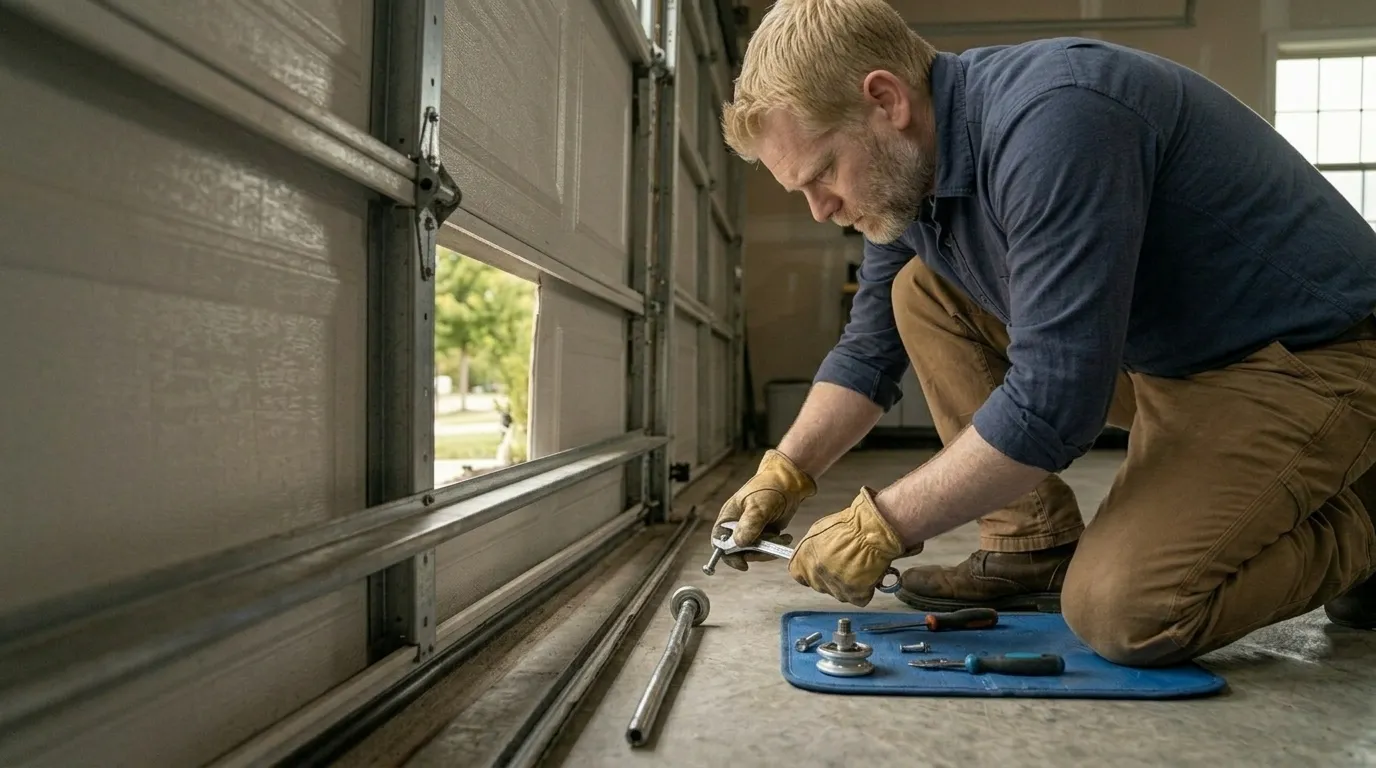
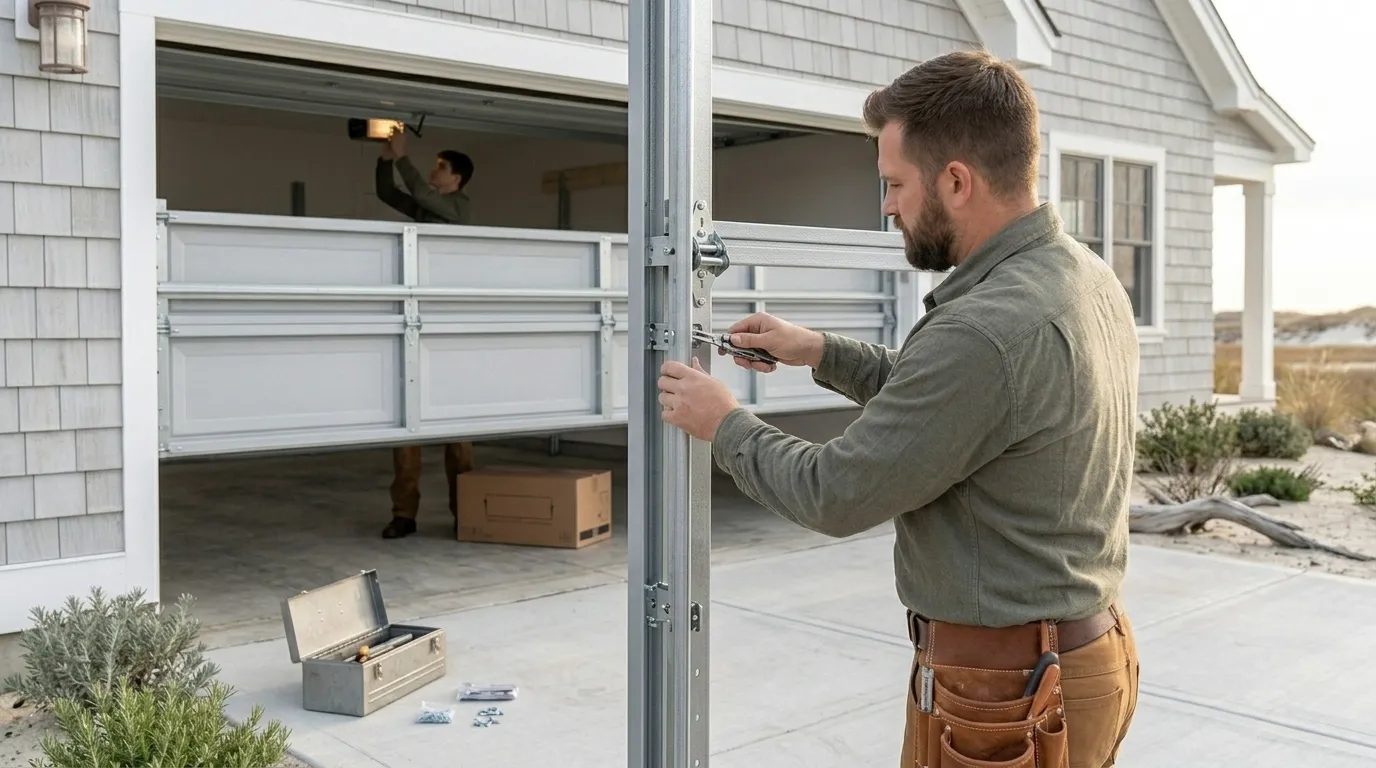
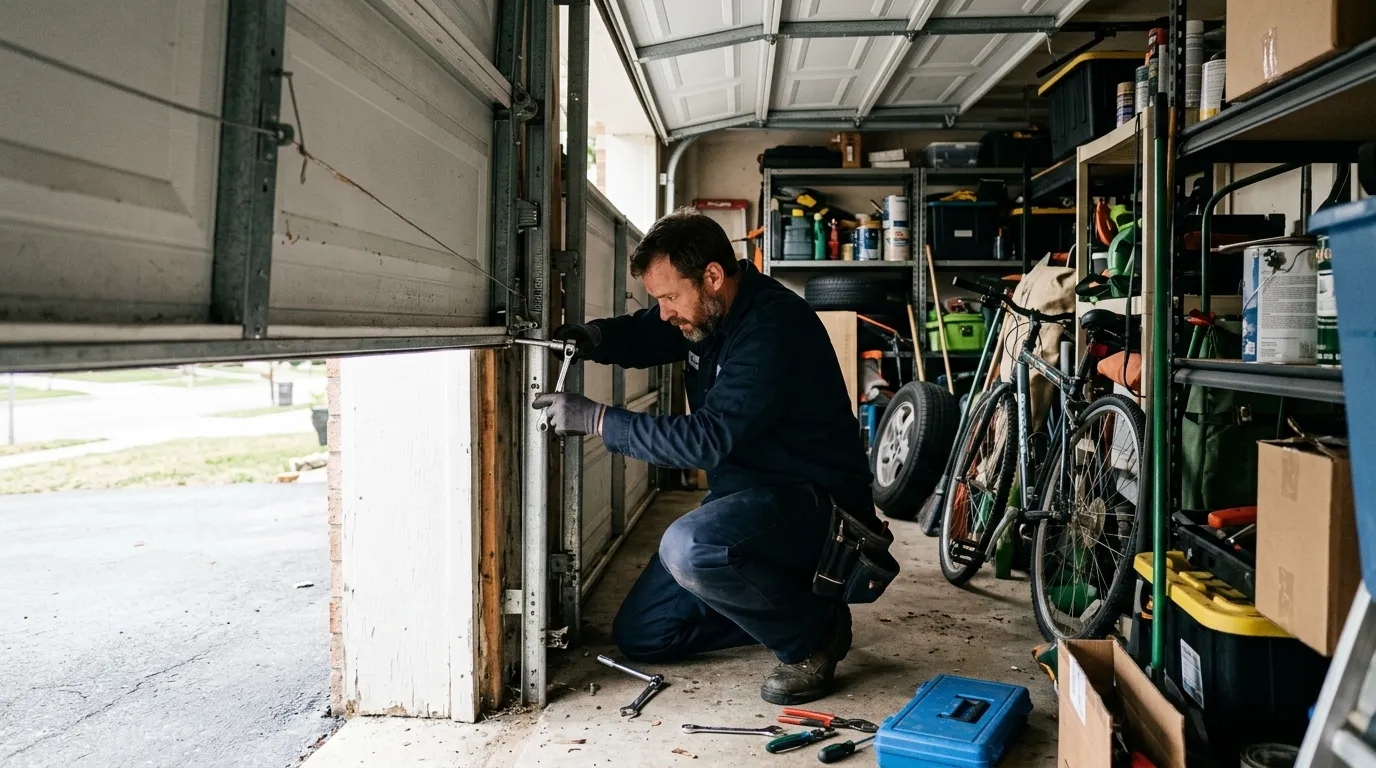
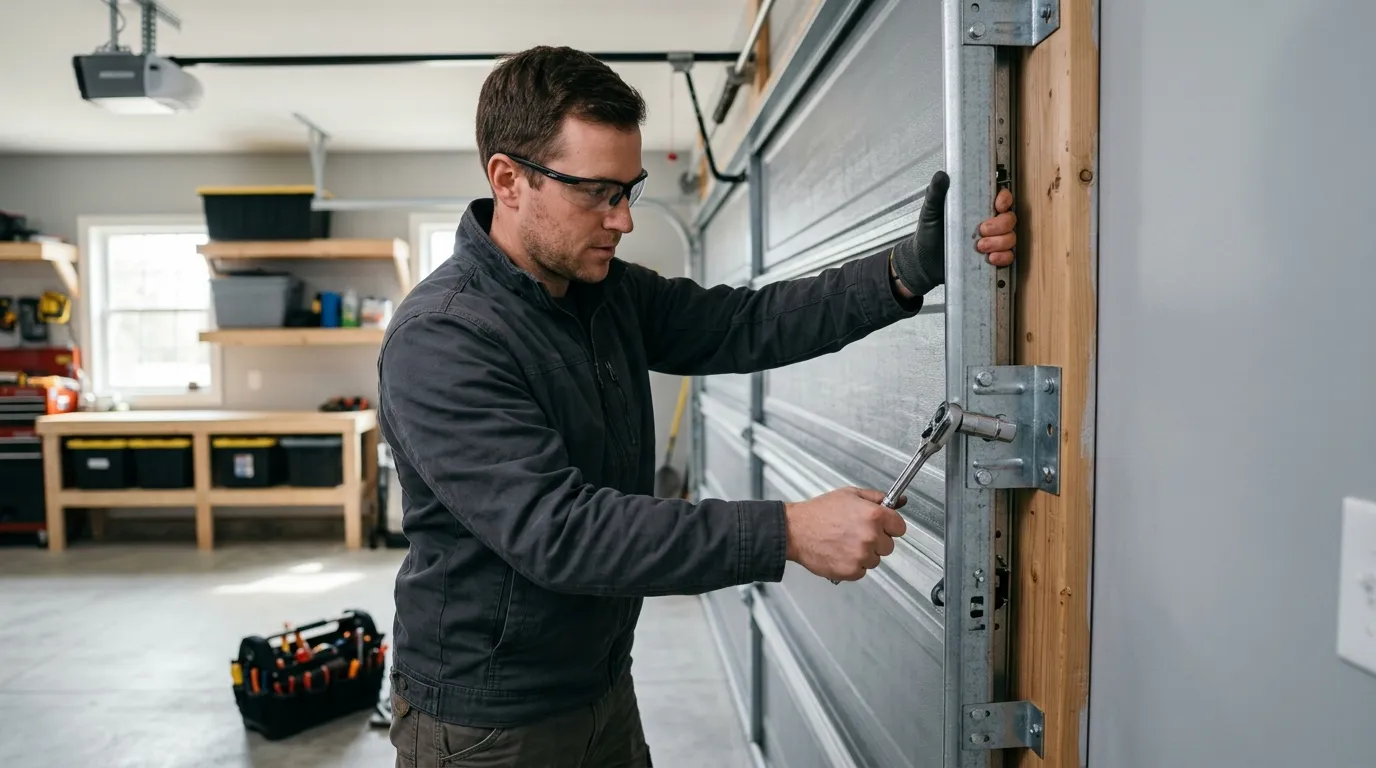
If it's the spring, we're not patching the old one - torsion springs get replaced as a matched pair even if only one has failed, because the other is on the same clock and running it alone puts uneven strain on the door. We check the cables, the drums, and the rollers at the same time, since on a house from the 1980s or 90s those parts are usually original too and often need attention along with the spring.
If it's the opener, we look at whether the gear or drive assembly is worth rebuilding or whether the unit has reached the point where parts availability makes replacement the more sensible call. Builder-grade openers from that era weren't made to be repaired indefinitely, and there's a point past which chasing parts costs more than a new unit.
One honest limit: if the door itself is a steel panel style from that same build era and it's rusted through or badly dented, we'll tell you when spring or cable work isn't worth doing on a door that's structurally on its way out. Fixing the hardware on a door that won't hold up much longer isn't a good use of your money, and we'll say so.