The Problem
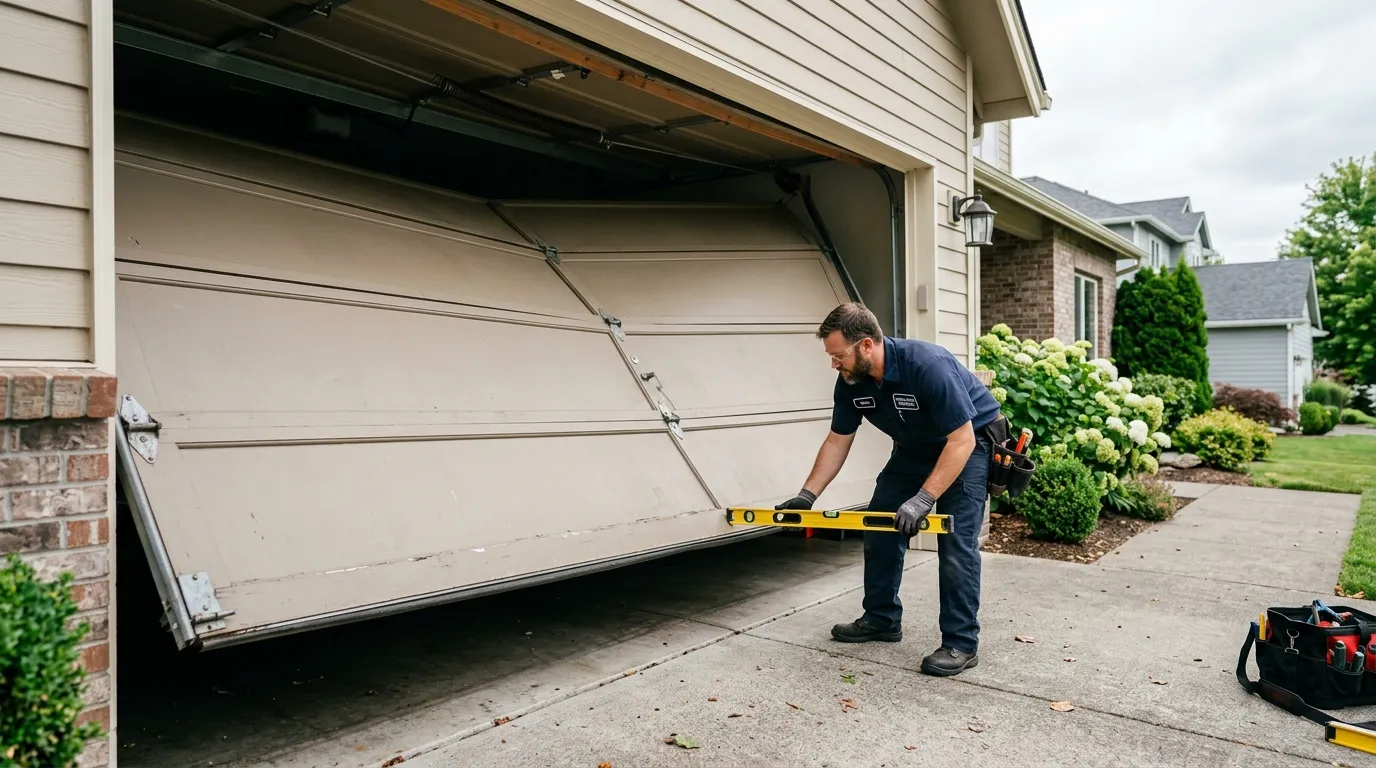
Matthews housing mostly went up between 1974 and 2006, with the median build year landing around 1998. That's a specific window in garage door history. A lot of doors from that era are flat steel panels, single layer, hung before insulation requirements became standard practice on residential builds. No foam core, no thermal break at the bottom seal, just a sheet of steel on a track.
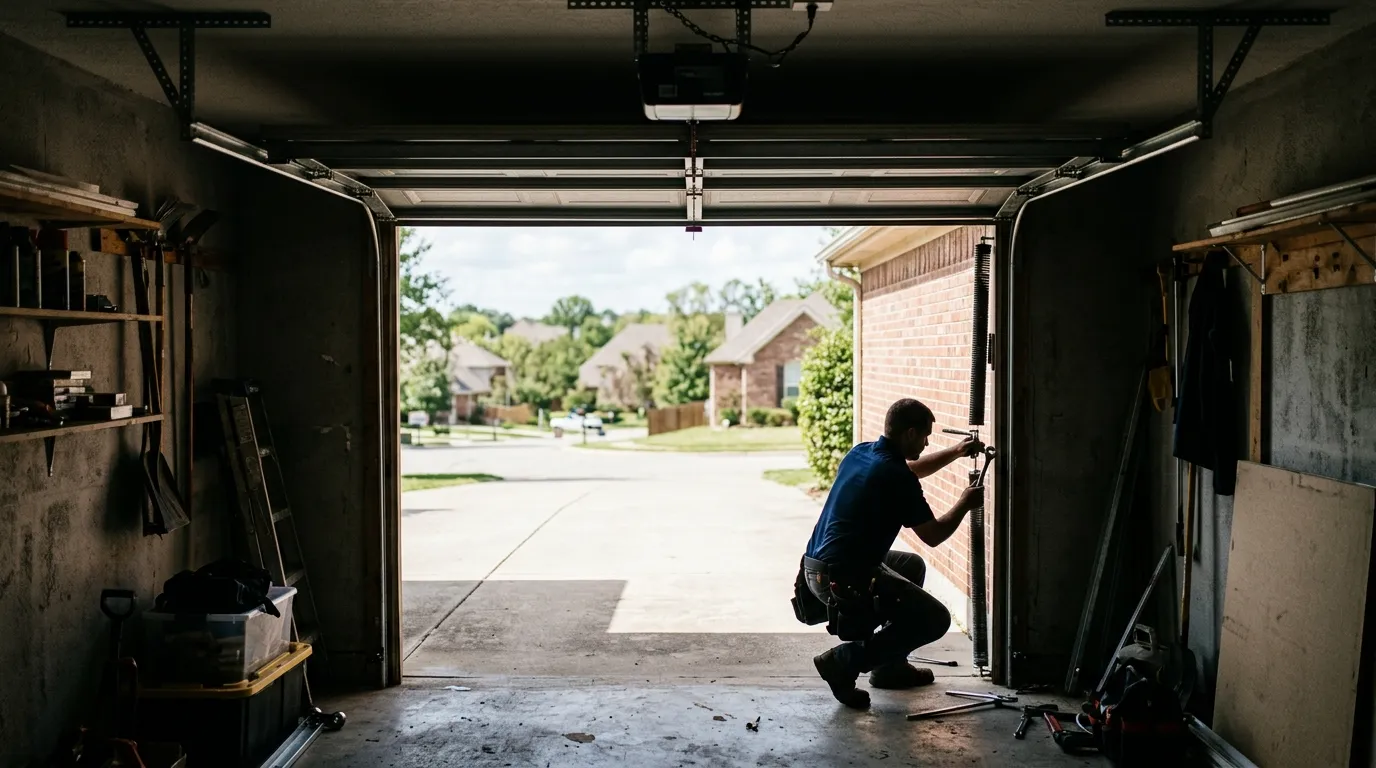
Across the 17 named areas that make up this stock, you'll see a lot of the same door repeated - same panel style, same hardware, same age of spring. That's not a coincidence, it's a subdivision built in a run of years by the same handful of builders. When one of these doors fails, it's rarely a fluke. The torsion spring, the rollers, the weatherstripping - they're all the same vintage, and they're all wearing out around the same time across a whole street.
The honest part: a door built in this window isn't automatically bad. Plenty of them are solid steel and just need a spring and a tune-up, not a replacement. The trouble starts when someone assumes 25-plus-year-old hardware will behave like new hardware under stress, and it doesn't.
What You Pay
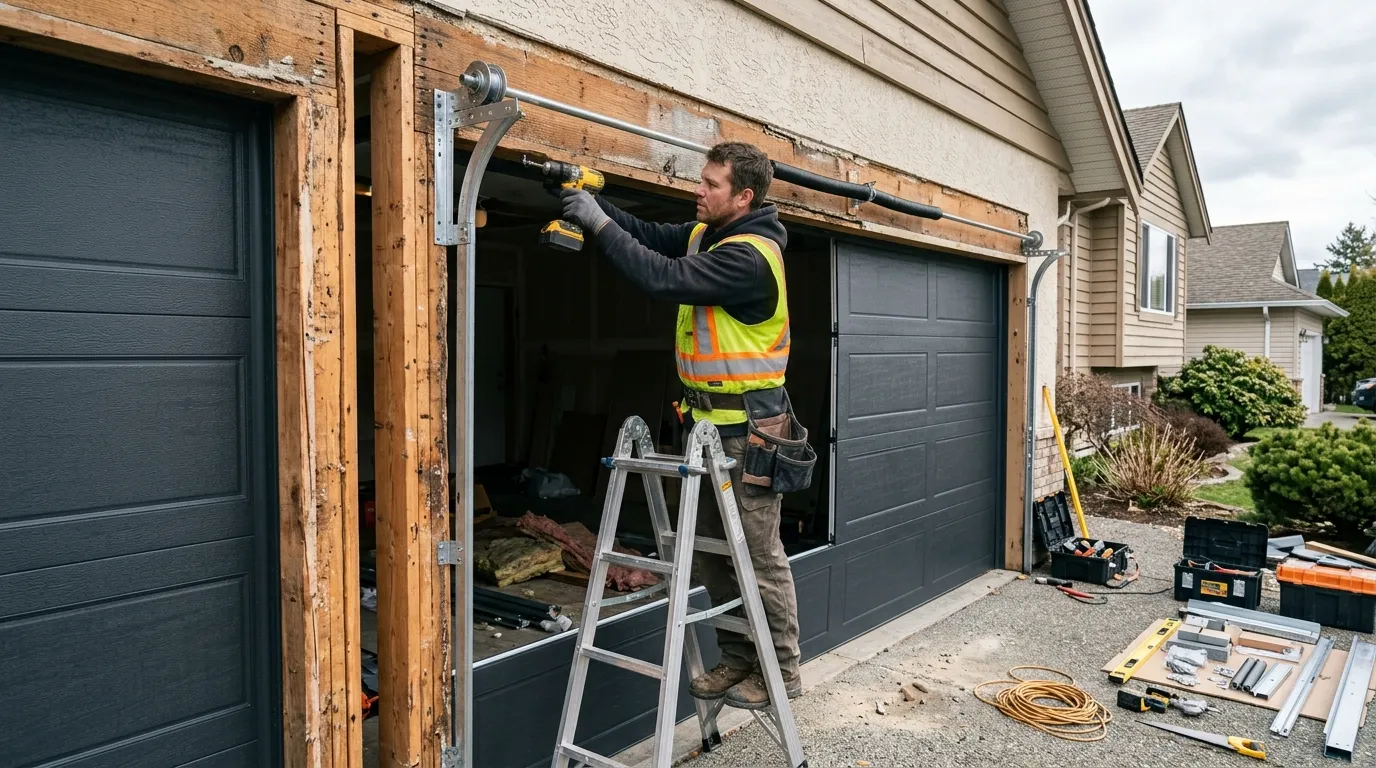
We don't post a flat number here because what you pay depends on what's actually wrong and what's behind the wall - torsion versus extension spring, the track condition, whether the opener is original to the house or already a replacement. What we can say: houses in this age bracket (1974-2006 stock) usually need spring or roller work before they need a full door replacement, and that's the cheaper visit by a wide margin.
We won't quote a price sight unseen over the phone, and we won't pretend every job in a 1990s-built house costs the same as every job in a newer one. If your door is original to a house built in that median-1998 window, expect the conversation to start with spring type and insulation, not with a number.
The area's median household income sits at $88,203, which tells you this is a market where people fix things properly rather than patch and hope - worth knowing when you're deciding between a repair and a full swap.
How Local Conditions Play In
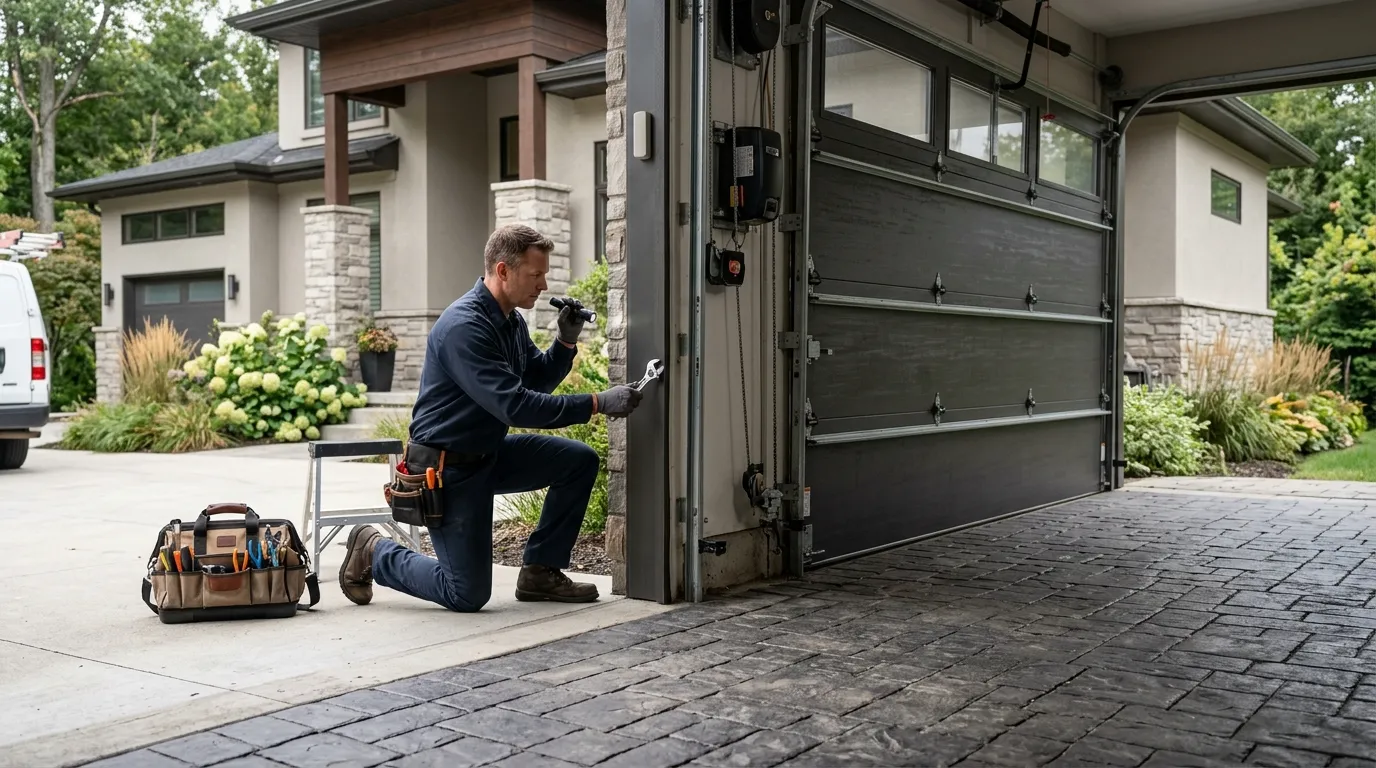
Matthews sits in a cold-moderate climate band - not the deep freezes you'd get further north, but enough cold-season swing to matter for hardware this old. Steel contracts in cold weather, and a torsion spring that's already fatigued from 20-plus years of cycles is more likely to snap on a cold morning than a mild afternoon. If your door is original to a house built anywhere near that 1998 median, winter is when the weak links show up.
Uninsulated doors from this era also mean more temperature transfer into the garage itself, which matters if the space is used for anything beyond parking - a workshop, storage for anything that doesn't like cold, or a laundry setup. That's not a dramatic problem, just a steady one.
We're a few miles from Stallings, Mint Hill, and Hemby Bridge, and the same building-era pattern holds across that stretch - it's a regional builder footprint, not just a Matthews quirk. But the hardware fails the same way regardless of which side of the line your house sits on.