The Problem
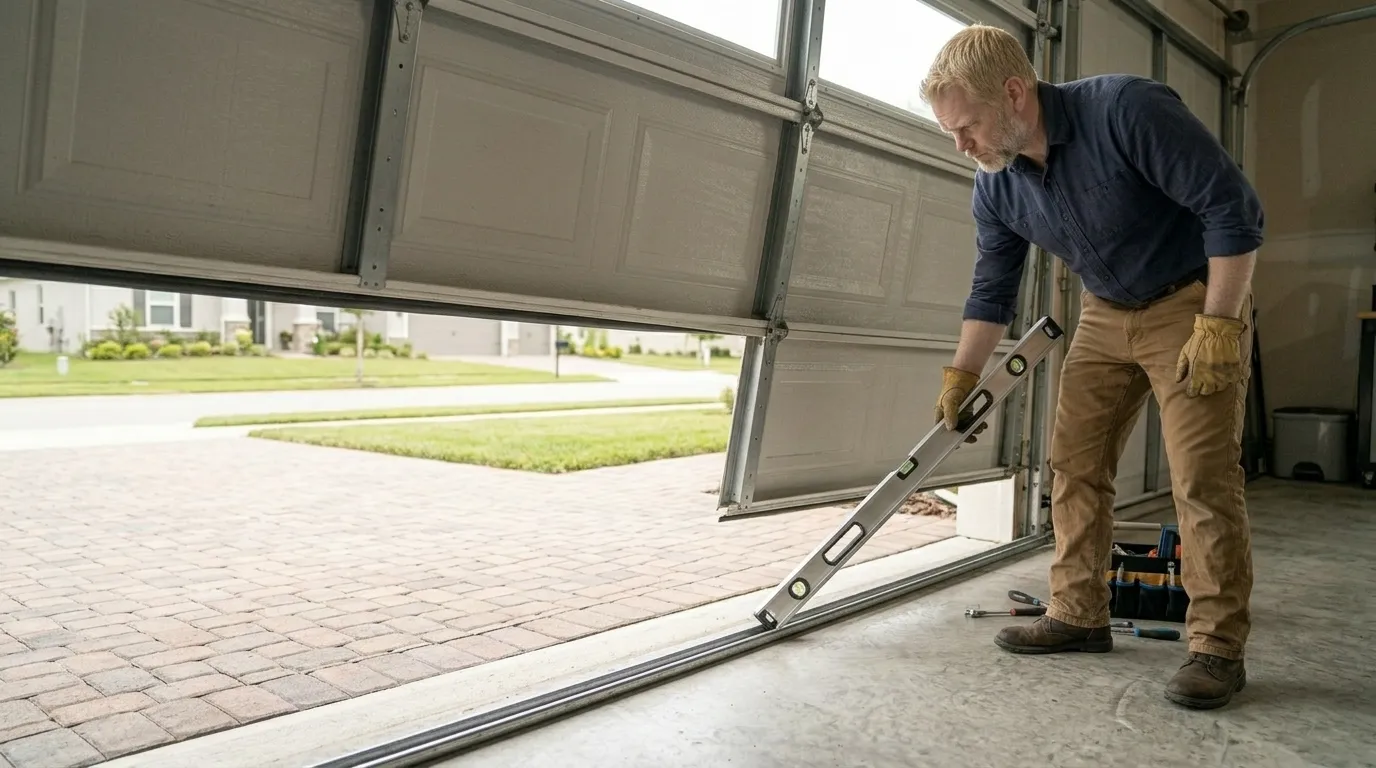
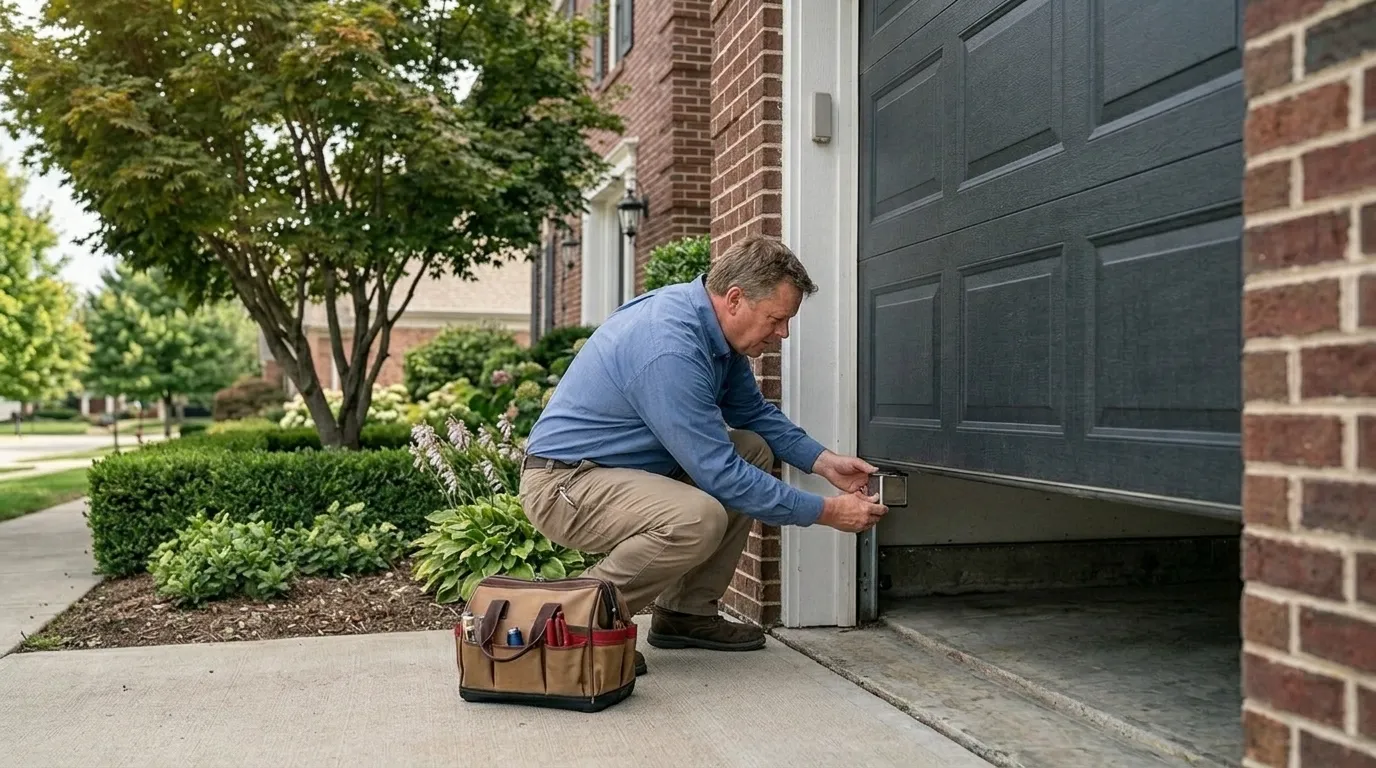
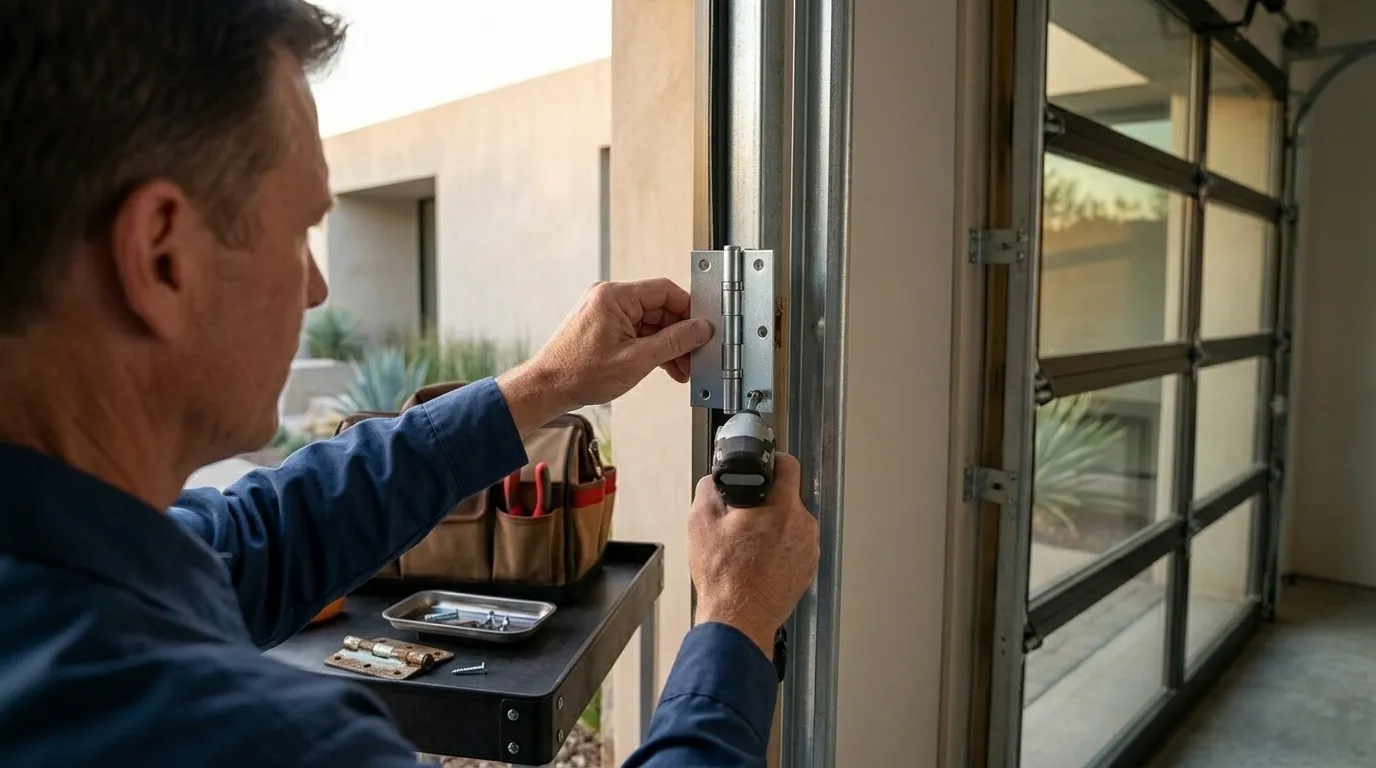
A door goes off track when the rollers stop riding straight inside the vertical or horizontal rail, usually because a bracket has loosened or the rail itself has bent. In Matthews, most of the housing stock went up between 1974 and 2006, with the heaviest concentration in the 1980s and 90s across the neighborhoods that ring the town. That matters because the track hardware from that build wave was sized for the doors of its day - lighter, often single-layer steel panels. Over three or four decades the brackets holding that track to the framing work loose a fraction at a time, and the rail starts to bow just enough that a roller catches an edge instead of riding through it. You'll notice it as a scrape, a hitch partway up the travel, or the door leaning slightly out of square when it's halfway open. It's rarely one dramatic event. It's usually a slow drift that ends the day a cable or roller finally can't compensate anymore and the door binds hard or drops on one side. The fix depends on whether the rail bent, the bracket pulled loose from old framing, or both - and that's usually easy to tell once someone's looking at it in person.
What You Pay
We don't quote a number here because it depends on whether this is a bent rail section, a loose bracket, or bent track plus a shot roller - three different jobs with three different price tags. What we can tell you is how the math tends to work in this area. The median household income across the Matthews service area is $88,203, which puts most repairs here in the range homeowners treat as a normal maintenance expense rather than a financial emergency, especially compared to full door replacement. A straight bracket re-anchor is the cheapest fix there is. A bent rail that has to be swapped for new track costs more in parts and time. If the track is bent because the door itself was hit - a car bumper, a stored ladder falling into it - that's a track-and-possibly-panel repair, and that's a different conversation than a hardware adjustment. Ask for the breakdown before the work starts: rail, brackets, rollers, and labor should be separate lines, not one bundled number.
How Local Conditions Play In
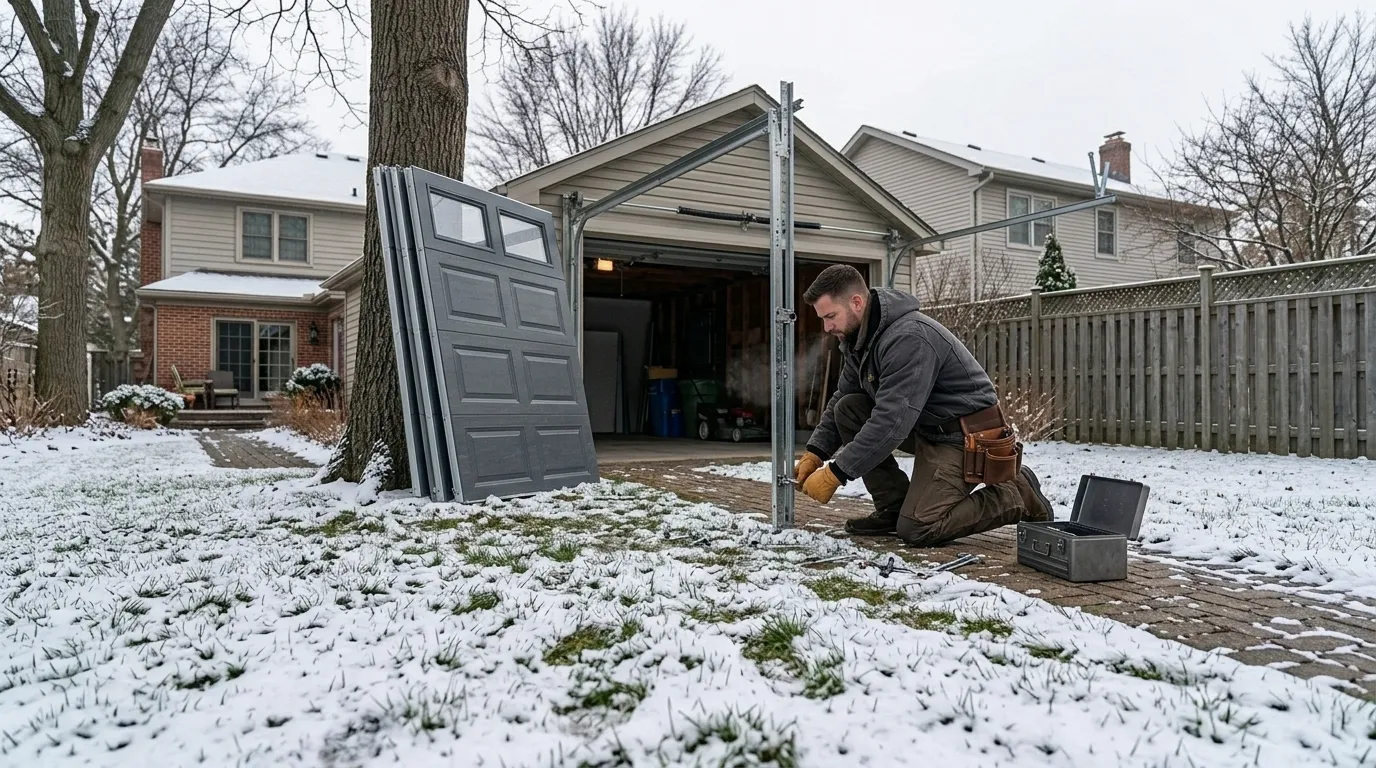
Matthews sits in a cold-moderate climate band, not the deep-freeze conditions of the mountains or the mild winters of the coast, but enough of a real seasonal swing that metal brackets and lag bolts go through actual expansion and contraction every year. That cycle is slow work on fasteners - a quarter-turn of loosening this winter, another next winter - and it's exactly the kind of wear that shows up first as a slightly crooked door rather than a sudden failure. It also means track alignment issues here tend to cluster seasonally: more calls in late winter and early spring, after a run of temperature swings has worked screws and brackets loose, than in the middle of summer. None of this is dramatic weather - no hail damage, no hurricane debris in most years - it's ordinary thermal cycling doing ordinary damage to hardware that's been up for a few decades. If your bracket screws are backing out of the framing a little more each year, that's very likely what's happening, and it's worth catching before the rail itself starts to bow from the play in the mounts.