What You Are Seeing
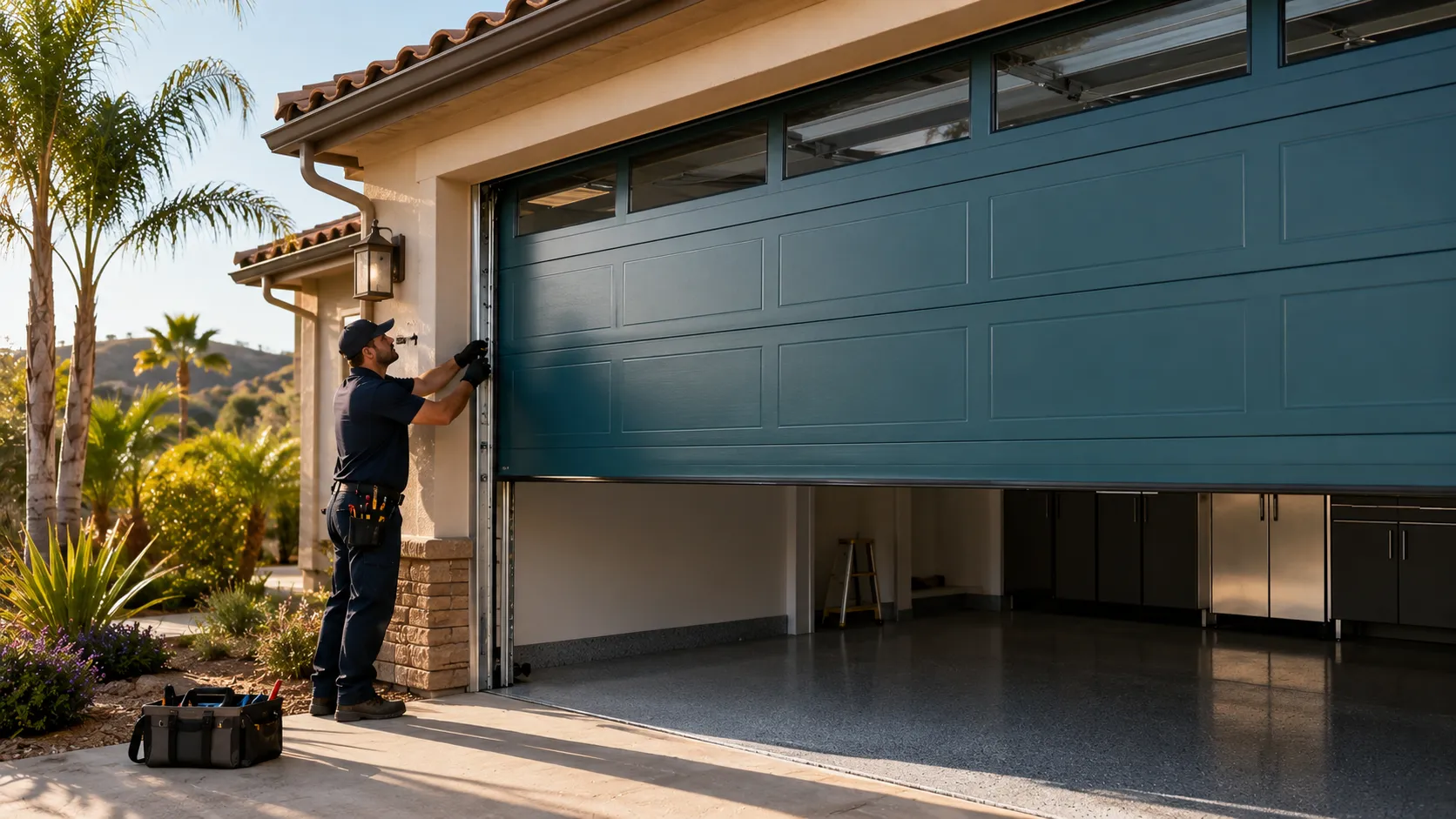
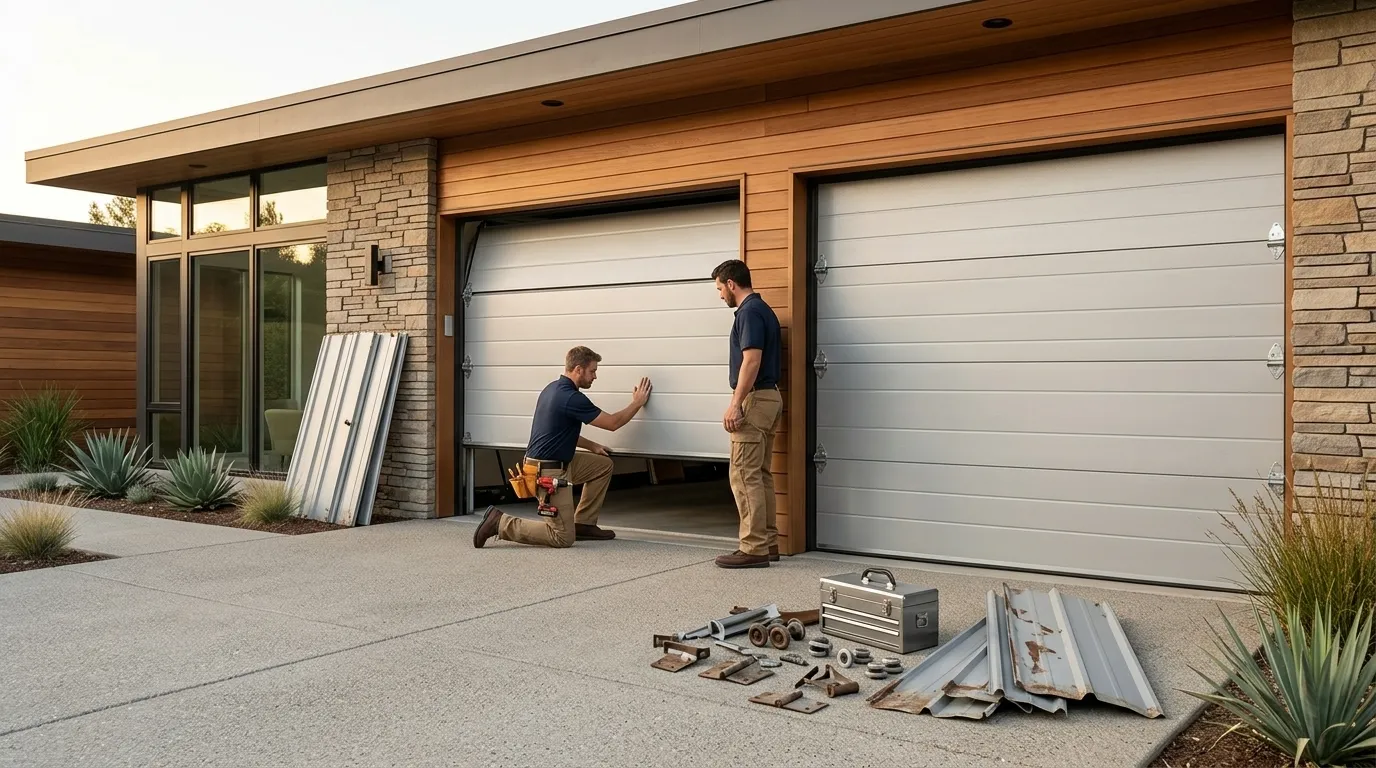
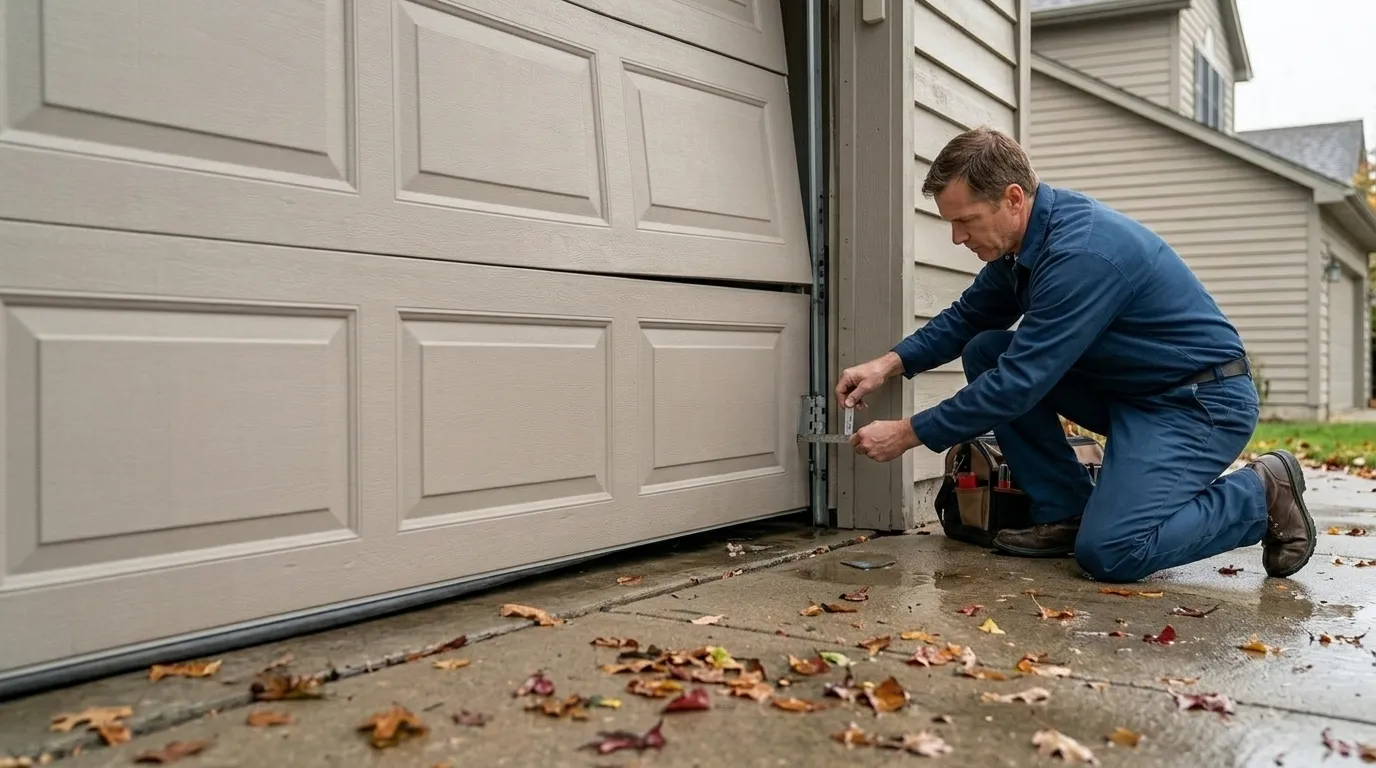
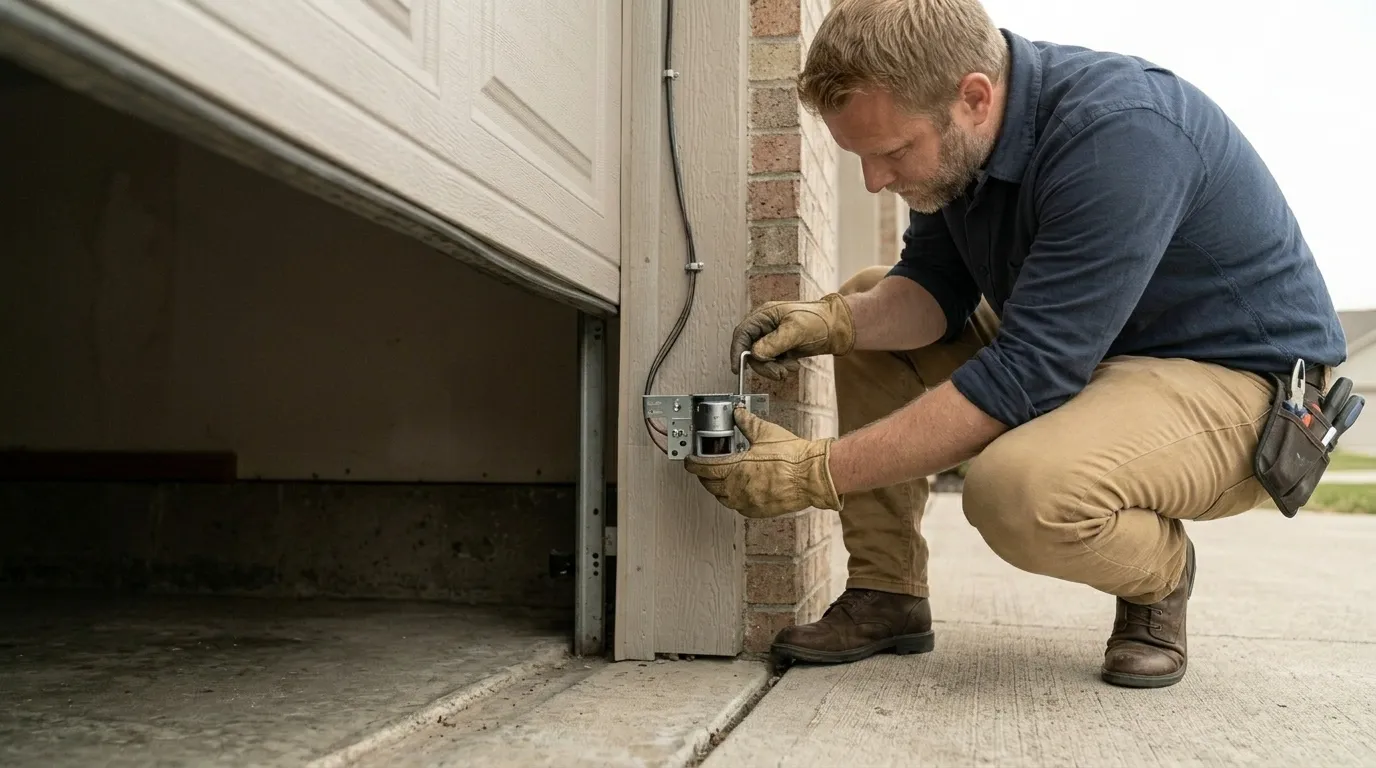
If your house sits in one of the neighborhoods built through the 1980s and 90s here, chances are you're still running the door that came with the place, or a like-for-like replacement from twenty years ago. You notice it first as a door that's heavier to lift by hand than it used to be, a track that's bowed slightly at the bottom bracket, or an opener that strains and reverses on cold mornings. Sometimes it's simpler: the door still works, but the panels are dented, the insulation is gone, and the whole thing looks like it belongs to a house ten years older than yours. None of this means something broke overnight. It means the door has been doing its job since somewhere around 1998, the median build year for houses in this area, and it's reaching the point where patching stops making sense. A new install isn't usually an emergency call - it's a decision you make once you've watched the old one struggle through one too many winters.
Why This Fails Locally
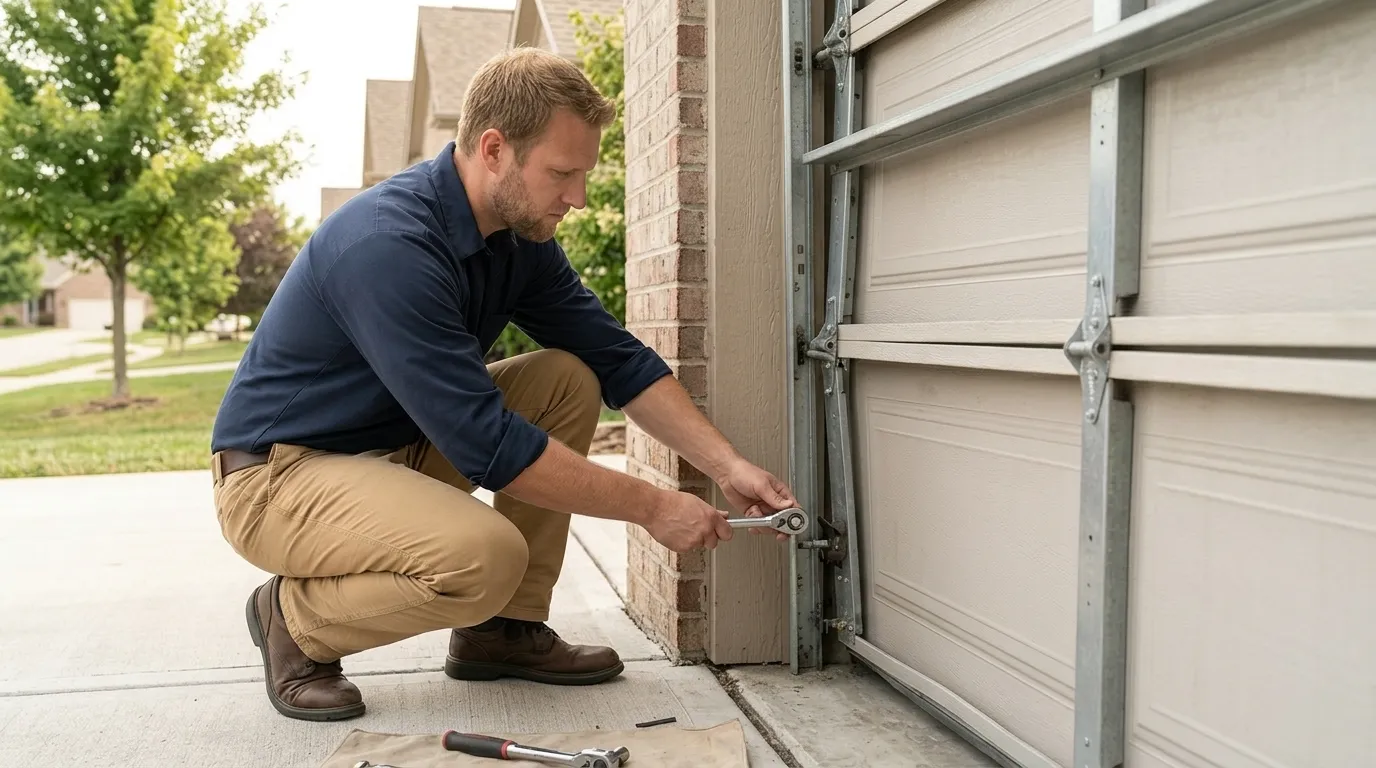
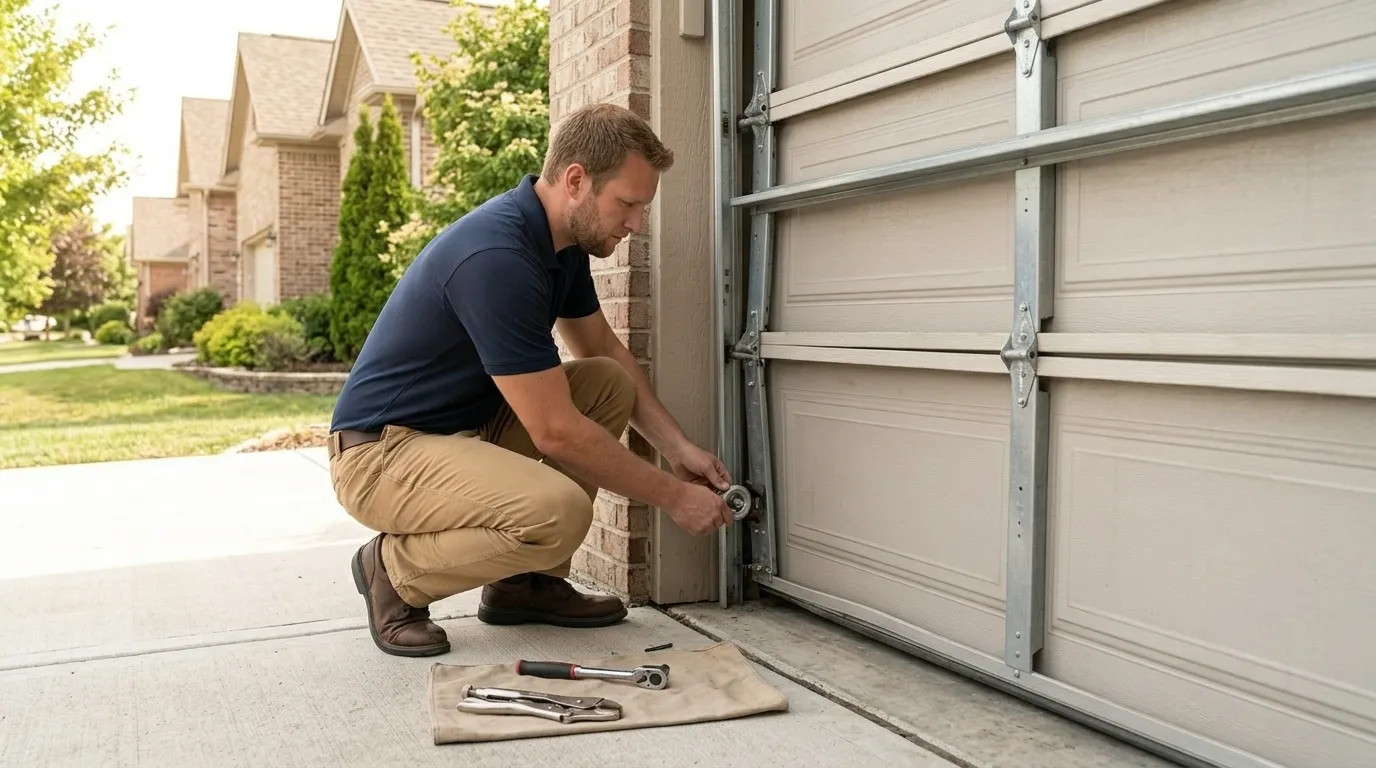
Matthews sits in a cold-moderate climate band, which means winter isn't brutal but it's consistent enough to matter over 20-plus years - freeze-thaw cycling on hardware, seasonal humidity swings that warp wood-composite panels, and the kind of temperature drop that stiffens torsion springs sized for a lighter, newer door. Housing here runs 1974 through 2006, with most stock concentrated in the 1980s and 90s across the named subdivisions in this service area. That generation of construction used steel doors and openers built to a lower standard than what's sold today - thinner gauge panels, single-layer insulation or none, torsion springs rated for the original door weight rather than for the double-insulated replacement most owners eventually want. When that original door starts to sag or the track pulls loose from the jamb, it's rarely one part failing. It's an install that was correct for 1995 conditions and hardware, now carrying more weight and more temperature swing than it was speced for.
What the Fix Involves
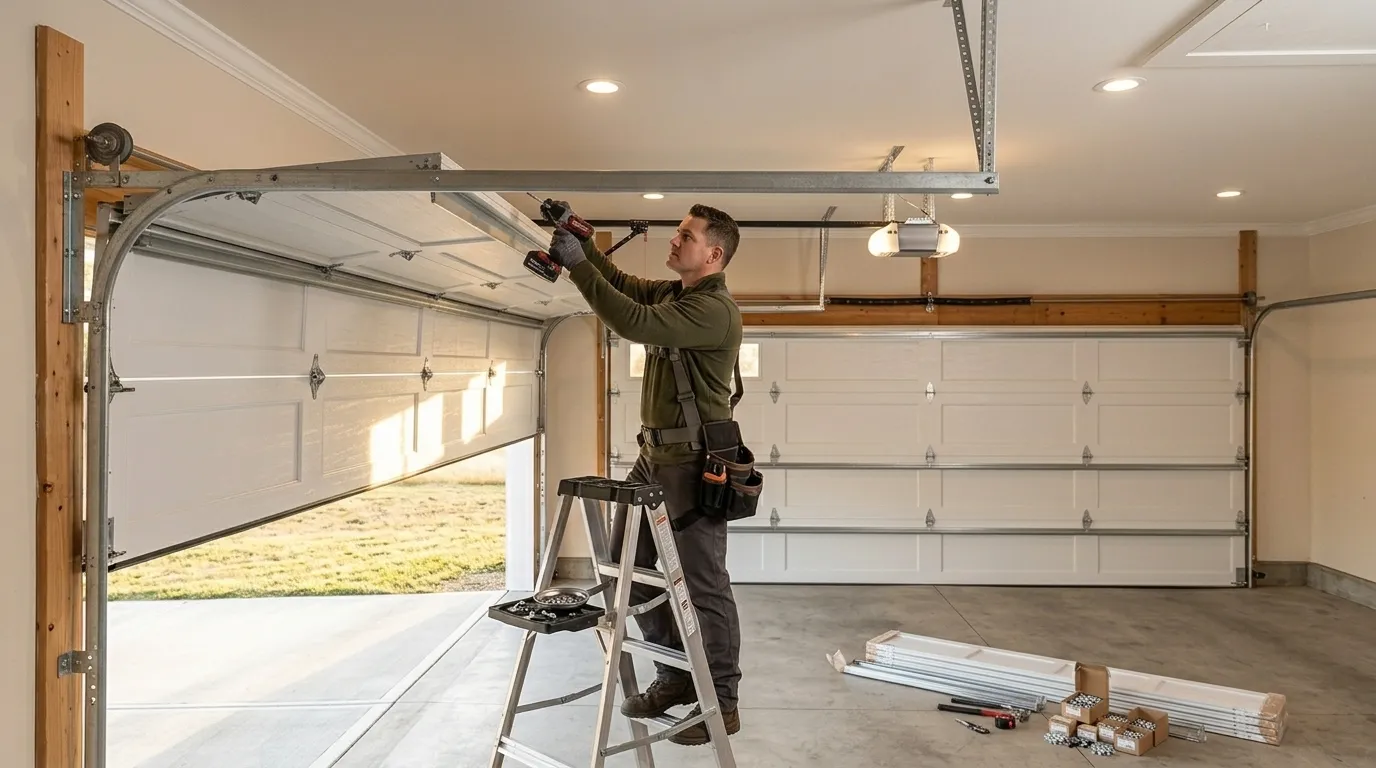
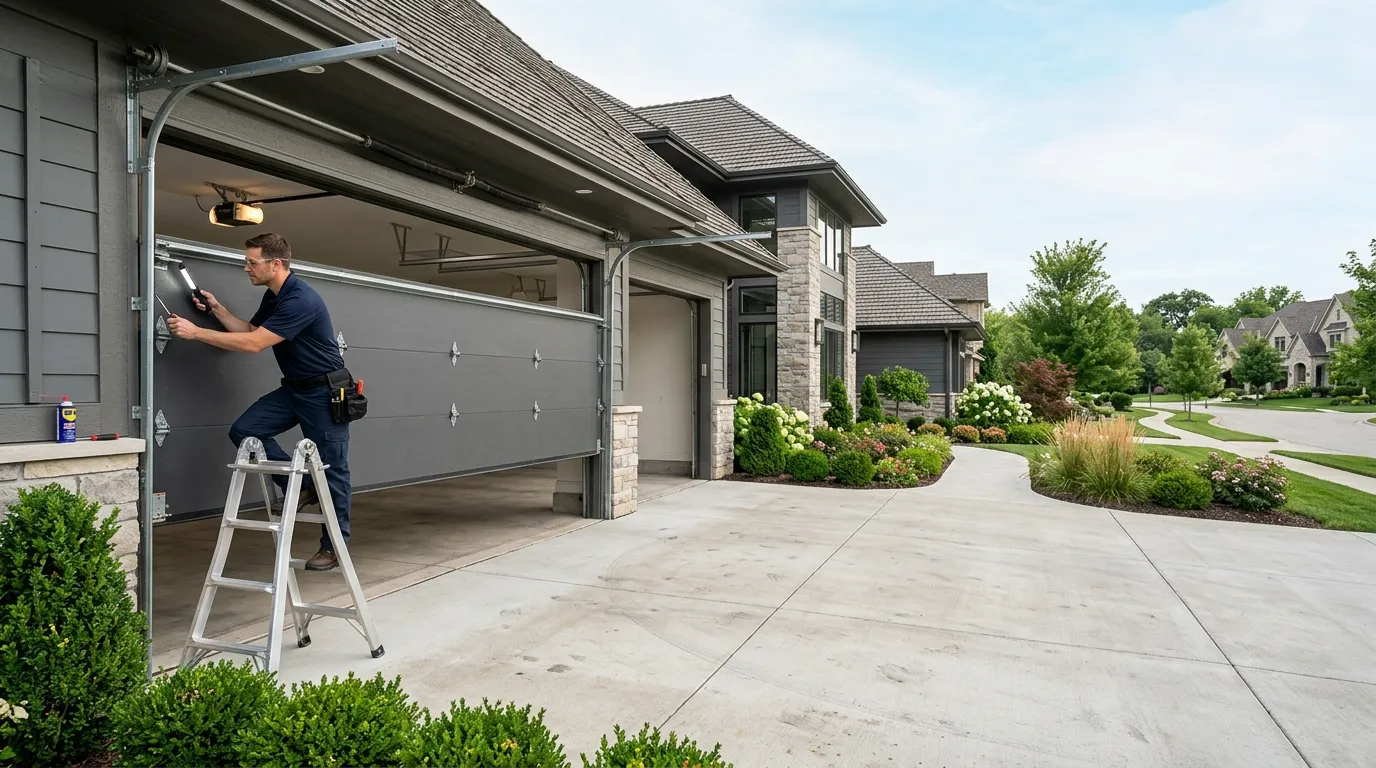
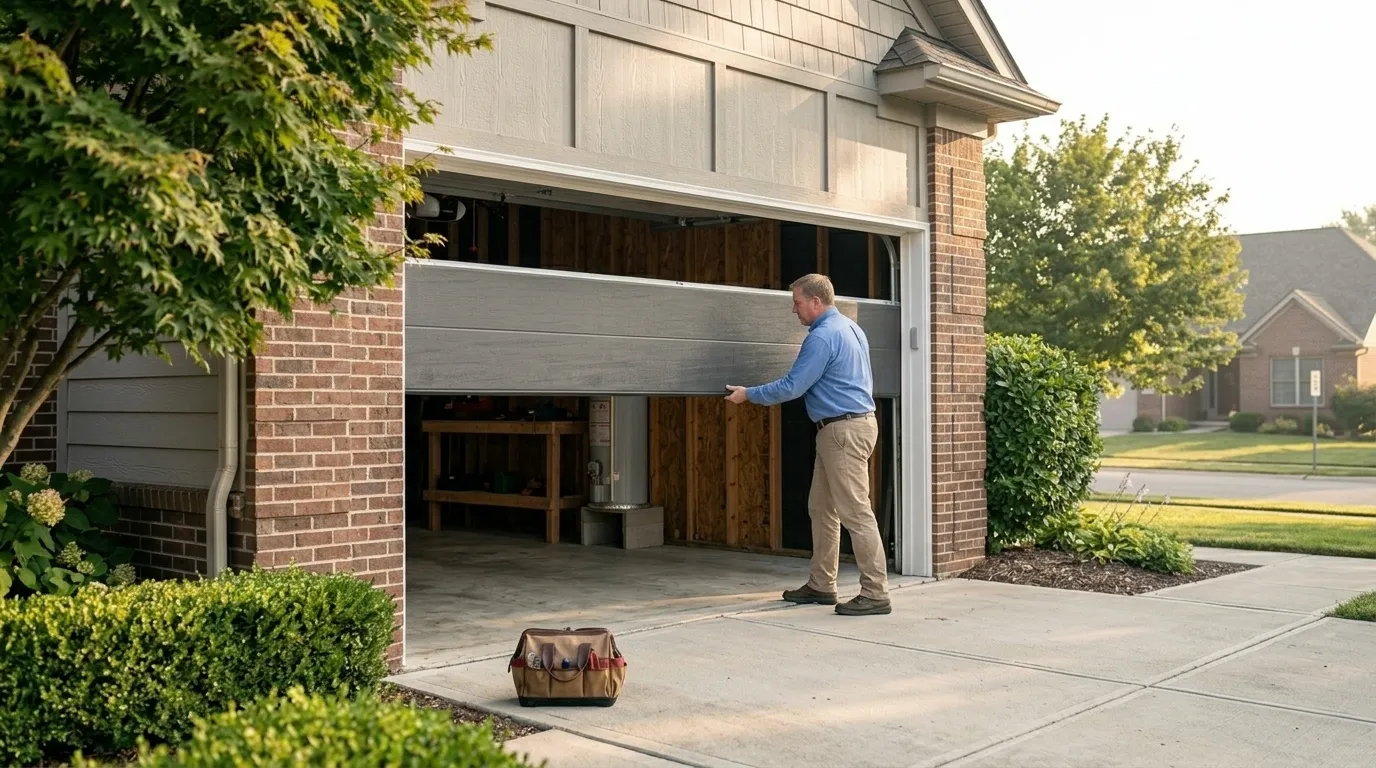
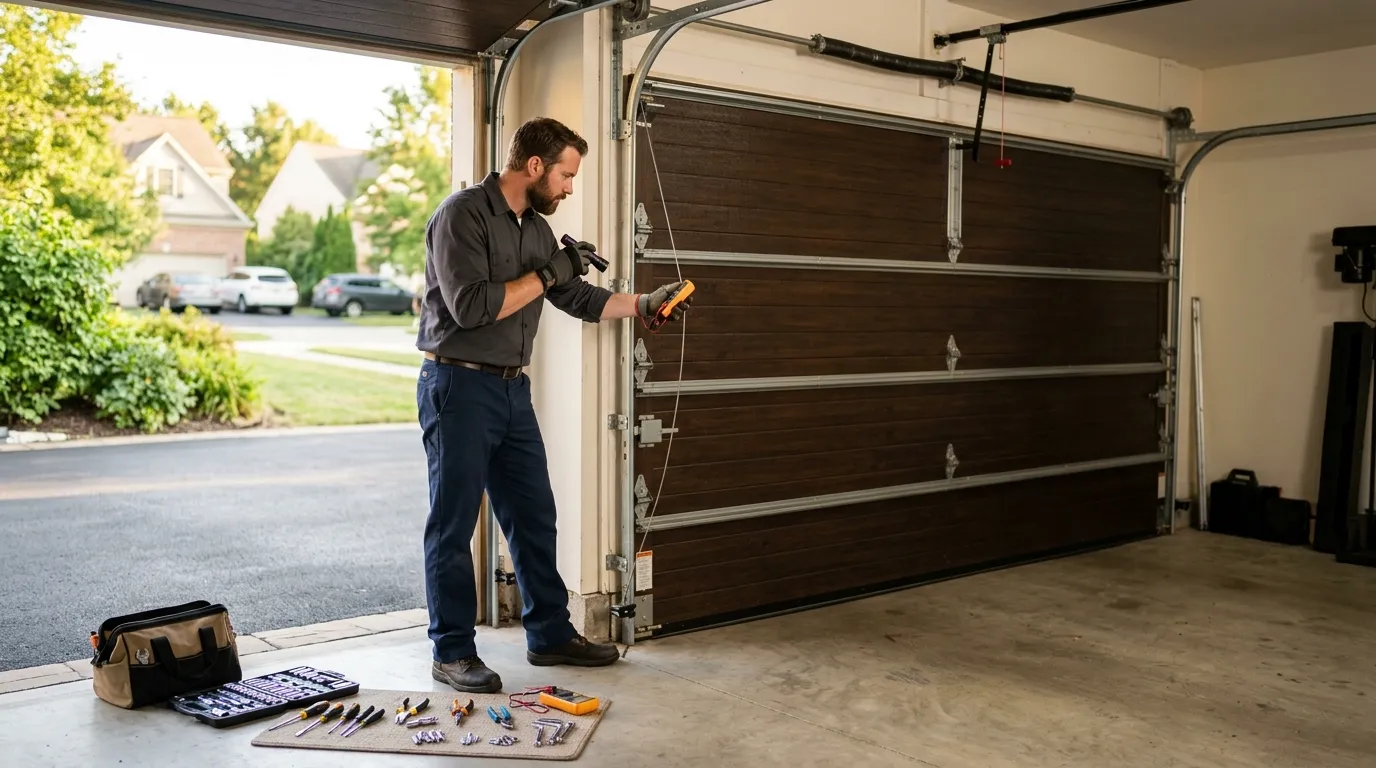
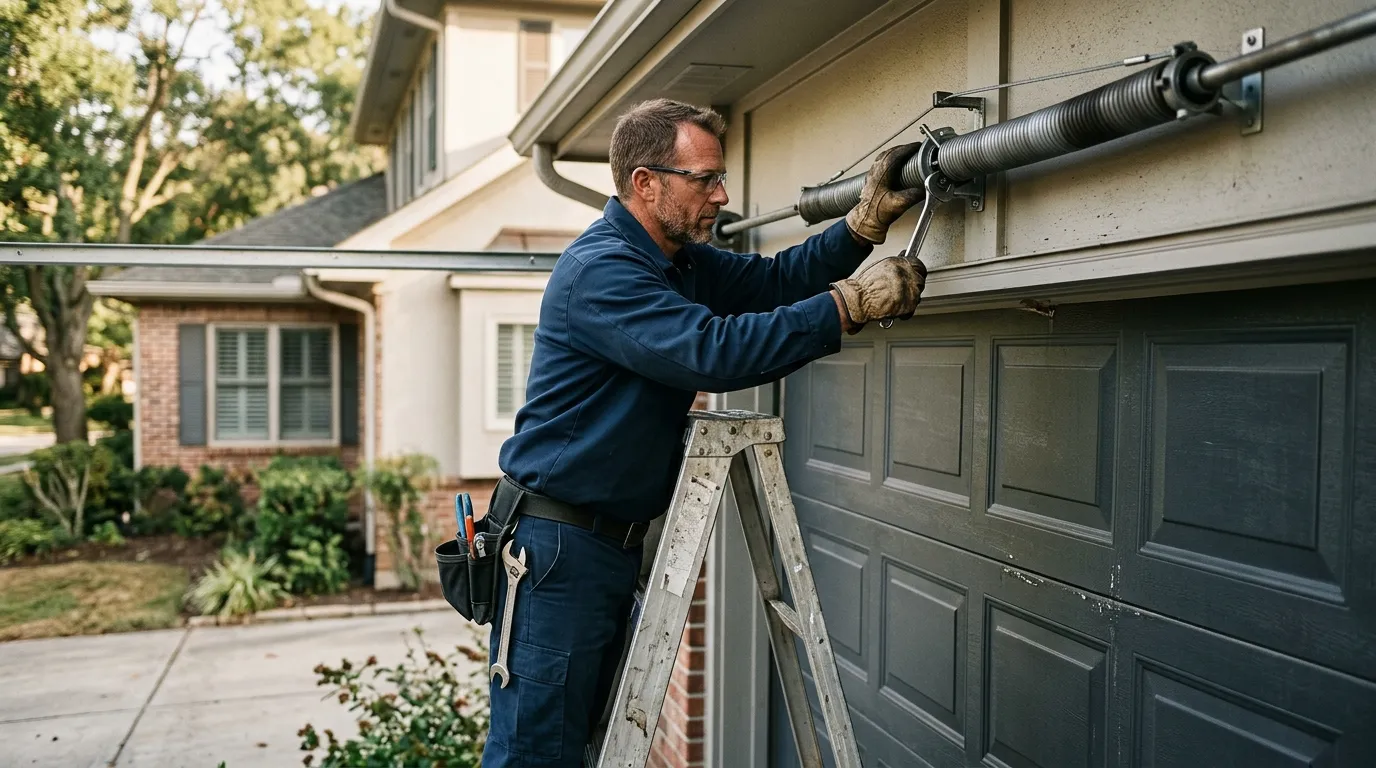
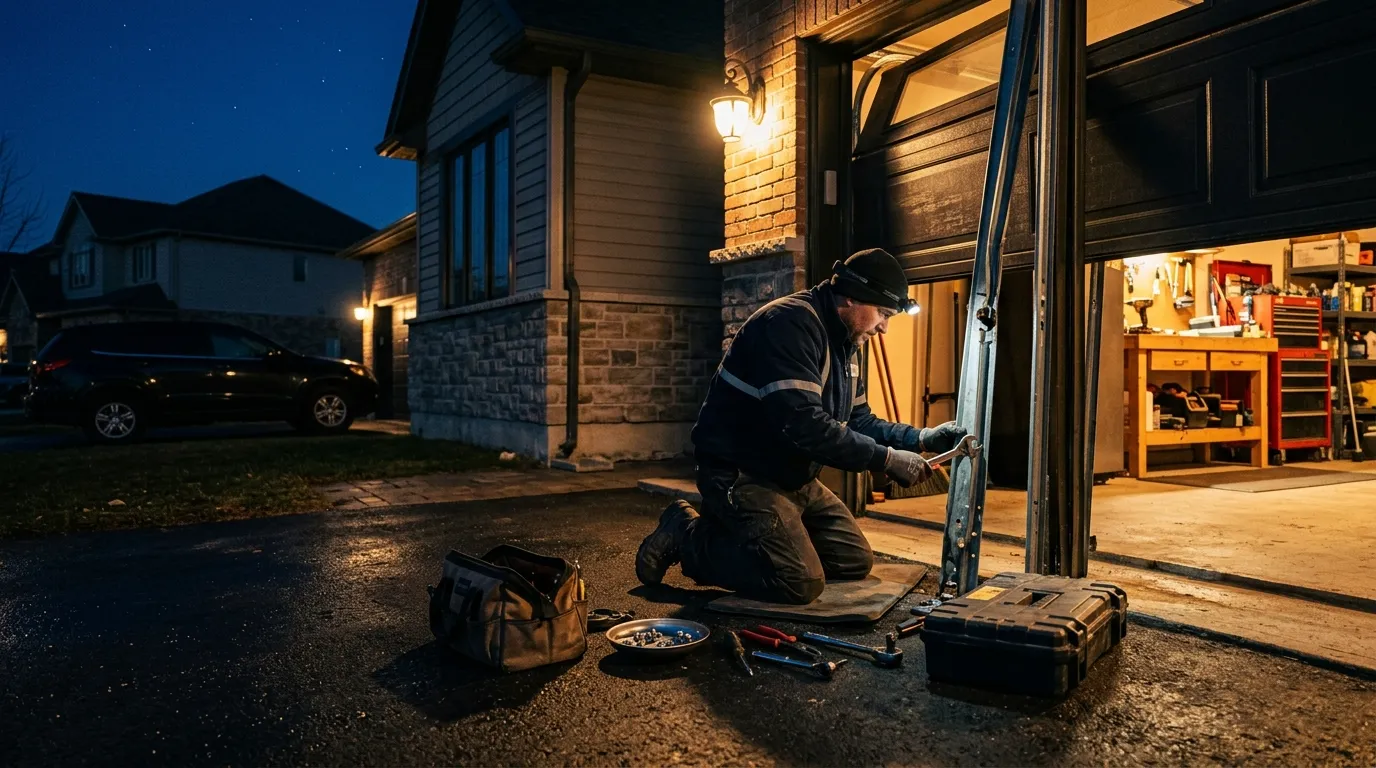
A proper install replaces more than the door panels. Given the age of hardware typical in this area, that usually means new track, new springs sized to the actual door weight, and a new bottom bracket set rather than reusing brackets rated for a lighter original door. For a cold-moderate climate like this one, insulation matters more than most owners expect walking in - a double-layer steel door holds up better against the seasonal swing here than the single-skin doors that shipped standard through most of the 1980s and 90s. We set the opener to match the new door's weight and travel rather than leaving the old opener's force settings in place, which is one of the more common shortcuts that leads to a callback six months later. The whole job is sized to the opening we measured, not to a stock size that happens to be close.