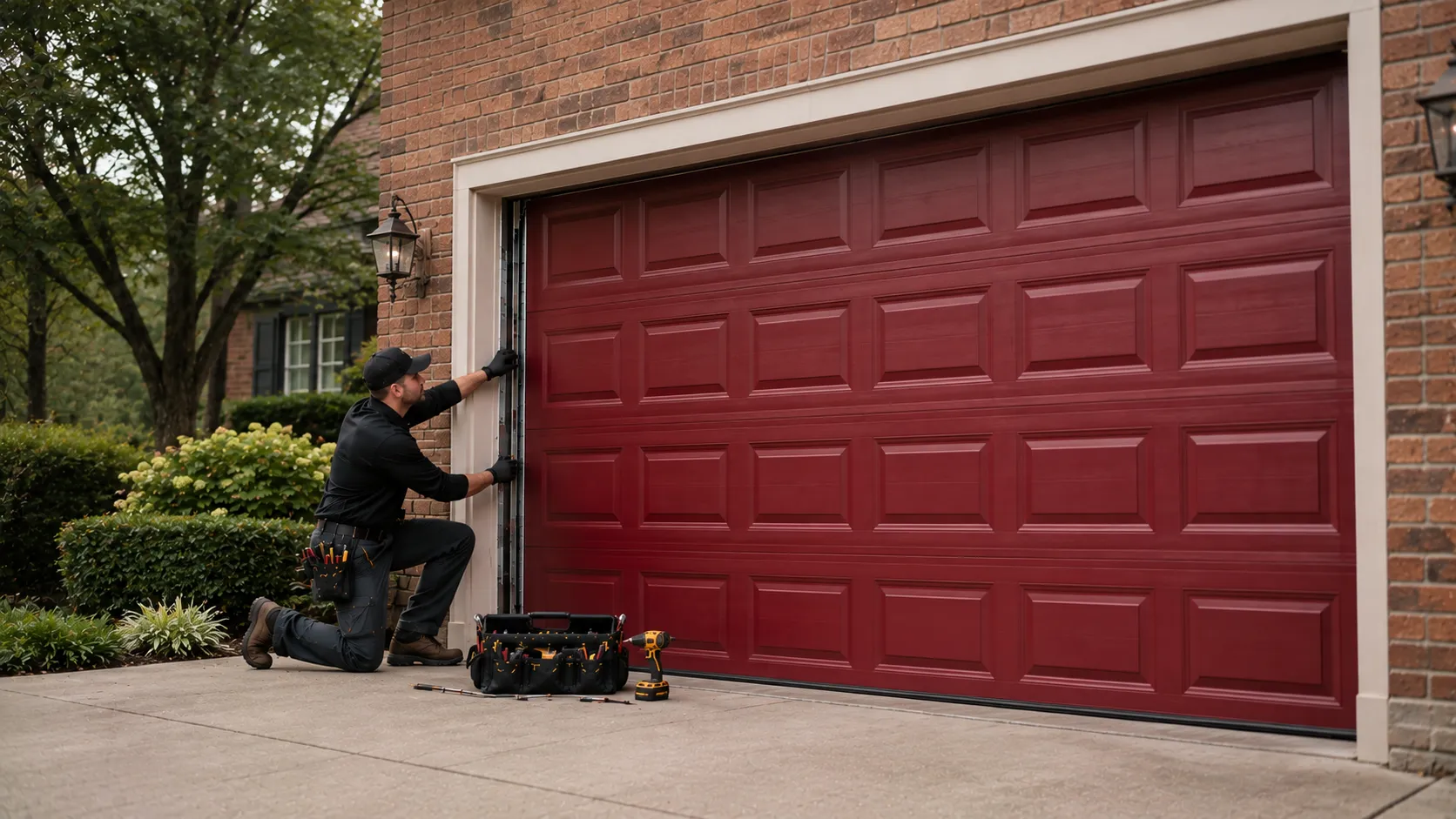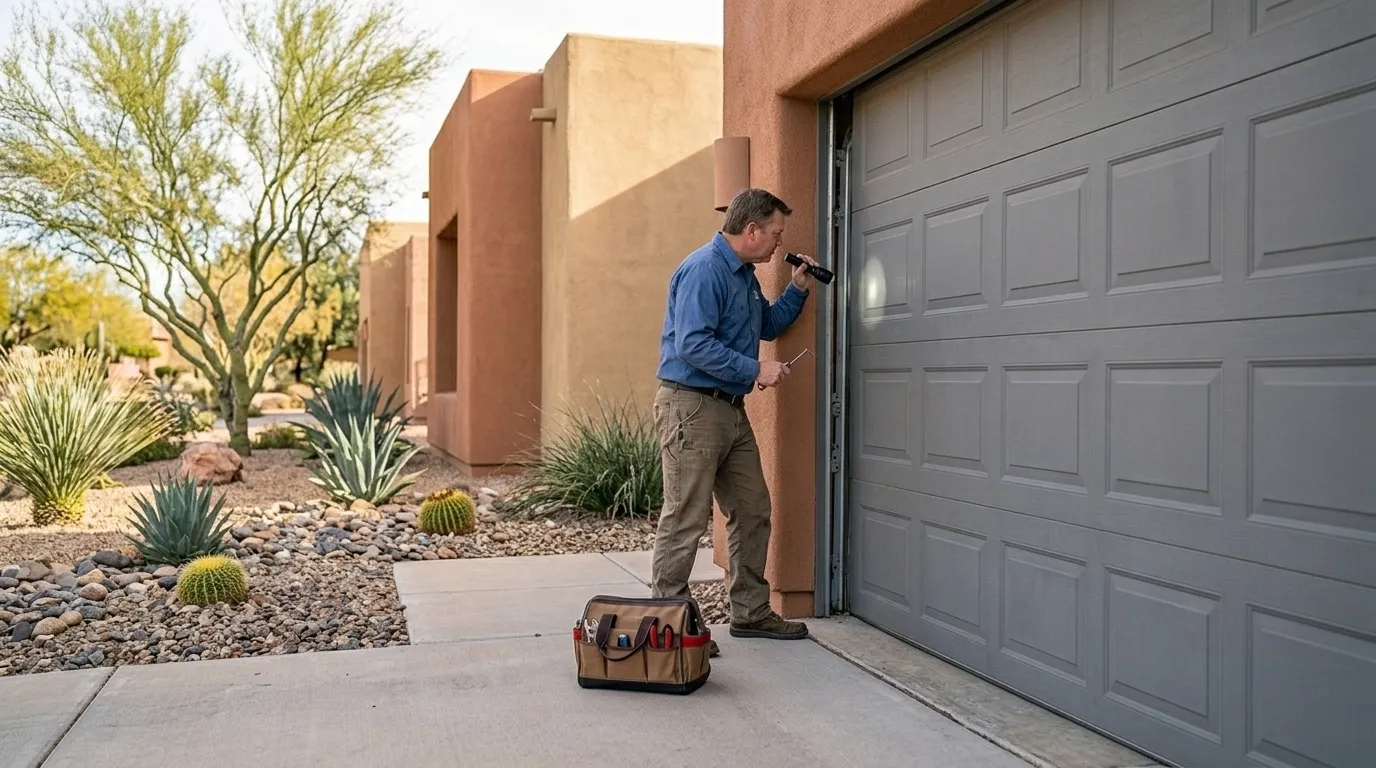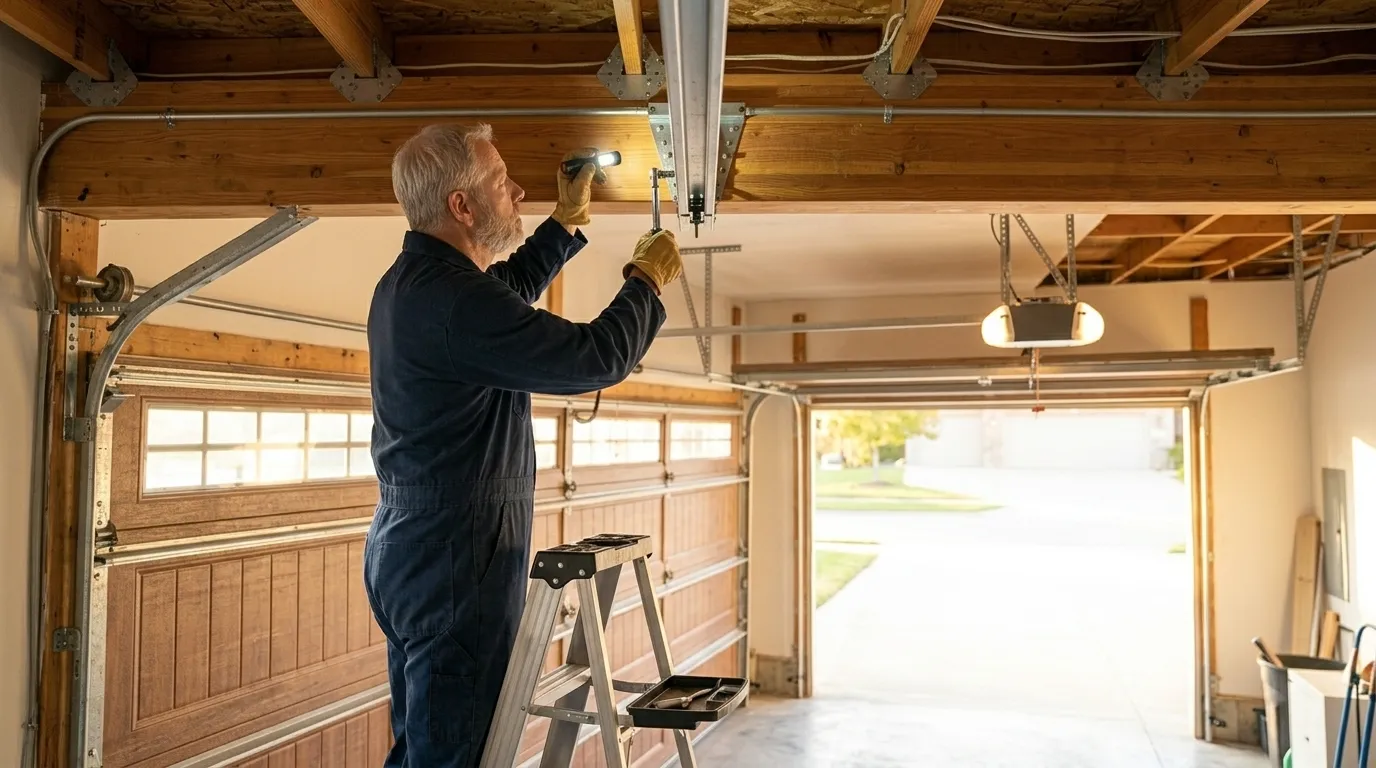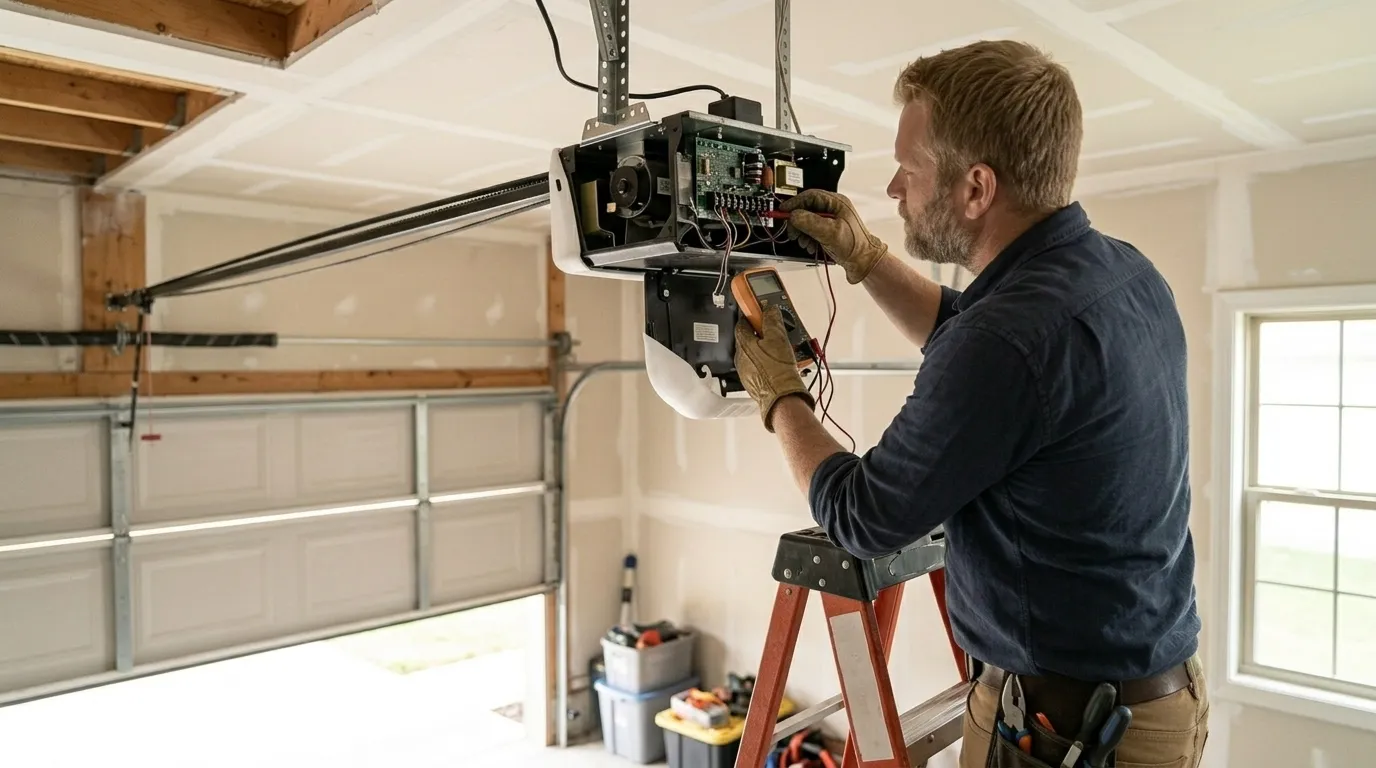
The Problem
Most houses in and around Matthews went up between 1974 and 2006, with the median build year sitting at 1998. That puts a huge share of the doors we look at right in the 1980s-90s window, whether the house sits in Sardis Woods, Providence Plantation, Idlewild South, or one of the other older sections closer to the center of town. Doors and openers from that era are past their expected service life even if they look fine from the driveway. Torsion springs are rated in cycles, not years, and a spring wound in 1991 has usually seen 8,000 to 12,000 open-close cycles by now - right where fatigue failure shows up. Openers from the same window are chain-drive units with worn gear sets and drive-side circuit boards that don't like moisture. When we get a call, it's rarely one thing. A homeowner hears a grinding noise and assumes the opener, but the opener has been straining because the spring lost tension months ago and nobody noticed. That's the pattern across this stock: a slow failure that gets blamed on the newest part instead of the oldest one.
What You Pay
We don't have a flat number to put on this page, and giving you a fake one would be worse than saying nothing. What we can tell you is what the visit covers: a full check of the spring, cable, rollers, track alignment, opener force settings, and safety sensors before any part gets replaced. On a house from the 1980s or 90s stock common here, that check almost always turns up more than the one symptom you called about - a stretched cable, a roller worn oval, a sensor that's been knocked out of alignment. You get told what's failing and why before anything gets swapped out, not after. If the honest answer is that the door is old enough that patching it is throwing money at a system near the end of its life, we'll say that instead of billing for a repair that buys you six months.
How Local Conditions Play In
Matthews sits in a moderate cold climate band, not the deep-freeze conditions that crack steel outright, but enough seasonal swing to matter for hardware this old. Winter cold thickens standard grease on tracks and rollers, which is part of why a door that ran quiet in August starts groaning in January - the lubricant hasn't failed, it's just stiff. Humidity swings through the shoulder seasons cause condensation on steel torsion bars and on opener circuit boards inside garages that aren't insulated, which is most garages built in the 1974-2006 window we're working with here. None of this is dramatic weather. It's steady, moderate cycling that slowly loosens fasteners, corrodes contact points, and shortens the working life of parts that were already at or past their rated cycle count.