The Problem
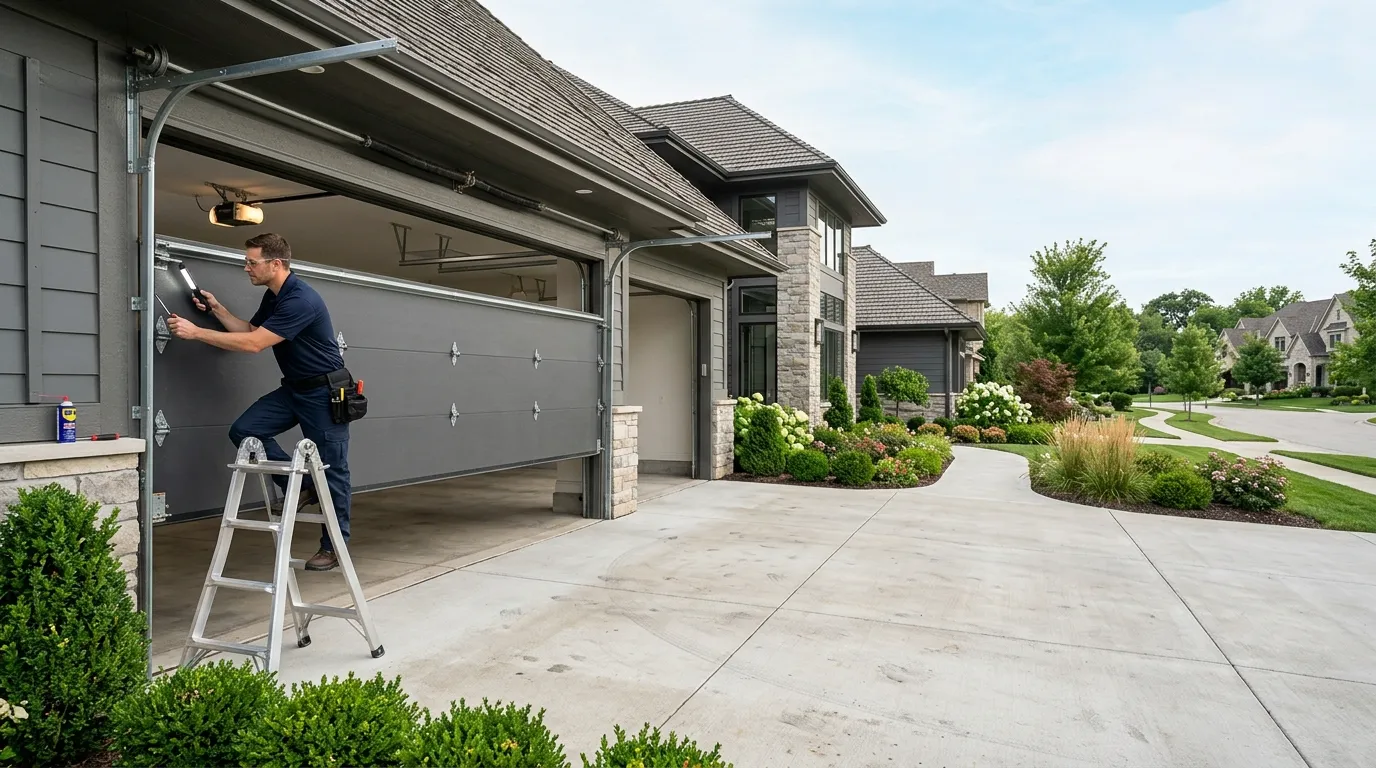
Most of the doors we get called out to in Matthews sit on houses built between 1974 and 2006, with the typical build year landing around 1998. That means a lot of torsion springs on the market right now are the originals, or the first replacement, and either way they're old. Steel doesn't care about the calendar until it gets cold, and then it does. A spring that's been carrying a 150-plus pound door for two or three decades is already fatigued at the molecular level. Cold snaps don't cause that fatigue, but they do reveal it, because cold steel is stiffer and less forgiving of the last few cycles a tired spring has left in it. The door that opened fine on a 60-degree afternoon can snap the same spring on a 28-degree morning a week later. We don't see this because winter here is brutal. We see it because winter here is the stress test a marginal spring can't pass, and this area's housing stock has a lot of springs that are due for the test whether they pass or not.
What You Pay
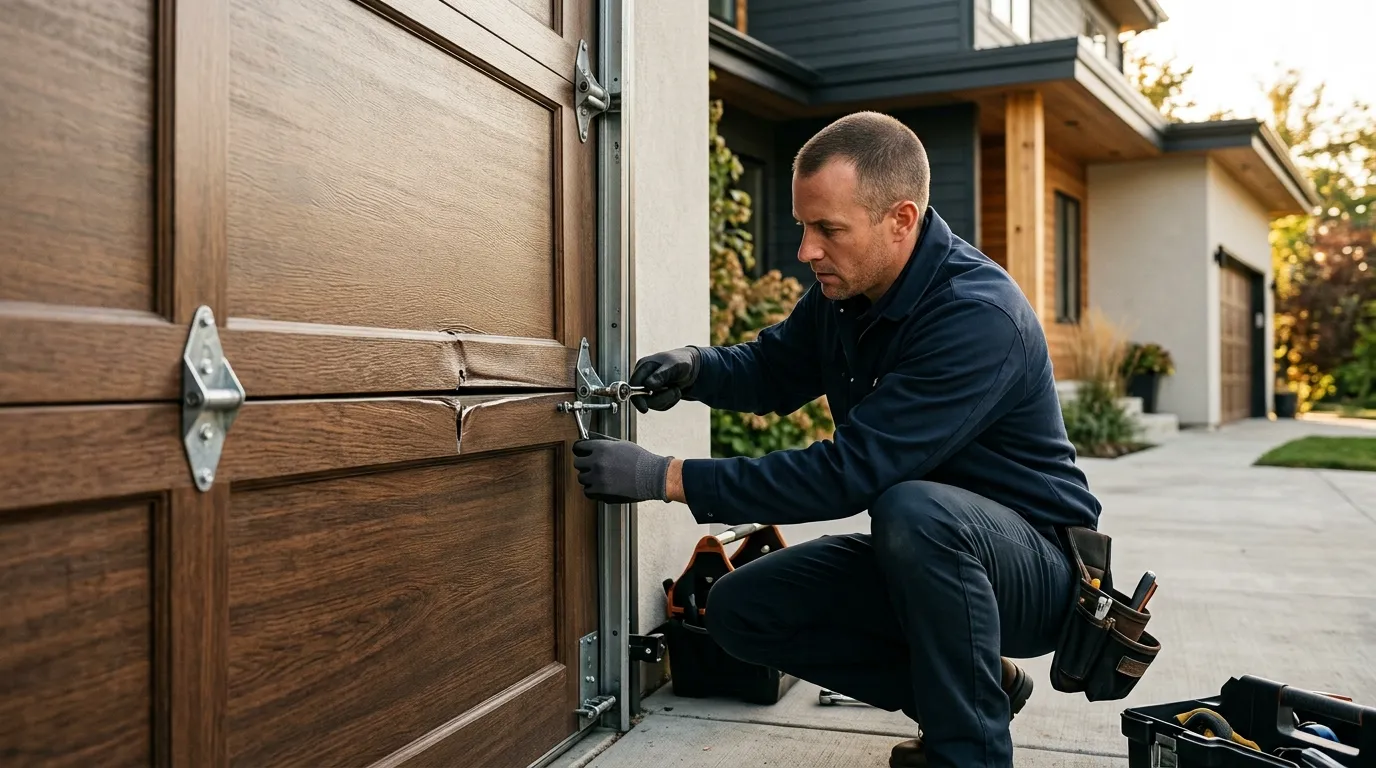
We don't have a set number to quote you here, and giving you one without seeing the door would be a guess dressed up as a fact. What we can tell you is what moves the number: whether it's a single torsion spring or a matched pair on a double door, whether the drums and bearings are original from the 1980s-90s stock common in this area or already replaced, and whether the cable took damage when the spring let go, which happens more often than owners expect. A door on original hardware from that era usually needs more than a spring swap, because the parts around the spring have been running the same number of cycles. That's the honest limitation: if your hardware is original to a 1980s or 90s build, a spring job can turn into a bigger job once we're actually looking at the shaft and bearings. We'll tell you before we start, not after.
How Local Conditions Play In
This area sits in a cold-moderate climate band, which means hard freezes come and go rather than settling in for months at a time. That in-and-out cycling is actually harder on aging steel than a steady cold would be, because the metal keeps expanding and contracting instead of just sitting stiff. Over thirty winters, that's a lot of cycling for a spring that was never rated to last forever in the first place. We work across the roughly 17 named areas in this service area, from Sardis Woods and Marshbrooke closer in to Becton Park and Montibello further out, and the pattern holds everywhere: houses from the same building boom, aging springs on the same rough timeline, all more likely to fail on the same kind of morning. It's not that Matthews gets extreme cold. It's that the housing stock here is old enough now that cold is just the trigger, not the cause.