What You Are Seeing
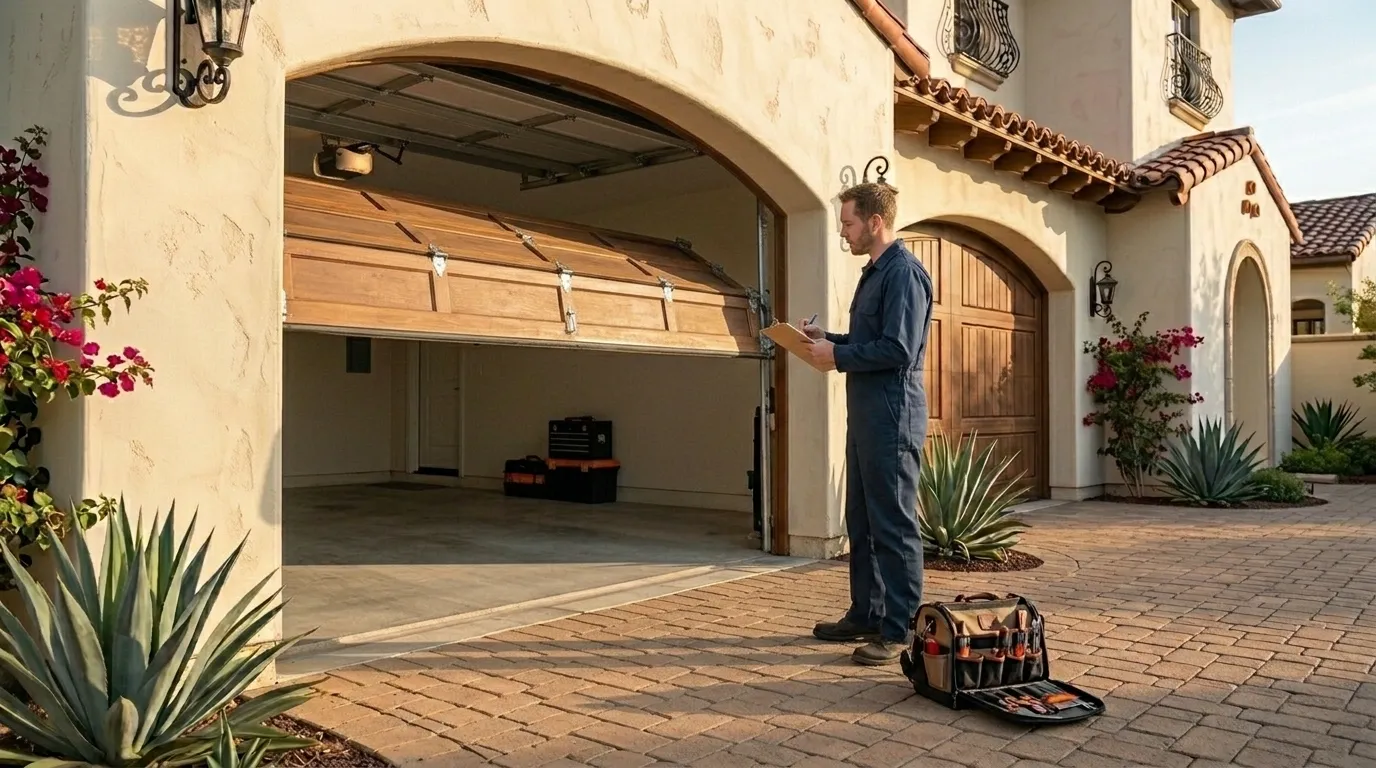
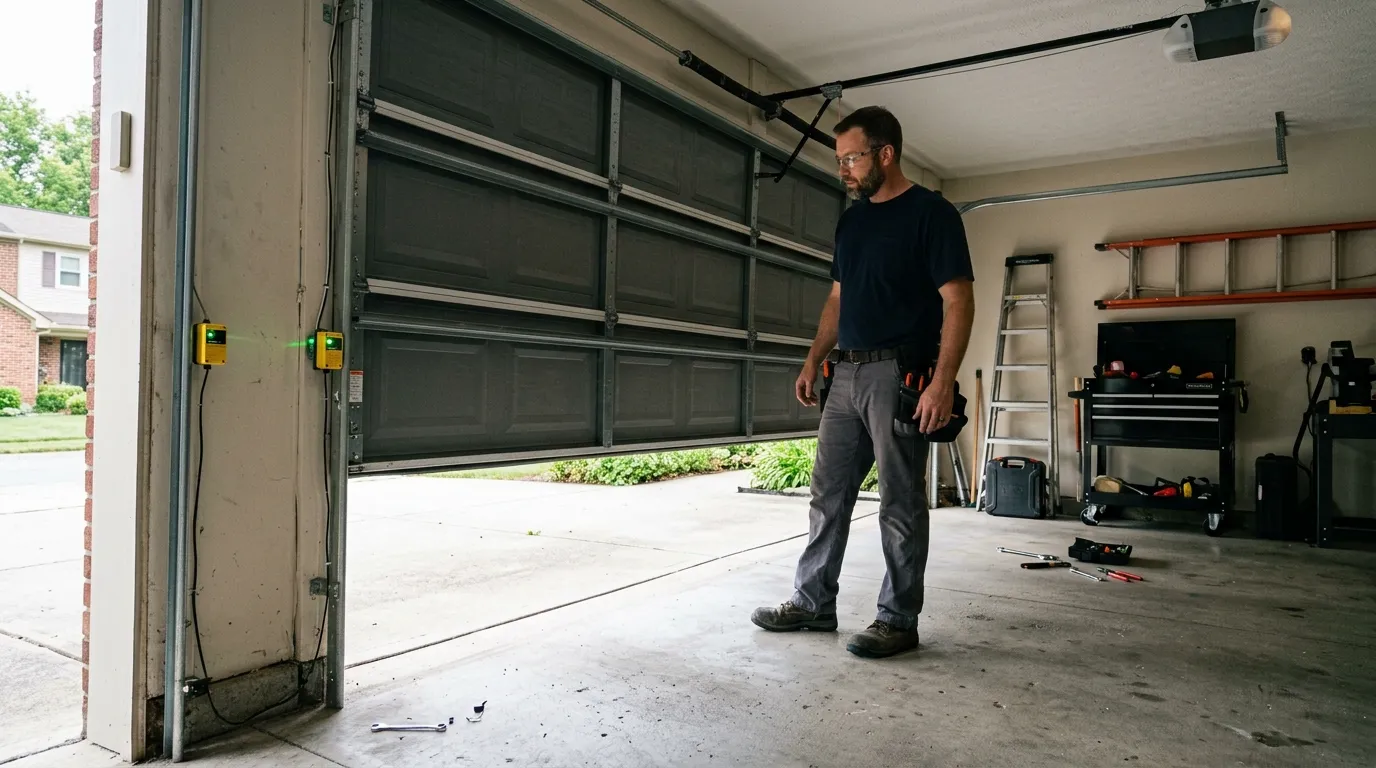
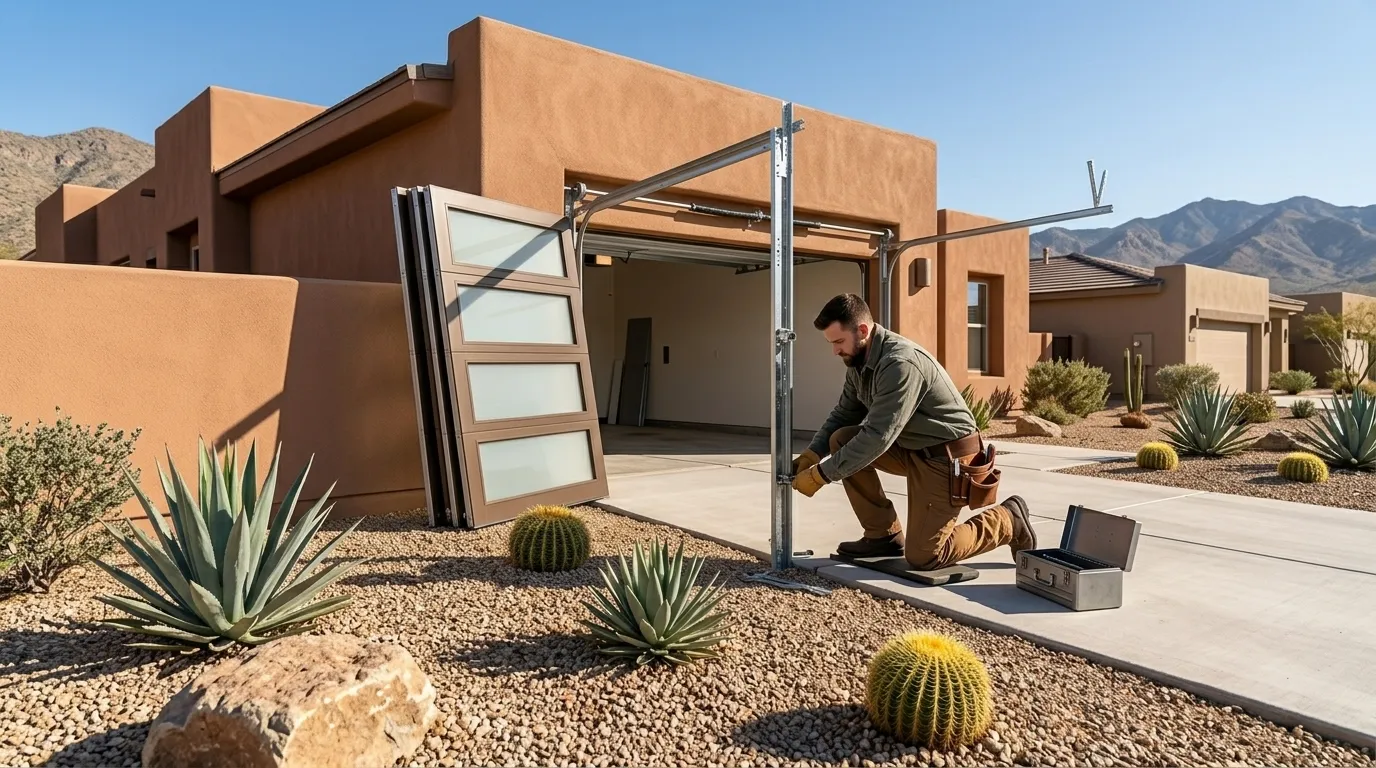
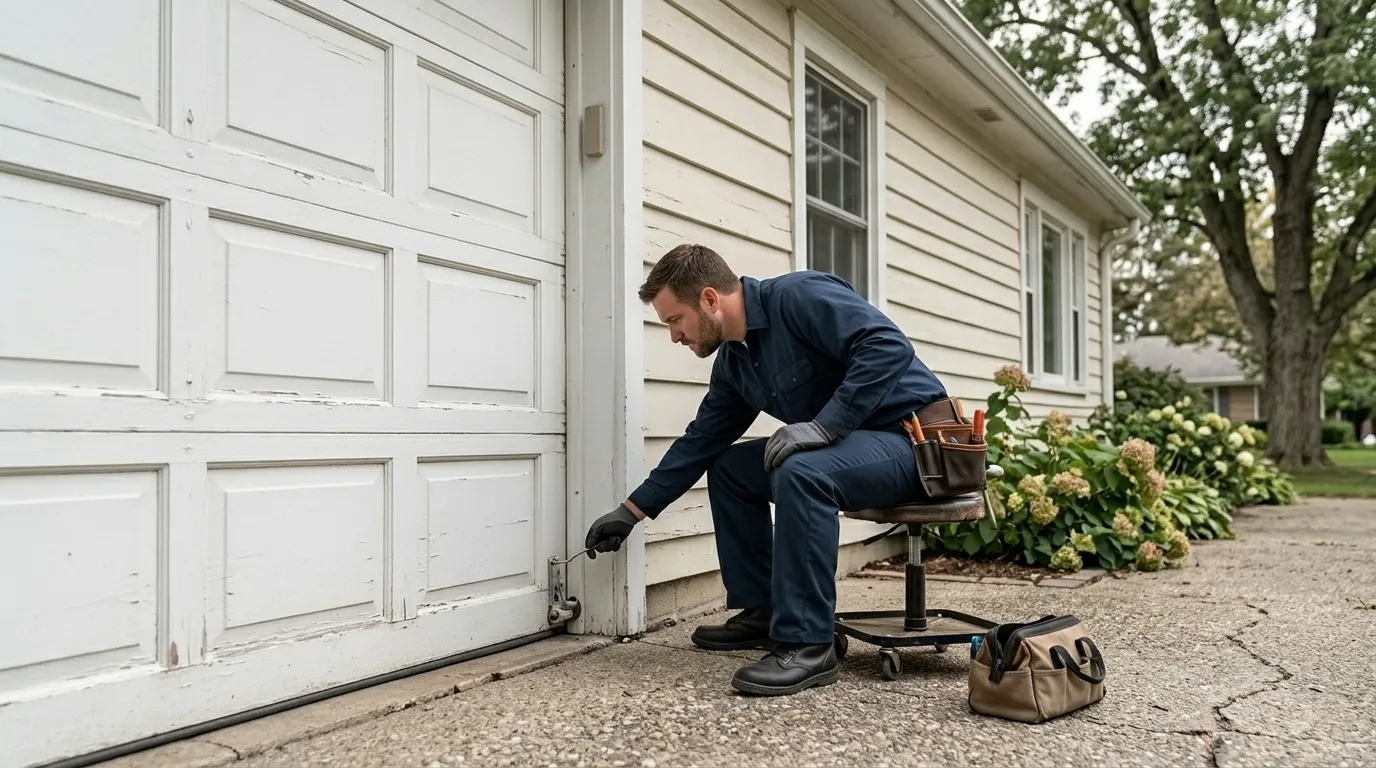
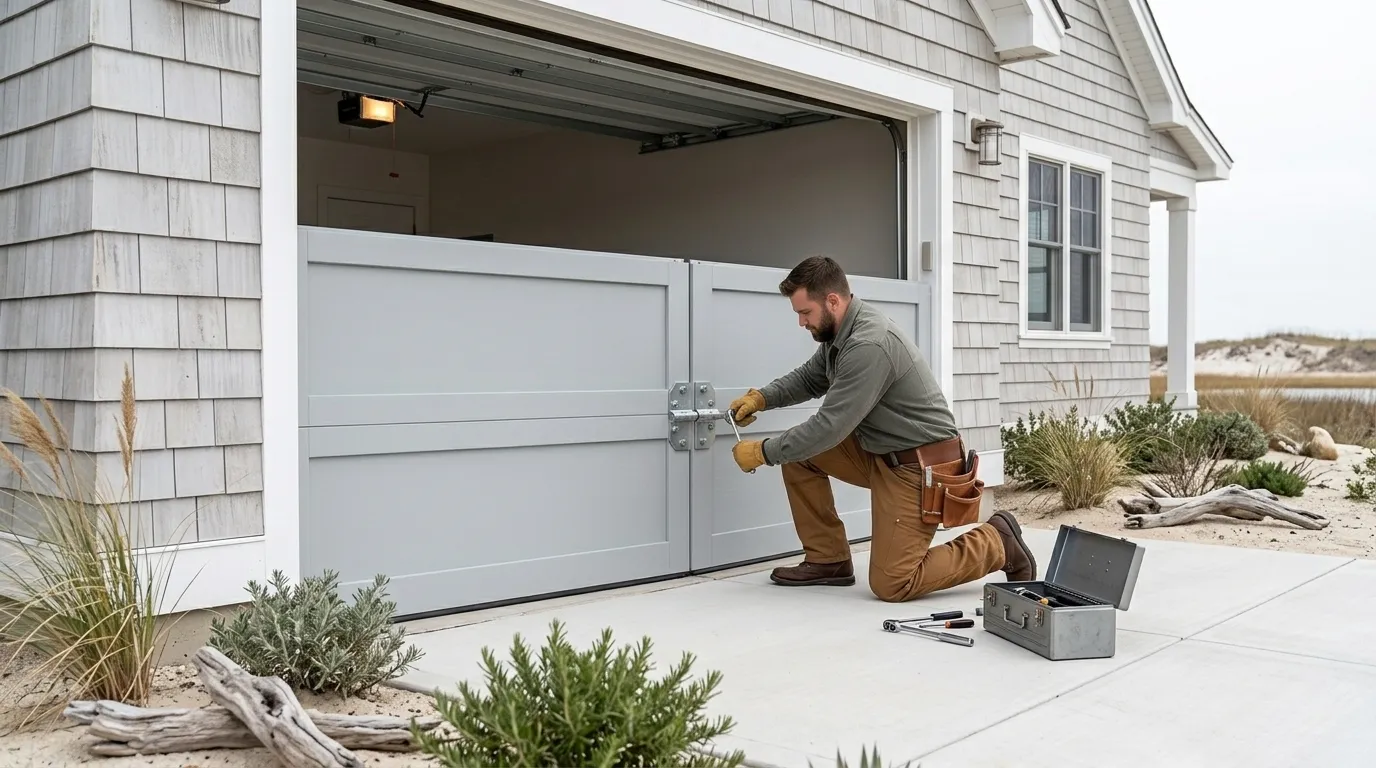
A door that won't budge, or one that lurches up crooked and stalls halfway. A spring that let go with a bang loud enough to bring the neighbors out. An opener that runs the motor but the door doesn't move, or moves an inch and reverses. Rollers grinding in the track, or a cable frayed down to a few strands where it wraps the drum.
Most of the calls we get in Matthews match one of these. The door doesn't fail all at once - it gives you weeks of small warnings first. A slight sag on one side. A opener that clicks twice before it catches. A door that closes fine in the afternoon and sticks in the morning cold. Those are not separate problems; they're usually the same worn part showing up in different ways depending on temperature and how many cycles the door has run that week.
If your door is refusing to move entirely, don't keep hitting the wall button - that's how a stripped gear or a bent opener arm turns into two repairs instead of one. Kill the power to the opener, pull the emergency release, and see if the door moves by hand. That tells you a lot before anyone gets a truck out.
Why This Fails Locally
Most of the housing across this service area went up between 1974 and 2006, with the bulk of it - the 17 named neighborhoods from Sardis Woods and Marshbrooke out to Marlwood and Becton Park - built through the 1980s and 90s. That means a lot of doors and openers here are original or close to it, running torsion spring setups and drive systems that were standard for that build era but are past the point where a patch job makes sense.
Matthews sits in a cold-moderate climate band, and that matters more than people think. Steel torsion springs lose tension as temperature swings through the winter, and the cable and drum hardware that was fine in October starts binding in January. A door that's carried the same spring for twenty-plus years doesn't fail on the worst day of cold - it fails a few weeks after, once the metal has fatigued through enough of those swings.
Openers from that same building period are also reaching a point where the circuit boards and drive gears just wear out from age, independent of any one bad day. It's less about weather breaking things outright and more about a house-wide cohort of hardware aging together, then temperature swings triggering the actual failure point.
What the Fix Involves
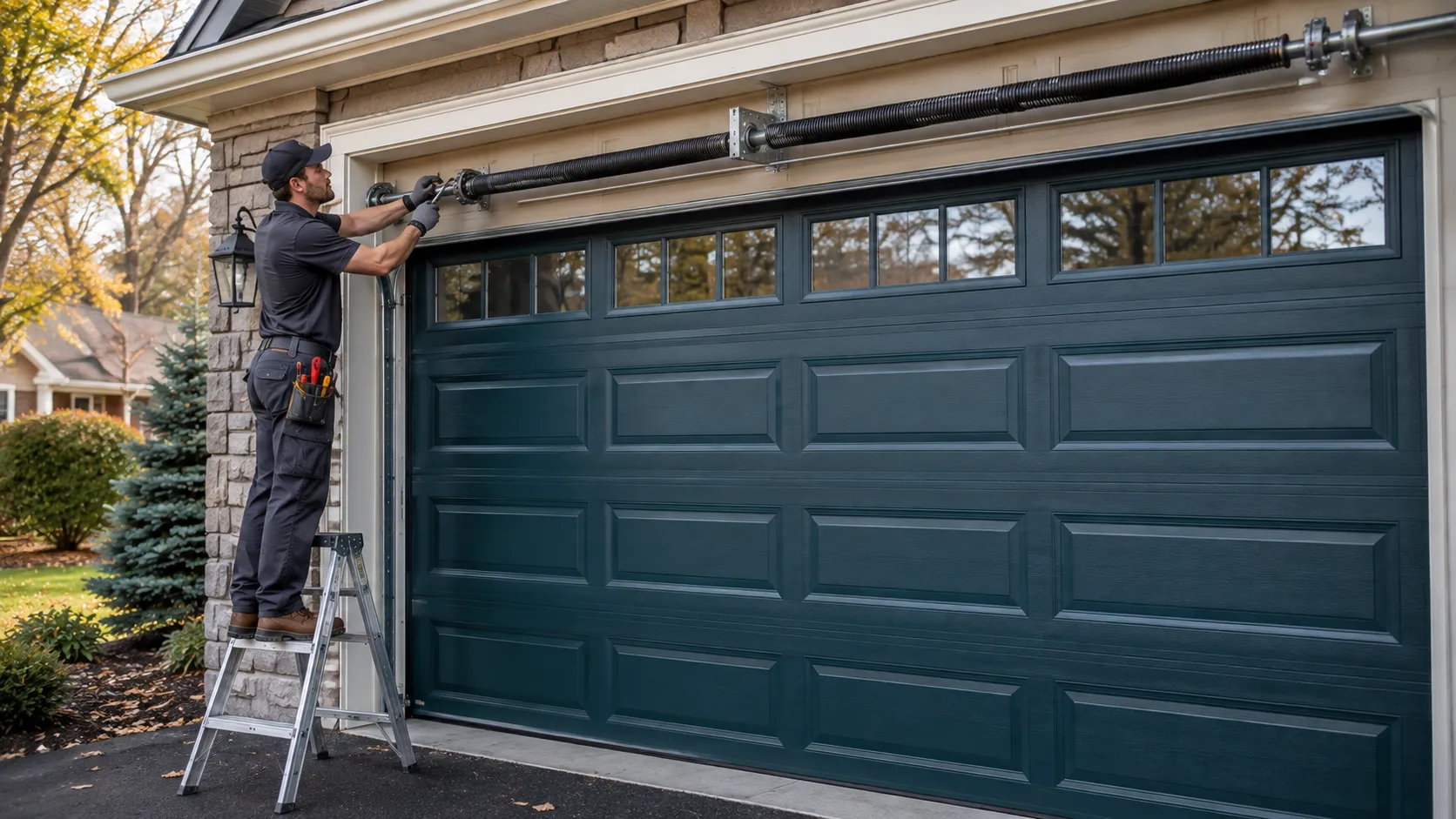
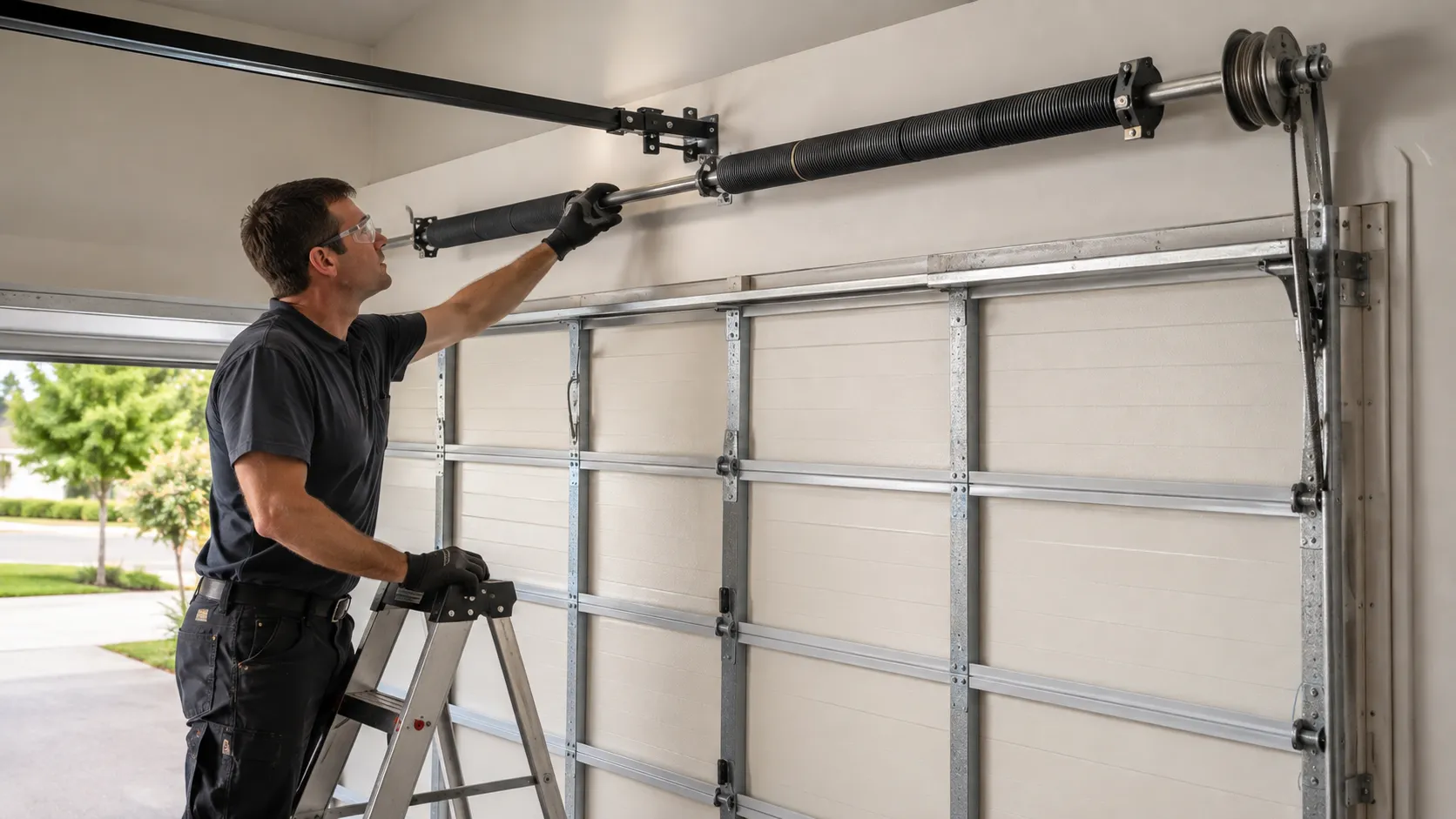
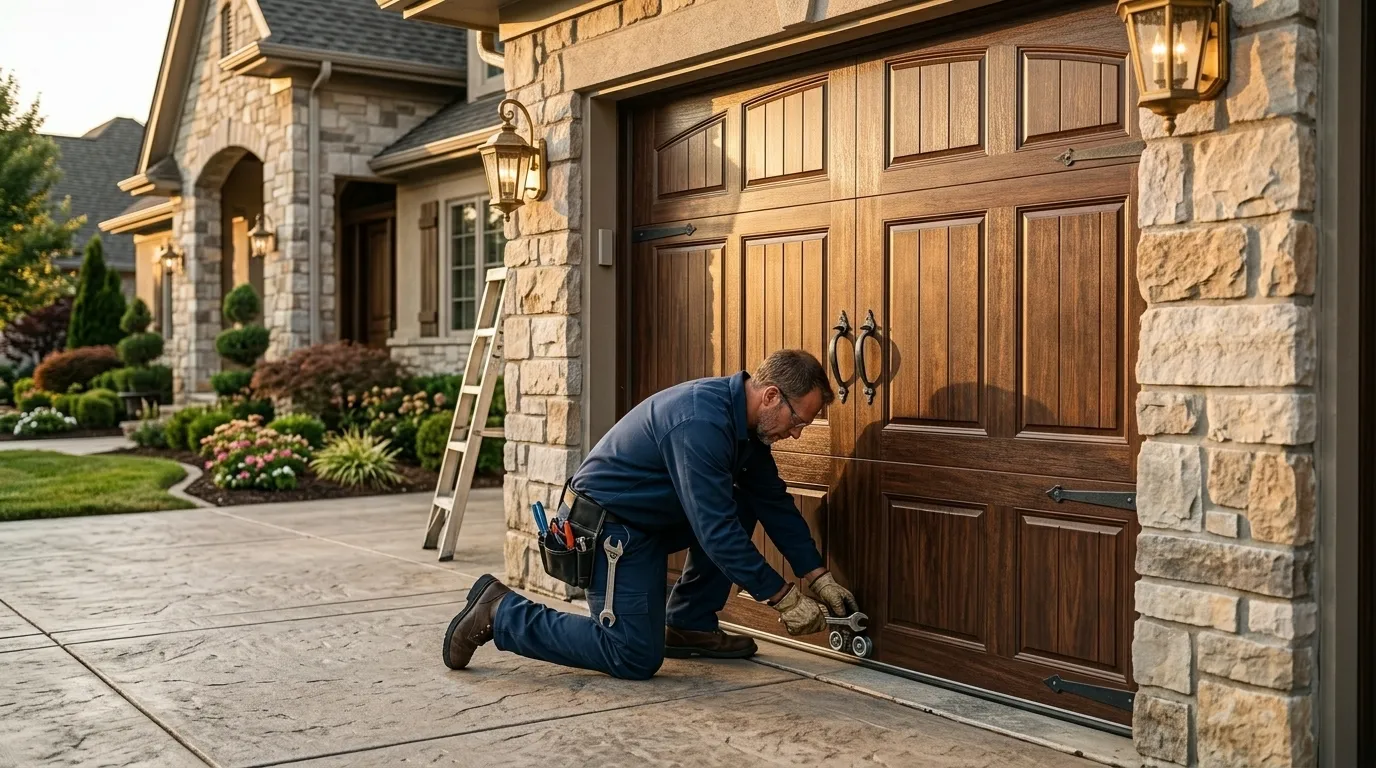
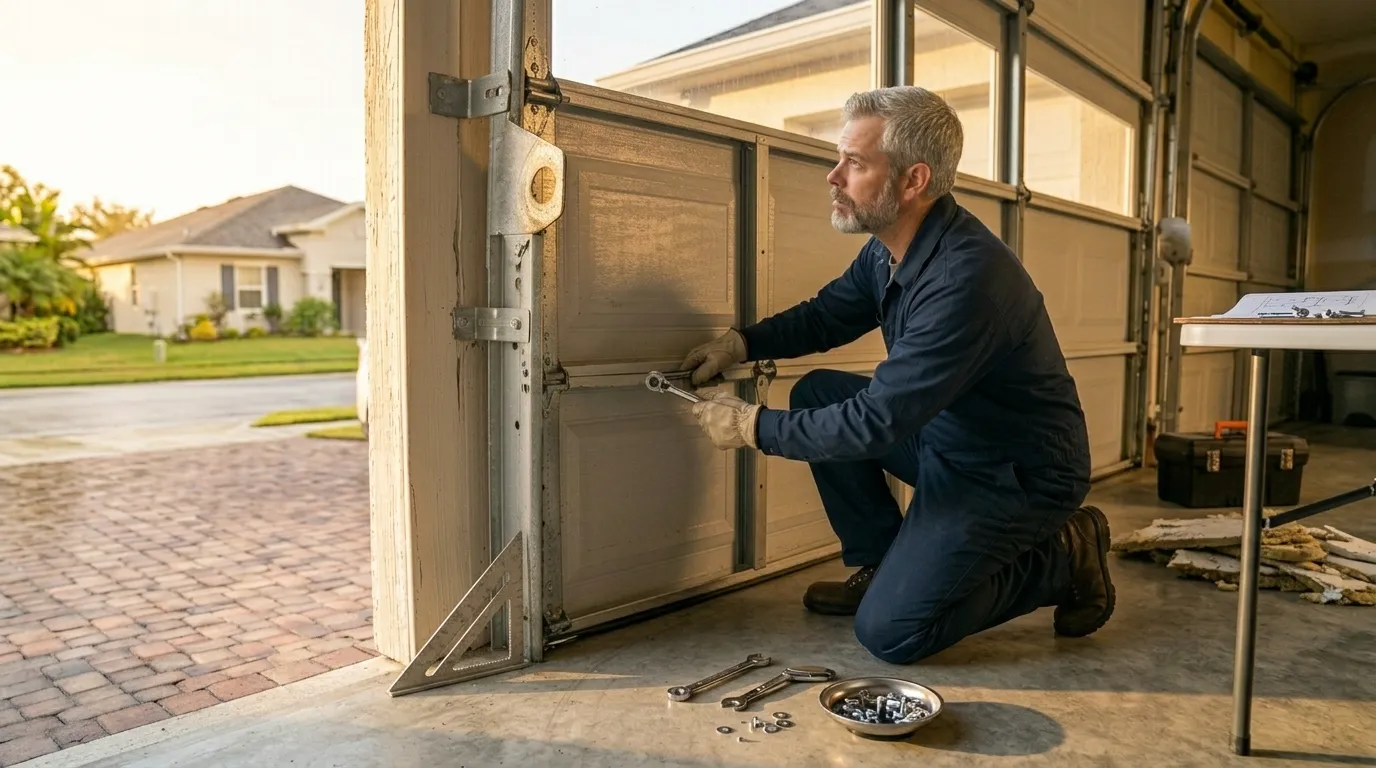
For a torsion spring, that's unwinding the old spring under controlled tension, checking the shaft and bearing plates for wear, and setting a replacement spring matched to your door's weight - not just whatever's closest in size. Skipping that matching step is how doors end up hard to lift by hand or how openers burn out early trying to compensate.
For an opener, we check the logic board, the drive gear, and the travel limits before assuming the motor itself is bad. A lot of no-move complaints turn out to be a stripped plastic gear inside the unit, which is a cheaper fix than a full opener swap.
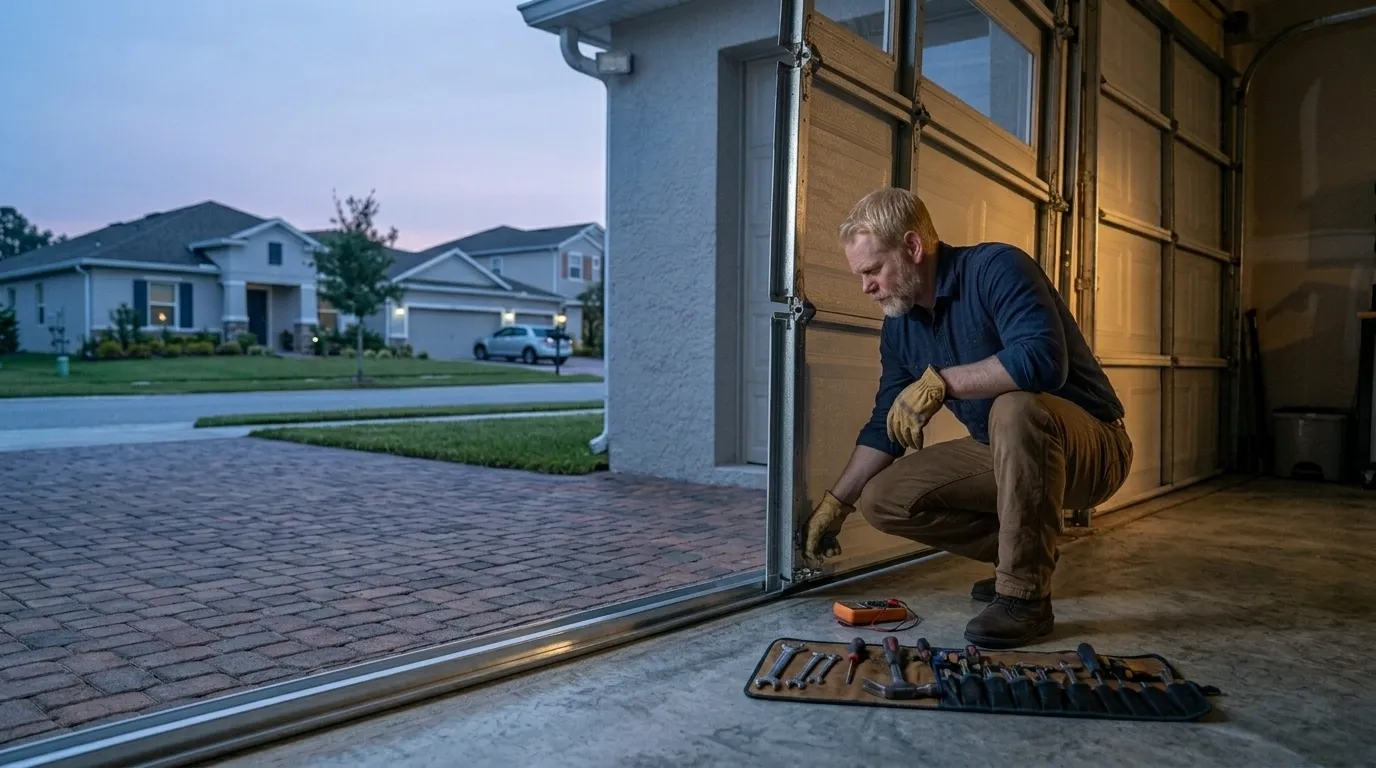
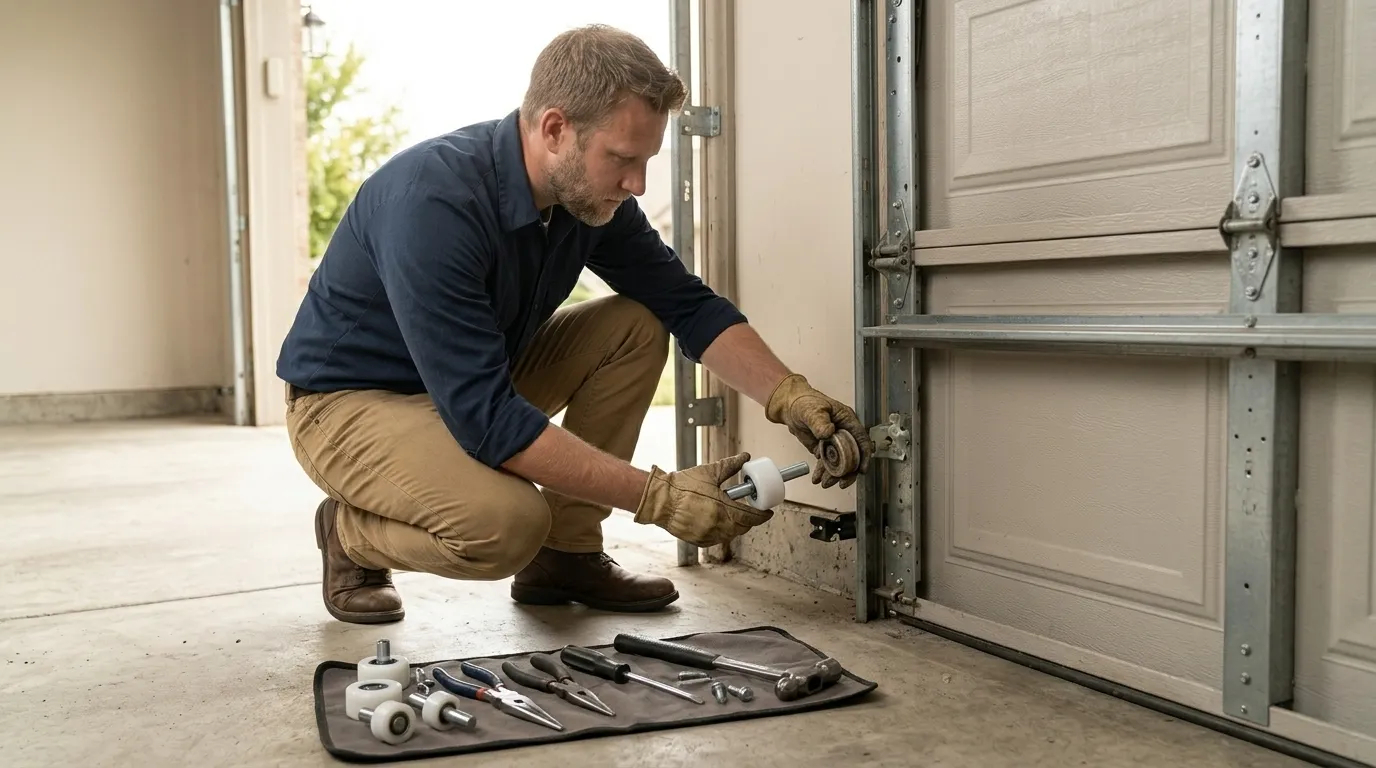
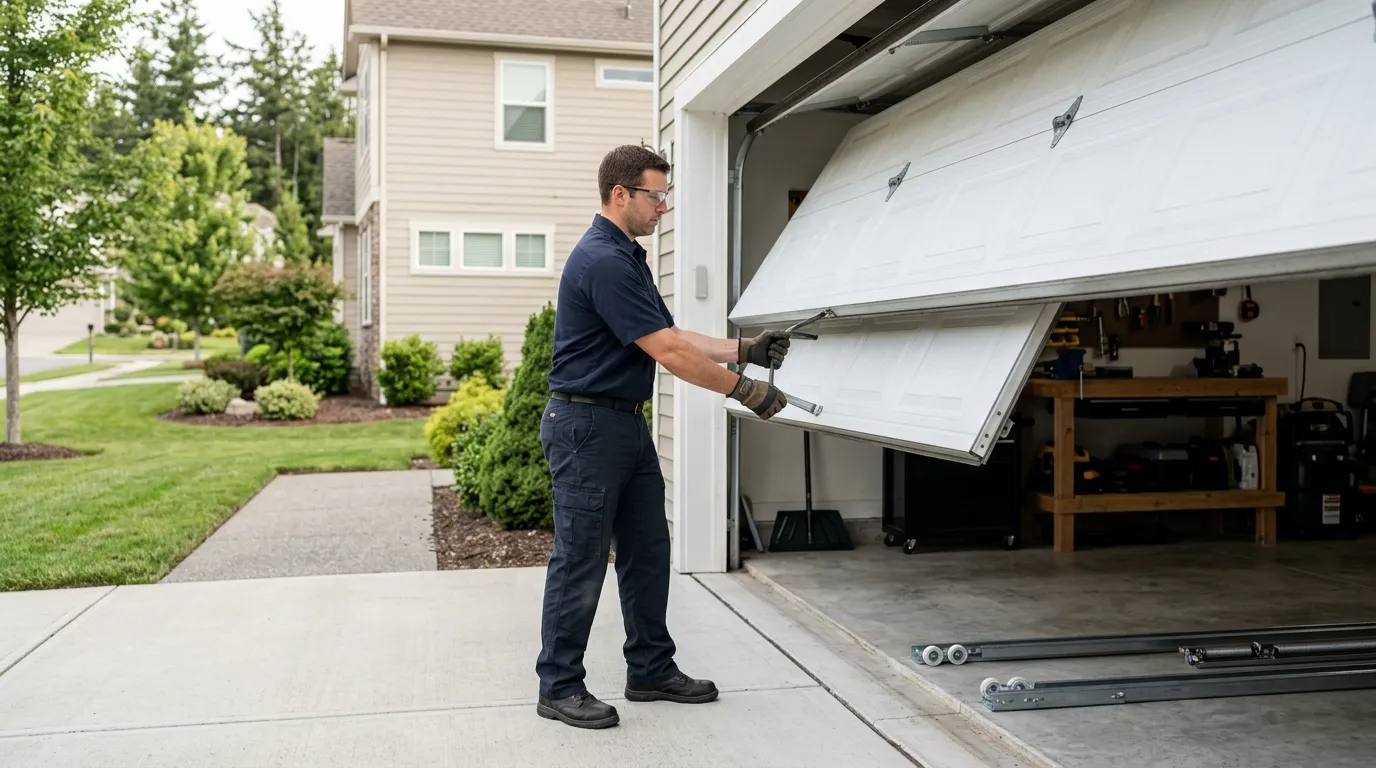
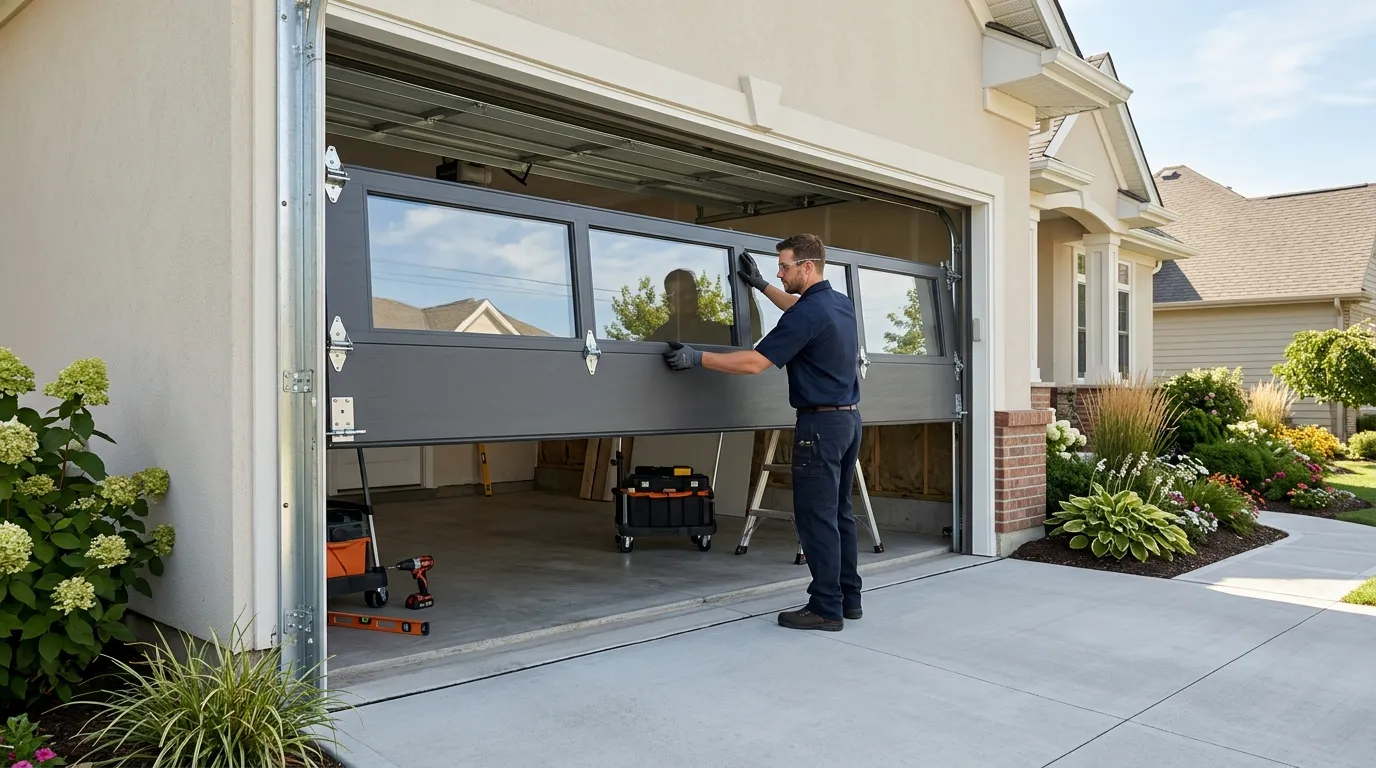
For track and roller issues, it's usually realignment and roller replacement, though a bent track from an impact - a car bumper, usually - sometimes needs a section replaced rather than bent back, since a re-bent track will keep drifting out of true.
We'll tell you straight if a repair isn't worth it. On a door old enough and worn enough on enough fronts at once, patching one part just means the next part fails in a month, and replacement ends up cheaper over a year.