24/7 Emergency Service Open 7 days · 7am–8pm Serving Matthews, NC & nearby
(704) 270-4456
Matthews, NC

What That Garage Door Noise Is Actually Telling You

Grinding, popping, or a loud bang when it's cold? Here's what garage door noises actually mean in Matthews homes built between 1974 and 2006.

What That Garage Door Noise Is Actually Telling You

The Problem

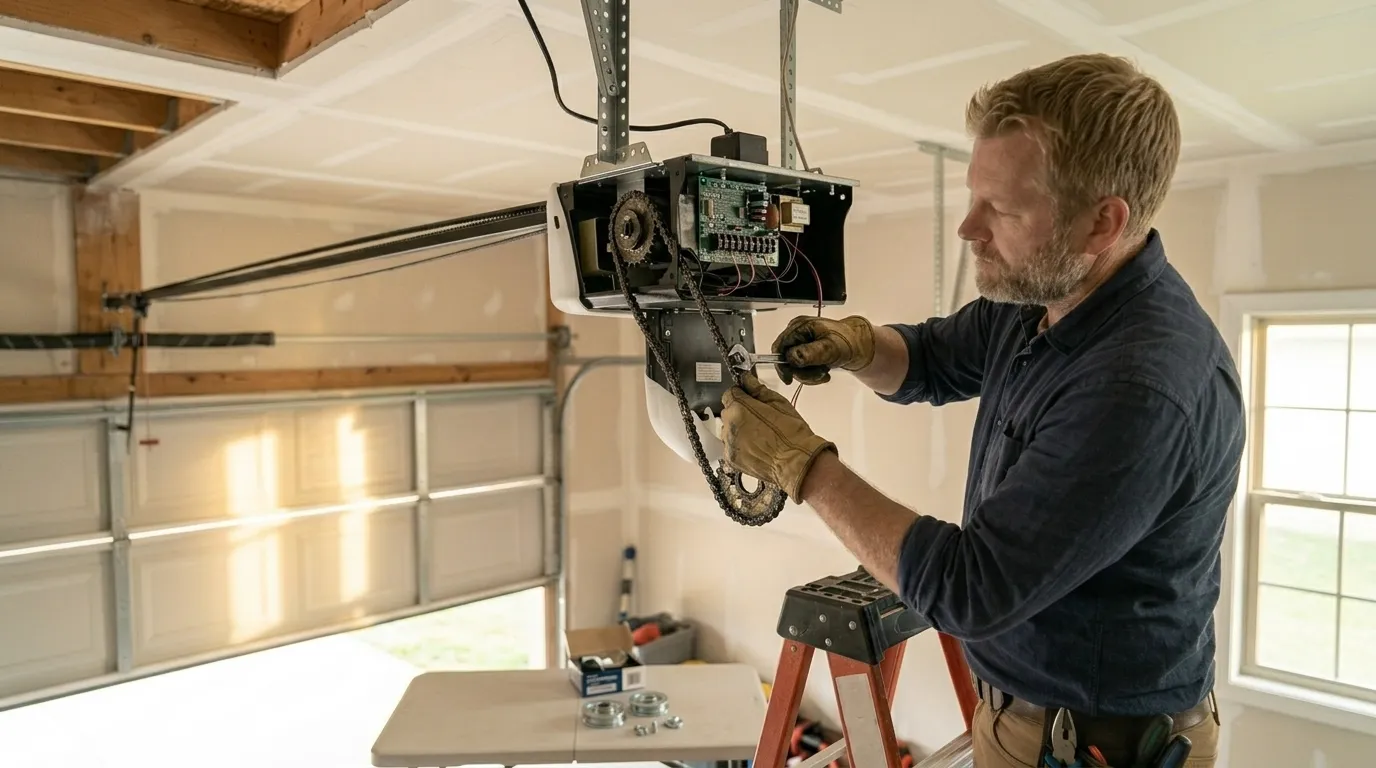
A garage door doesn't make noise for no reason. It makes noise because a part is wearing, loose, or fighting something it wasn't built to fight. In Matthews, most of the housing stock went up between 1974 and 2006, with the heaviest concentration from the 1980s and 90s across the area's named neighborhoods. That means a lot of doors, openers, and torsion springs installed during the same building wave are aging out at roughly the same time, which is why we hear the same three or four noises over and over: a rhythmic thump as the door travels (usually a flat spot on a roller or a bent track section), a sharp bang at the top of the panel (often a spring giving out, not the opener), a grinding hum from the motor housing (worn gear or a stripped nylon sprocket on older chain-drive units common to that era), and a metallic pop when the temperature drops overnight. None of these are cosmetic. A door that bangs once usually doesn't bang twice before something breaks. The trick is matching the sound to the part before it fails all the way, instead of after.

What You Pay

We're not going to hand you a number here that doesn't hold up once someone's actually looked at the door, because what drives the bill is the part that's failing, not the noise itself. A worn roller job and a broken torsion spring on a double door are not close to the same repair, even though both can sound like a bang. What we can tell you is how the math tends to work in Matthews: with 44,306 owner-occupied houses in the service area and most of that stock built in the same 20-year stretch, a lot of homeowners are replacing original hardware for the first time, not the third. First-time failures are usually cheaper to fix than to fully replace, provided the track and opener mounting are still sound. Once you're into a second or third opener on the same door, replacement starts making more financial sense than another repair. We'll tell you which side of that line you're on before we start, not after.

Where People Go Wrong

The most common mistake we see is spraying WD-40 on a noisy roller and calling it handled. It quiets things down for a week, then the noise comes back louder, because WD-40 is a solvent, not a lubricant, and it strips whatever grease was left in the roller bearing. The second mistake is ignoring a single loud bang because the door still opens fine afterward. On the 1980s and 90s builds that make up most of Matthews' housing, a single-bang event is almost always a torsion spring letting go, and a door running on one working spring instead of two will wear out its opener fast, because the opener is now doing the spring's job. The third mistake is assuming an opener replacement fixes a grinding noise. If the grinding is coming from the drive gear and not the motor, a new opener grinds too, just more quietly, for a while. We don't recommend replacing an opener until we've confirmed the noise is actually the opener and not the door pulling against a bad track or a dying spring making the motor strain.

How Local Conditions Play In

Matthews sits in a cold-moderate climate band, which means the garage sees real temperature swings across a year without the deep-freeze extremes that crack hardware outright. What that does instead is slow, repeated: metal contracts overnight and expands during the day, and on a torsion spring that's already fatigued, that daily cycle is what turns a quiet spring into one that pops on a cold morning. It's also why fall and early winter are when we get the most spring-failure calls, not because the cold breaks anything new, but because it finishes off what summer already wore thin. Doors on the shadier, north-facing lots we see in areas like Marshbrooke and Becton Park tend to hold moisture in the track longer after a wet stretch, which speeds up rust on rollers that are already at the end of their life. None of this means you need to do anything differently in summer versus winter. It means a noise you've been putting off is more likely to become a failure once the temperature starts dropping.
How it works

From “it’s stuck” to “it’s fixed”

  1. 1
    Tell us what’s wrong - Matthews garage door service

    Tell us what’s wrong

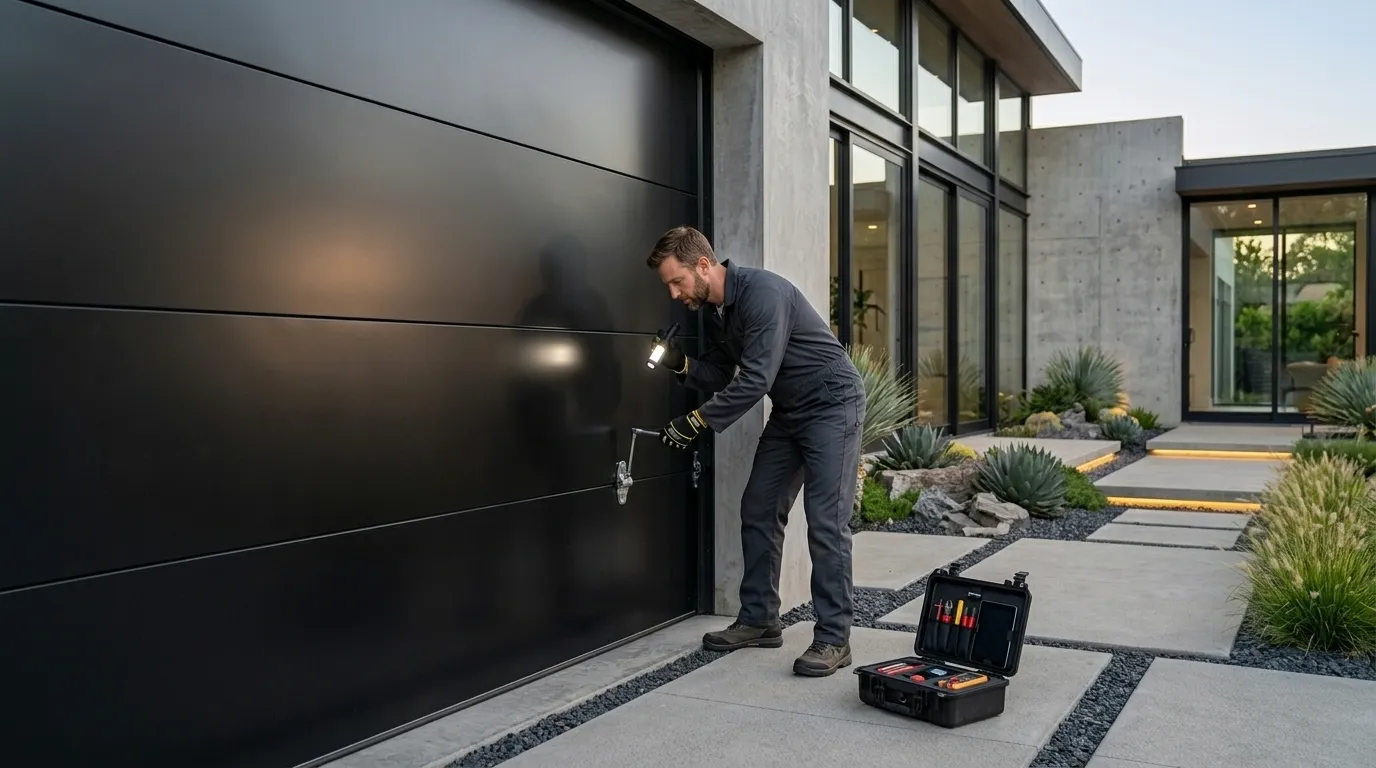
    Describe the symptom - won’t open, loud bang, opener runs but the door won’t move.

  2. 2
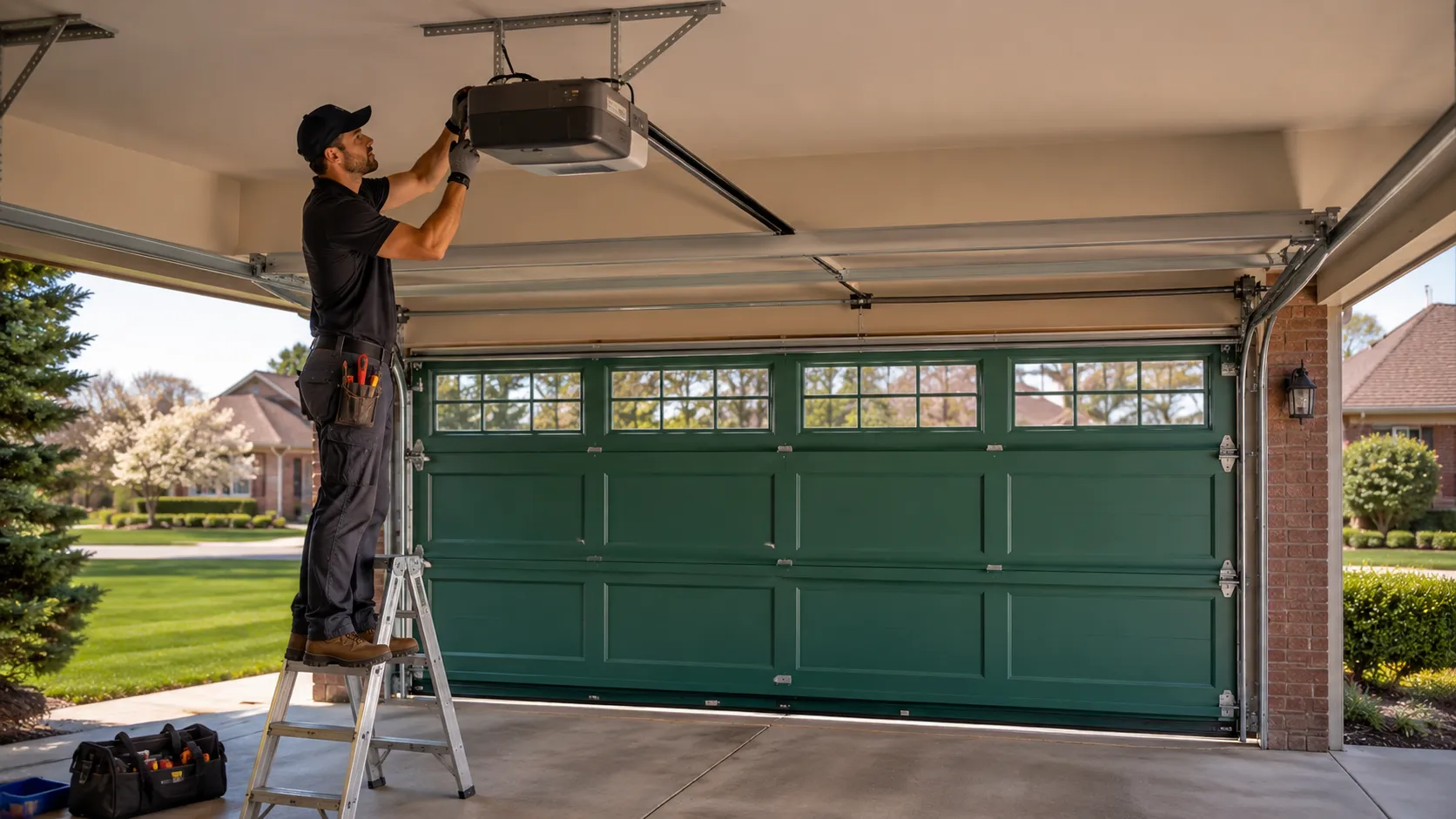
    On-site diagnosis - Matthews garage door service

    On-site diagnosis

    A technician tests the door under power and by hand and finds what actually failed.

  3. 3
    Clear, up-front plan - Matthews garage door service

    Clear, up-front plan

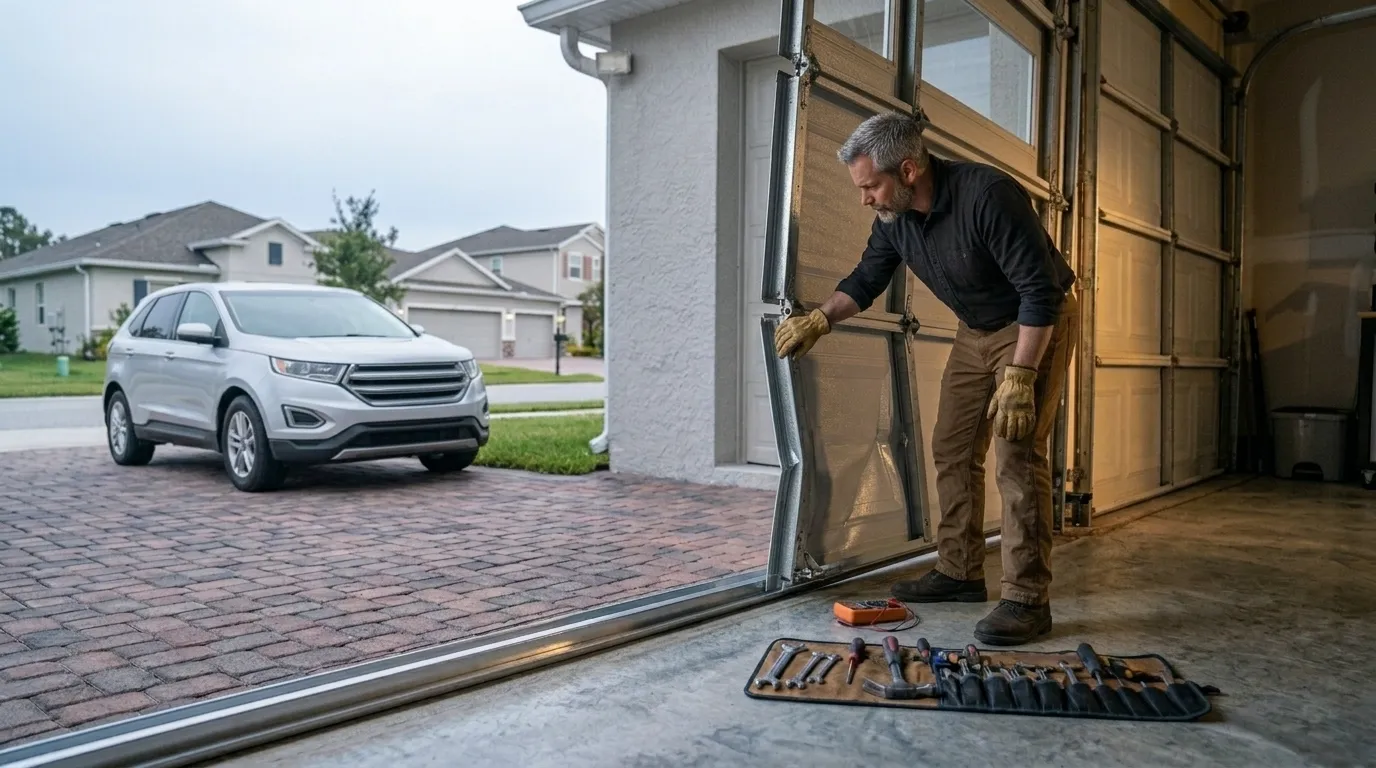
    You get the fix that’s needed and what drives the cost - before any work starts.

  4. 4
    Repaired & tested - Matthews garage door service

    Repaired & tested

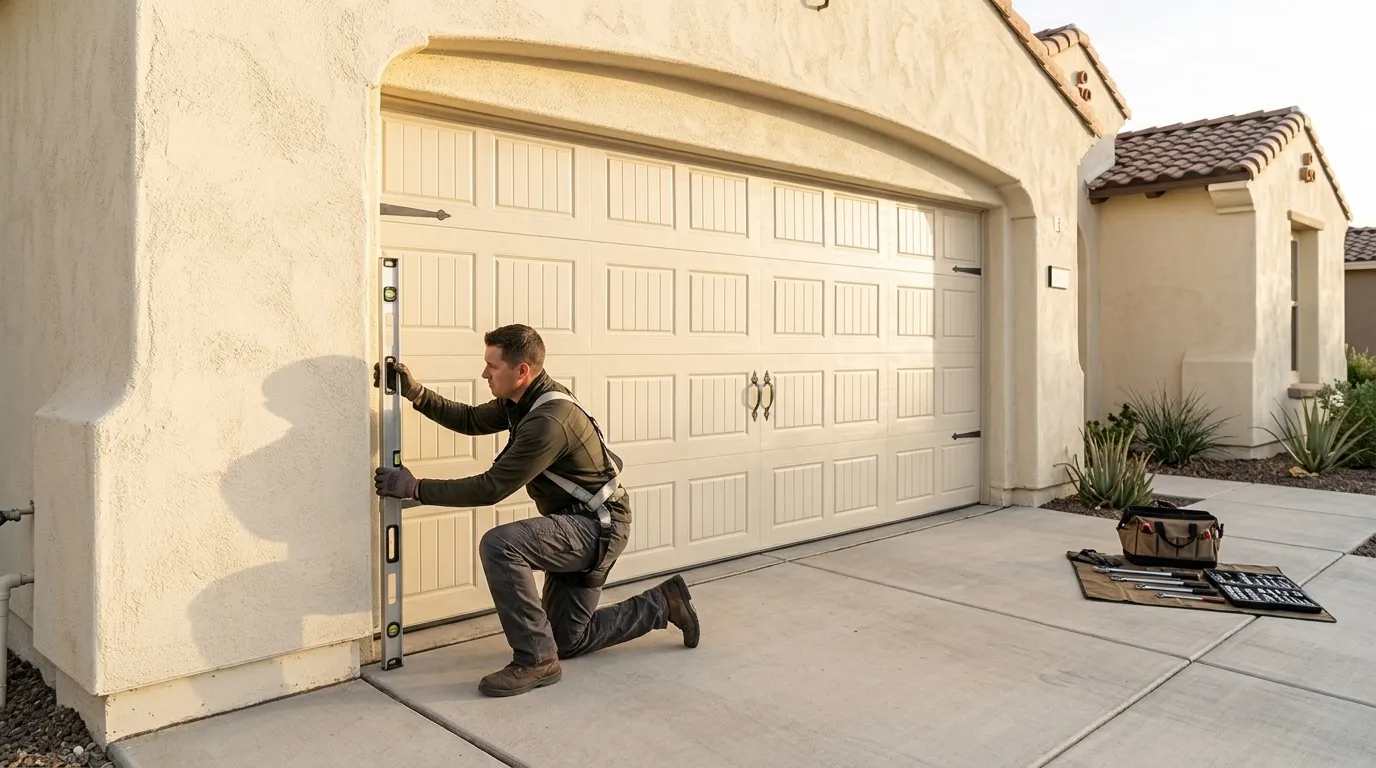
    The repair is done, the door is set true and tested, and the work area left clean.

Serving Matthews, NC - tell us what your door’s doing and we’ll take it from there.

How we work

What to expect

Diagnosis firstEvery visit starts by finding what actually failed - not a pre-written parts list.
The right part for the doorSprings and openers matched to the door’s weight and age, so the fix holds up.
Straight answersWhen a repair makes more sense than a replacement - or the reverse - you hear it plainly.
Clean, careful workTension released safely, hardware set true, the door tested under power before we leave.
Questions

Frequently asked

Straight answers about garage door repair in Matthews. Still unsure? Ask us directly.

My door makes a loud bang but still opens and closes fine. Do I need to worry?

Yes. A single loud bang is almost always a torsion spring breaking, not something loosening and settling. The door can still open because the opener is now doing all the lifting work the spring used to share, which wears the opener down fast. Get it looked at before the opener fails too.

Is it normal for my door to be louder in winter?

Some increase is normal, but a spring that's already fatigued from years of daily temperature swings often finishes failing in the colder months. If the noise has gotten noticeably worse since fall started, don't wait for it to disappear on its own.

My house was built in the 90s and I've never touched the garage door. Is that a problem?

Not automatically, but a lot of Matthews homes from that build era are hitting original-hardware age at the same time, and springs, rollers, and openers all have a working life. If you've never had it serviced, a grinding or thumping noise now is more likely to be a real part failure than routine settling.

Can I just lubricate the noise away?

Sometimes, if it's a dry roller and nothing else is wrong. But spraying a solvent like WD-40 instead of an actual garage door lubricant often makes it worse within a week. If the noise comes back fast after lubricating, the part is worn, not just dry.

Ready to get your garage door sorted?

Tell us what it’s doing and where you are in Matthews - we’ll take it from there.

Request a QuoteCall