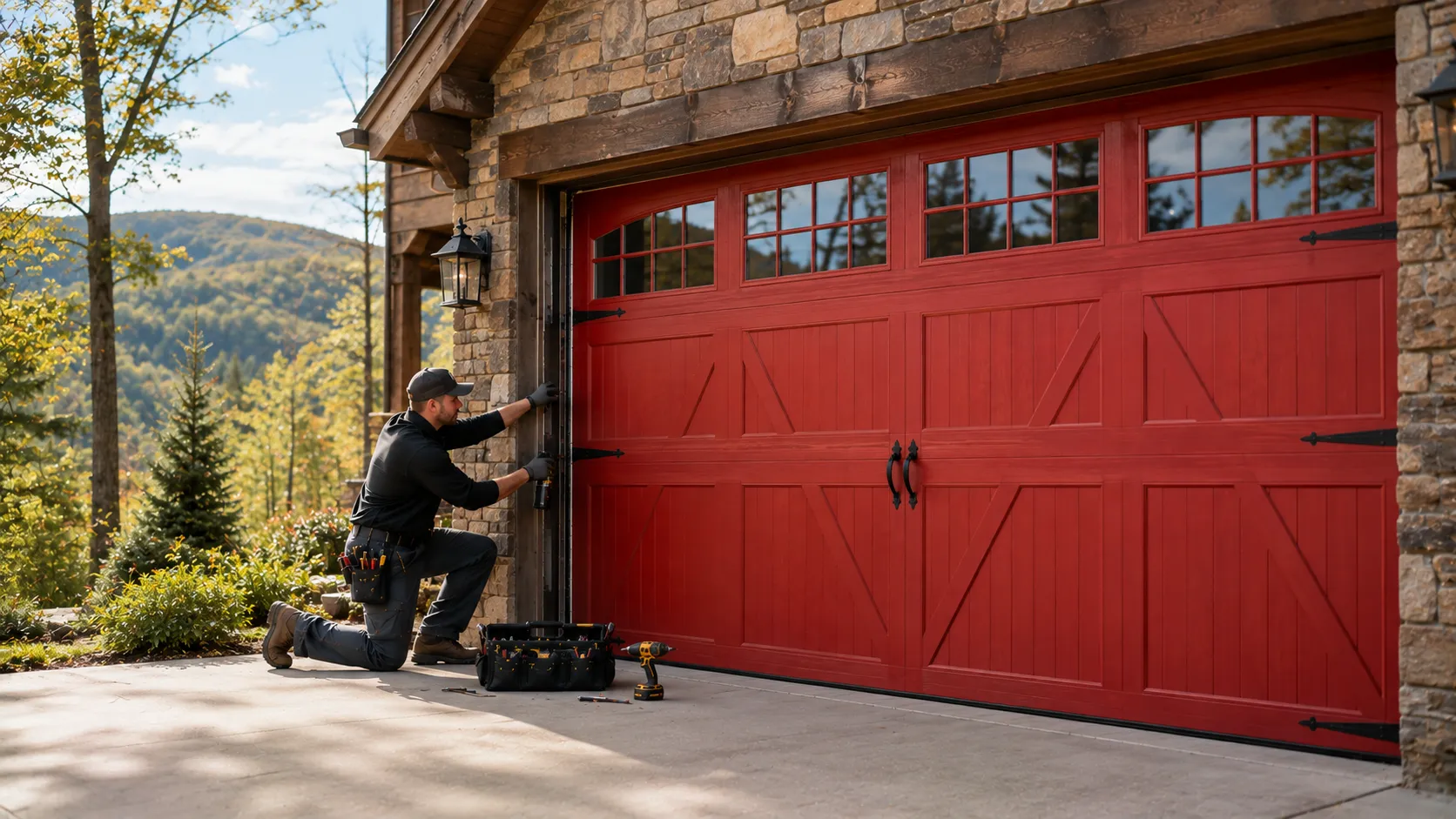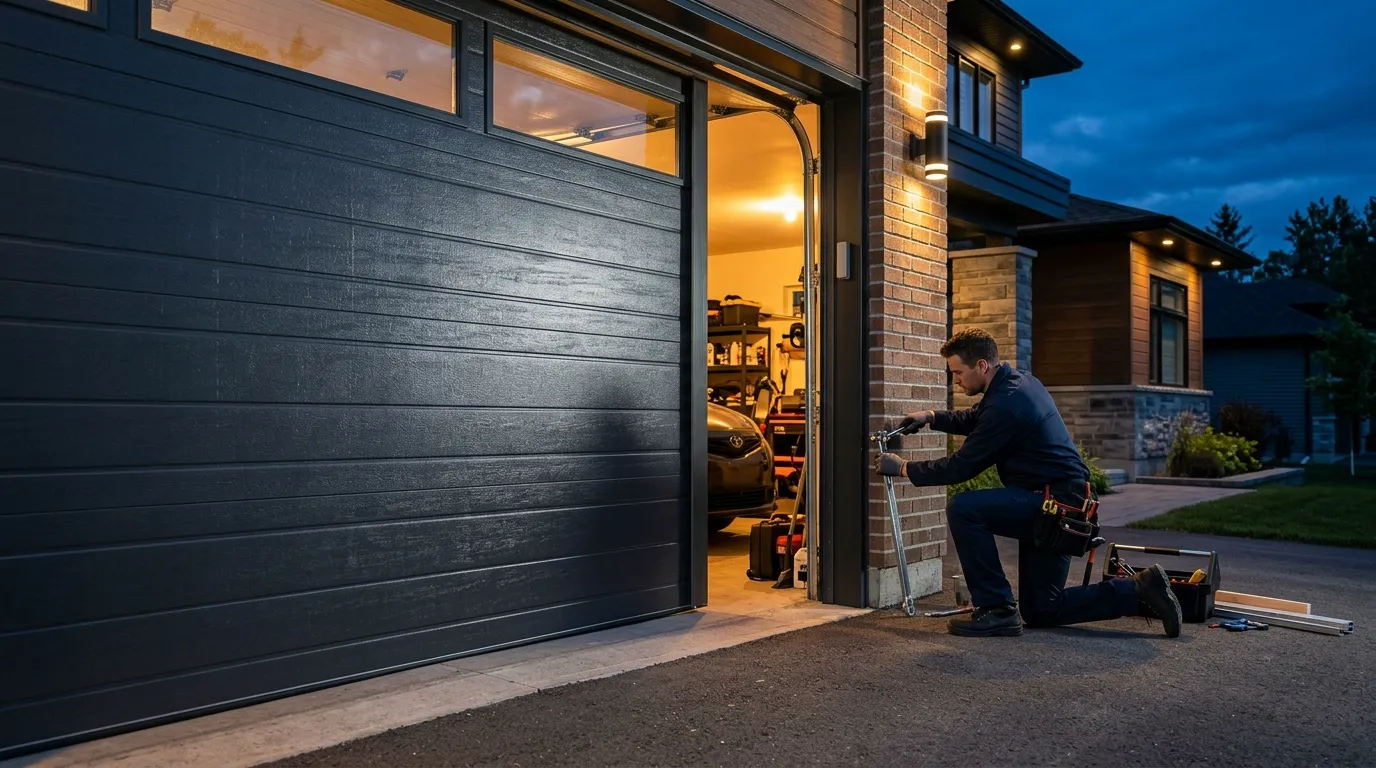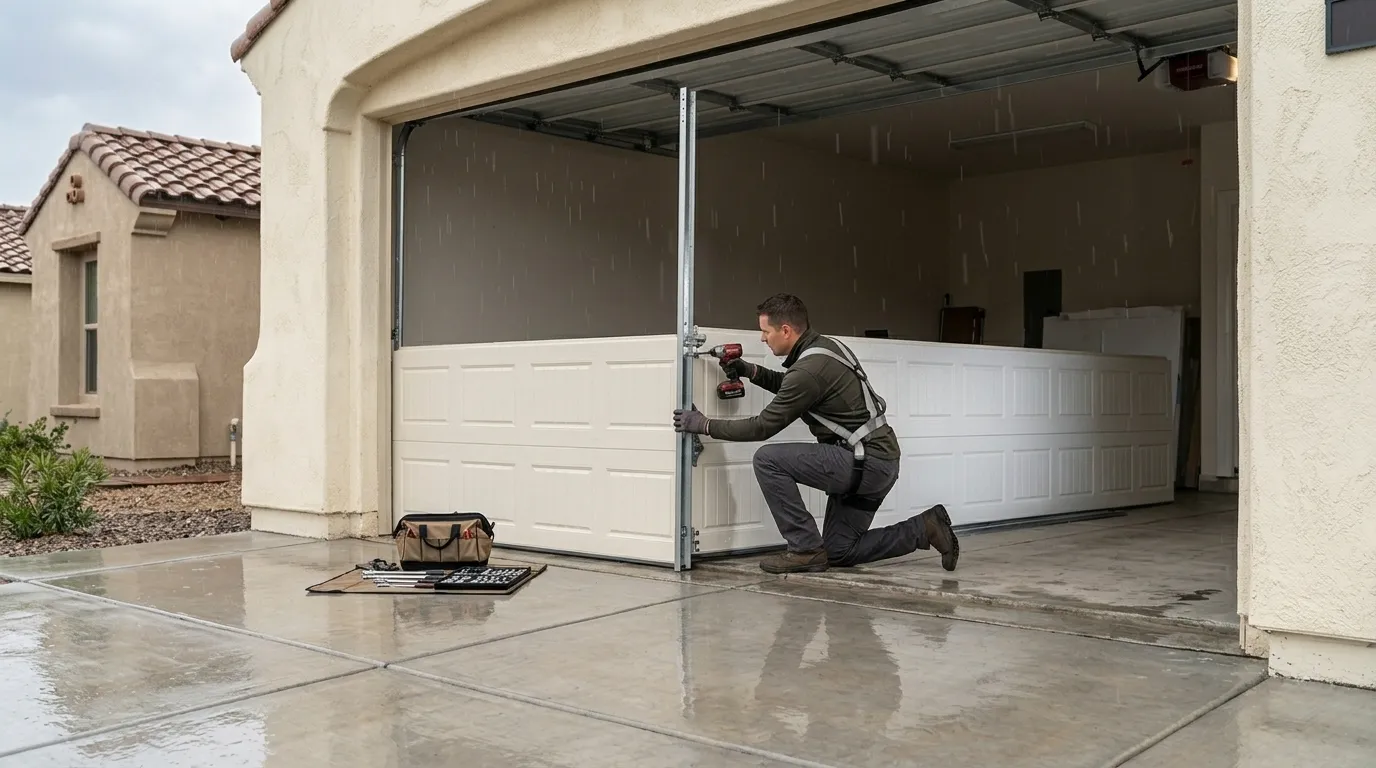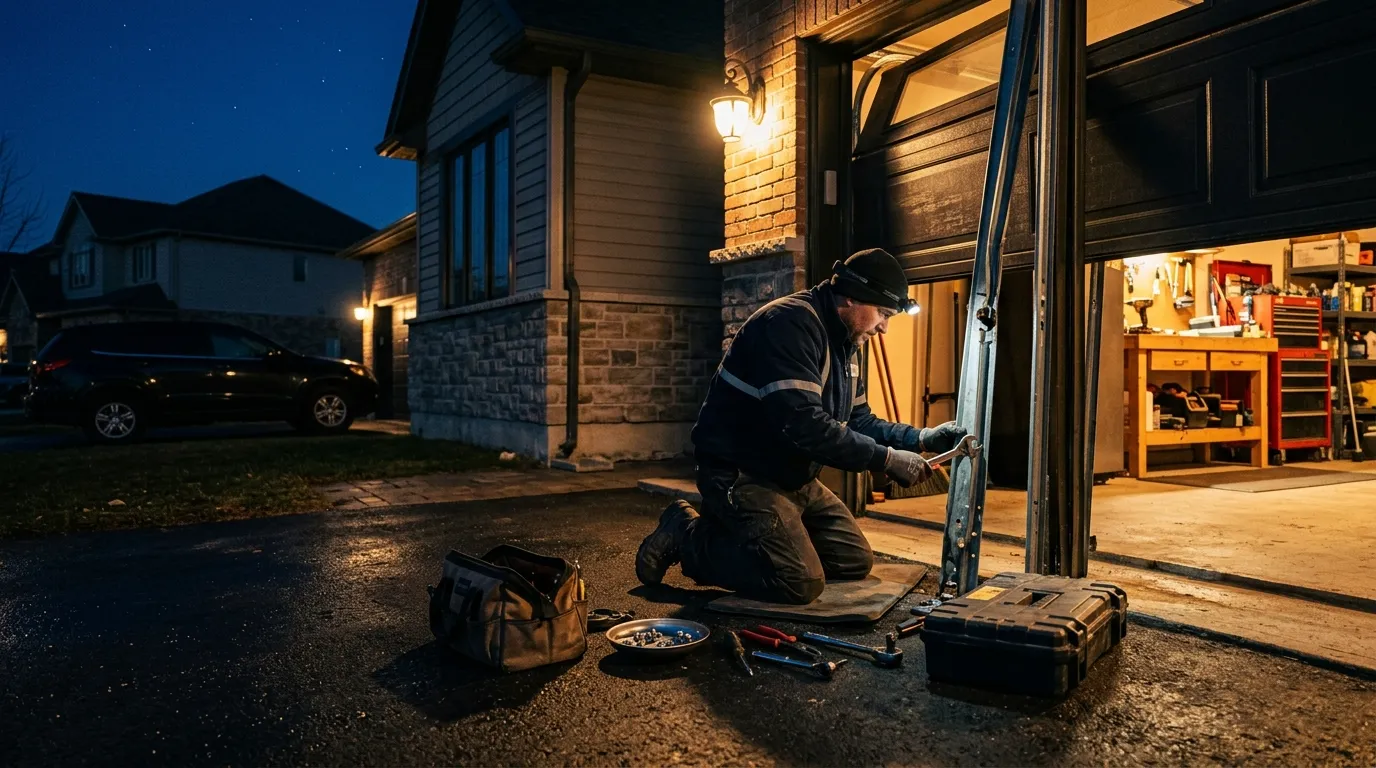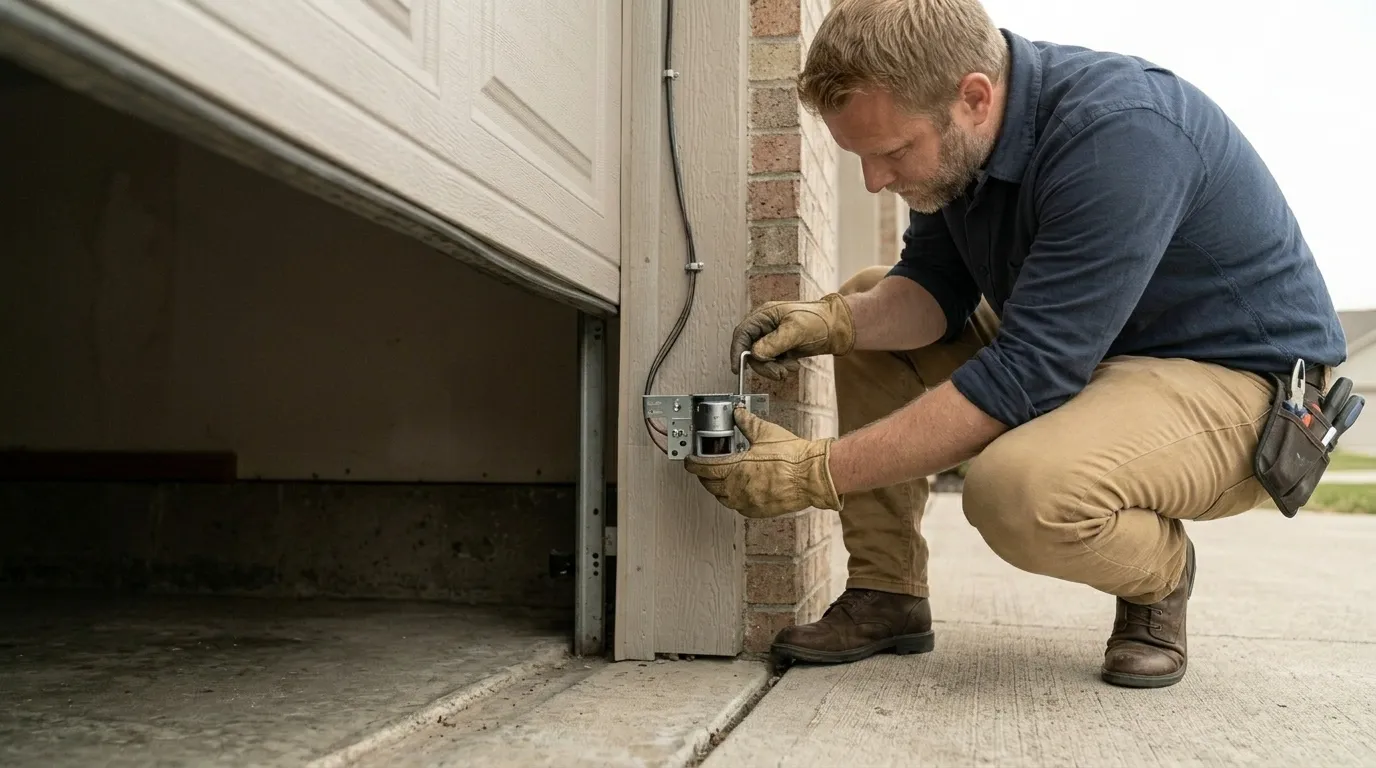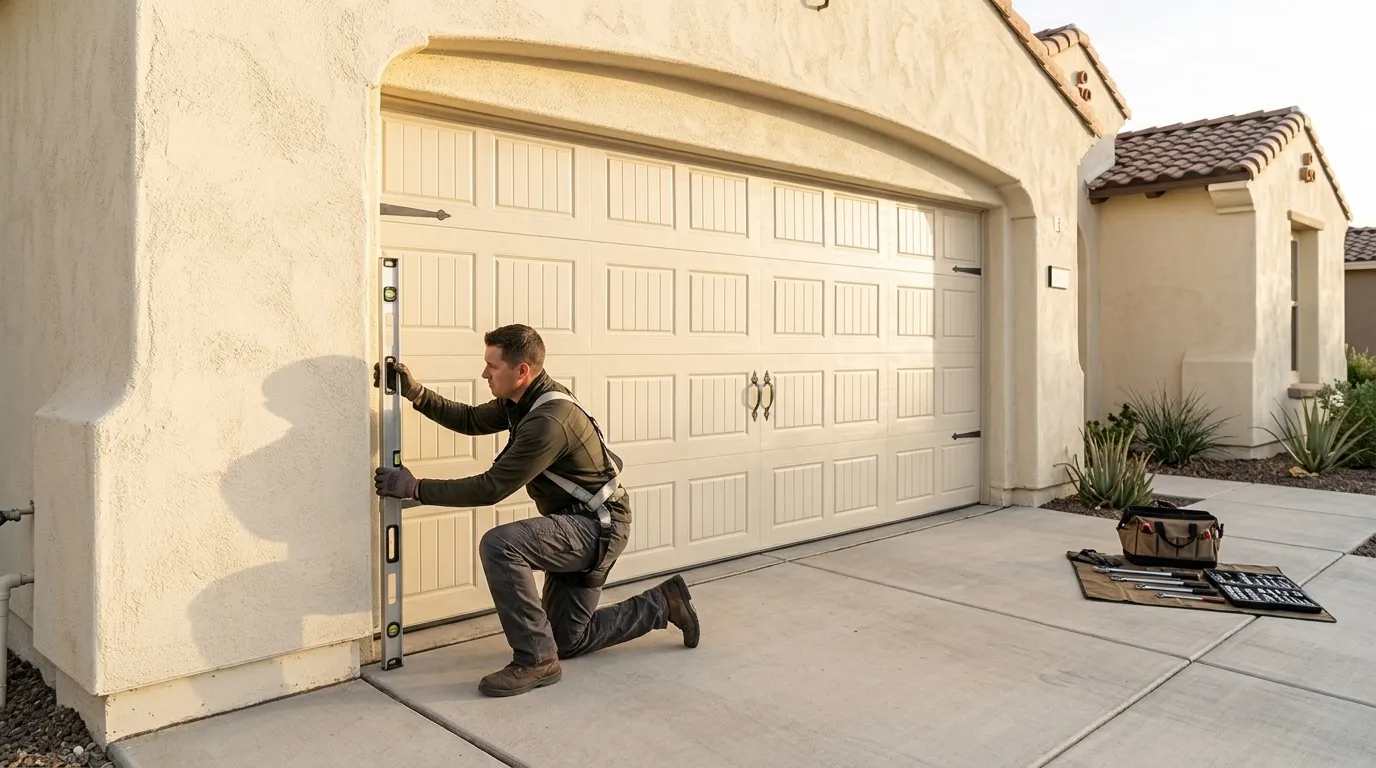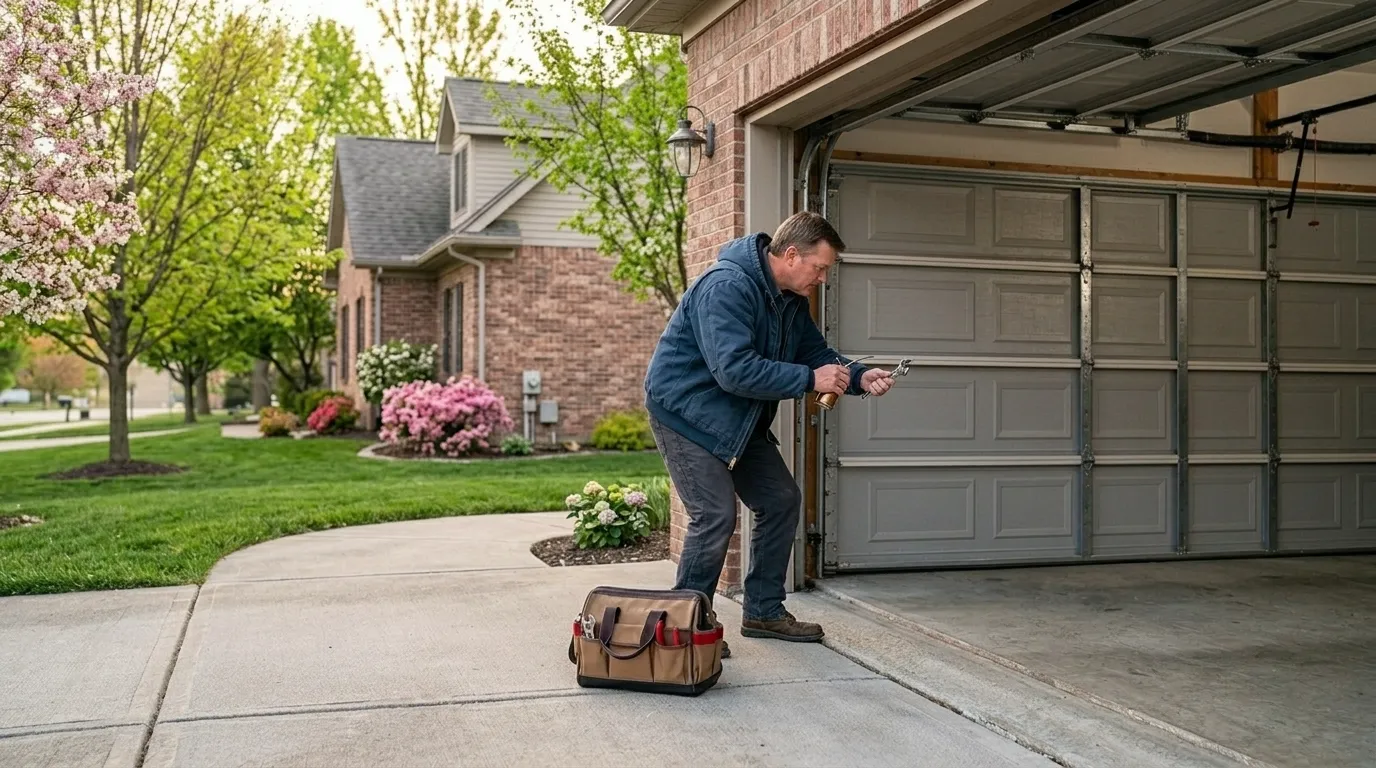
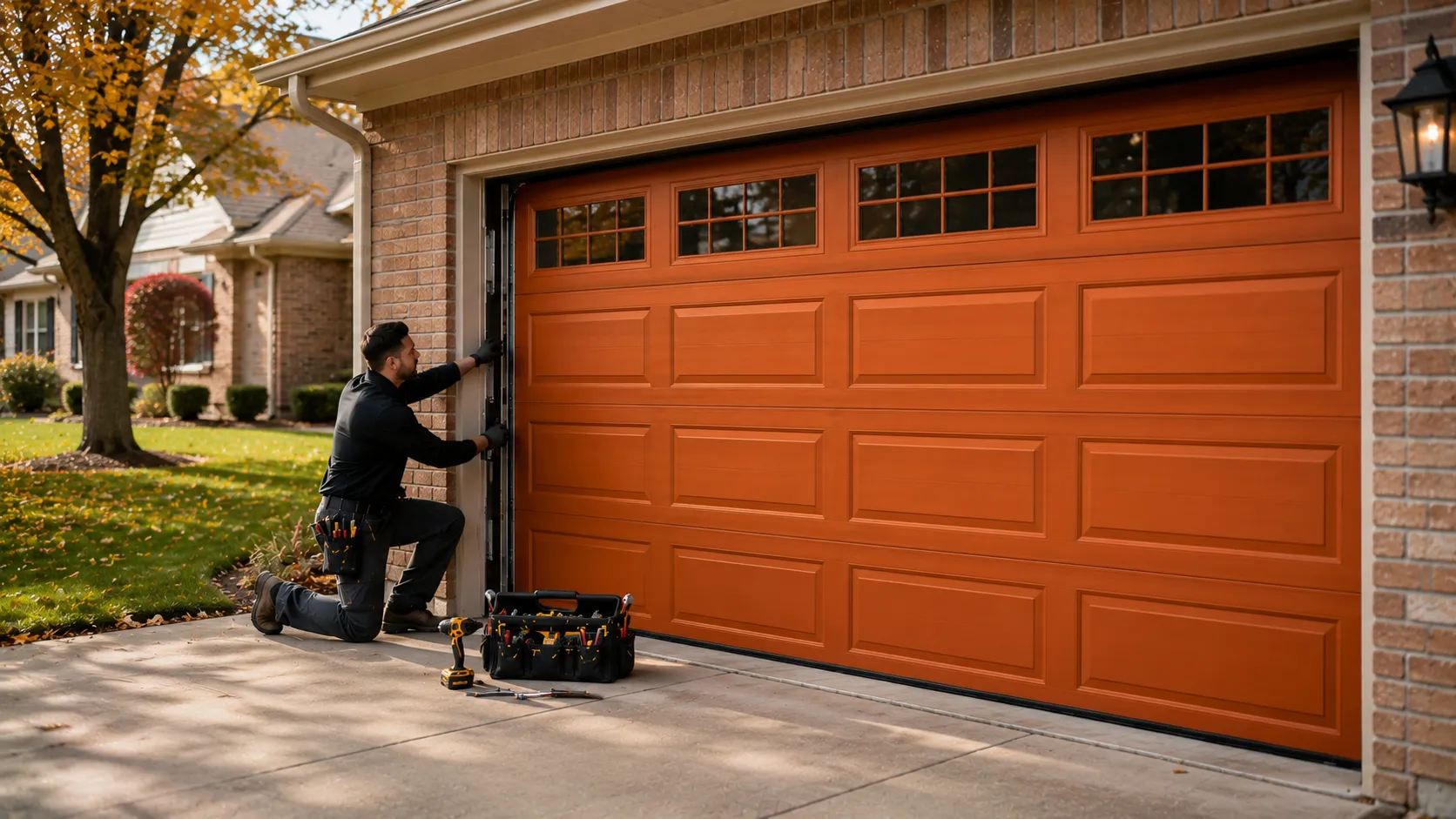
The Houses Here
Belmont sits at the far edge of our coverage, about 20 miles out from our base in Matthews, and the housing stock here lines up with the wider service area's build era - most of it went up in the 1980s through the 1990s, with a median around 1998. That matters more than people think. A door installed on a house built in 1998 is now old enough that its original torsion spring has almost certainly gone through at least one full fatigue cycle, and the opener, if it's still original, is a chain-drive unit from before soft-start and rolling-code security became standard. With 6,289 households in the Belmont area, that's a lot of doors sitting at roughly the same age and hitting the same wear points around the same time. We're not guessing at a decade here - this is the tail end of the same construction wave that shaped the rest of our coverage, just built out a little later and a little farther from the center. That consistency actually helps: we know what's behind the panel before we open the truck door, because the hardware from this era is well documented and parts are still findable, unlike the older stock closer in.
What People Here Ring About
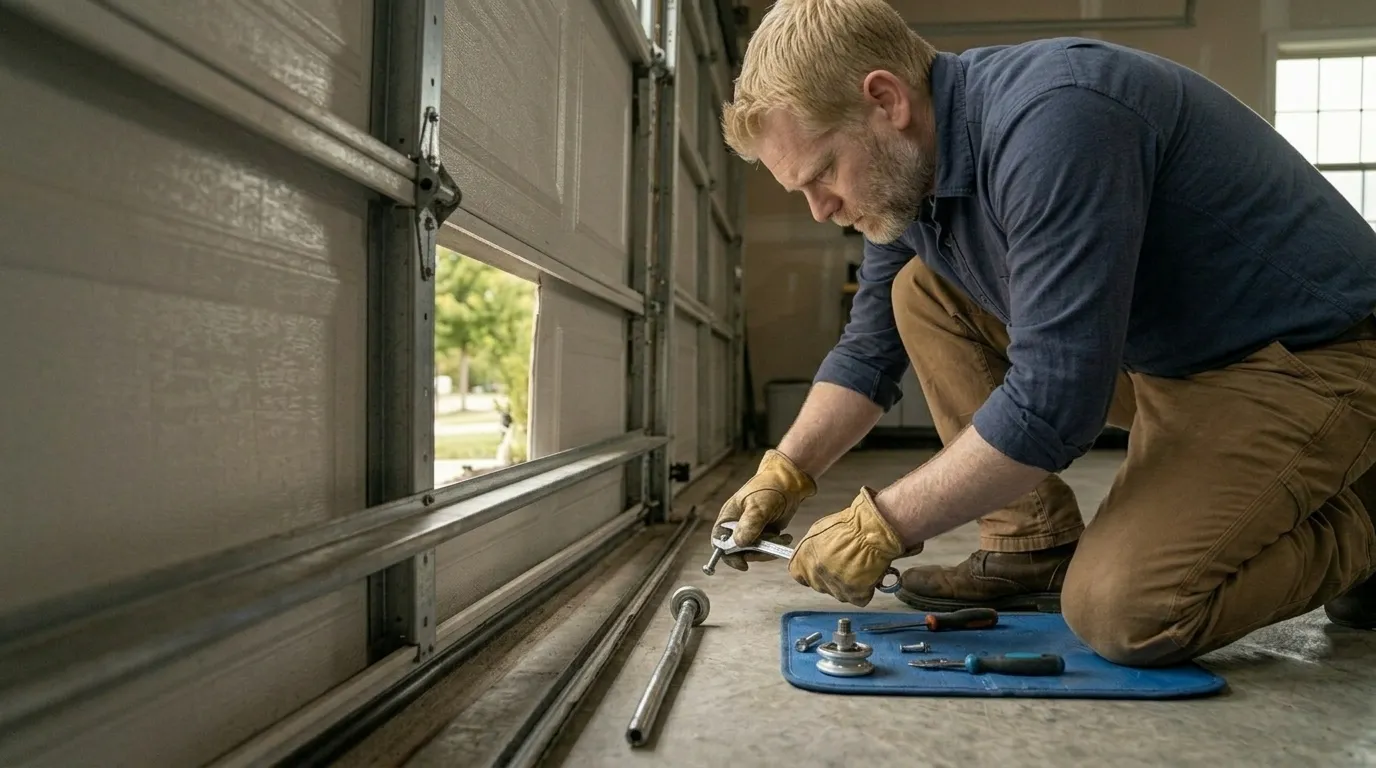
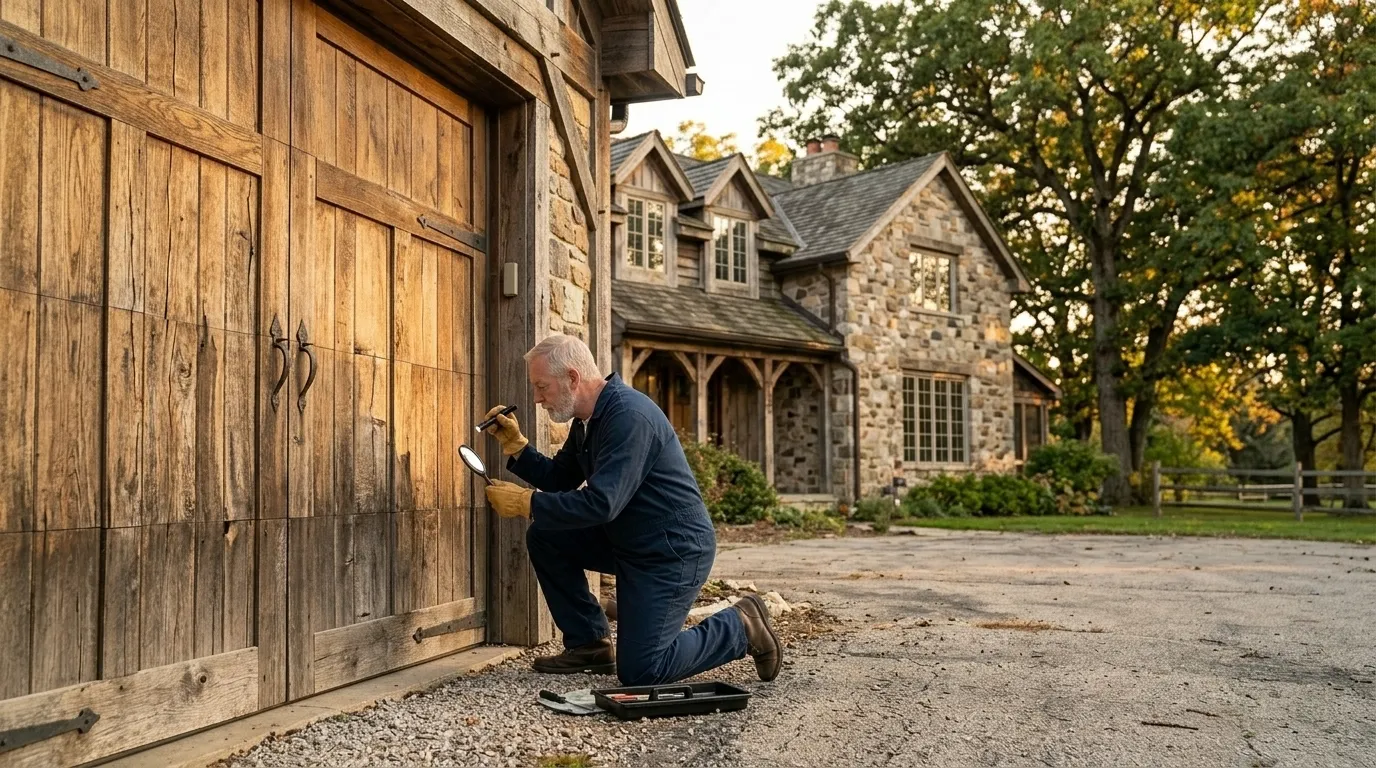
The calls from this stretch tend to cluster around a few things tied directly to that late-90s build window. Torsion springs on doors installed between the mid-80s and 2006 are reaching or past the end of their cycle count, so a spring snapping on a cold morning is the most common reason the phone rings. Second most common: openers original to the house finally giving out, usually the drive gear or the logic board, not the motor itself. Rollers on steel doors from this period were often plastic and never upgraded, so noise complaints - a door that grinds or bangs on the way up - show up a lot too. Belmont's median household income of $86,442 tends to mean people ask for the repair option before the replacement quote, and on a door this age, that's usually the right call. We'll tell you straight when a spring swap or opener board fixes it, and we'll tell you when the track is bent enough that patching it just delays the same call.
How That Shows Up in the Door
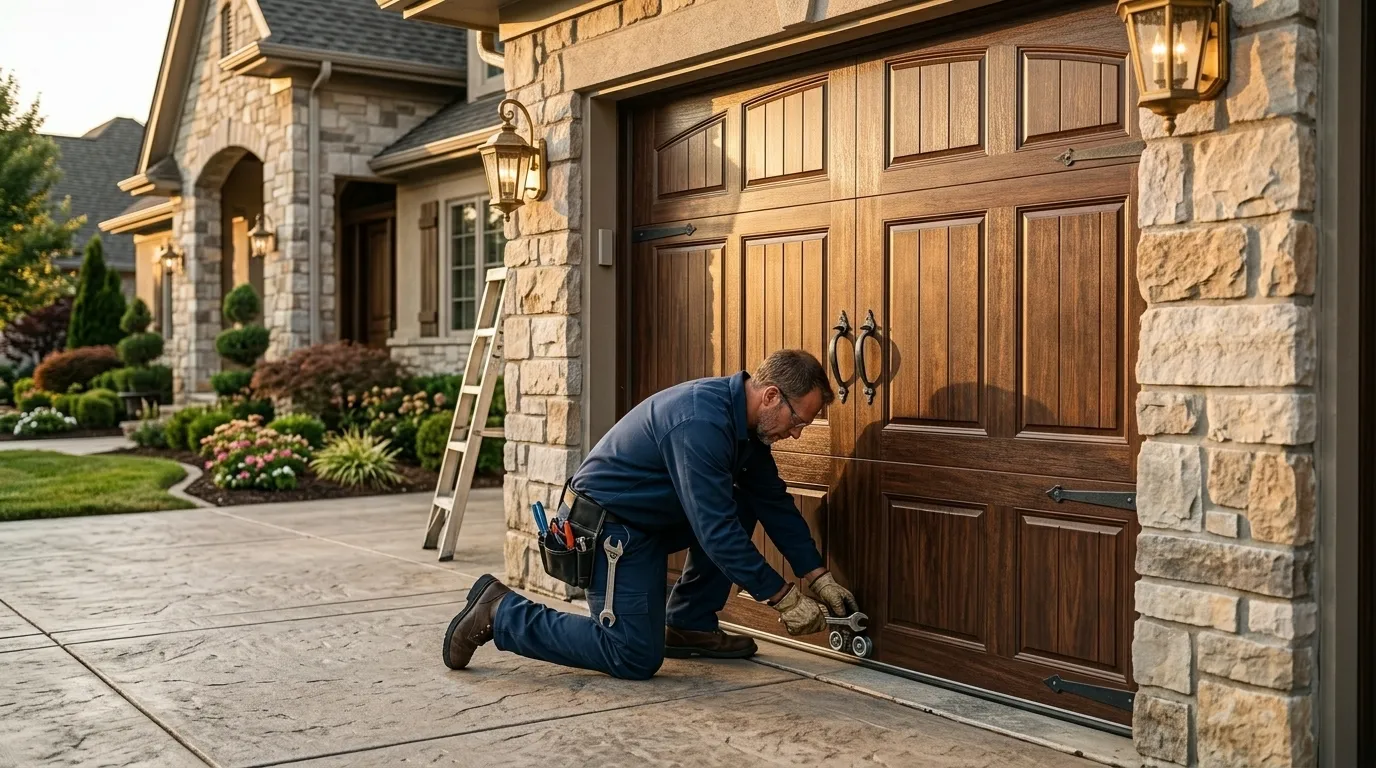
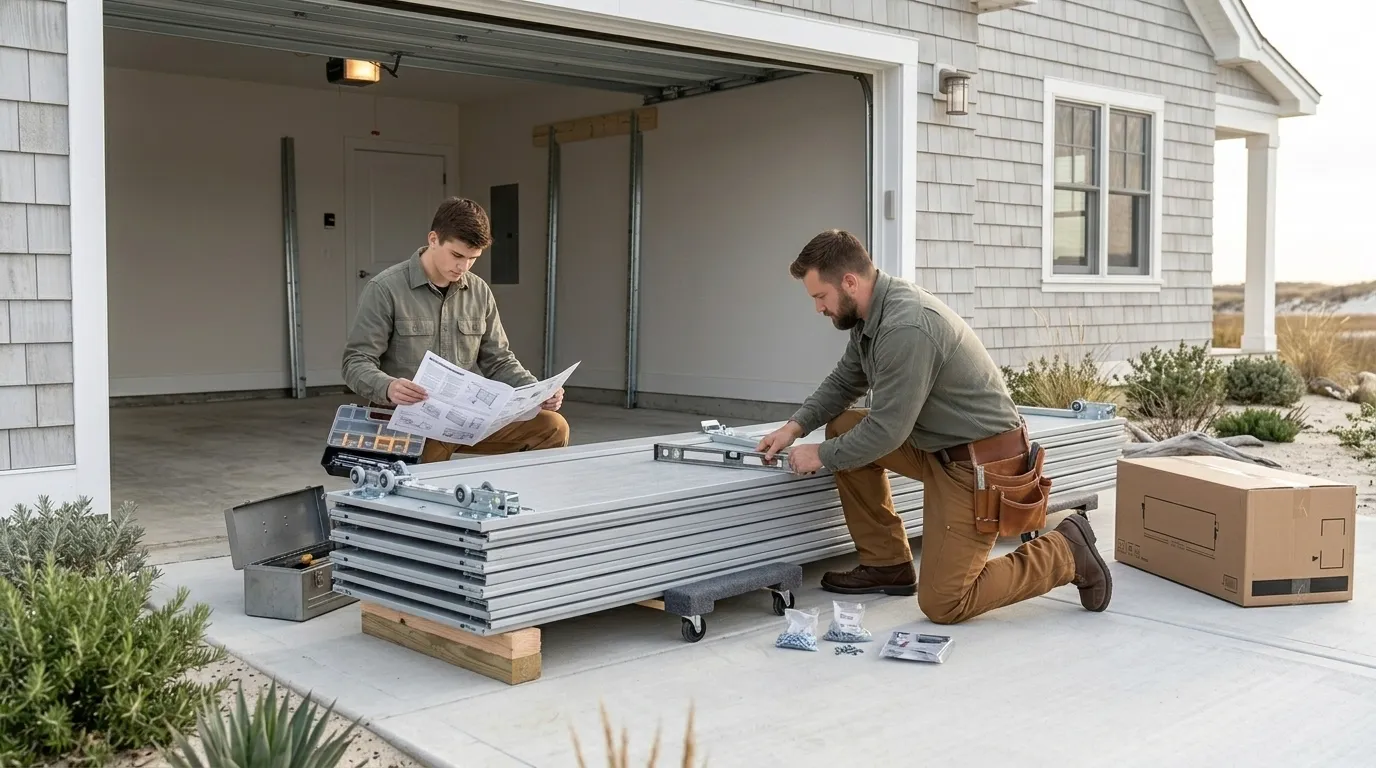
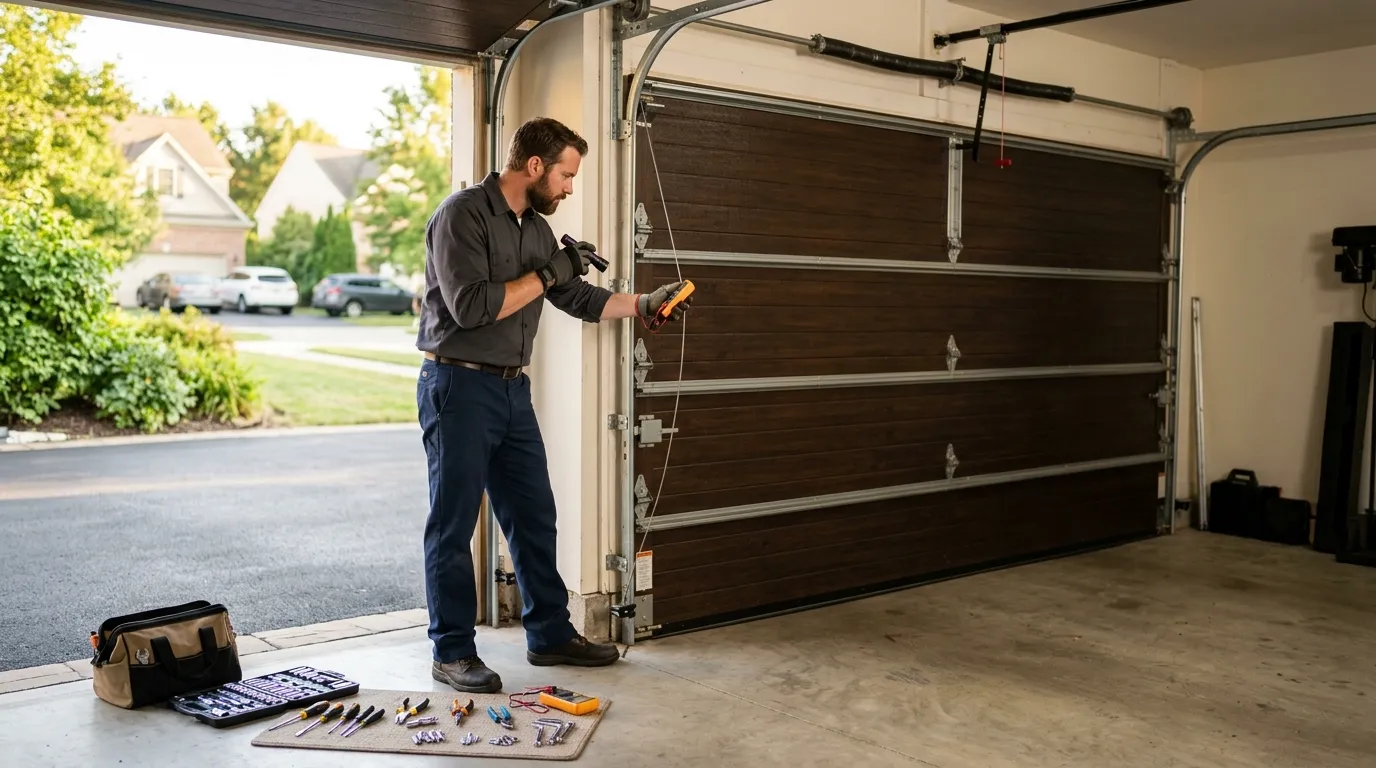
On a house built around 1998, the door itself is usually a two-inch steel panel on a standard-lift torsion system, sized for the coverage area's cold-moderate climate rather than anything more severe - so we're not dealing with the hurricane-rated hardware you'd find closer to the coast. What we do see is standard torsion springs sized for a garage of that era's typical width, wound for a 7-foot door, and openers that were mid-range residential units when new but have no battery backup and no smart-home tie-in. When we replace a spring here, we're matching wire gauge and wind direction to a system built to a spec that hasn't changed much since 1998, which keeps the repair straightforward. Where it gets harder is when a homeowner has already had one bad repair - a mismatched spring or a track bent back into rough alignment - because fixing someone else's fix takes longer than doing it right the first time.