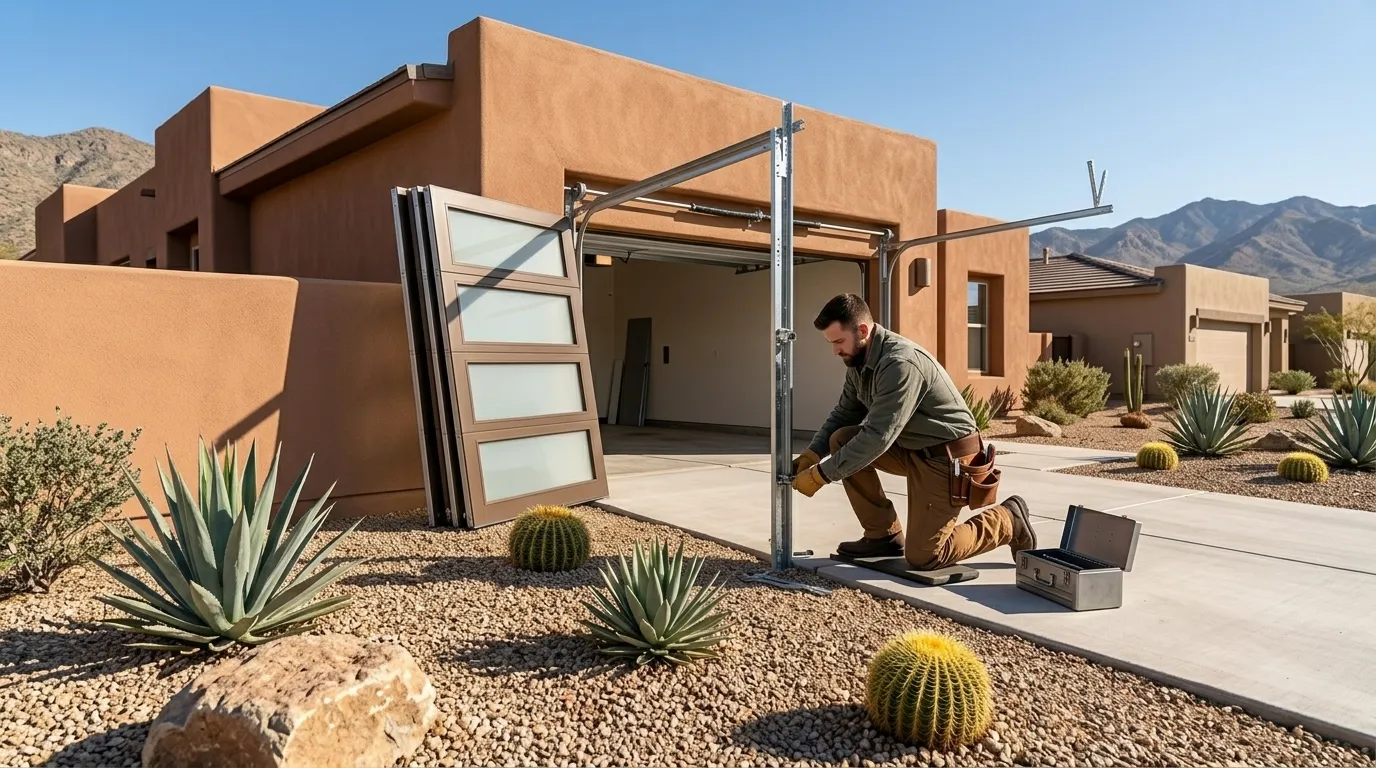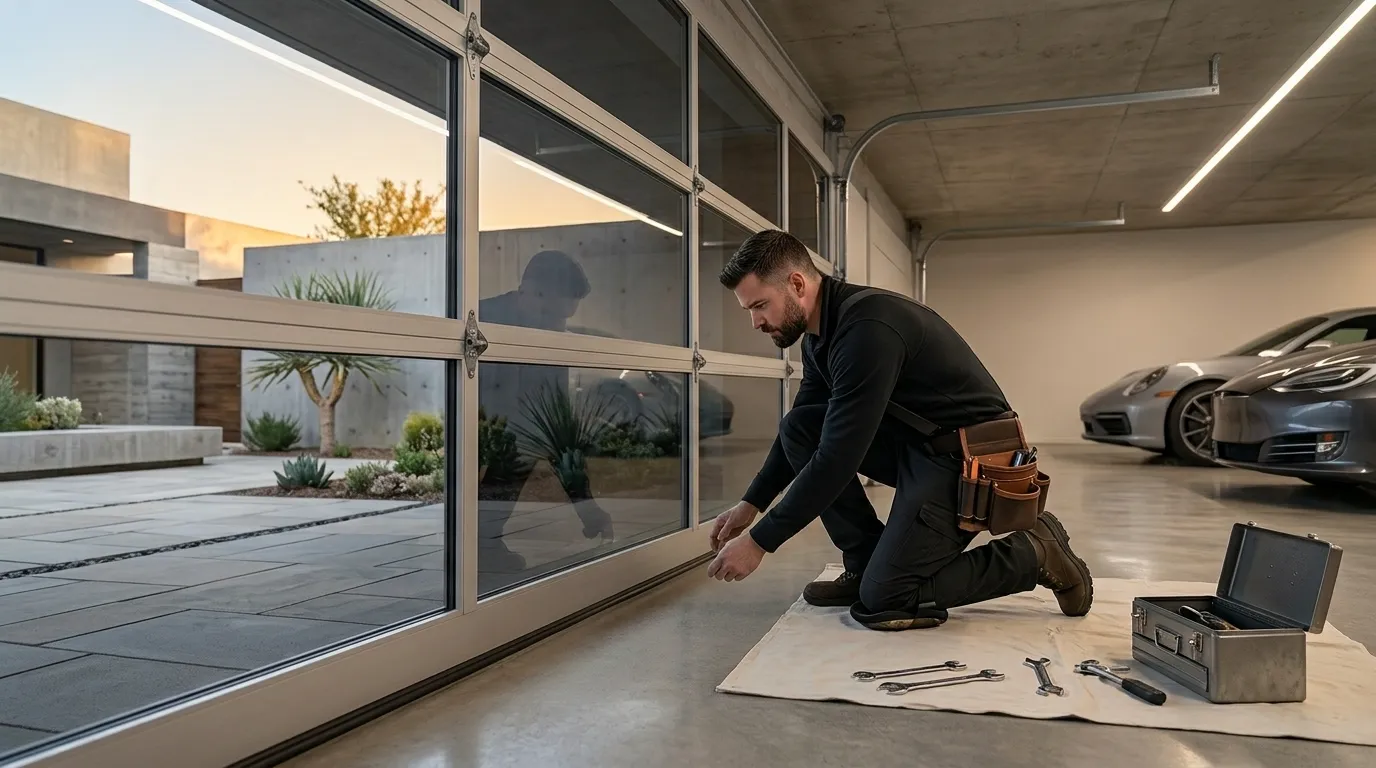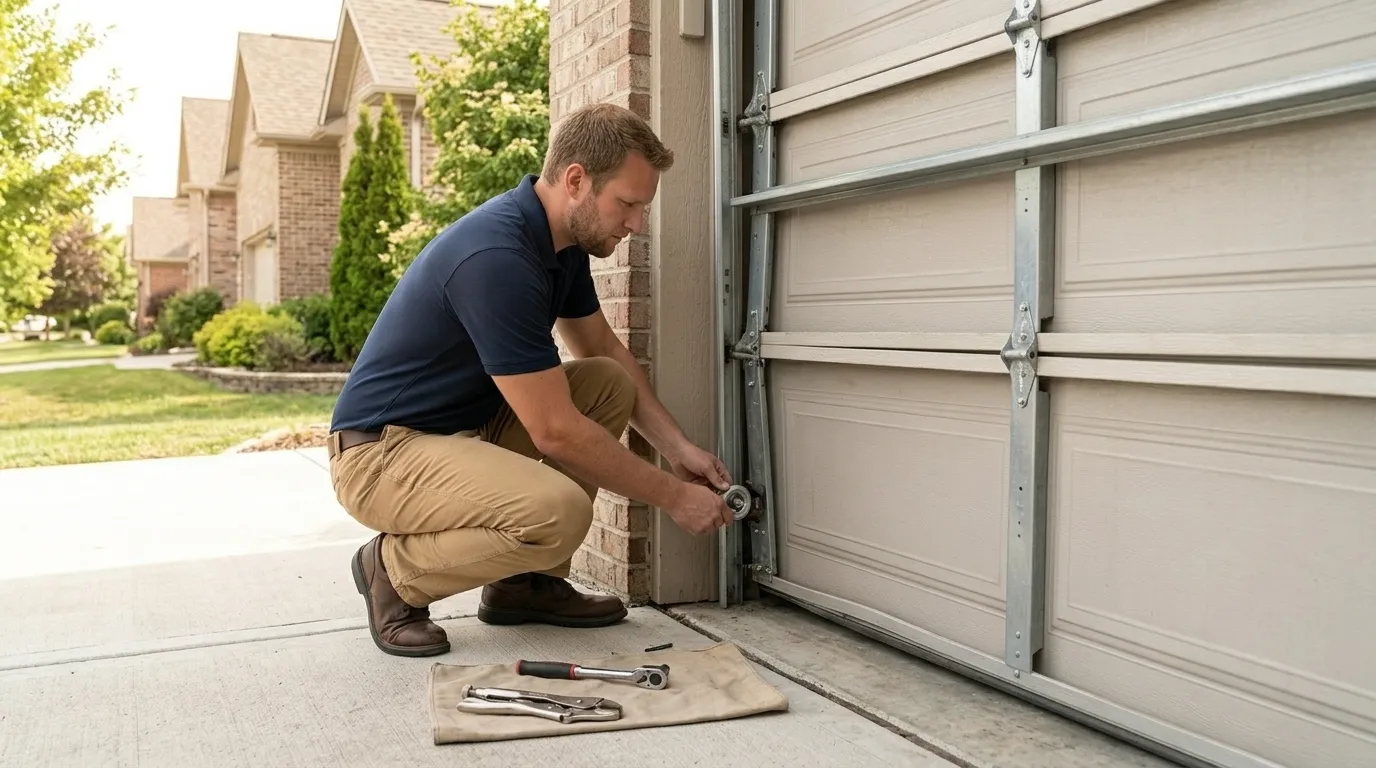
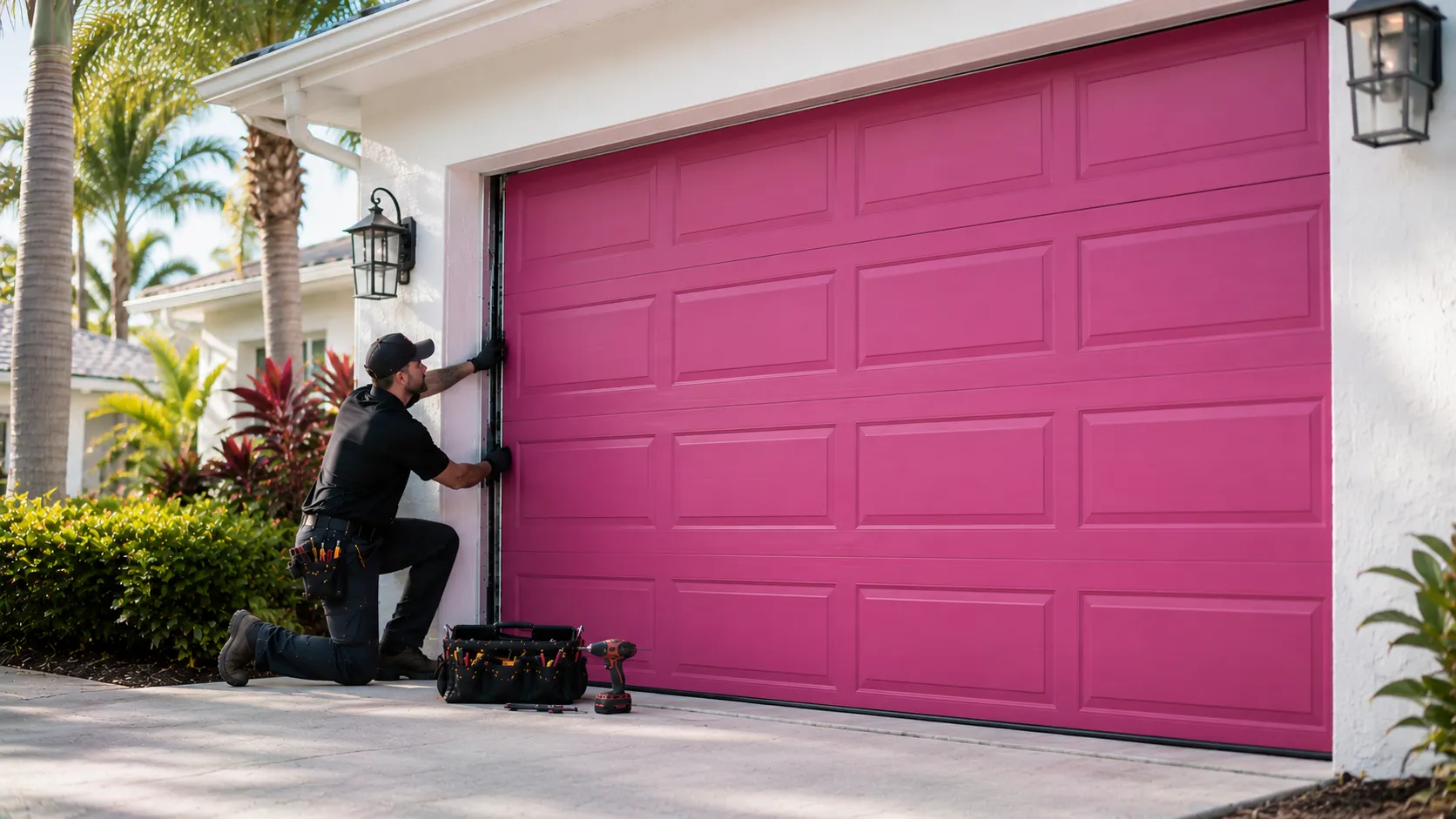
What You Are Seeing
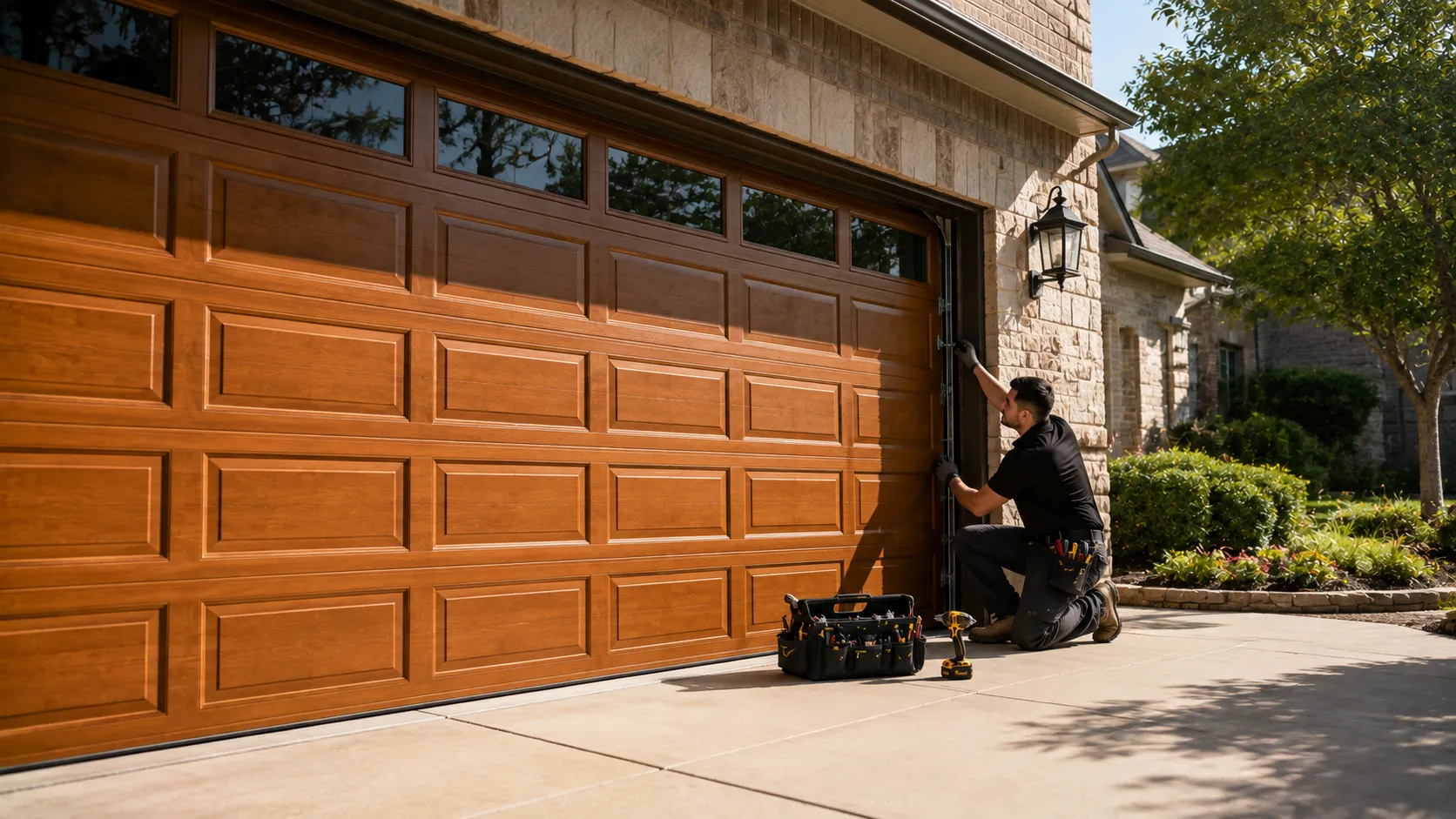
Weddington sits seven miles out from our shop in Matthews, which is close enough that a spring call here doesn't turn into a half-day trip, but far enough that we load the truck before we leave rather than after we see the door. That matters for spring work specifically, because torsion springs come in a range of wire sizes and wind directions, and guessing wrong once you're standing in the driveway means a second trip.
Most houses in Weddington went up between the mid-1970s and the mid-2000s, with the median build year landing around 1998. That's a narrower, newer window than a lot of the towns we cover, and it means the doors we're pulling springs on out here are mostly standard torsion setups on steel doors, not the older extension-spring, side-mounted hardware you find in places with a lot of pre-1970s stock. If your door sounds like a gunshot went off in the garage and then won't lift, that's a torsion spring letting go, and on a door this age it's almost always a clean, known repair rather than an archaeology project.
Why This Fails Locally
Springs fail on a cycle count, not a calendar, but the climate here still shapes when that failure shows up. This area sits in a cold-moderate band, meaning winters bring real temperature swings without the deep-freeze extremes of further north. Steel contracts in the cold, torque changes slightly, and a spring that was already near the end of its cycle life tends to snap on the first cold snap of the season rather than waiting for spring weather.
With a median household income around $196,159 in Weddington, we also see more two-car, double-wide doors and heavier insulated panels than in some of the other areas we serve. Heavier doors put more load on the springs holding them, which is fine when the springs are sized correctly for the door, but it means an undersized replacement spring - the kind of shortcut some installers take to save a part cost - fails faster here than it would on a lighter door. This isn't a Weddington-specific defect, it's simple physics meeting a heavier average door.
The DIY Question
Torsion springs are wound under enough tension to break a bone or worse if the winding bars slip, and that risk doesn't go down because the door is newer or the house is nicer. We'd rather lose the job to your own two hands on something safer - a noisy roller, a loose track bracket - than have you attempt spring work with the wrong bar or no bar at all.
The honest limitation here: if your opener is more than a few years old and the spring failure has already stressed the drive gear, replacing just the spring sometimes isn't the whole fix. We'll tell you that on site rather than selling you a spring and letting the opener grind itself out three months later.
What the Fix Involves
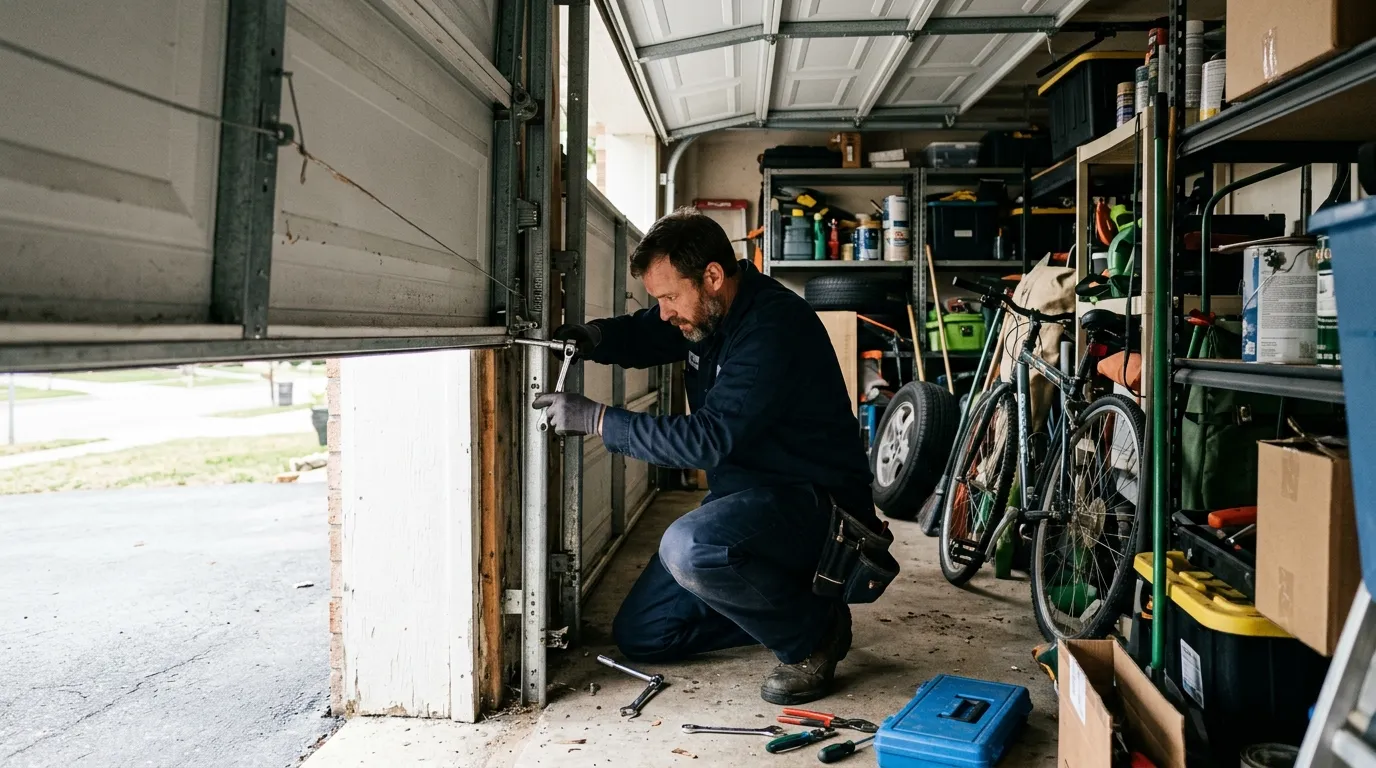
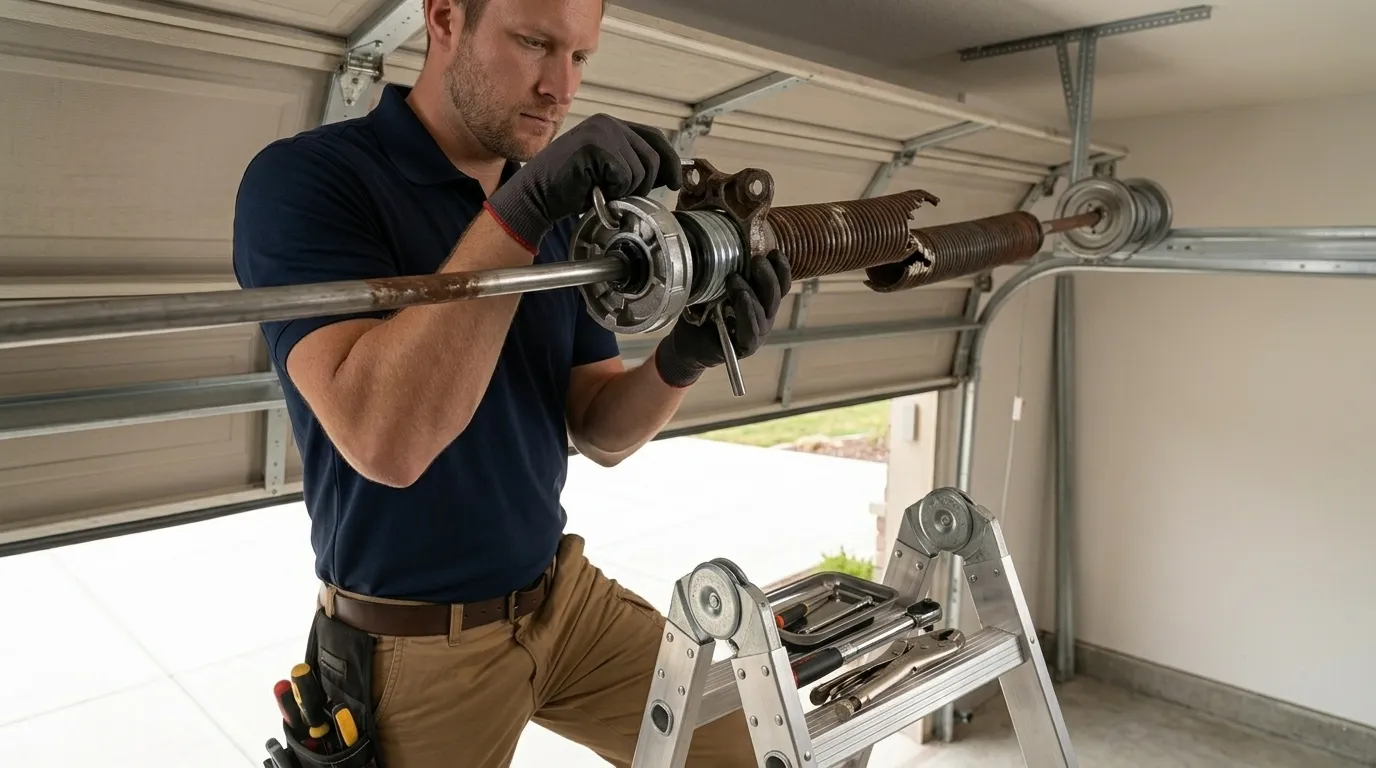
For the standard torsion setup we see on most Weddington doors, the job is: relieve tension on the old spring with winding bars, pull the broken halves off the shaft, size and install the replacement to match the door's weight and the drums already on the shaft, then wind it to the correct number of turns and test the balance by hand before the opener ever touches it. On a heavier insulated double door, we're checking that balance more carefully, since an unbalanced door on a heavy panel strains the opener from the first cycle.
We carry common torsion sizes on the truck, which covers the bulk of what we see on 1980s-through-2000s stock. If your door needs an odd-length or high-cycle spring outside that range, that part sometimes has to be ordered, and we'll say so upfront rather than installing something close enough and hoping.