What You Are Seeing
Weddington's housing stock centers on 1998, which puts it right in the middle of the wider service area's 1974-2006 build range. So far that sounds like every other suburb we cover. What's different here is the household income: $196,159, more than double the $88,203 median across the 64,855 households we serve. That number doesn't change how a door breaks, but it changes what people ask for when they replace one.
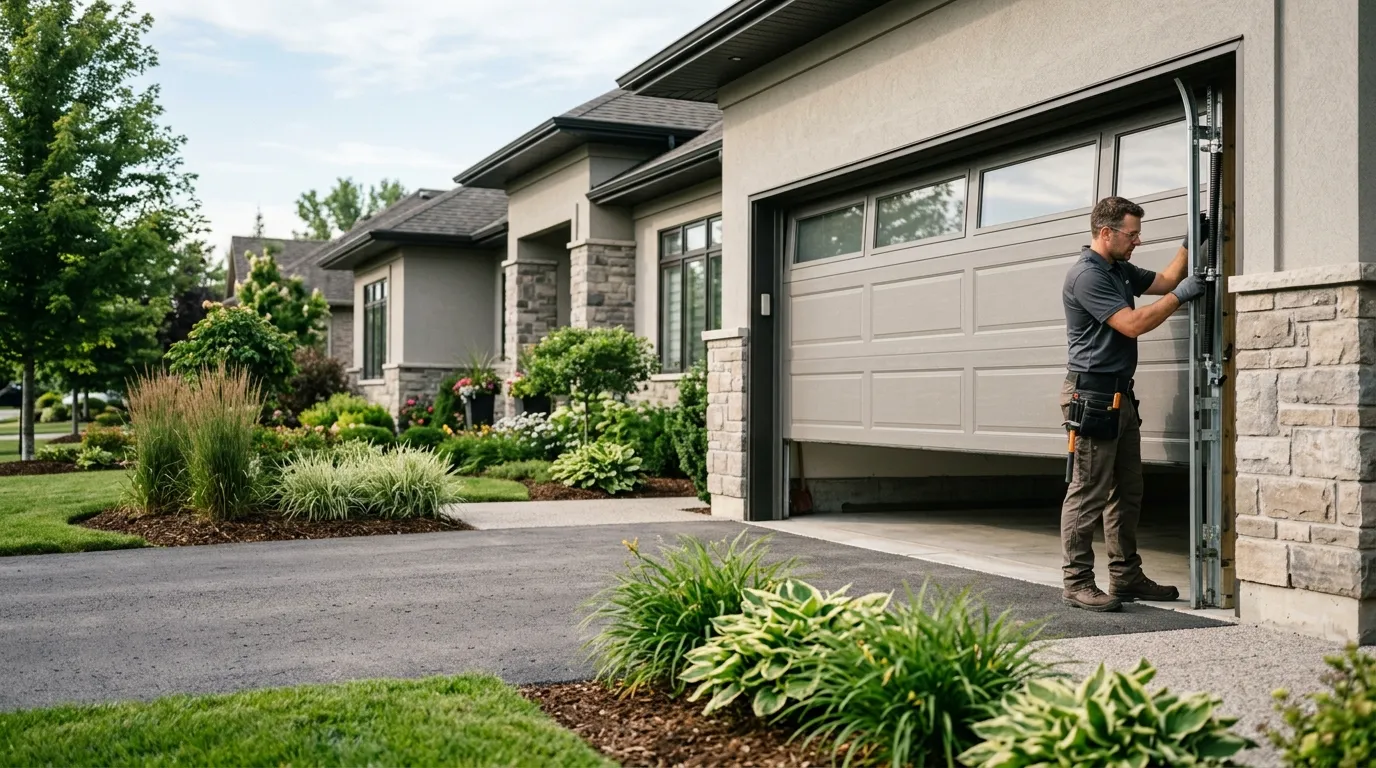
Most of what we get called out for in Weddington isn't a door that's failed outright - it's a builder-grade steel door from the late 90s that still opens and closes but looks tired, insulates poorly, and doesn't match what the rest of the house has become since. Original hardware from that era is usually a single torsion spring, a lightweight steel opener with a chain drive, and non-insulated panels. None of that is broken. It's just dated for a house that's been upgraded everywhere else.
We also see straight swap-outs: a 1998 door that finally cracked a panel or seized a roller, replaced with something closer to current standards. Both jobs start from the same housing era, but they end in different places.
Why This Fails Locally
The area sits in a cold-moderate climate band, which matters for a house built in 1998 because that generation of doors rarely came with more than a thin foam layer, if any insulation at all. Twenty-five-plus years of winter temperature swings on an uninsulated steel panel means the door has been expanding and contracting on the same hardware for a long time. Springs on doors this age are past a reasonable service life even if they haven't broken yet.
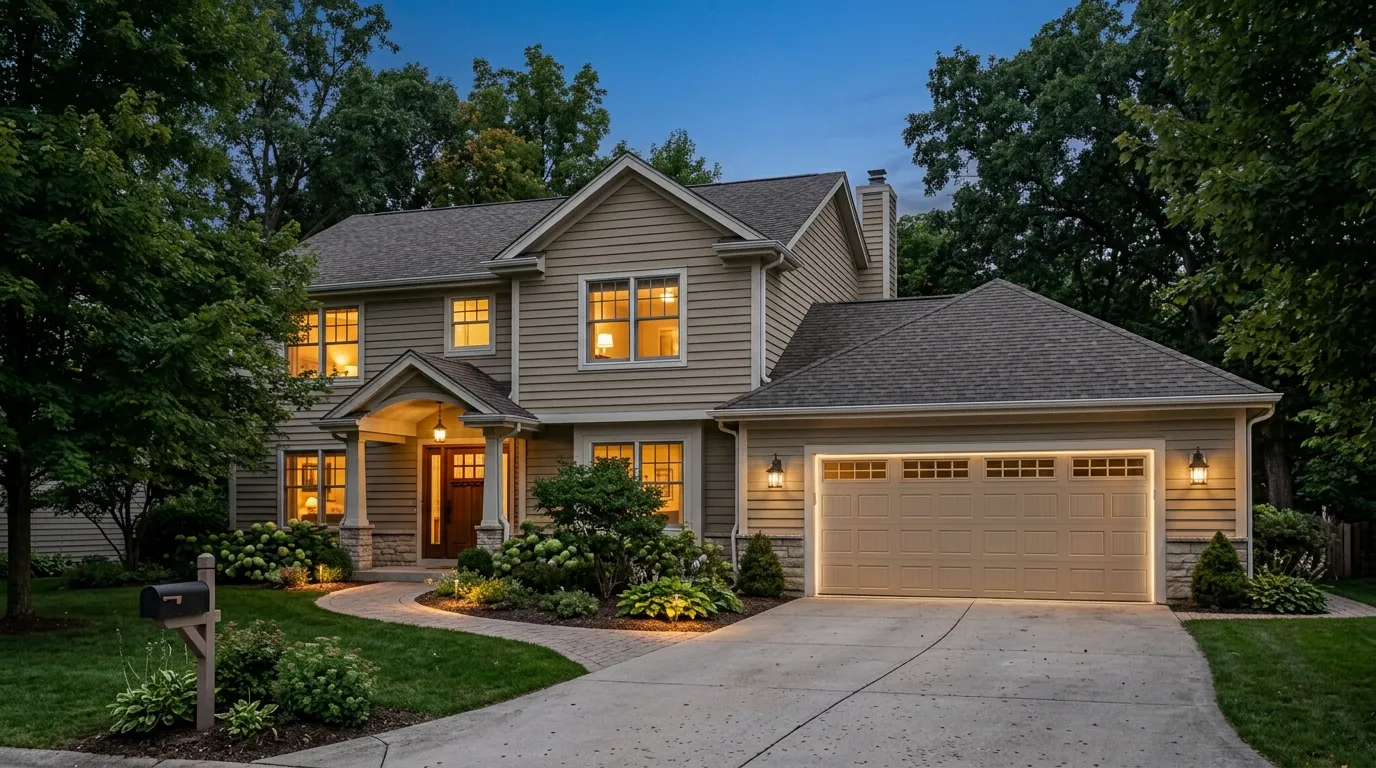
In a neighborhood where household income runs at $196,159, the fix people choose is rarely 'the cheapest door that fits the opening.' We see more requests for insulated steel or composite panels, quieter openers, and finish options that match a home that's likely seen other updates since 1998. That's a Weddington pattern, not a general one - it comes directly from what the income figure tells us about what homeowners are willing to spend to get the door right instead of just serviceable.
The DIY Question
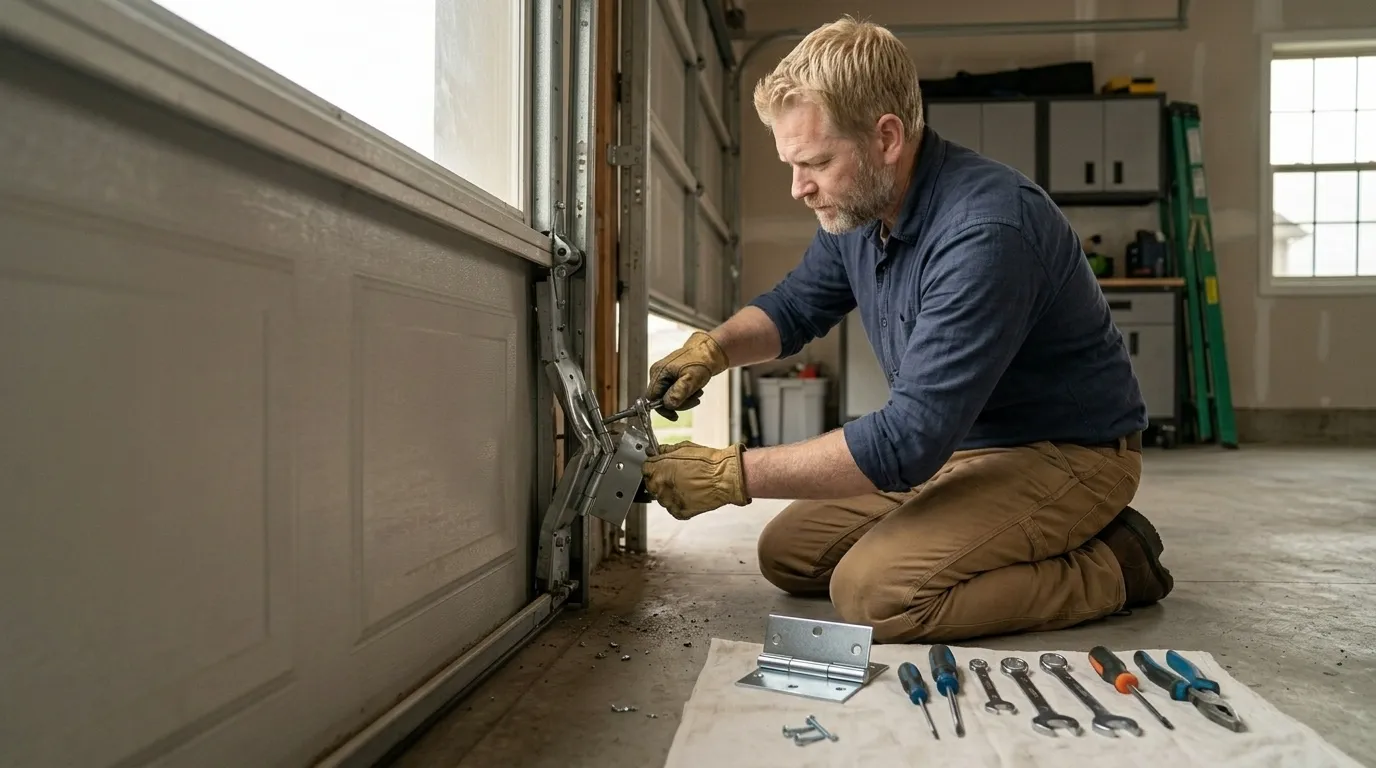
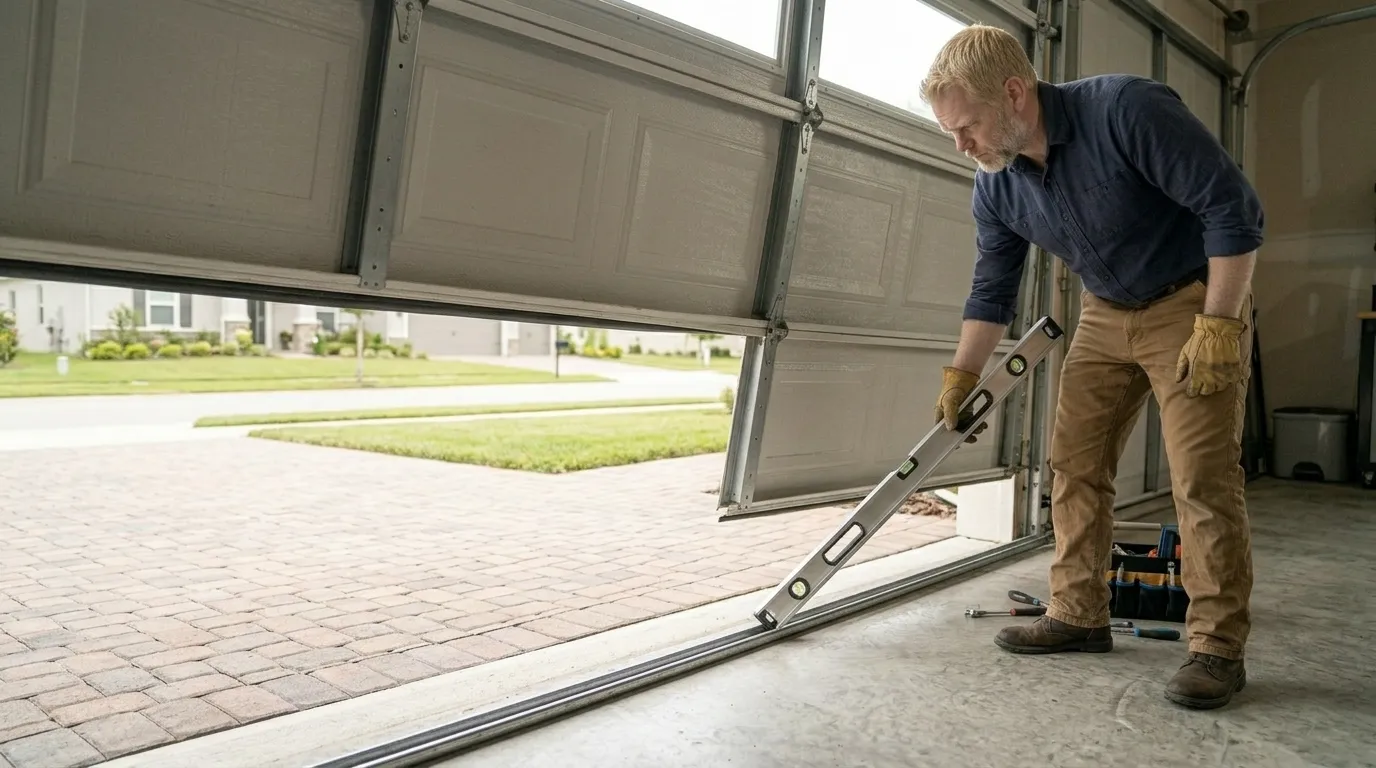
A homeowner can hang a basic single-panel replacement kit. What's harder to get right without the tools is spring tension on a torsion system and squaring a new door to an opening that's shifted slightly over 25-plus years, which is common in houses from the late 90s. Get either wrong and you've got a door that binds, a spring that lets go under load, or an opener straining against hardware it was never sized for.
Our honest limit: if the opening itself is out of square or the header framing has settled, that's a carpentry problem before it's a door problem, and we'll say so rather than force a door into an opening that needs work first.
What the Fix Involves
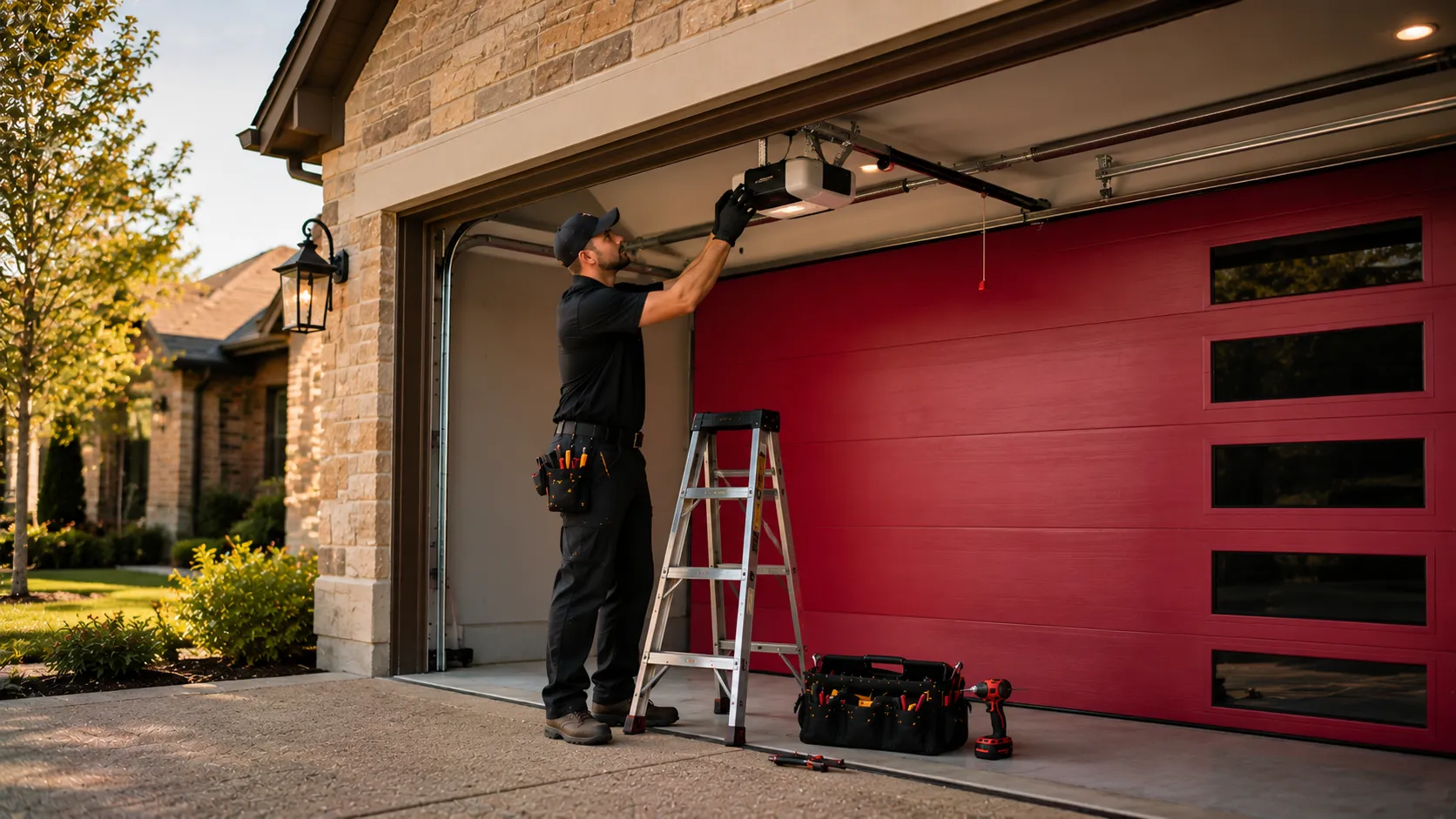
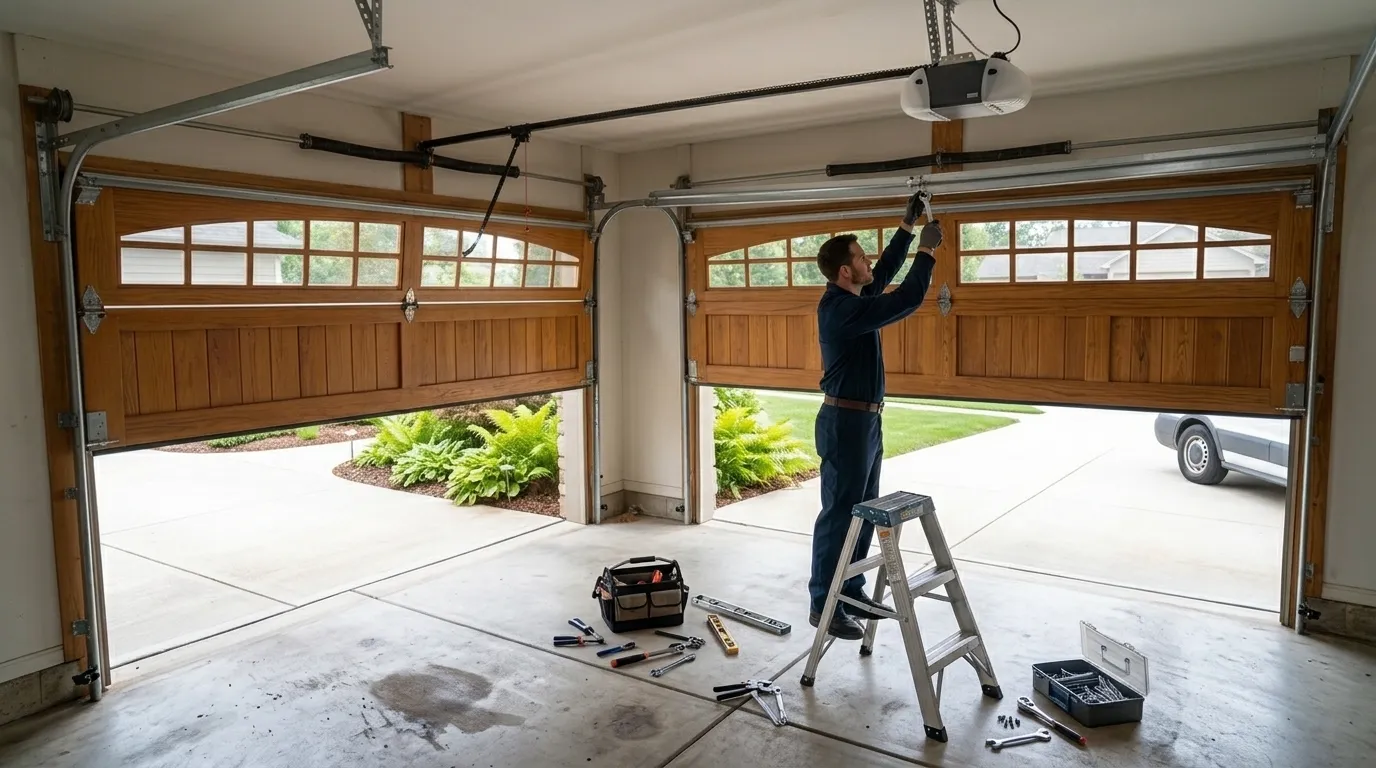
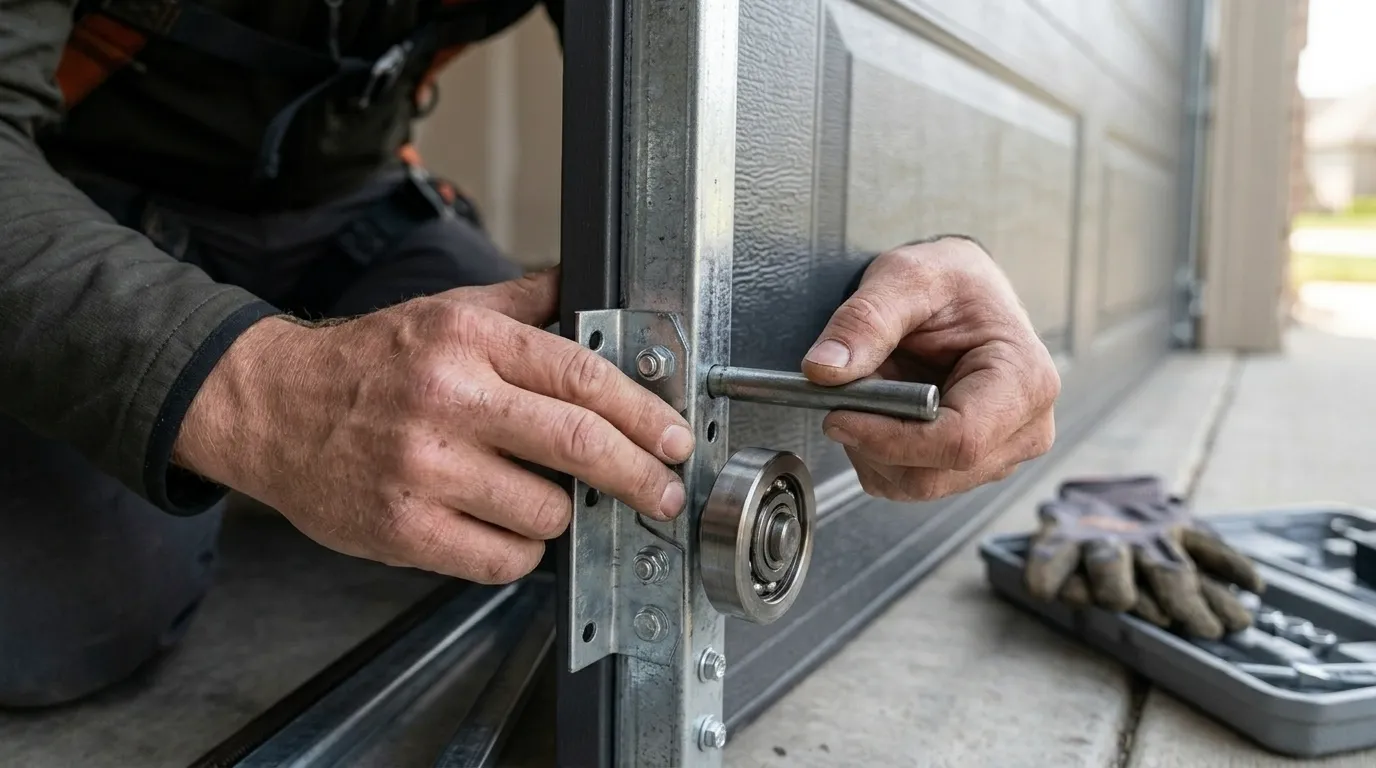
For a straight replacement on a 1998-era Weddington house, the job usually means pulling the old panel and track, checking the header and jamb for square, and setting new track and spring hardware sized to the replacement door's weight - insulated doors run heavier than the original steel panels they're replacing. If the opener is original to the house, we'll flag it, since a chain-drive unit from that era is nearing the end of its practical life even if it still runs.
We balance the new door against the opener, set travel limits, and test the safety reversal before calling it done. Nothing here is Weddington-specific in mechanics - torsion springs and track work the same everywhere - but the age and spec of what we're pulling out, and what homeowners here typically choose to put back in, both come straight from the numbers above.