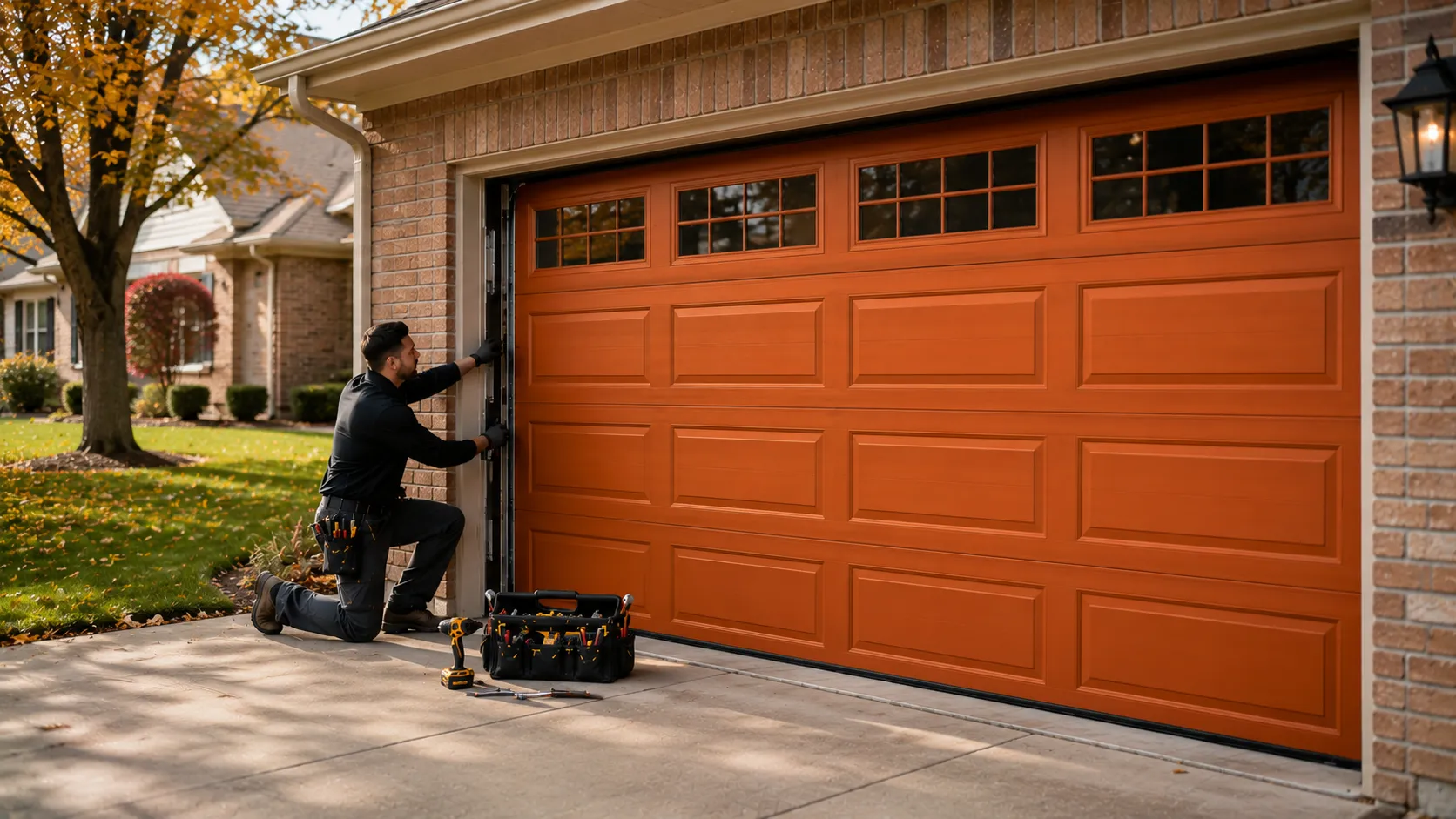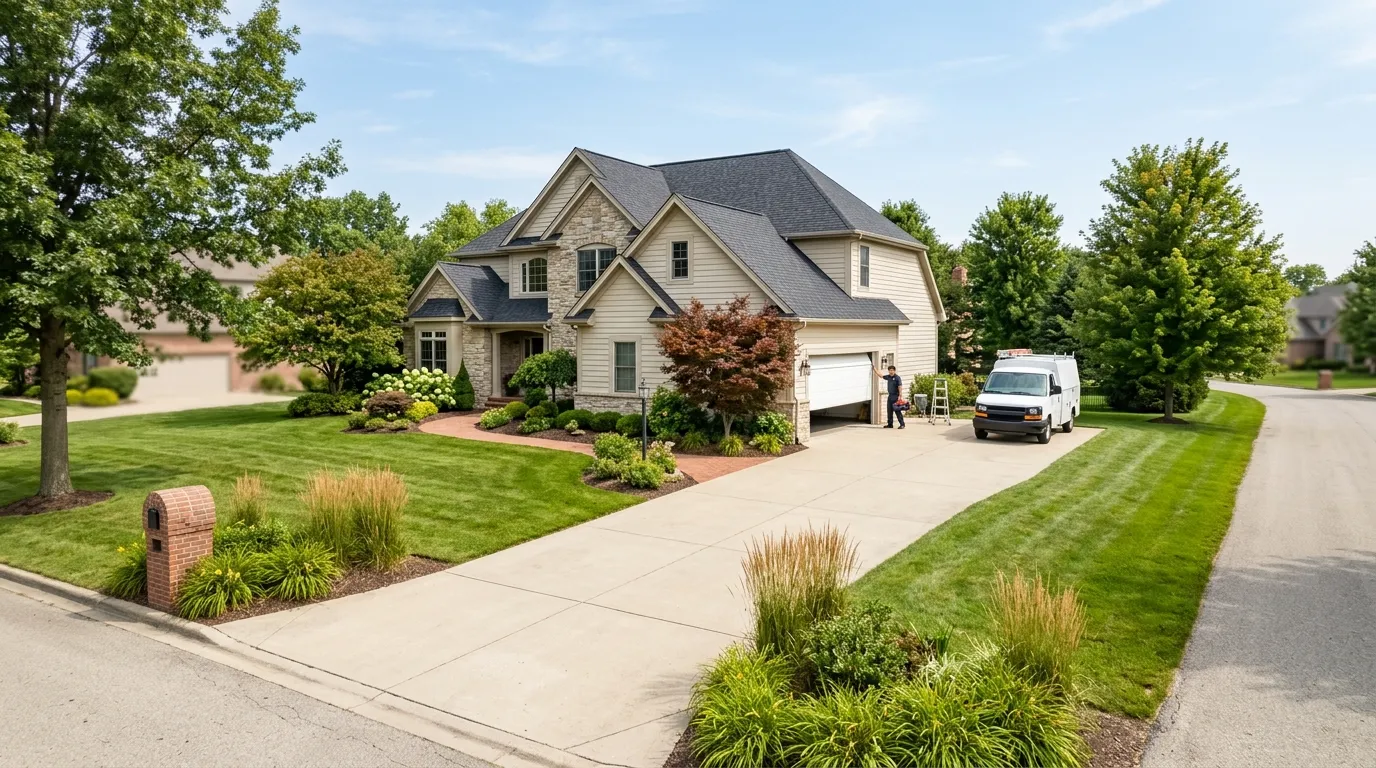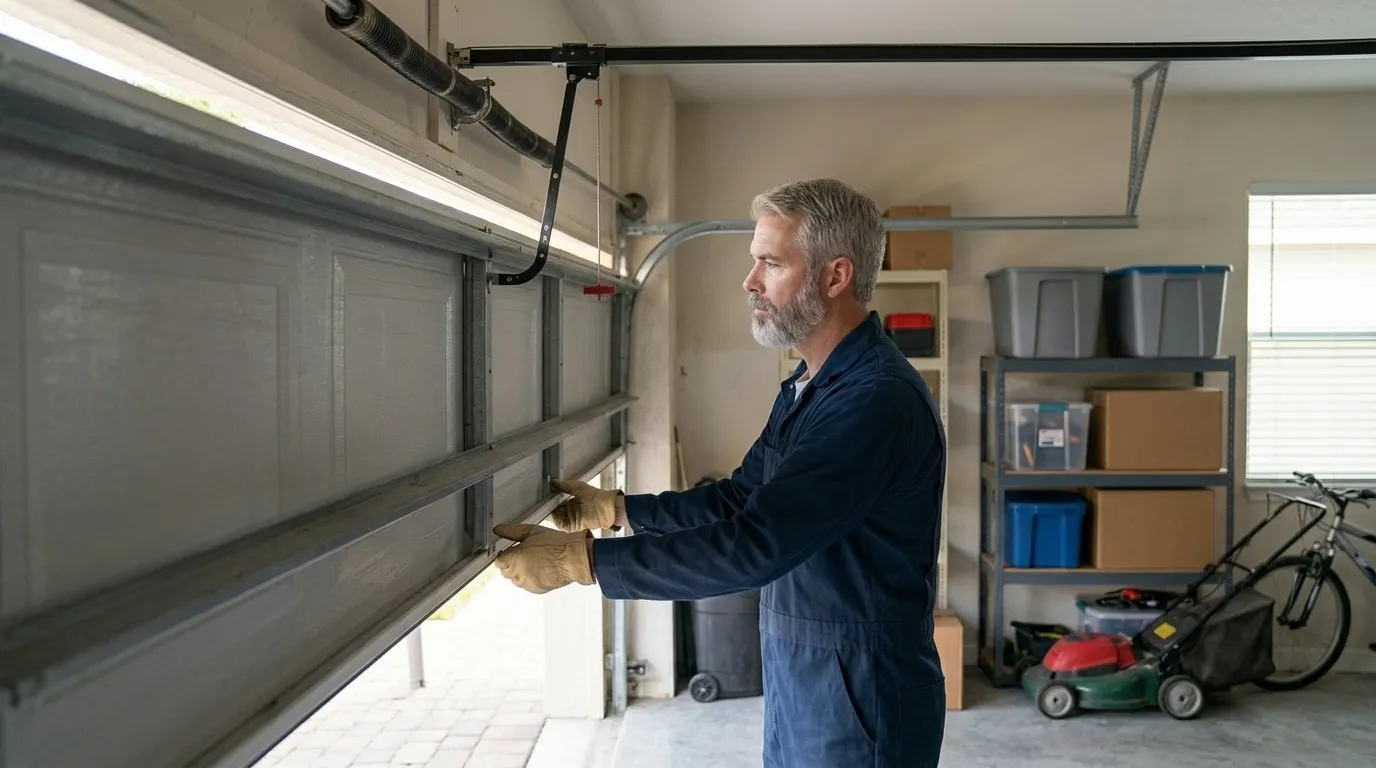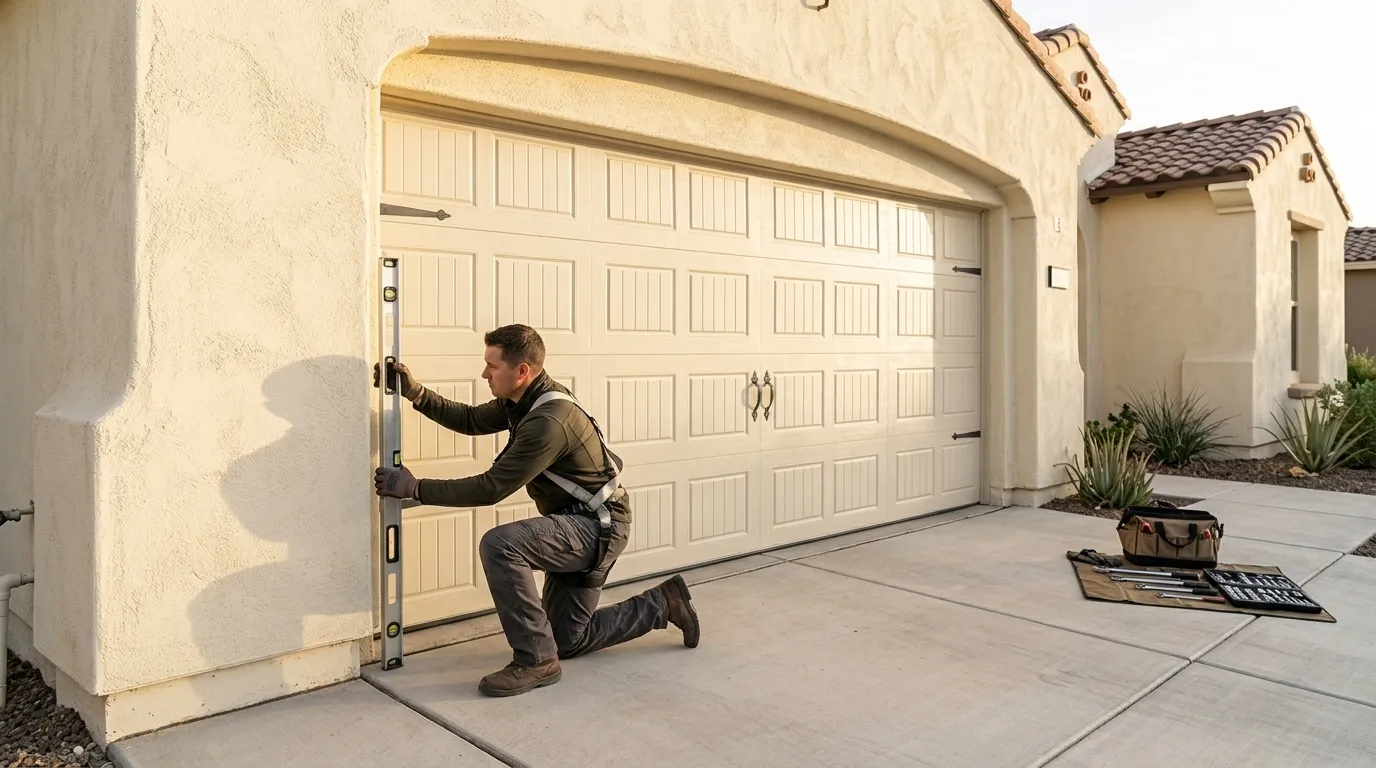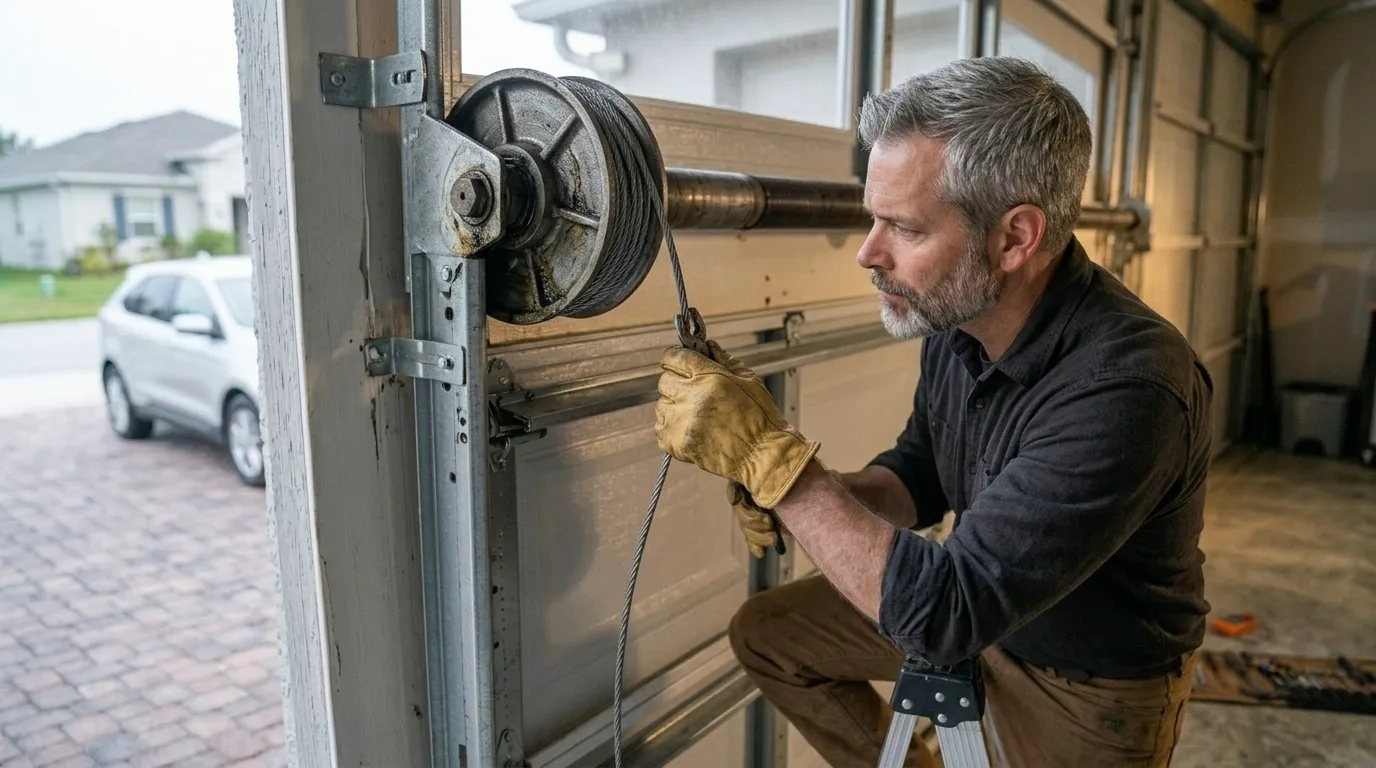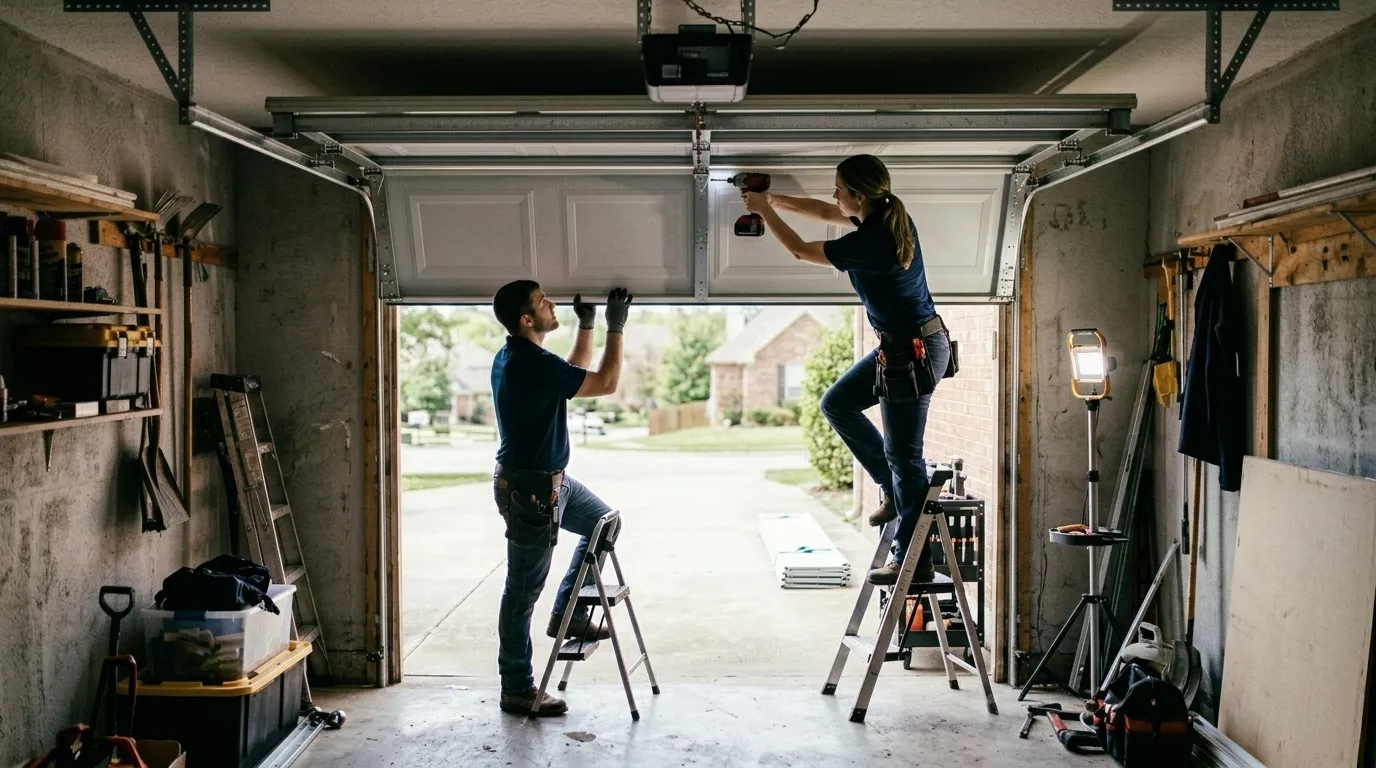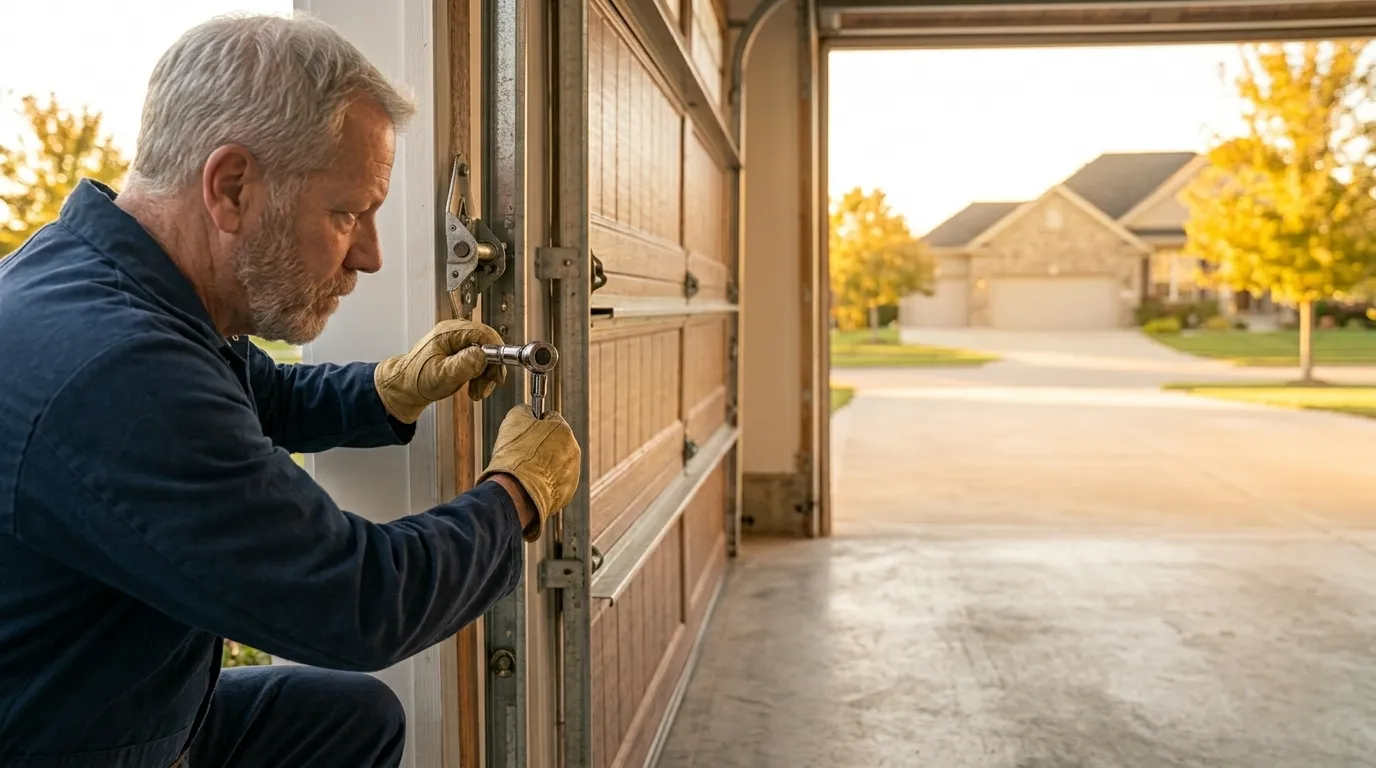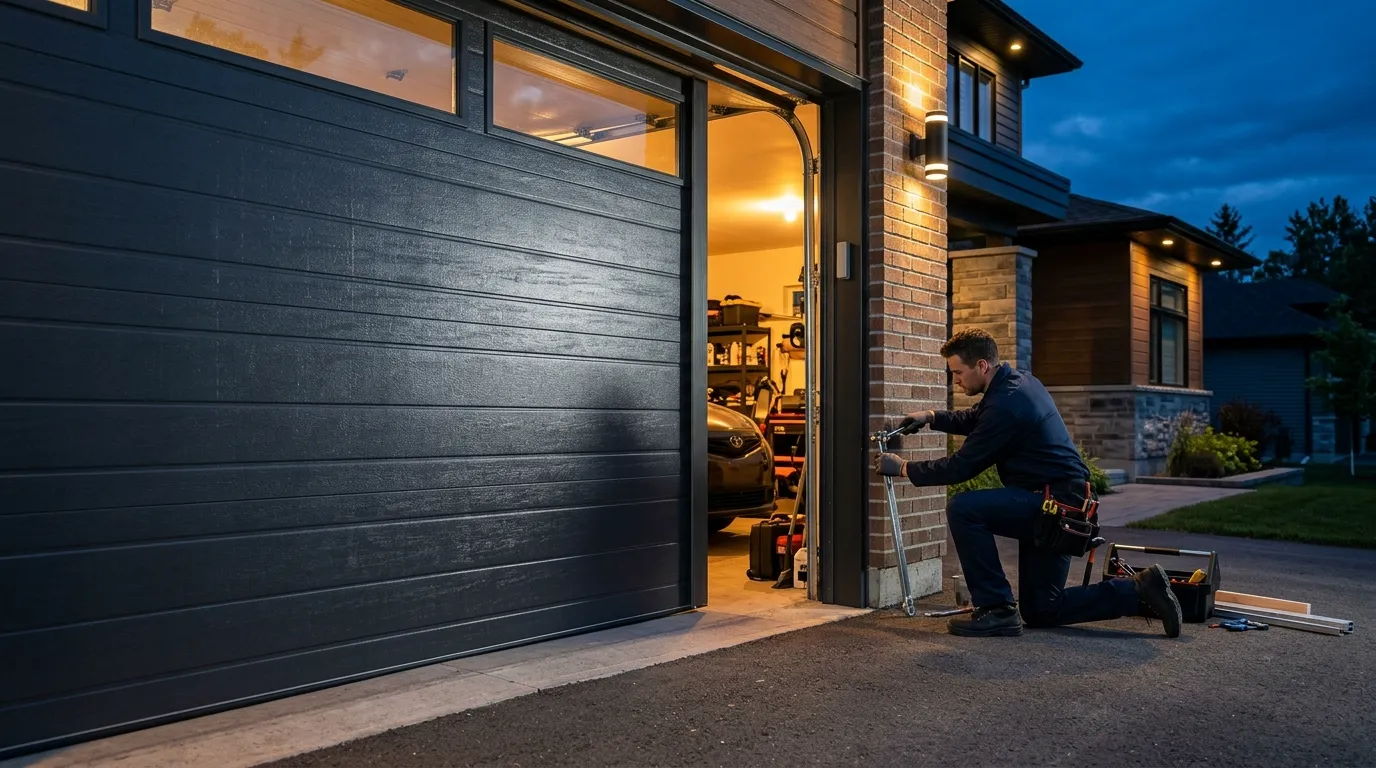
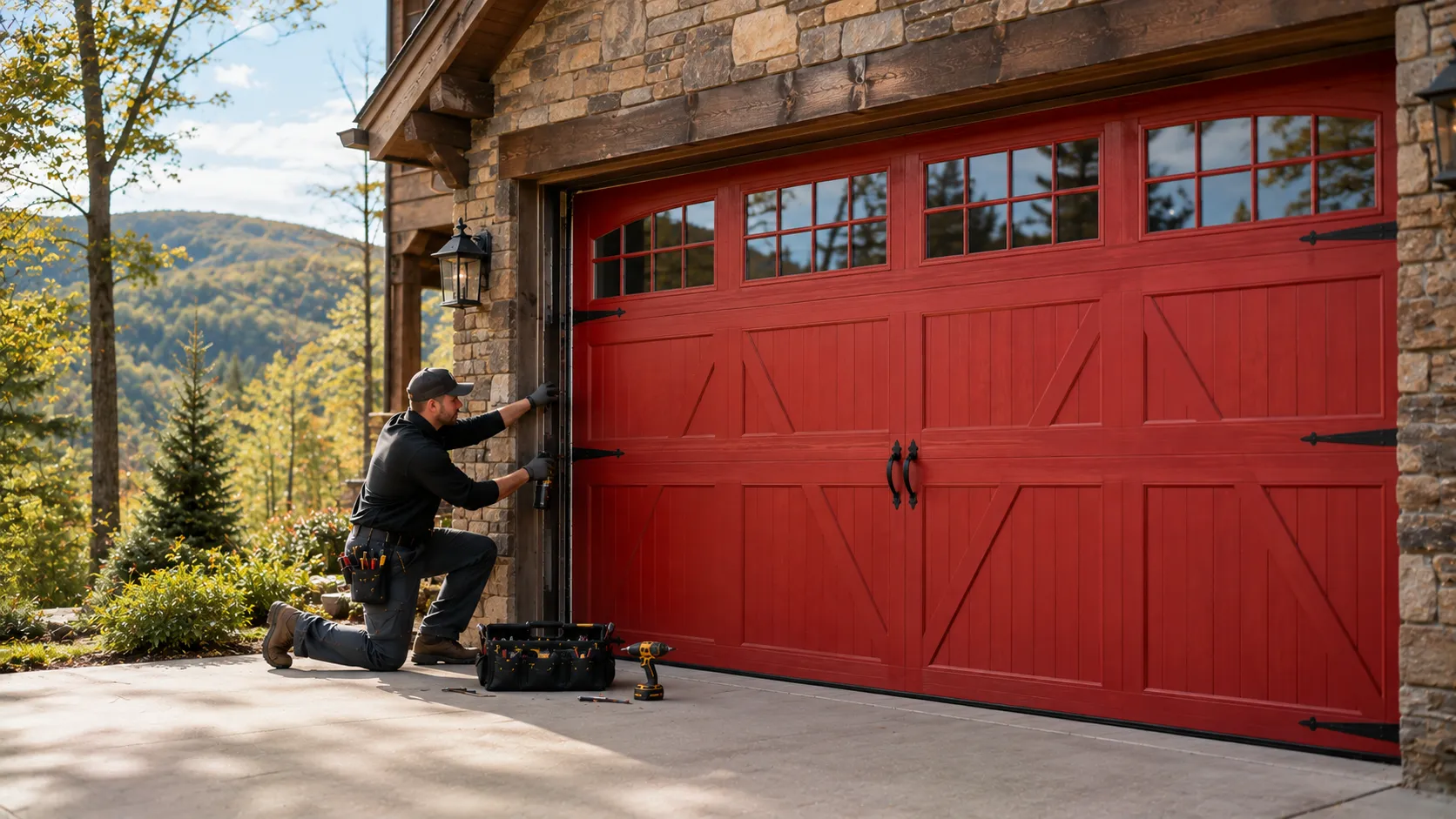
What You Are Seeing
Weddington's median household income runs $196,159, more than double the $88,203 median across the wider service area, and that number matters before we even open the door panel. At that income level, the repair-or-replace math tilts differently than it does elsewhere: a $400 spring job on a door that's structurally fine is an easy yes, but so is a $2,000 replacement on a door that's just outdated or underbuilt for the house. Homeowners here aren't stretching to make a ten-year-old opener last another decade.
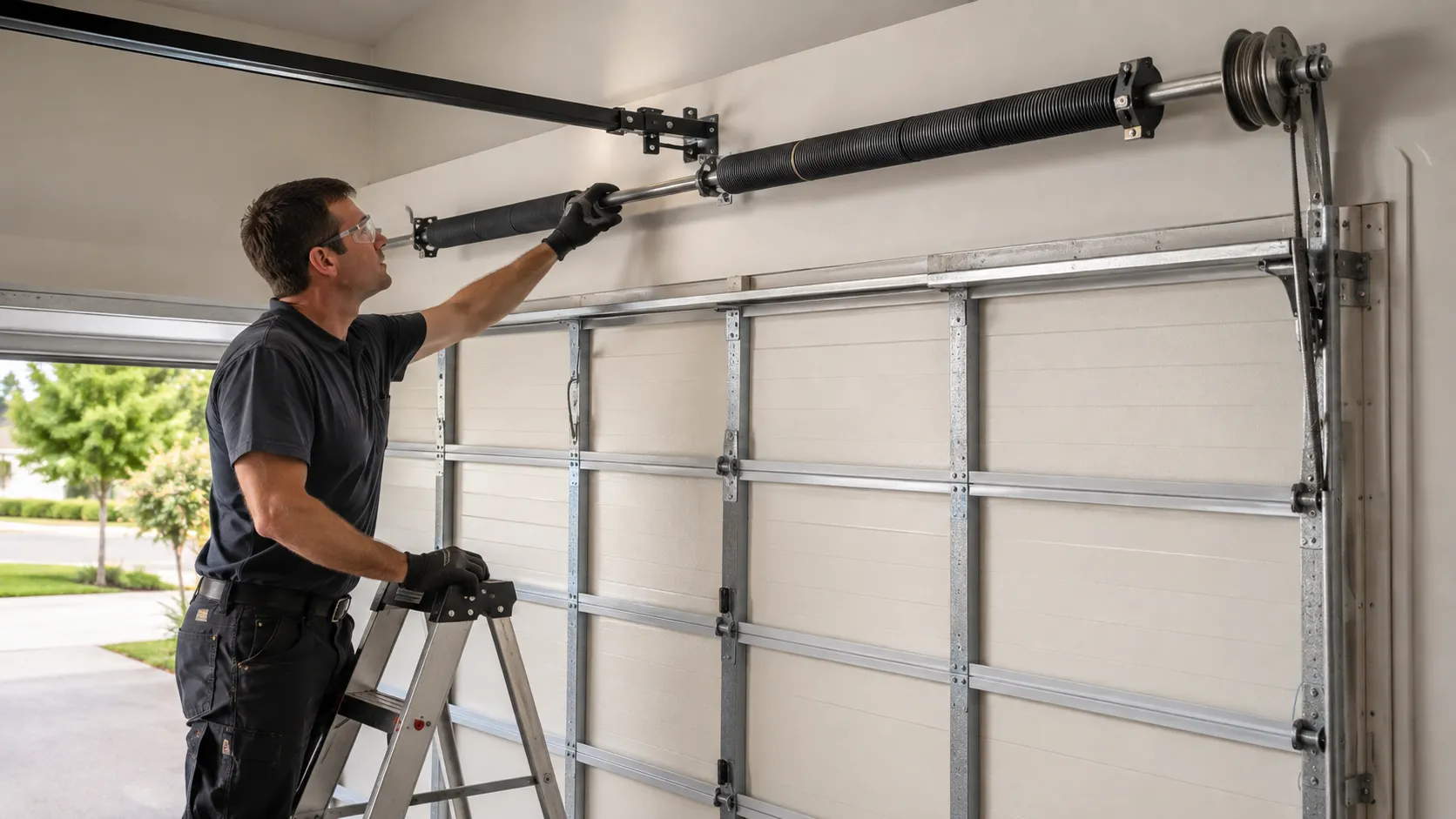
The housing stock backs this up. Weddington's median build year sits at 1998, squarely inside the 1974-2006 window that covers most of this area's stock. That means steel raised-panel doors, torsion springs mounted on a center shaft, and openers with chain or belt drives rated for heavier doors than the one-piece wood doors you'd find in older neighborhoods closer to Matthews. The failure points are predictable: worn rollers, a cracked bottom bracket, or a torsion spring that's simply hit its cycle count. Nothing exotic, but the parts and labor aren't interchangeable with older hardware.
Why This Fails Locally
A door built to 1998-era specs carries a heavier torsion spring setup than anything from the 1970s, and that spring is rated for a specific number of open-close cycles, usually somewhere between 10,000 and 15,000. Houses in this build era are now old enough that original springs are aging out at roughly the same time across the neighborhood, so if your spring is going, your neighbor's probably isn't far behind.
The other common failure is the opener itself. A chain-drive unit installed when the house was new is now 20-plus years old, and the circuit board or drive gear is the part that quits first, not the motor. With 4,282 households in Weddington built mostly in this same window, this isn't a one-off problem, it's a wave that moves through a neighborhood over a few years. We travel from Matthews, about 7 miles out, so scheduling here works the same as anywhere else in the coverage area, but the hardware you're dealing with is a generation newer than what we see on older streets closer in.
The DIY Question
Torsion springs on a door this size store enough force to cause real injury, and that's true whether the door was built in 1998 or last year. We don't recommend spring work as a homeowner project, full stop - it's the one repair on this list where the tool cost isn't the issue, the physics is.
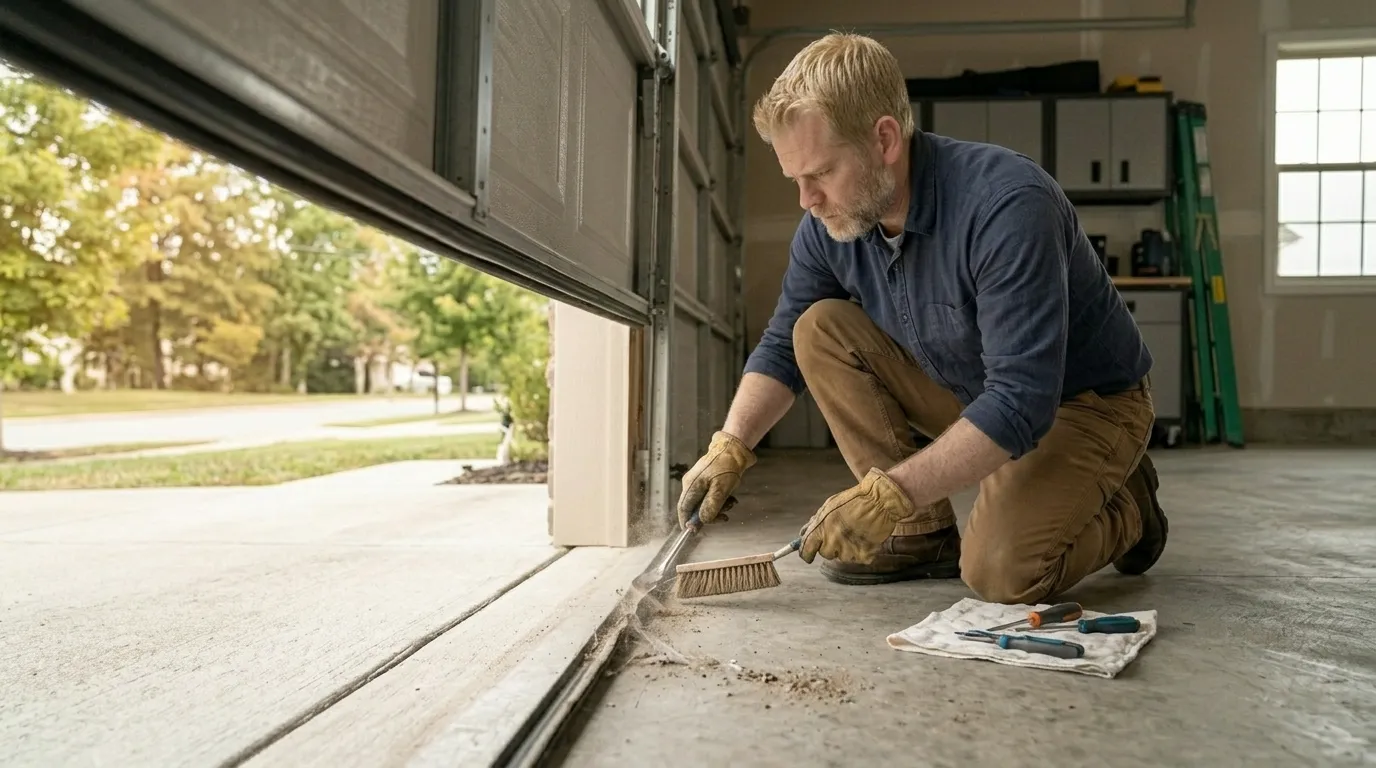
What you can reasonably check yourself: the photo-eye sensors near the floor track (a smudge or misalignment there is the most common reason a door won't close), and the weatherstripping along the bottom panel, which dries out and cracks faster in a cold-moderate climate like this one once it's past ten years old. If the door reverses before touching the floor, or the opener light blinks in a pattern, that's the sensors, not the spring, and it's a five-minute fix. Anything involving the shaft, the cables, or the spring winding cones - call it in.
What the Fix Involves
For a typical Weddington call, the fix starts with identifying whether the door itself is original to the house or a replacement, since a 1998-era door and a 2015 replacement door use different spring sizing even on the same opening. From there it's usually one of three jobs: a torsion spring swap matched to door weight, a roller and cable inspection since both wear out around the same 15-to-20-year mark, or an opener swap if the drive system is original.
We don't stock every part for every door on the first truck out - some hardware for older or less common door models has to be ordered, and we'll tell you that up front rather than promise a same-visit fix we can't back. For the straightforward jobs, torsion spring replacement, roller service, opener swap, that's usually one visit. Weddington sits about 7 miles from our Matthews base, and the neighborhood's building-era consistency means we usually know what we're walking into before we open the truck.