What You Are Seeing
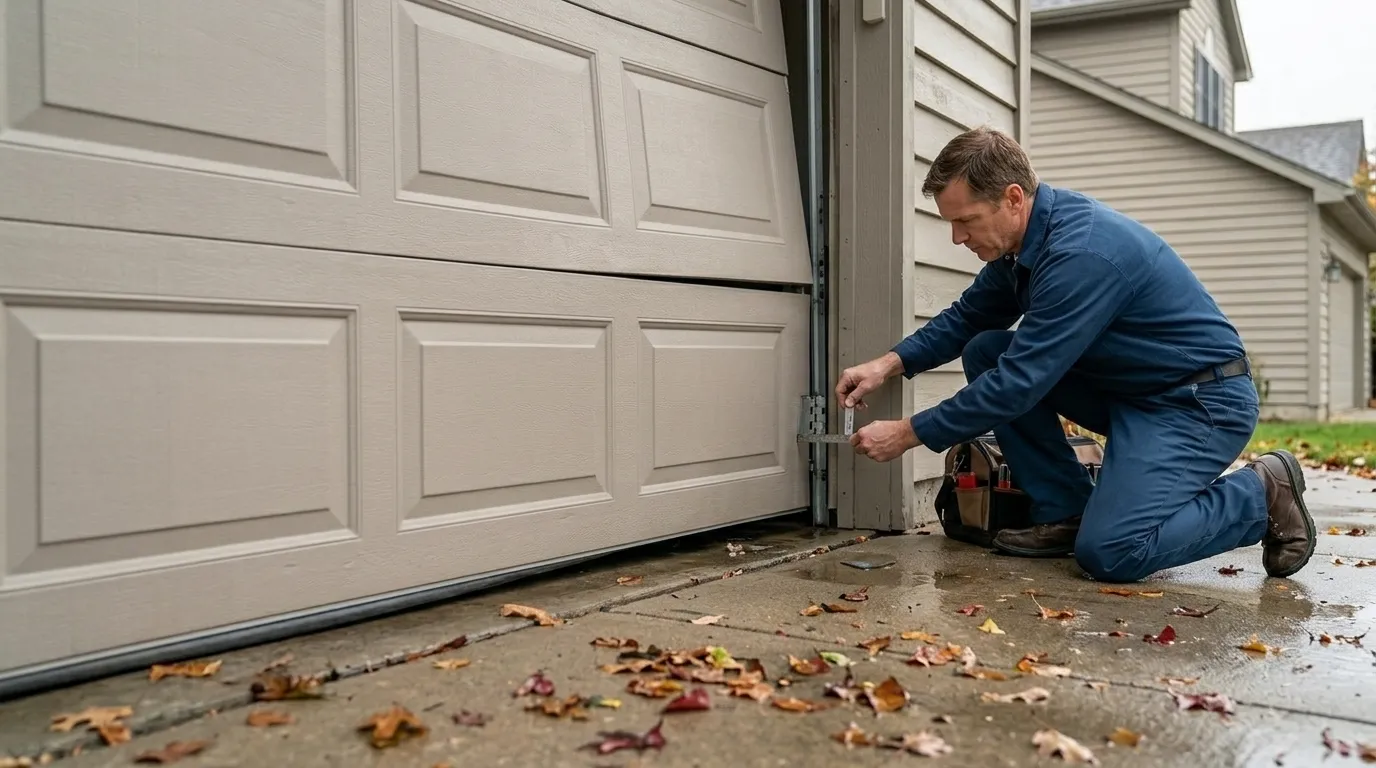
The door won't lift, or it lifts a few inches and stalls. Sometimes there's a loud bang from the garage a day or two before, which is usually the torsion spring letting go. You might see the spring itself split apart above the door, one half pushed to each side of the center bracket. On a double door with two springs, sometimes only one breaks and the door still tries to open, but crooked, because one side has no lift and the other does.
Most of Matthews's housing stock went up between 1974 and 2006, with a lot of it dating to the 1980s and 90s across the area's named subdivisions. That's a long enough window that a lot of original torsion springs are simply worn out on a cycle-count basis, not because anything was installed wrong. A spring rated for roughly 10,000 cycles doesn't care how well it was wound - open and close the door twice a day for 20 years and you've used it up.
If the door won't budge at all and the opener motor just hums, don't keep hitting the button. That strains the opener gears for no reason, since the opener was never meant to lift the door's full weight on its own.
Why This Fails Locally
Two things push spring failure earlier in Matthews than in a mild-winter market. First, the age of the housing stock: a 1998-median build year means a large share of doors out there are running on original hardware, not a replacement. Nobody's swapped the spring since the house was framed. Second, the climate band here is cold-moderate, meaning the metal goes through real temperature swings across a year - cold enough in winter to make old steel brittle, warm and humid enough in summer to work corrosion into the coil. That expansion and contraction cycle is harder on a spring than steady weather in either direction would be.
A spring that's already near end-of-cycle life snaps sooner under that stress, and it usually happens on the coldest morning of the stretch, which is exactly when you don't want the truck to open.
This isn't a defect in how Matthews homes were built - it's what happens to any torsion spring left in place for two or three decades in a climate that isn't gentle on steel. The fix is the same regardless of why it failed: replace the spring, matched to the door's actual weight, not a generic size.
What the Fix Involves
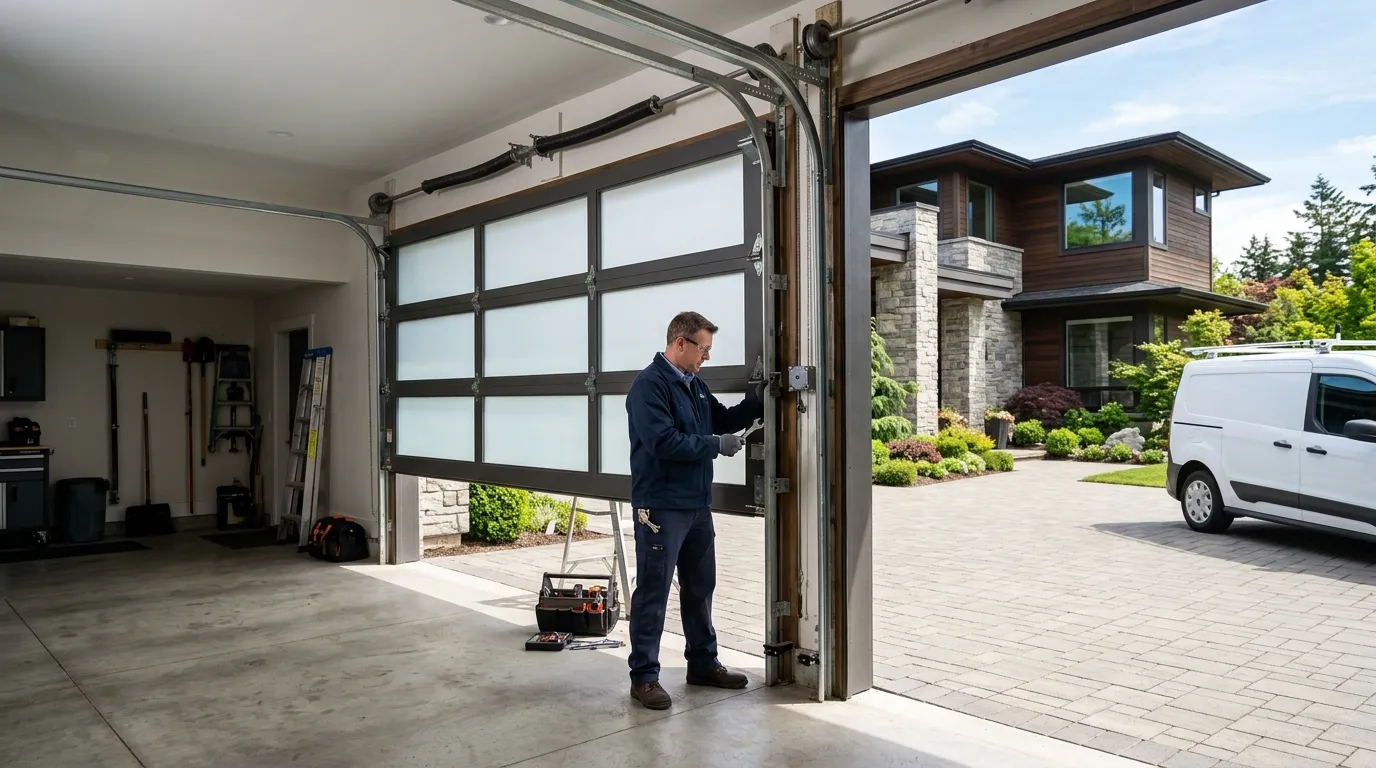
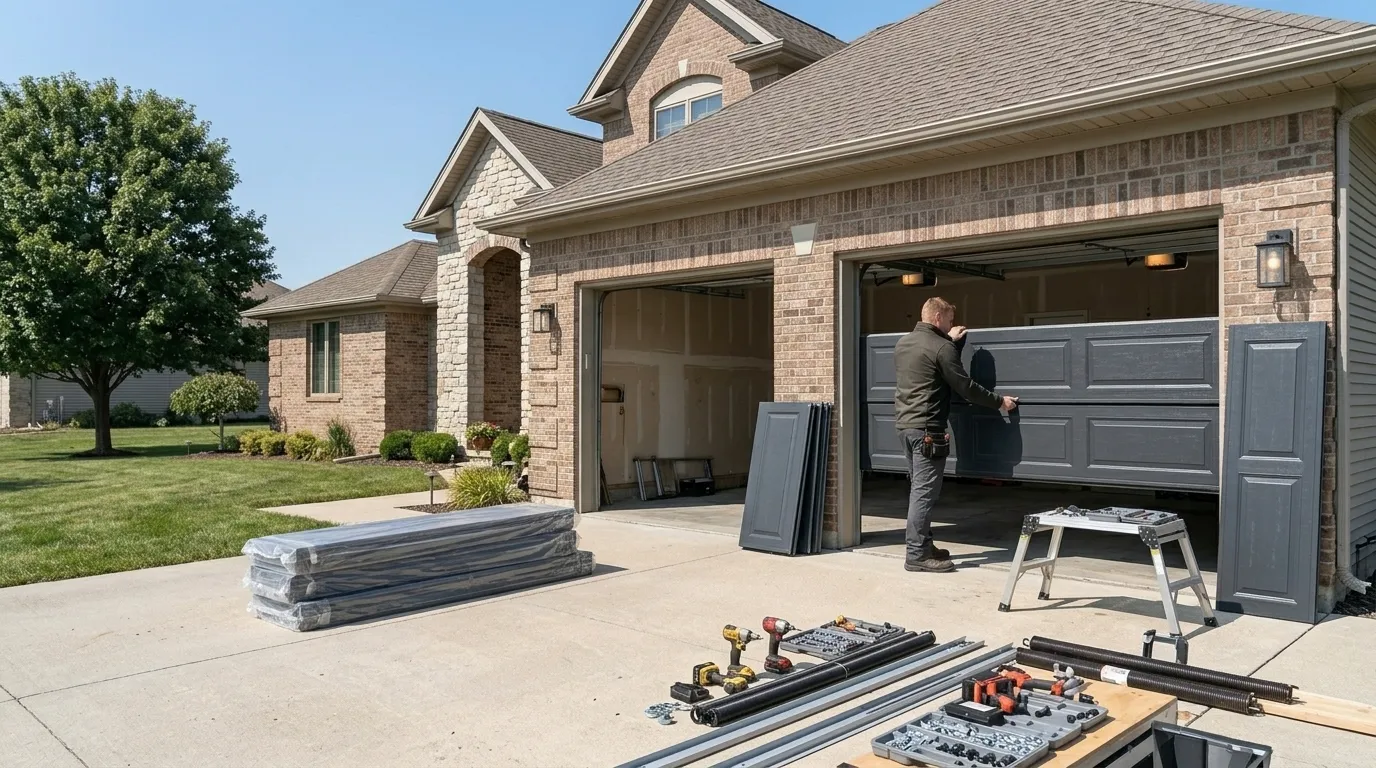
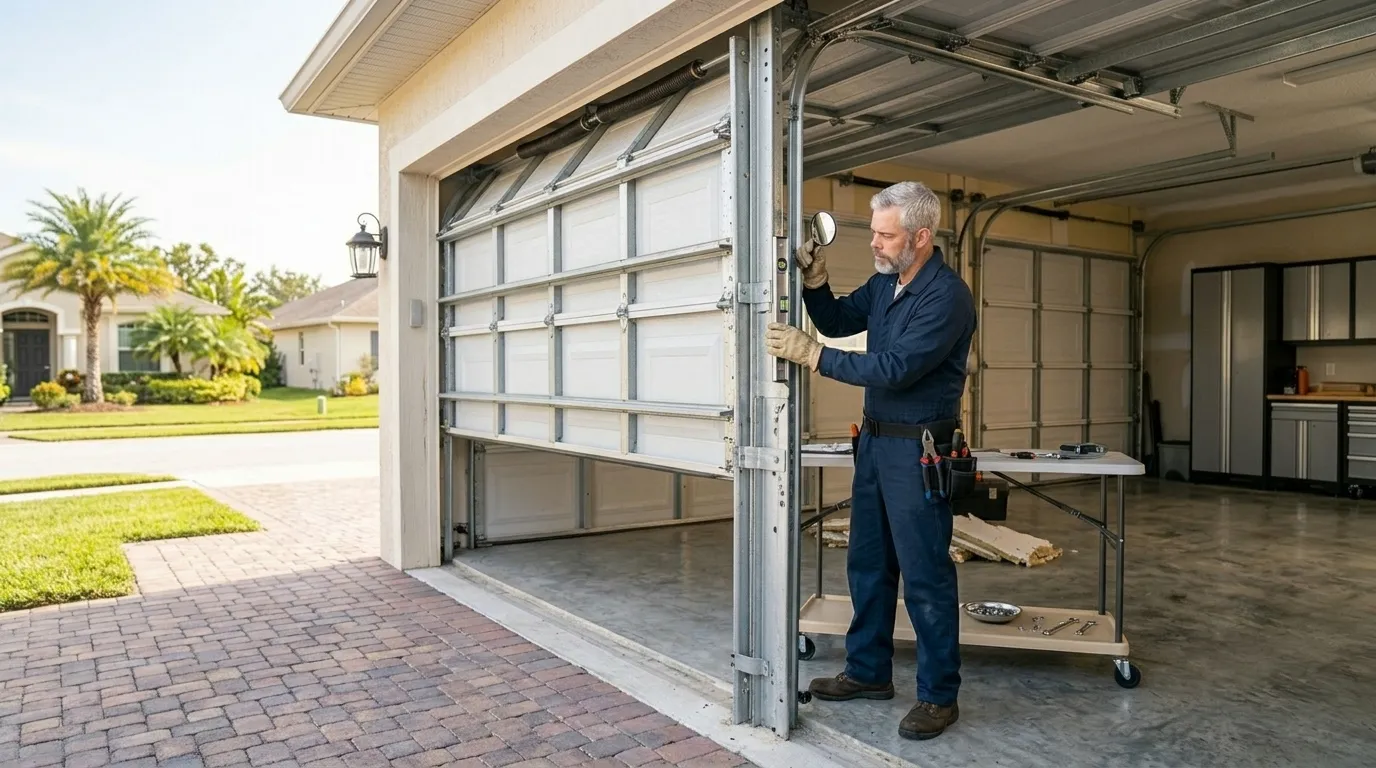
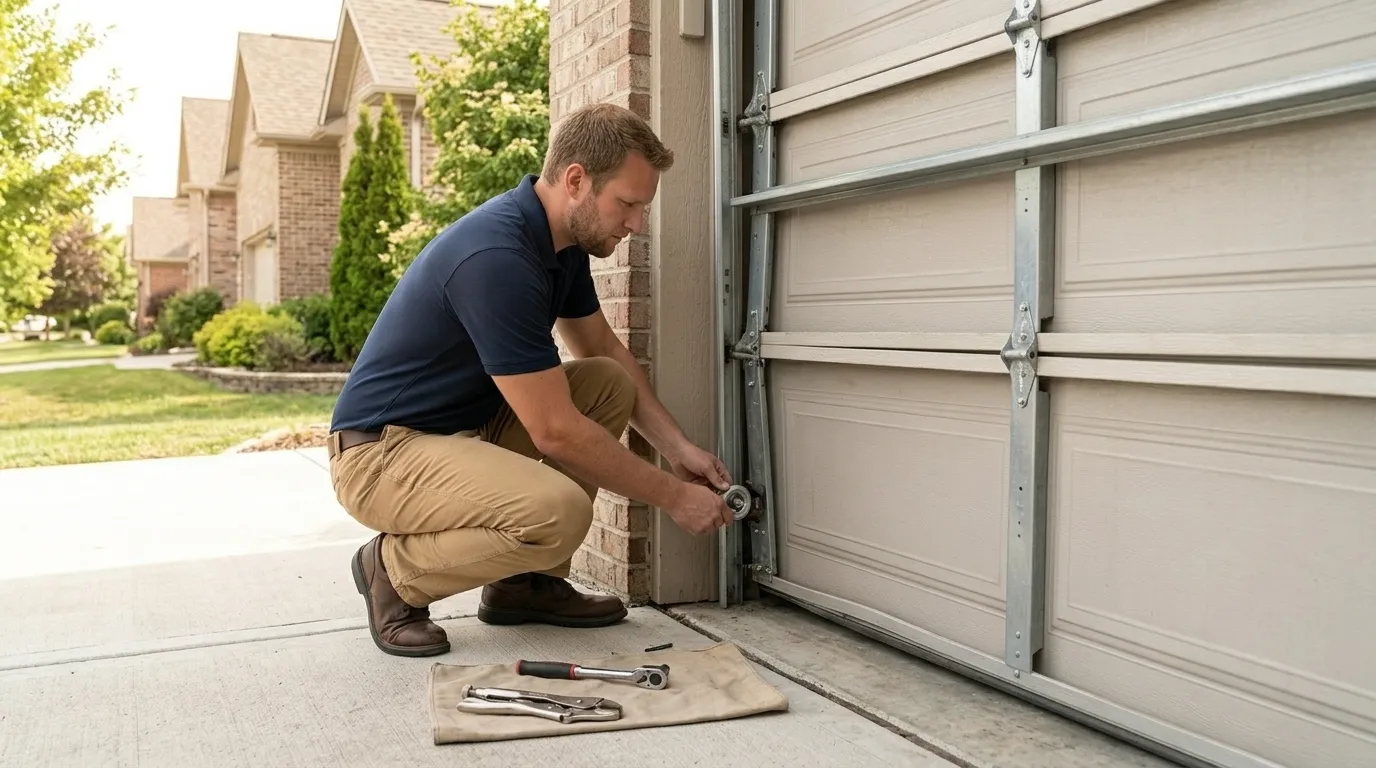
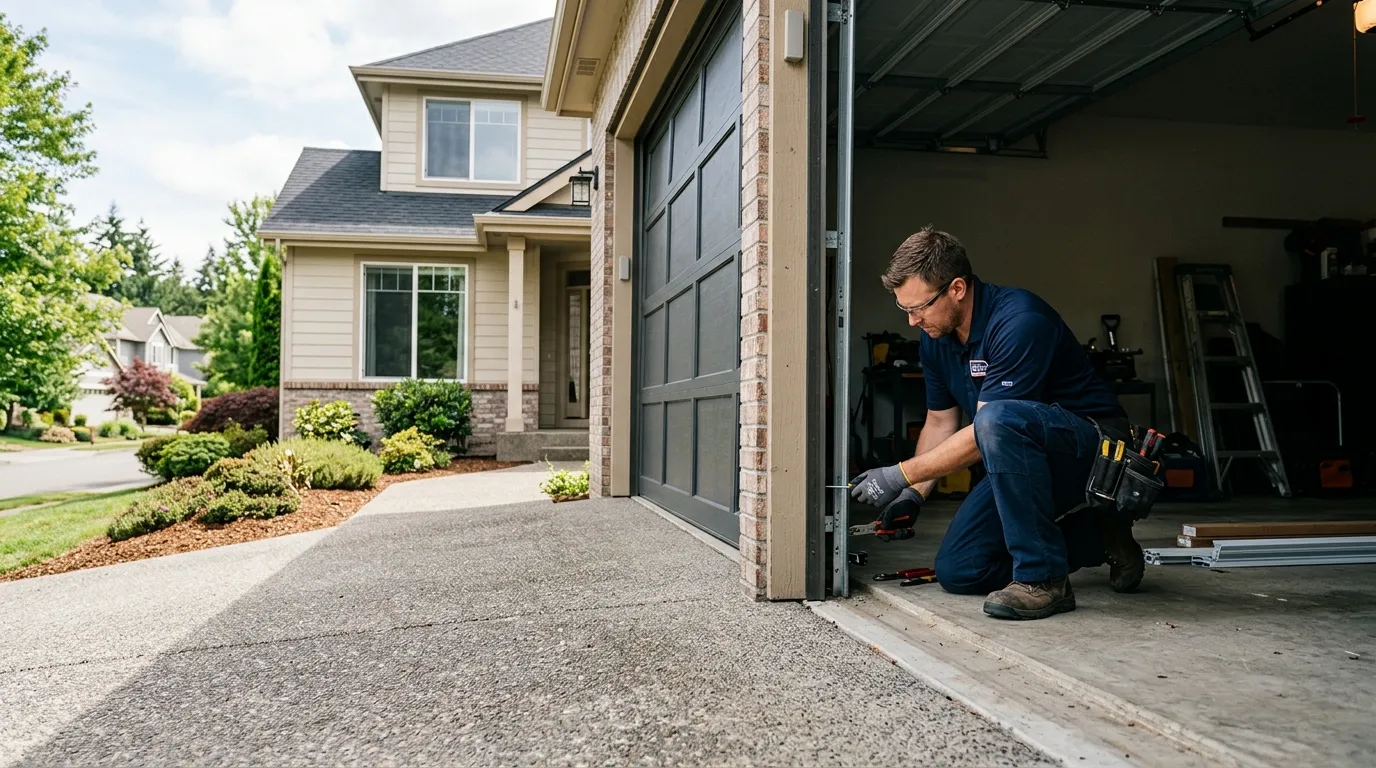
A torsion spring job means winding down the old spring safely with winding bars, pulling it off the shaft, and installing a spring sized to the door's actual weight and track length - not a universal size off a shelf. On a double door we check both springs even if only one broke, since the second is usually close behind on cycle count and it's cheaper to do both while the door's already apart.
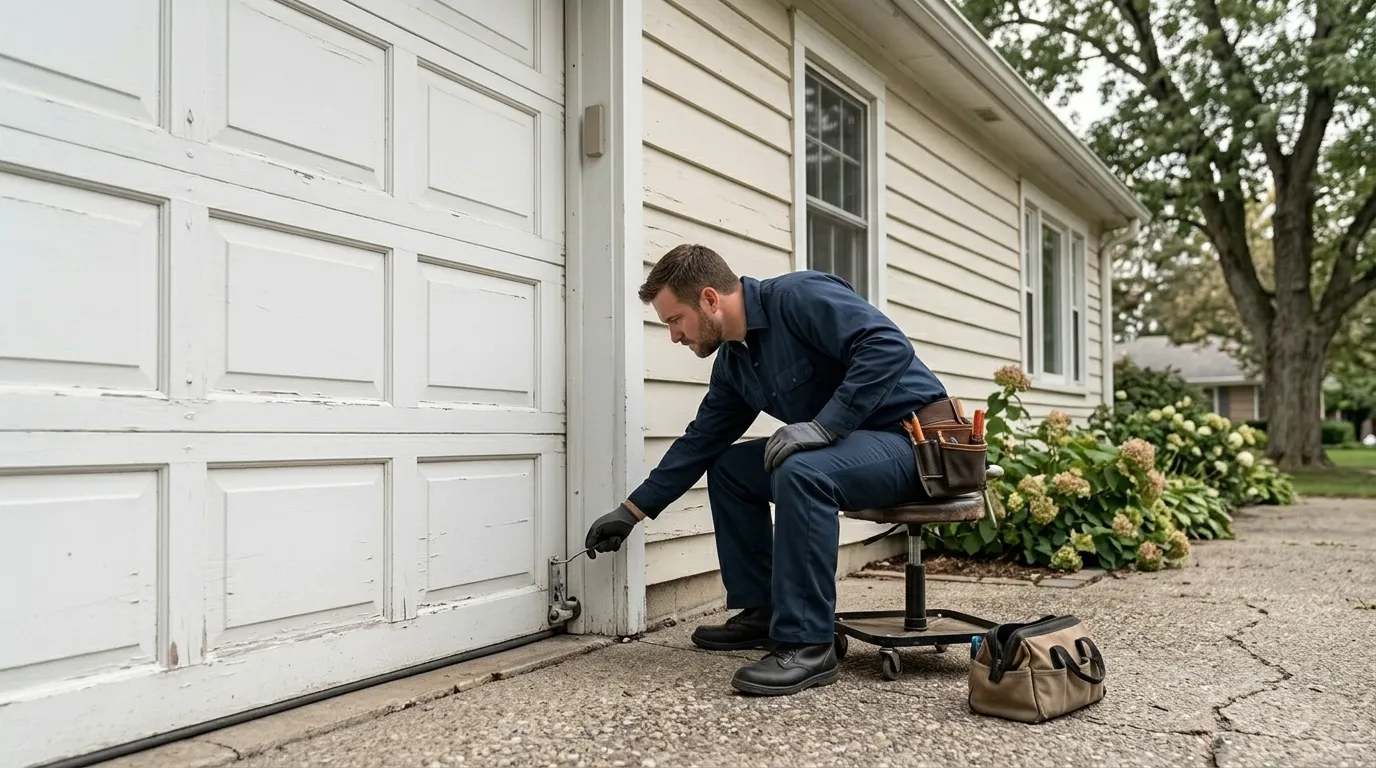
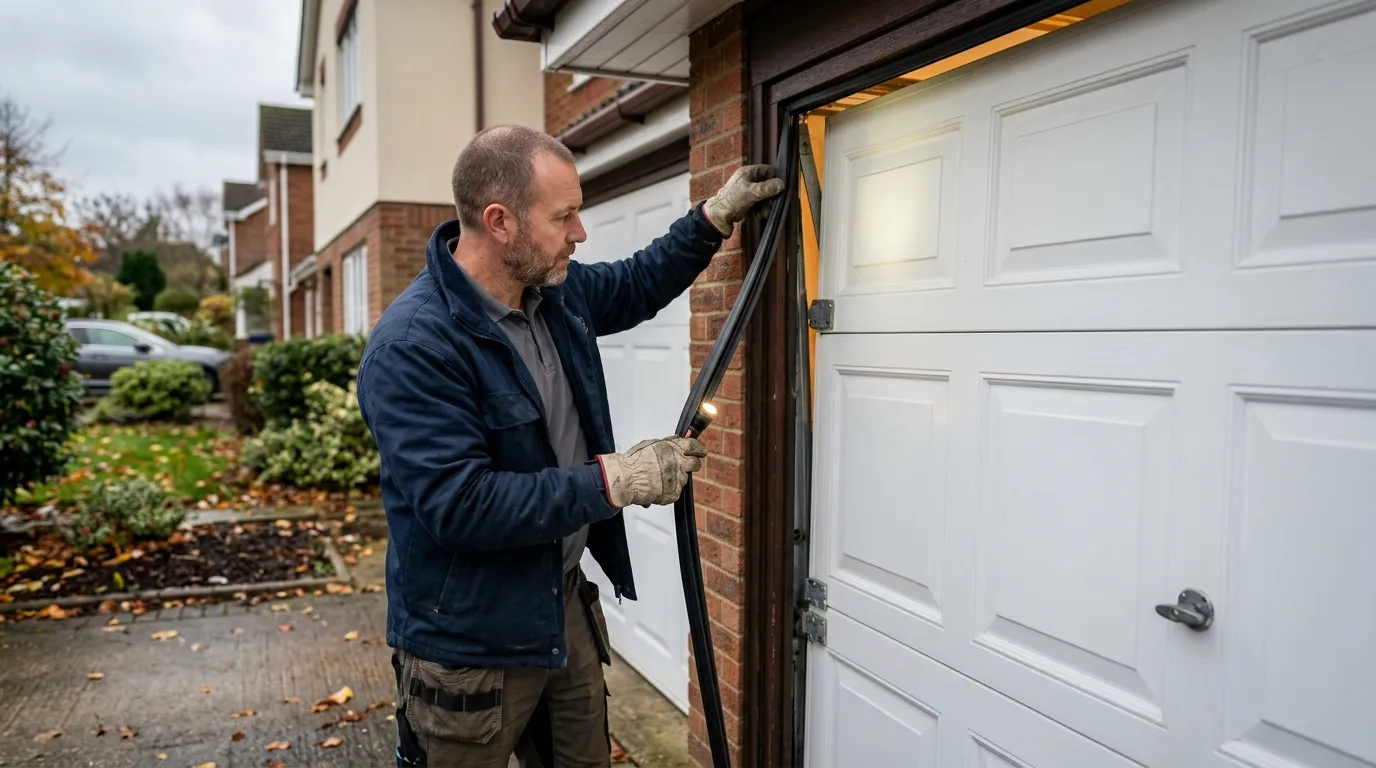
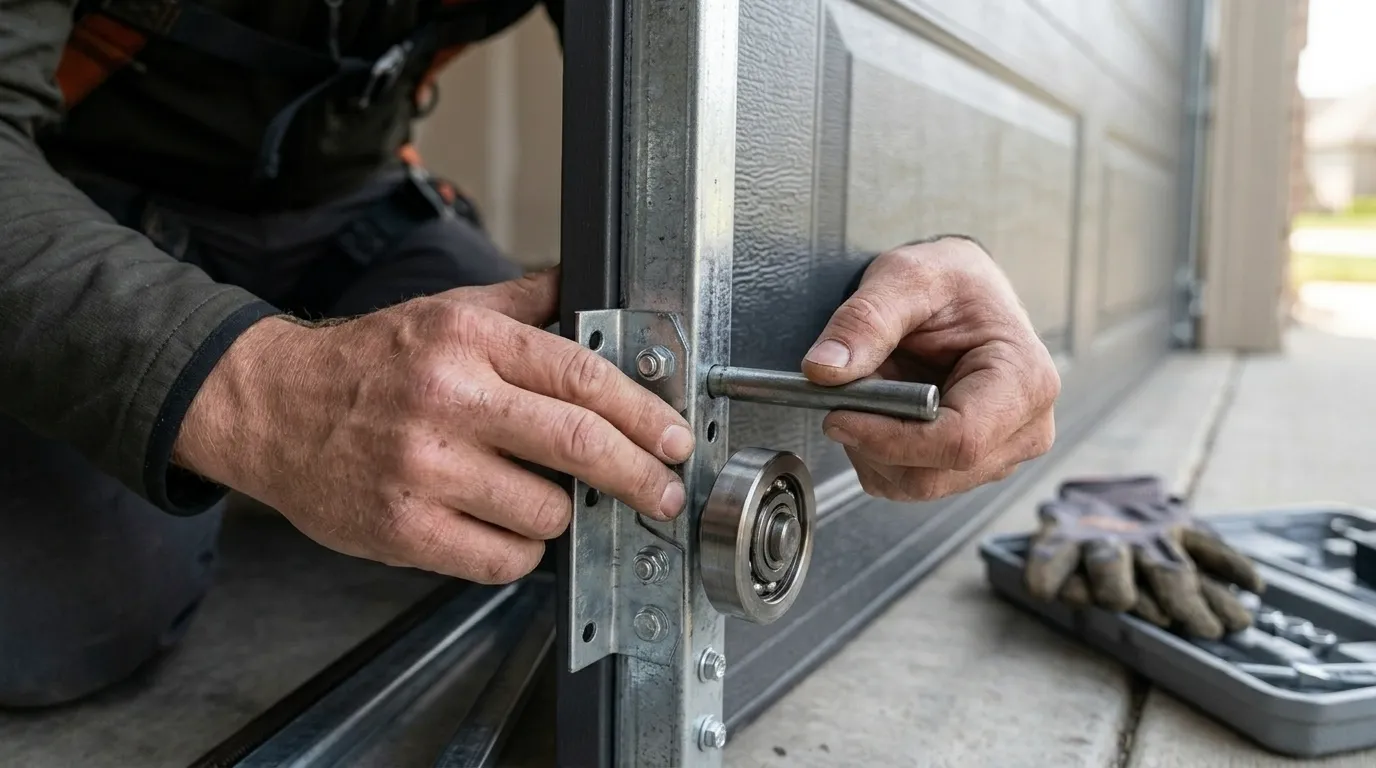
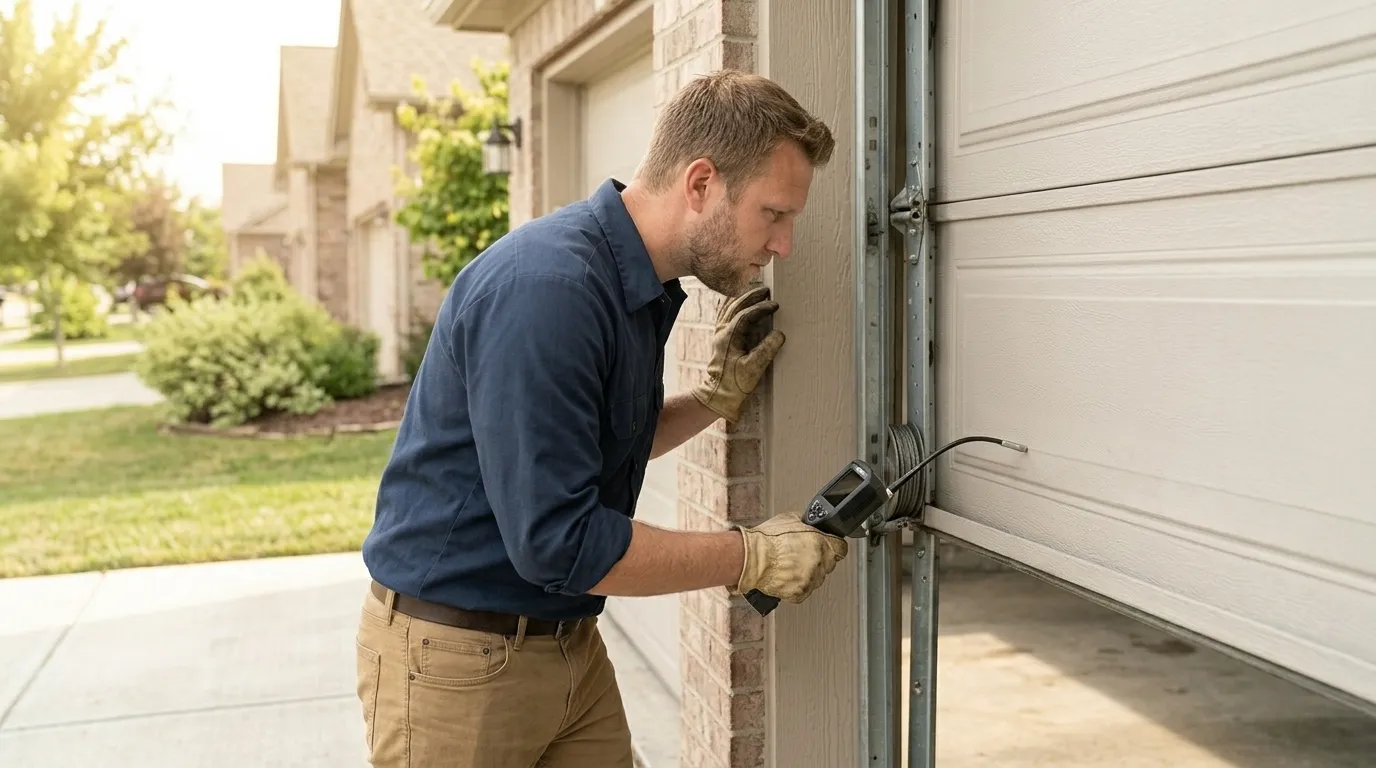
We also check the cables, drums, and center bearing plate while the spring's off, since those parts wear together and a bad bearing plate will chew through a new spring faster than it should.
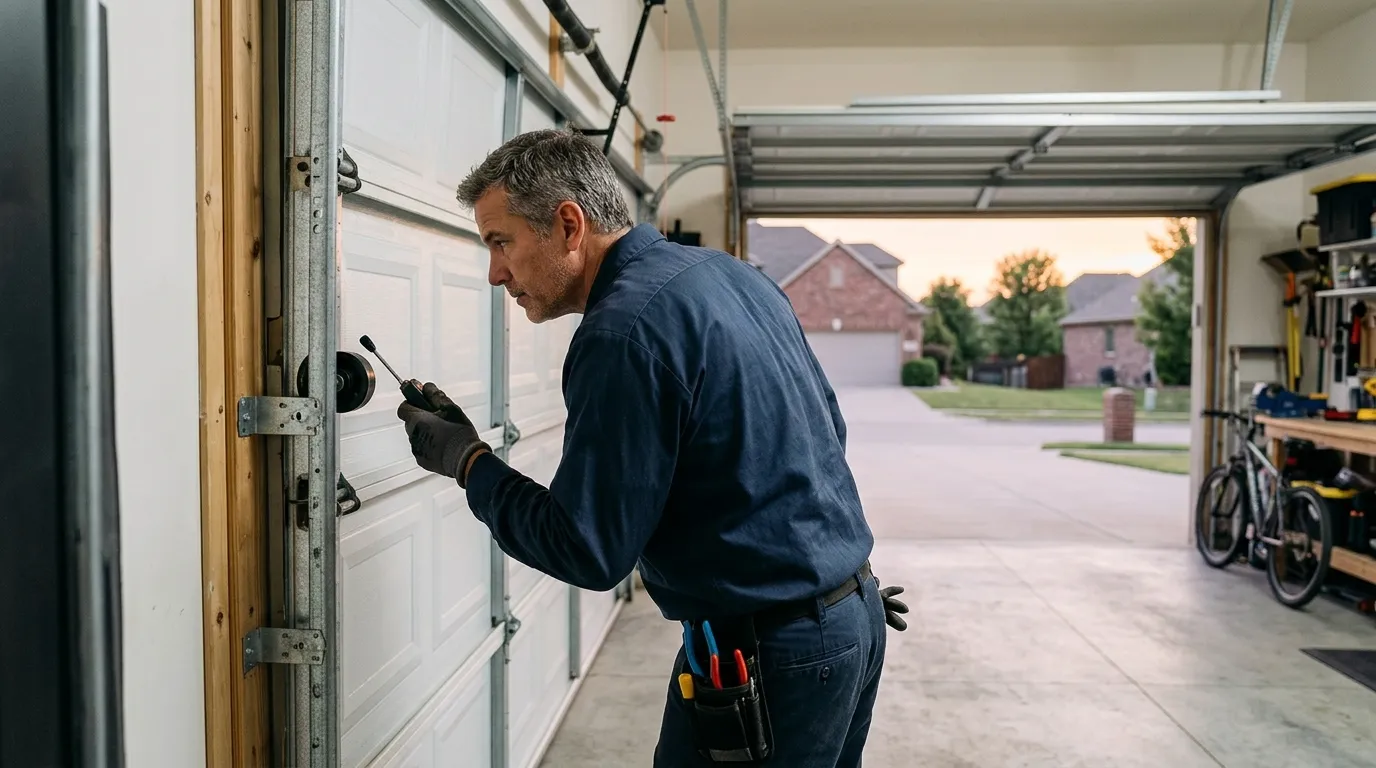
Once it's wound to the correct tension and the door balances - meaning it stays put at waist height without the opener holding it - we run it through a full open-close cycle and check the force settings on the opener before we call it done. Springs aren't a DIY repair; the bars are under real tension and a slip has hurt people. That part we won't talk anyone through over the phone.