What You Are Seeing
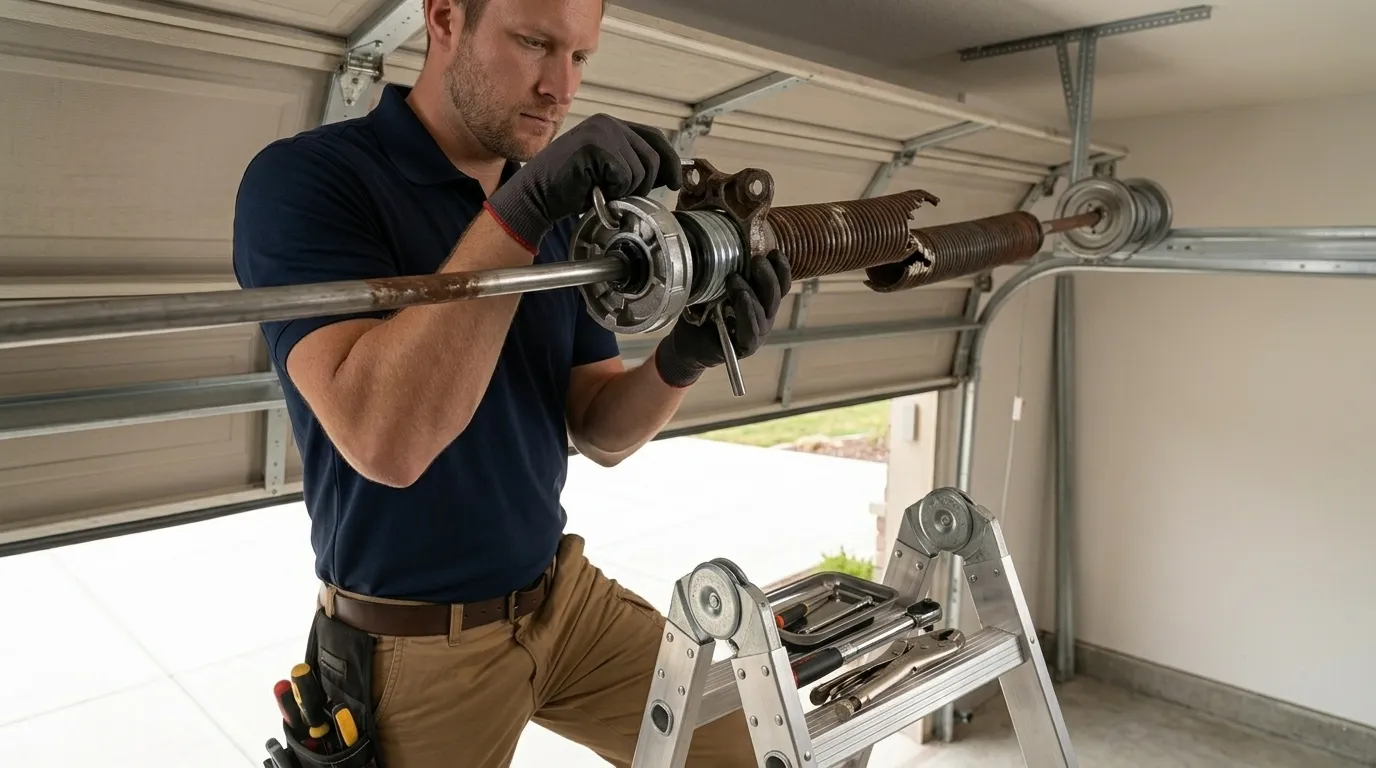
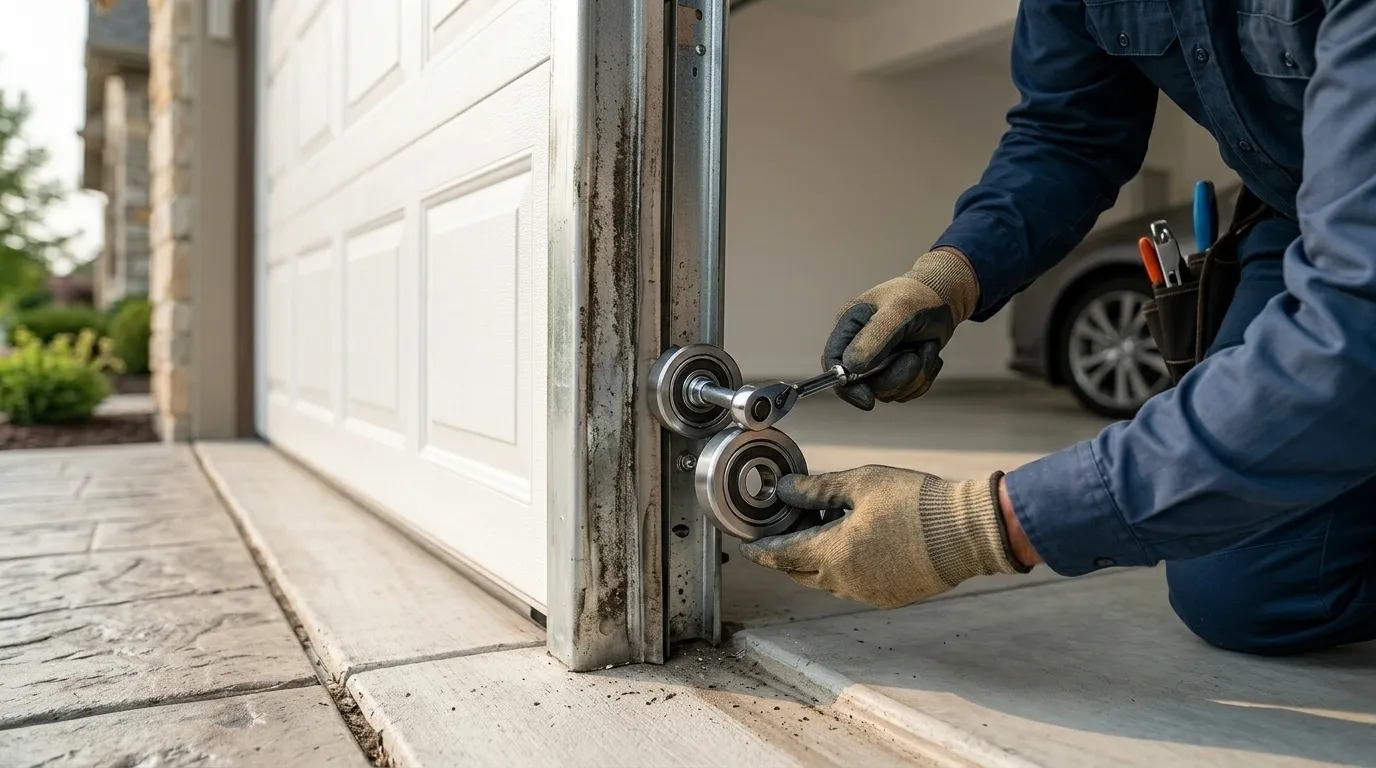
A door that used to glide now hesitates halfway up, or the opener grinds for a second before it catches. Maybe the door slams the last six inches instead of settling, or you hear a metallic pop when it closes and nobody's touched anything. None of that is random. A torsion spring loses tension a little at a time, rollers wear flat spots, and cable strands fray where they wrap the drum. By the time you notice a sound, the part has usually been degrading for months.
The houses across this service area were mostly built between 1974 and 2006, with a heavy concentration in the 1980s and 90s stock spread across the 17 named neighborhoods we work in. That means a lot of doors and openers are now old enough that the factory lubrication has long since dried out and the original hardware has never been adjusted. If your door is making noise it didn't used to make, that's the system telling you it's due for a look, not necessarily a full replacement.
What you're seeing is wear catching up with age, and in this climate that catch-up happens faster than owners expect. Ignoring it for another season usually turns a $150 tune-up into a spring failure that strands a car in the garage.
Why This Fails Locally
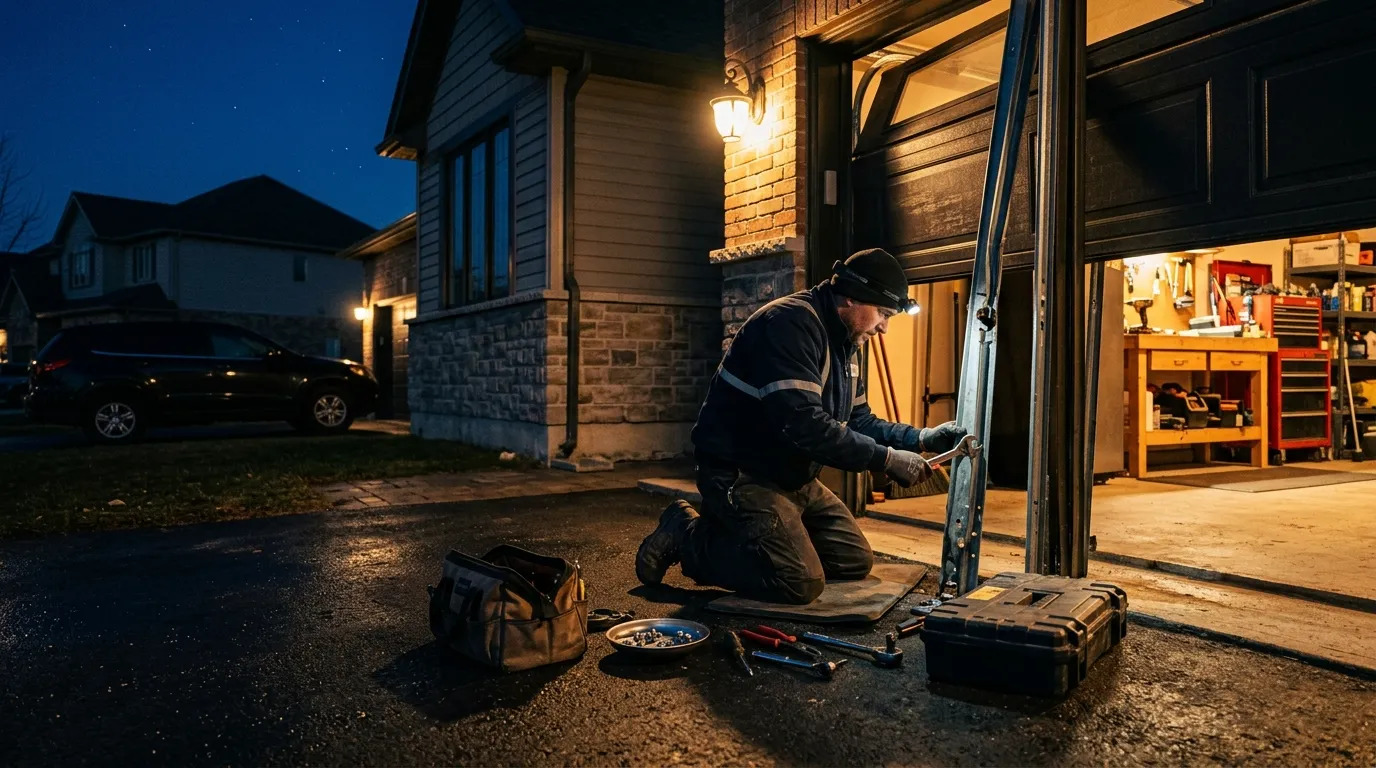
Cold, moderate winters do a specific kind of damage to garage door hardware that warmer climates don't see as much of. Steel torsion springs contract in the cold, cables tighten slightly, and any grease that's already thinning from age gets stiffer right when the door has to work hardest lifting a cold, heavy panel. That's a bad combination on a spring that's already 20 or 30 years into a system built for a house from the 1974-2006 construction window.
Most of the housing stock in this service area, across the 17 neighborhoods we cover, dates to the 1980s and 90s. That's the second generation of torsion-spring residential doors, and by now the springs, rollers, and cable ends on those original installs are well past the point where they should have had a mid-life service. Houses built later in that window, closer to 2006, are catching up fast too, because openers from that era are hitting 20 years old.
This isn't a problem unique to one street or one subdivision. It's a function of when this area was built out and what the winters here do to steel and grease every year since. A door that's never been serviced doesn't fail gently, it fails on the coldest morning of the year, which is exactly when you need it most.
What the Fix Involves
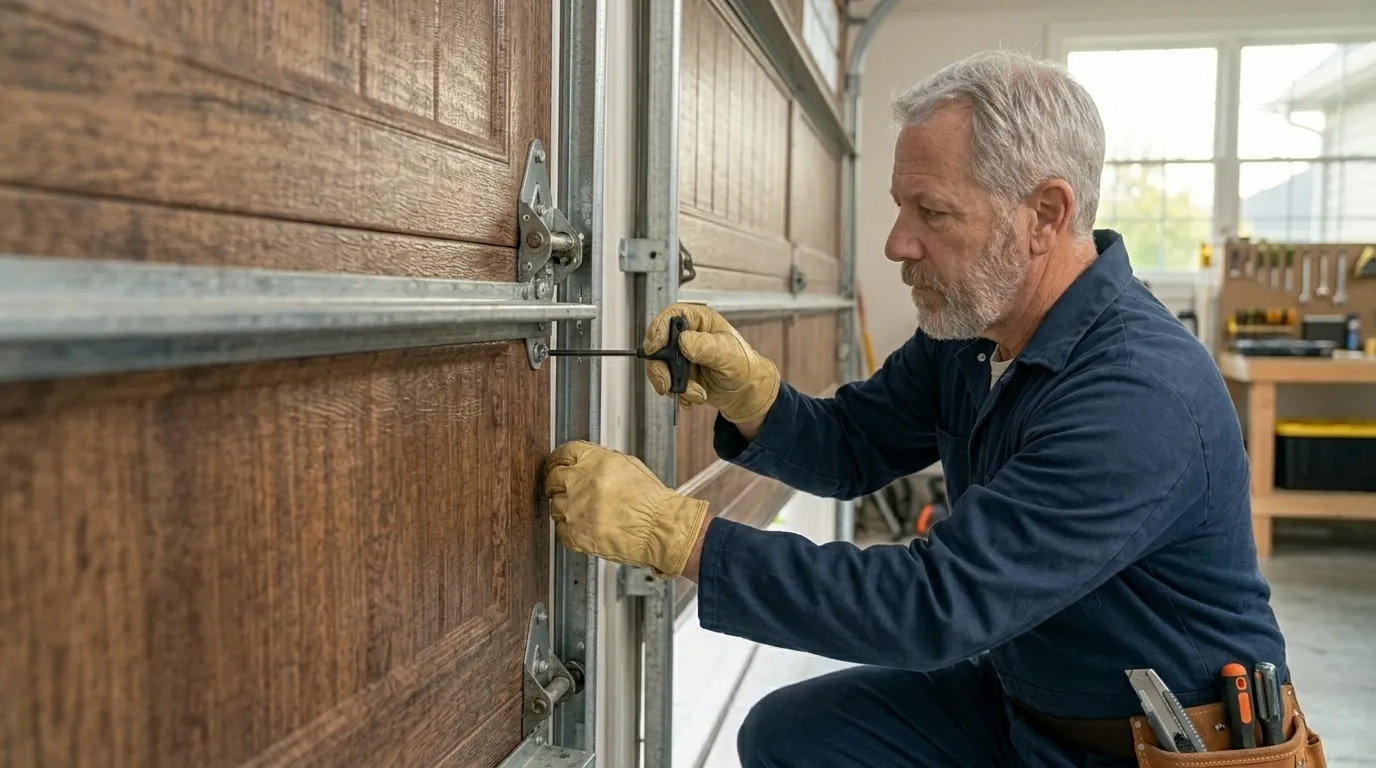
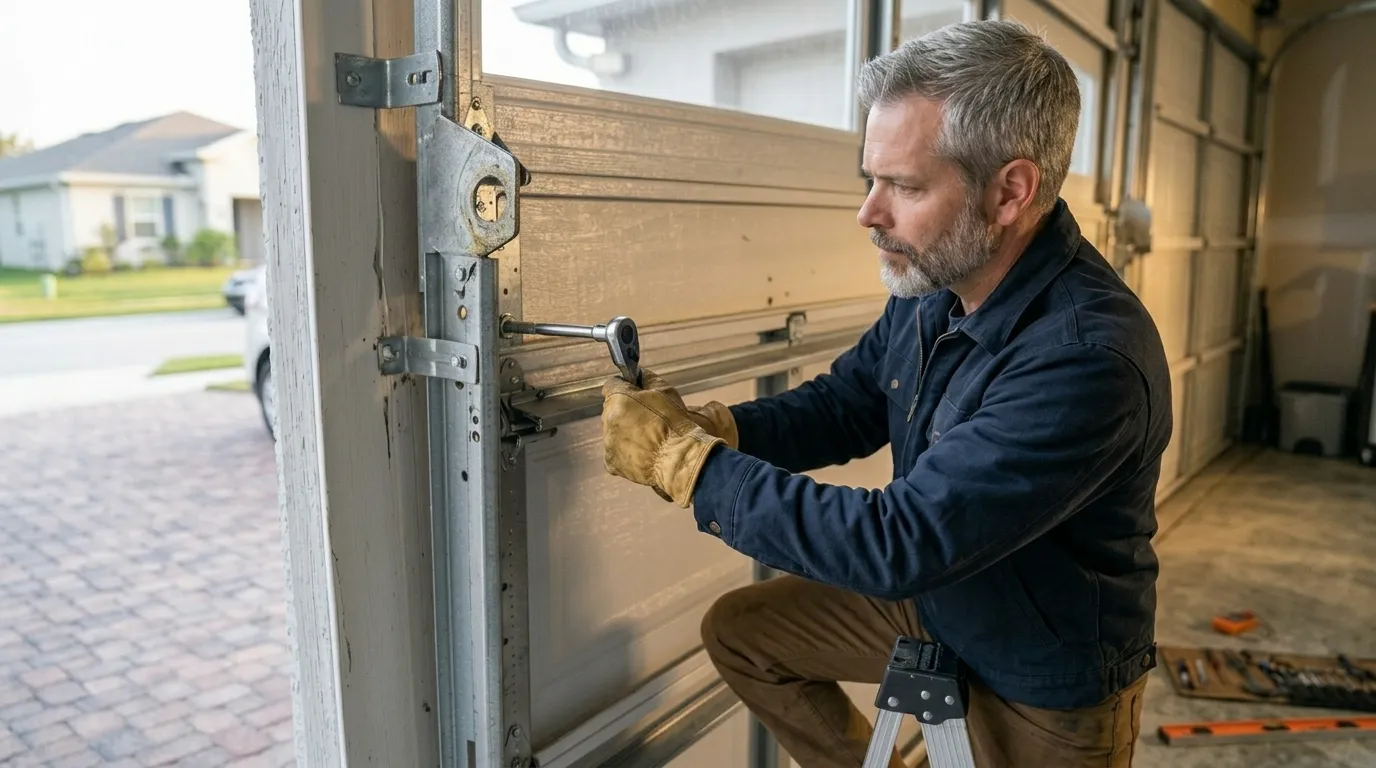
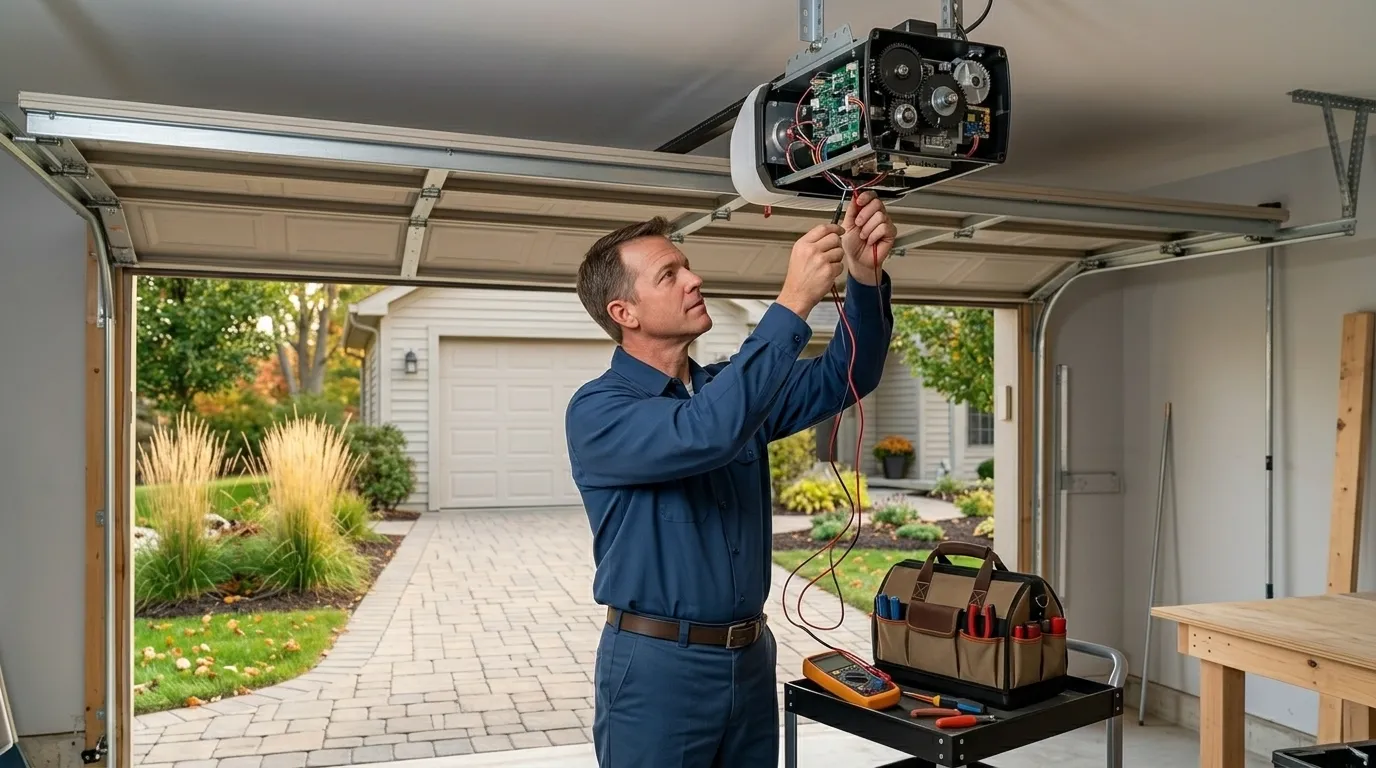
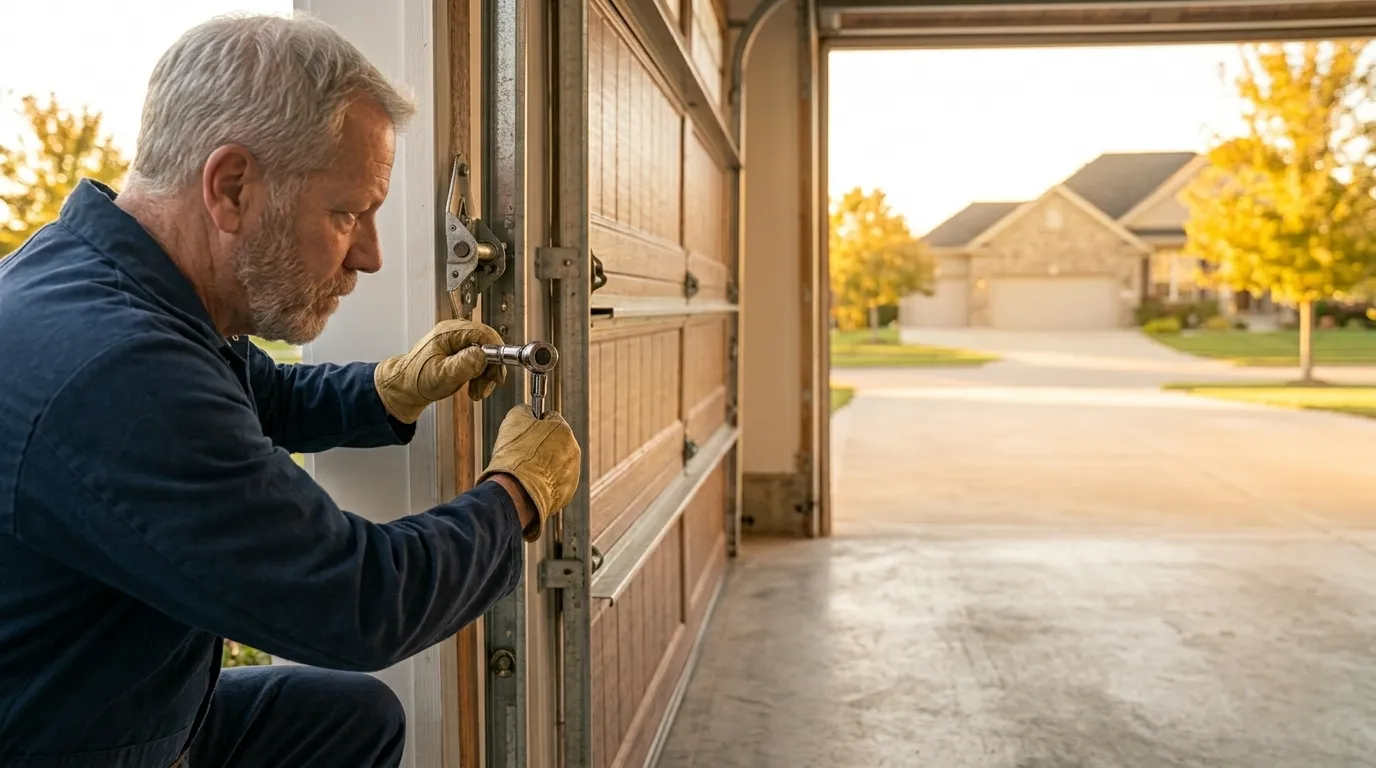
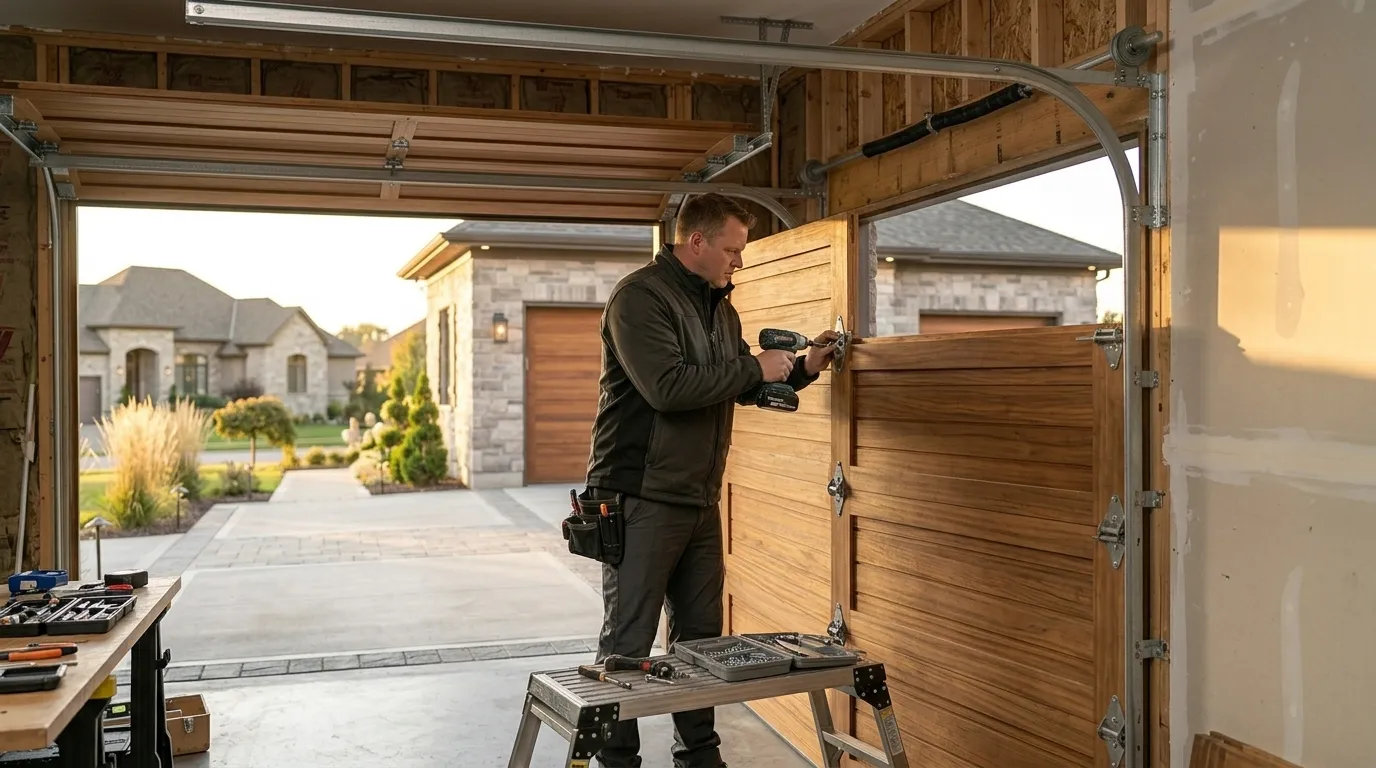
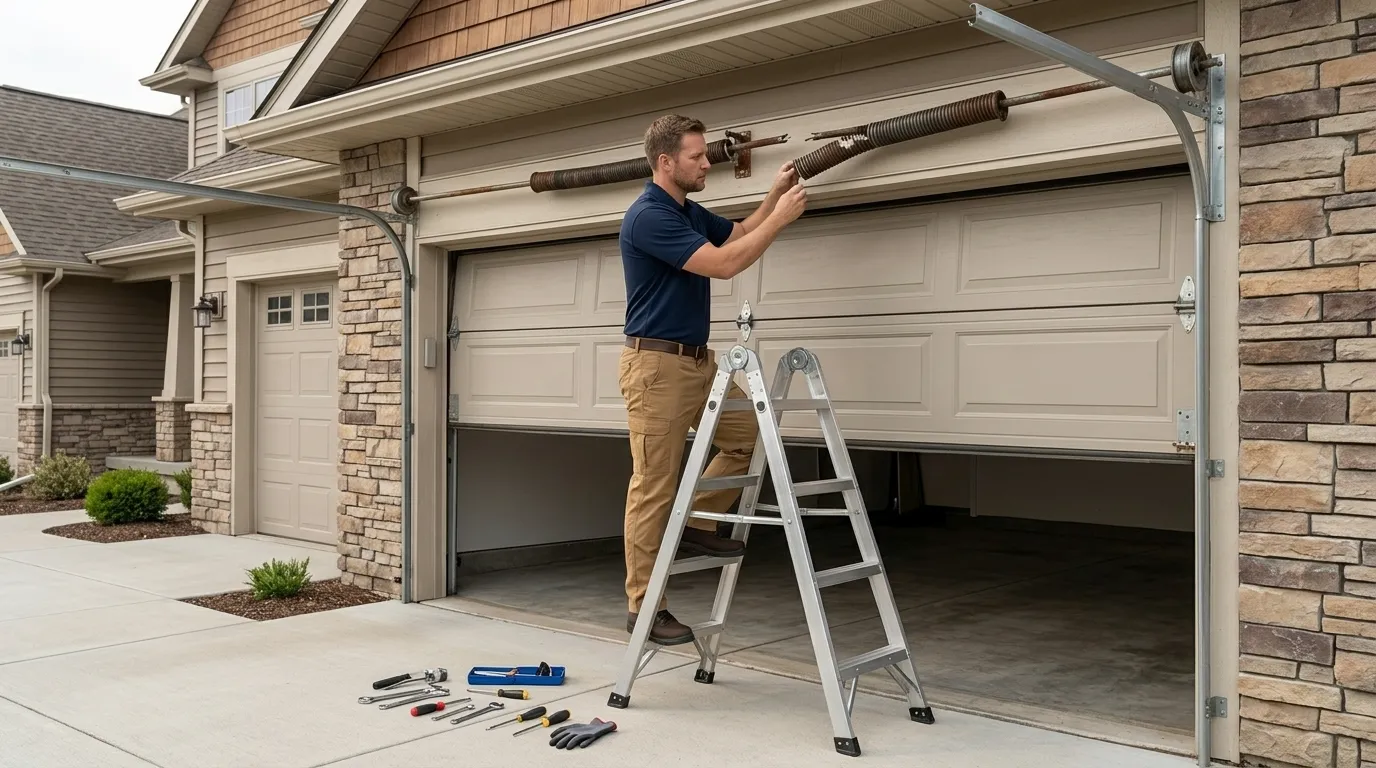
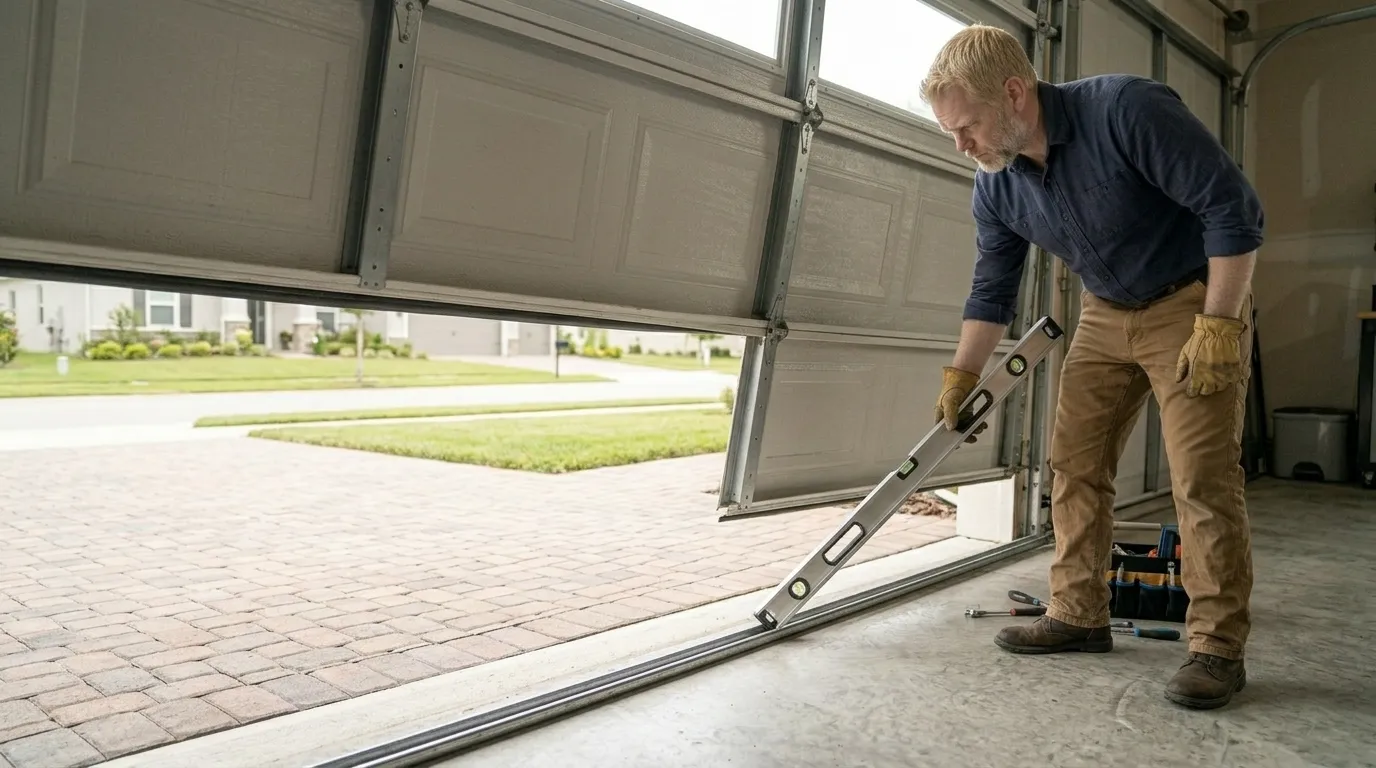
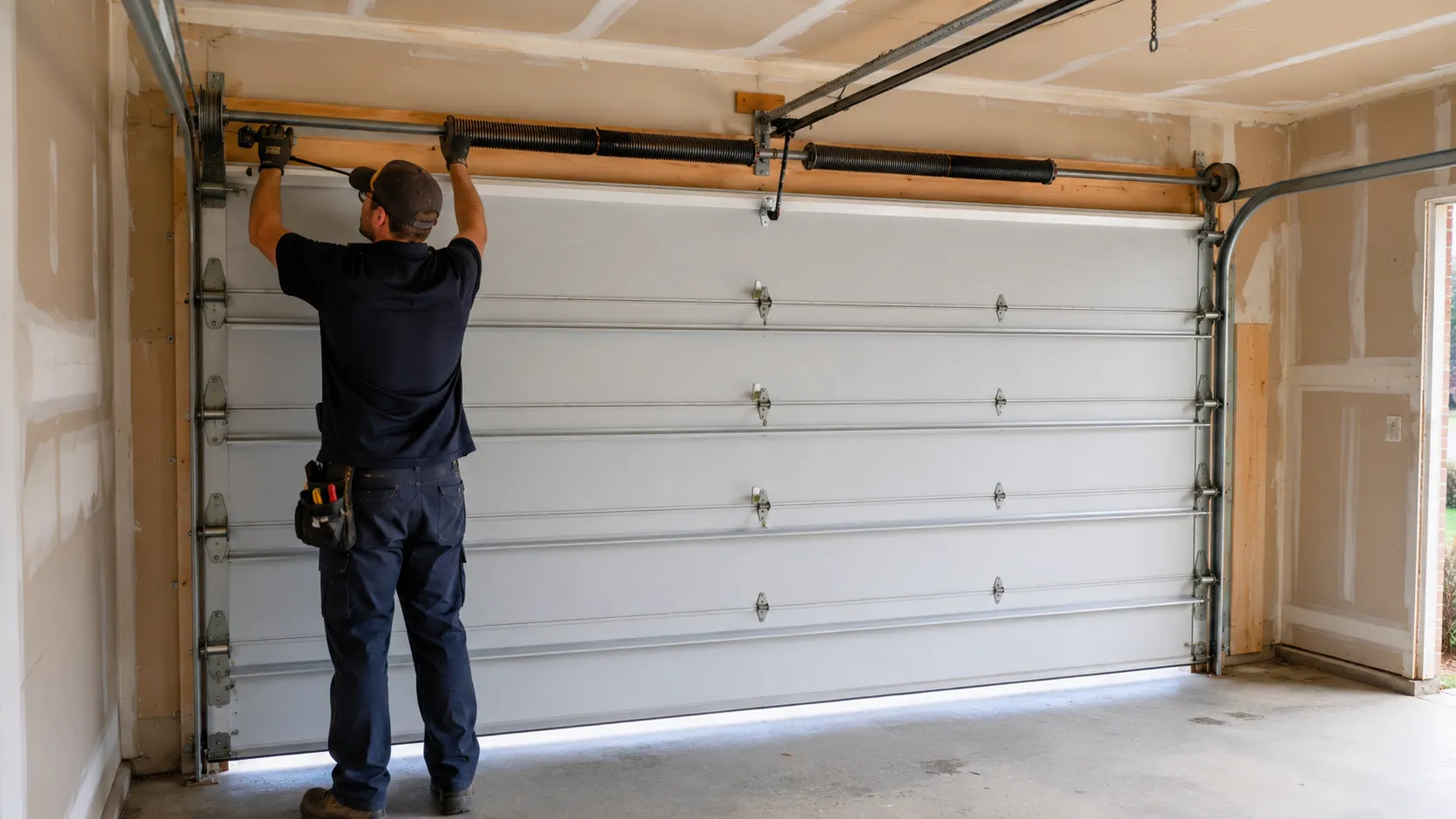
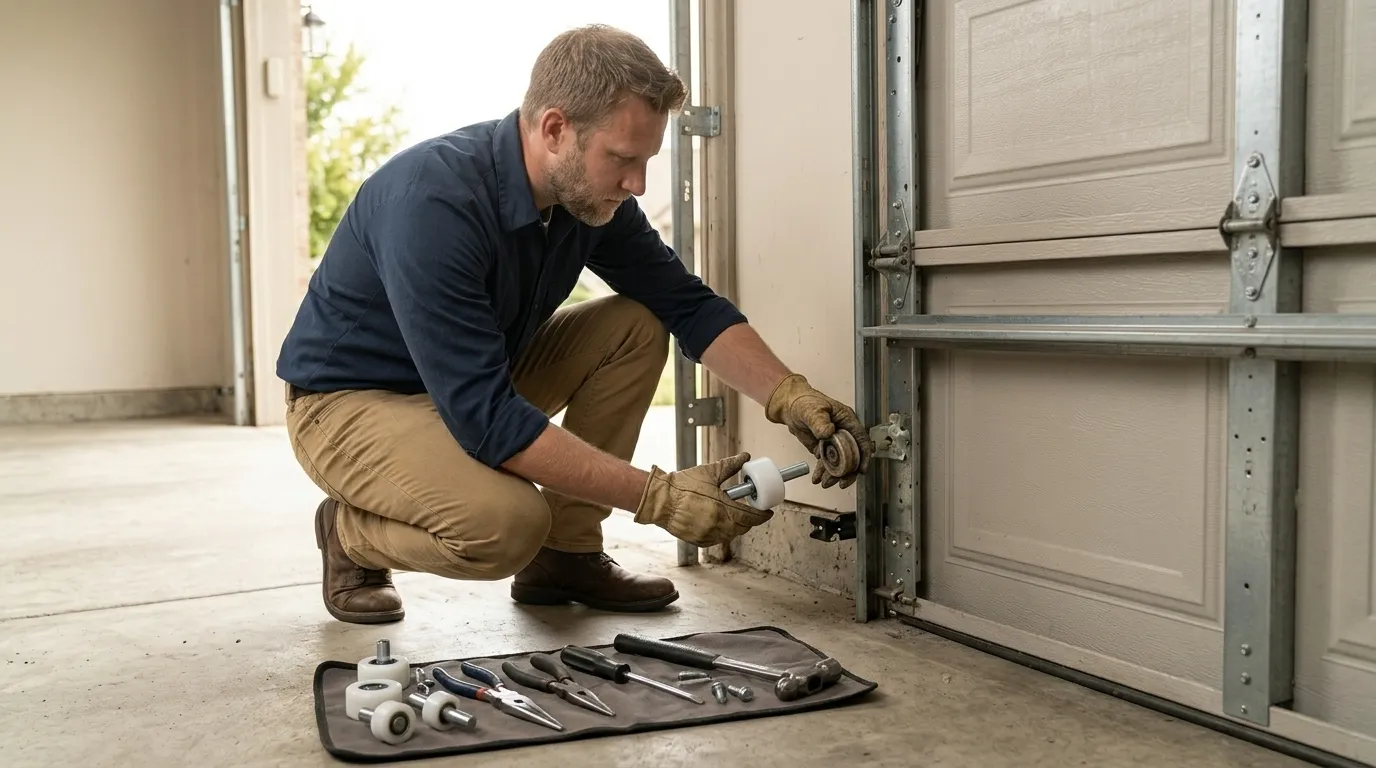
A real maintenance visit means we check spring tension and balance the door, because an unbalanced door is what burns out openers early. We inspect cables and drums for fraying, lubricate rollers, hinges, and the torsion bar itself with the right grease, not household oil, and tighten the hardware that vibration works loose over years of daily cycles. We check the opener's force settings and safety reversal, since those drift out of spec as springs age and stop matching the door's actual weight.
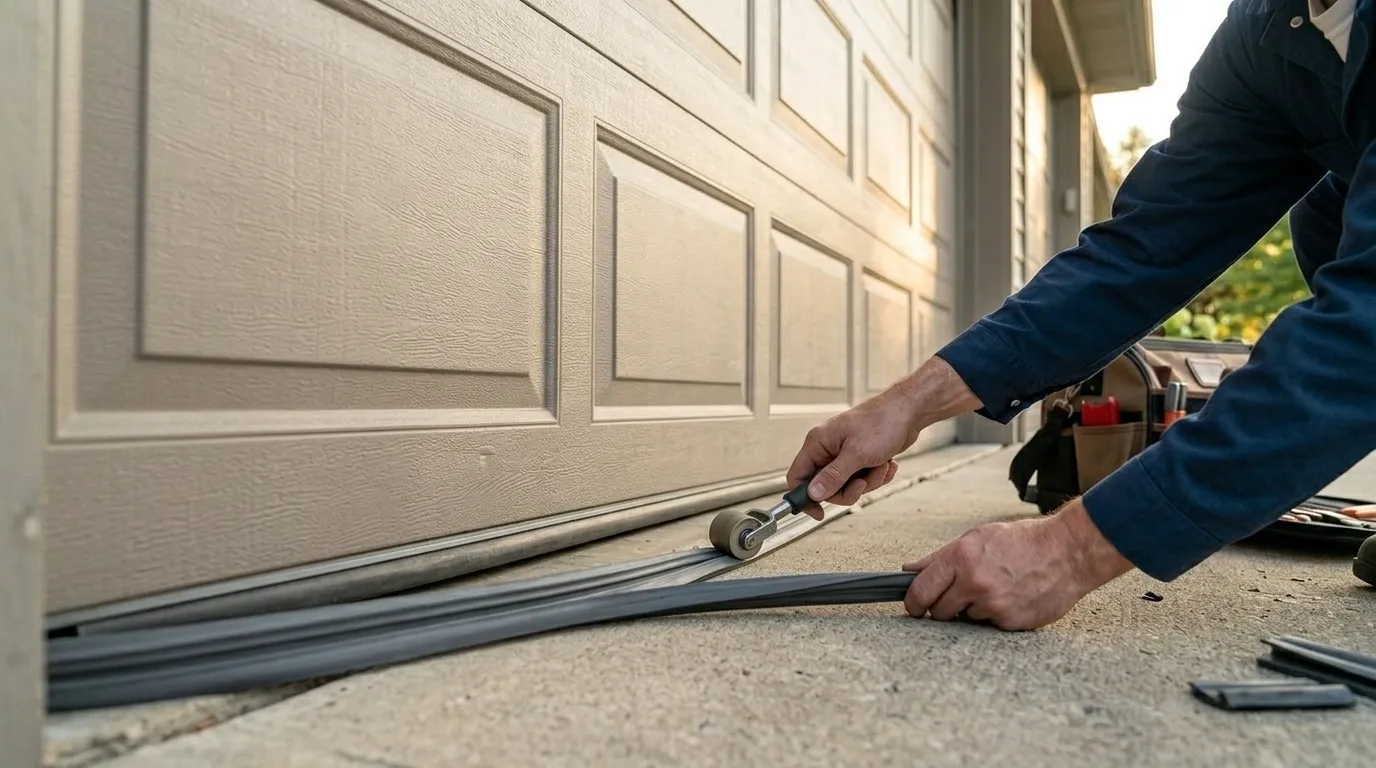
We also look at weatherstripping and the bottom seal, which matter more here than in a warmer climate because a gap lets cold air and moisture work on hardware that's already stressed by winter temperature swings. On a door from the 1980s or 90s stock common in this area, we'll flag if the spring is close to the end of its cycle life so you can plan a replacement before it lets go on its own.
The honest limitation: a tune-up won't fix a door that's already badly out of balance from a broken spring, or an opener whose gears are stripped. At that point you're looking at a repair or replacement conversation, and we'll tell you which one makes sense rather than selling a maintenance visit that won't hold.