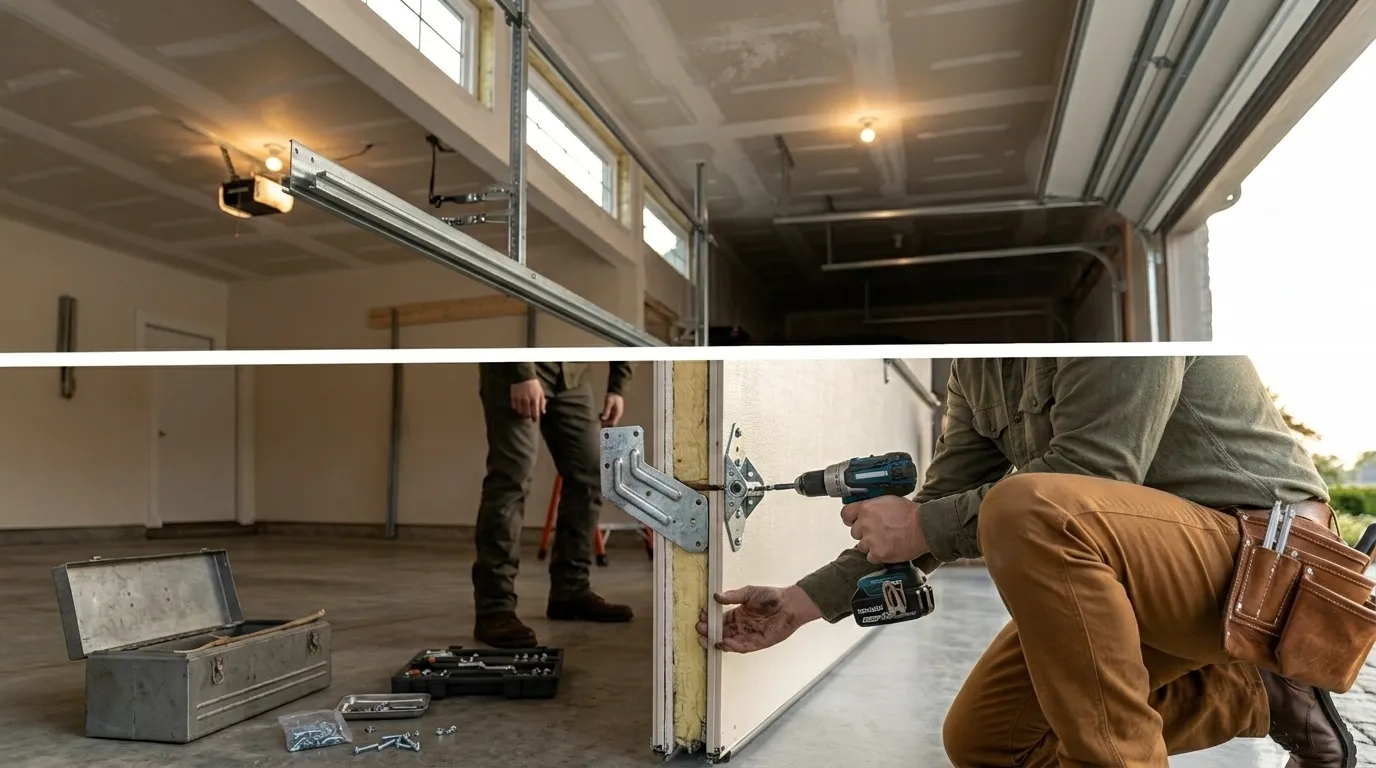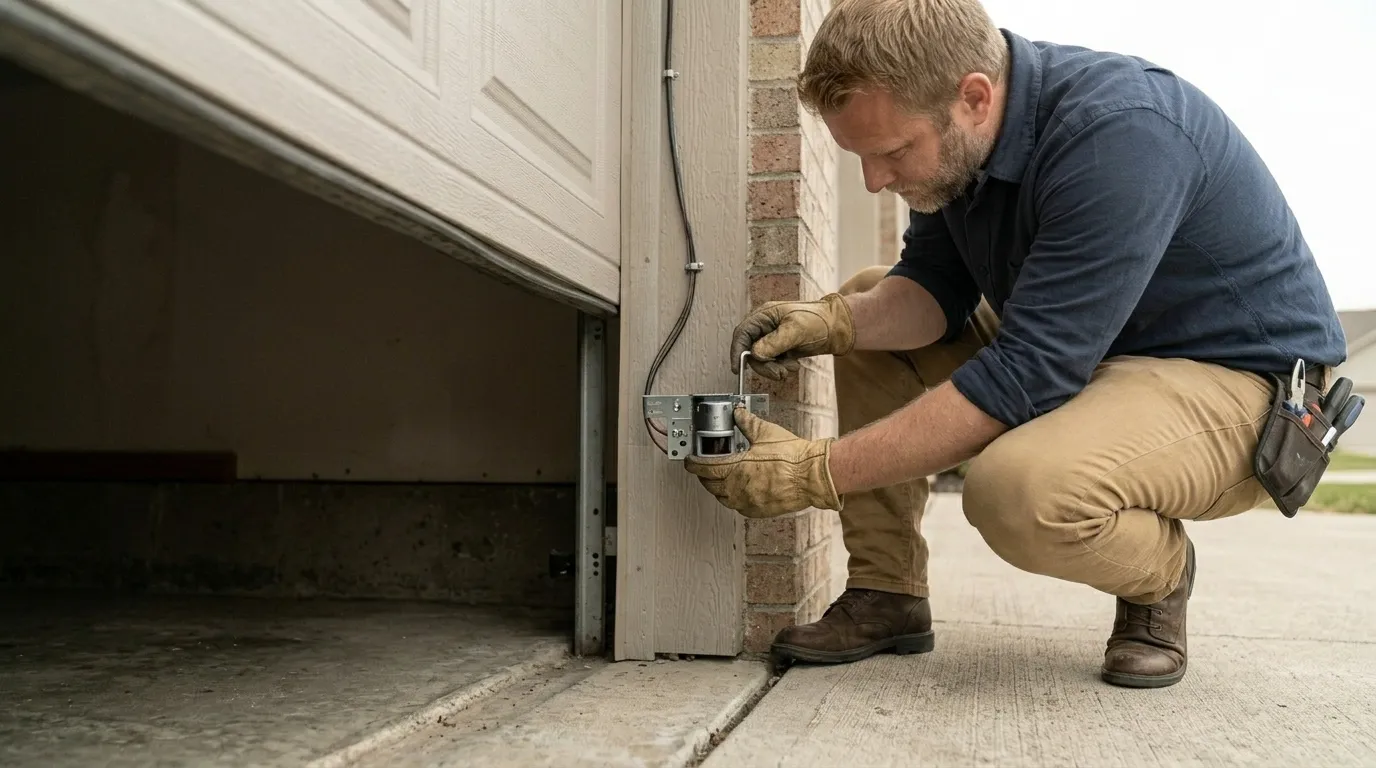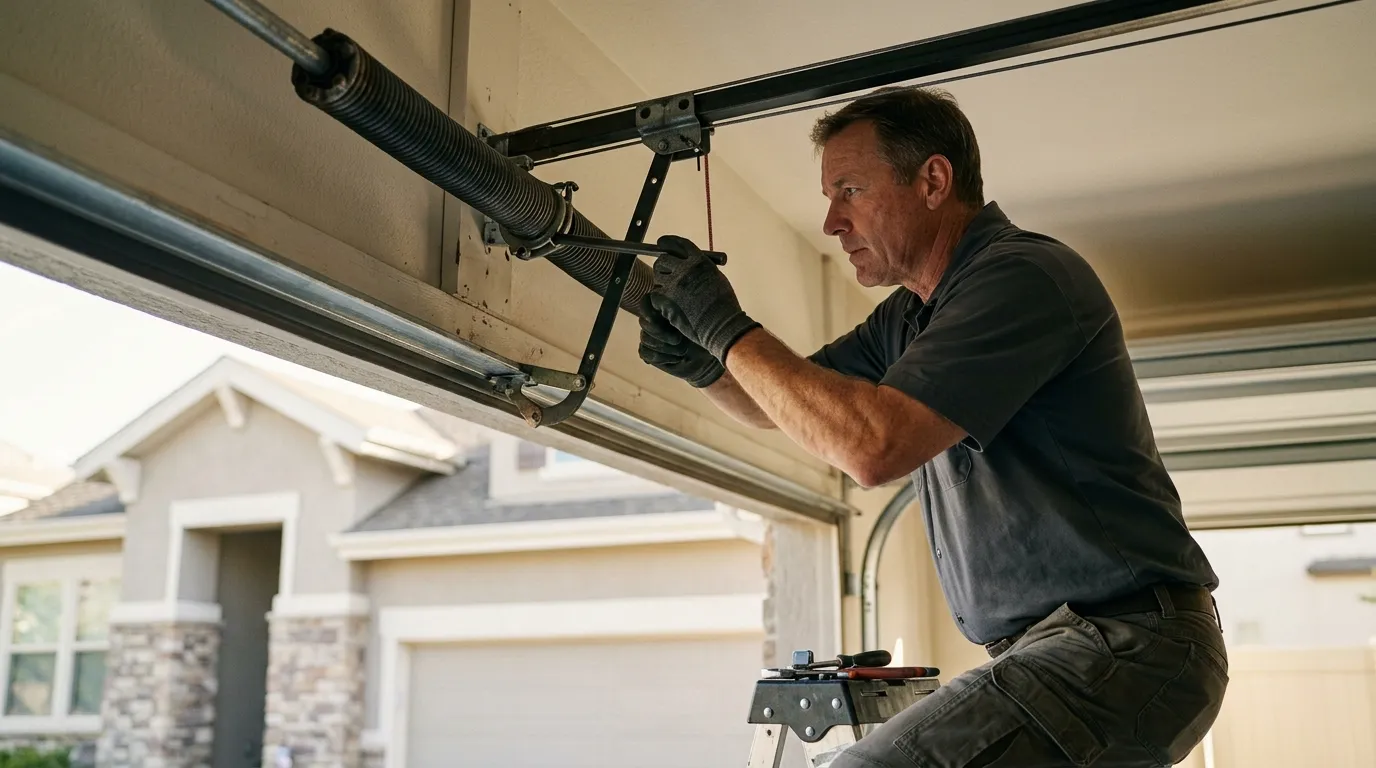
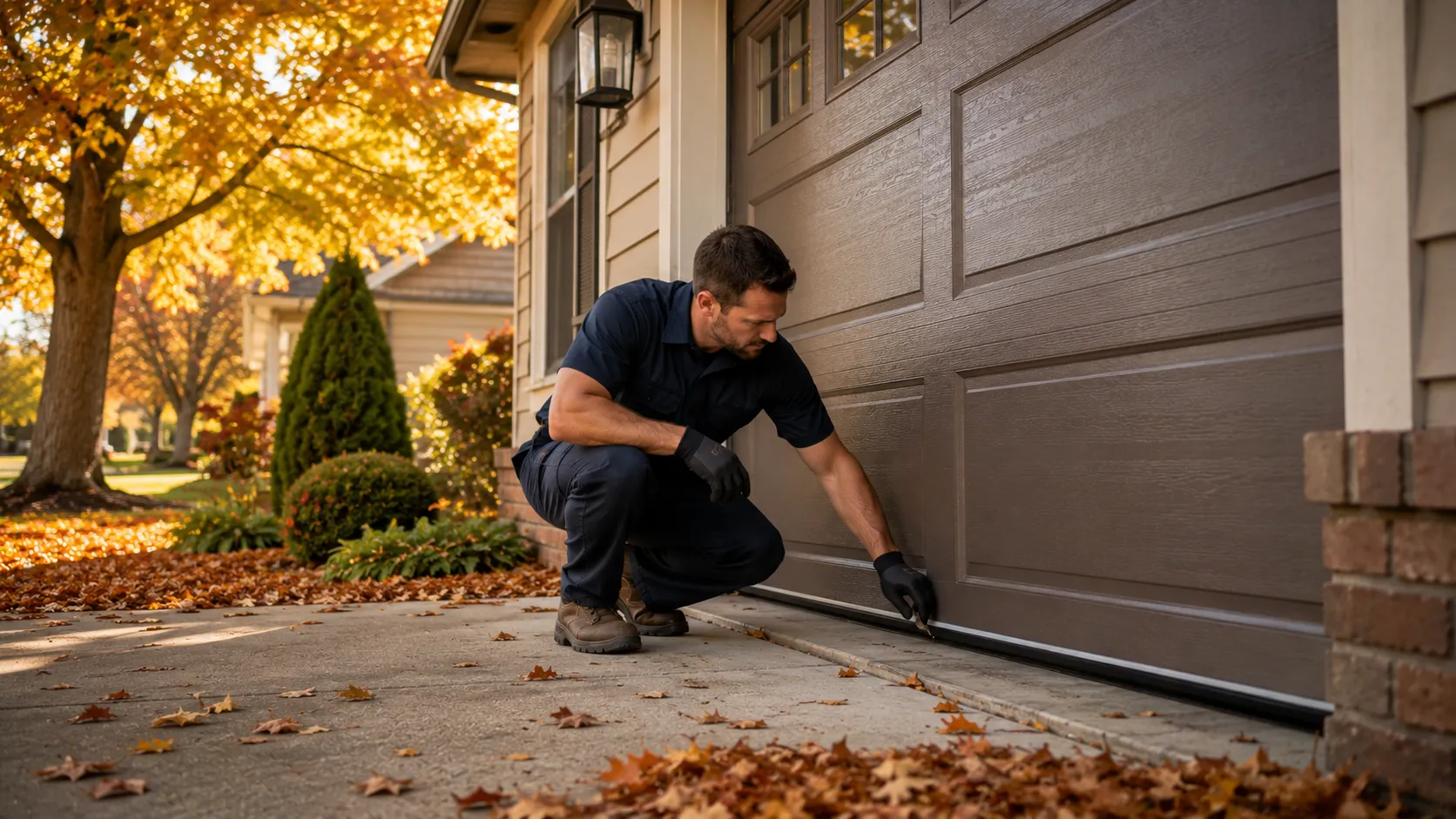
What You Are Seeing
The opener hums but the door doesn't move. Or it moves halfway, reverses, and sits there blinking a light you've never noticed before. Sometimes it's quieter than that - the remote works from the driveway but not from the street, or the wall button does nothing at all.
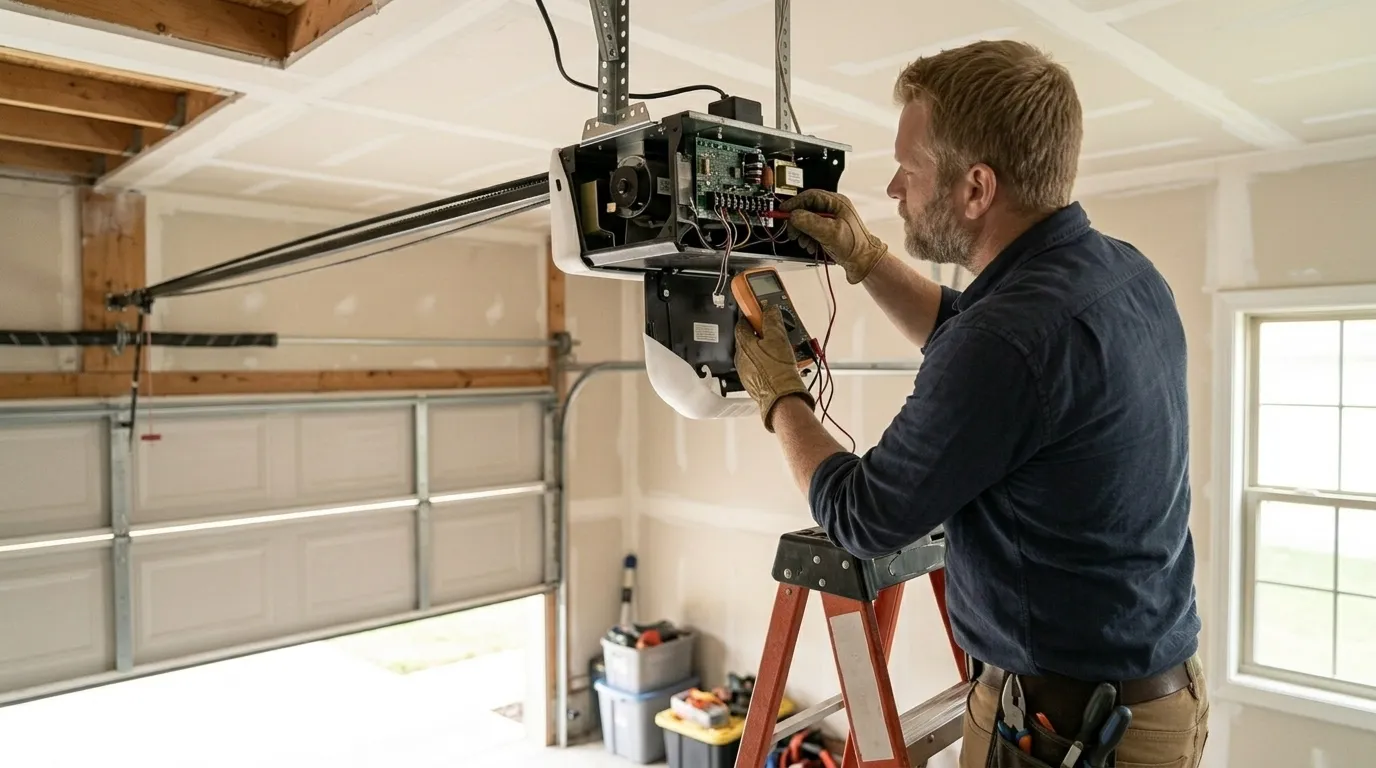
In Matthews, most of what we get called out for falls into a handful of patterns: a logic board that's lost its memory of the travel limits, a safety sensor pair that's gone out of alignment, or a drive gear worn down to plastic dust inside the unit's housing. None of these are dramatic failures. They're wear failures, and they show up gradually before they show up completely.
Across the 17 named areas in this service territory - from to - the opener brands and mounting styles vary, but the failure patterns don't vary much house to house. What varies is how long a homeowner puts up with the intermittent version before the door quits opening altogether. We'd rather see it at the intermittent stage. That's the cheaper visit.
Why This Fails Locally
Housing in this service area was mostly built between 1974 and 2006, with a median build year around 1998. That means a huge share of openers out there are the chain-drive and early belt-drive units that shipped standard with builder-grade garage packages of that era - units now 20 to 45 years into a service life that was never rated for 20 to 45 years.
Most of that stock clusters in 1980s and 90s construction across the 17 named neighborhoods in the territory, which means capacitors, circuit boards, and gear sets are aging at roughly the same pace across a lot of houses at once. When one opener in a subdivision starts failing, it's rarely alone.
The climate here is a cold-moderate band - not brutal, but enough seasonal swing that garage temperatures cycle through real highs and real lows every year. That cycling is hard on the plastic drive gear inside a chain or belt opener and on the photo-eye sensor brackets, which loosen slightly with each expansion and contraction. A sensor that's a quarter-inch out of alignment reads fine in July and refuses to close in January. That's not a coincidence - it's the same physical process every year, and it's why we see a seasonal bump in opener calls.
What the Fix Involves
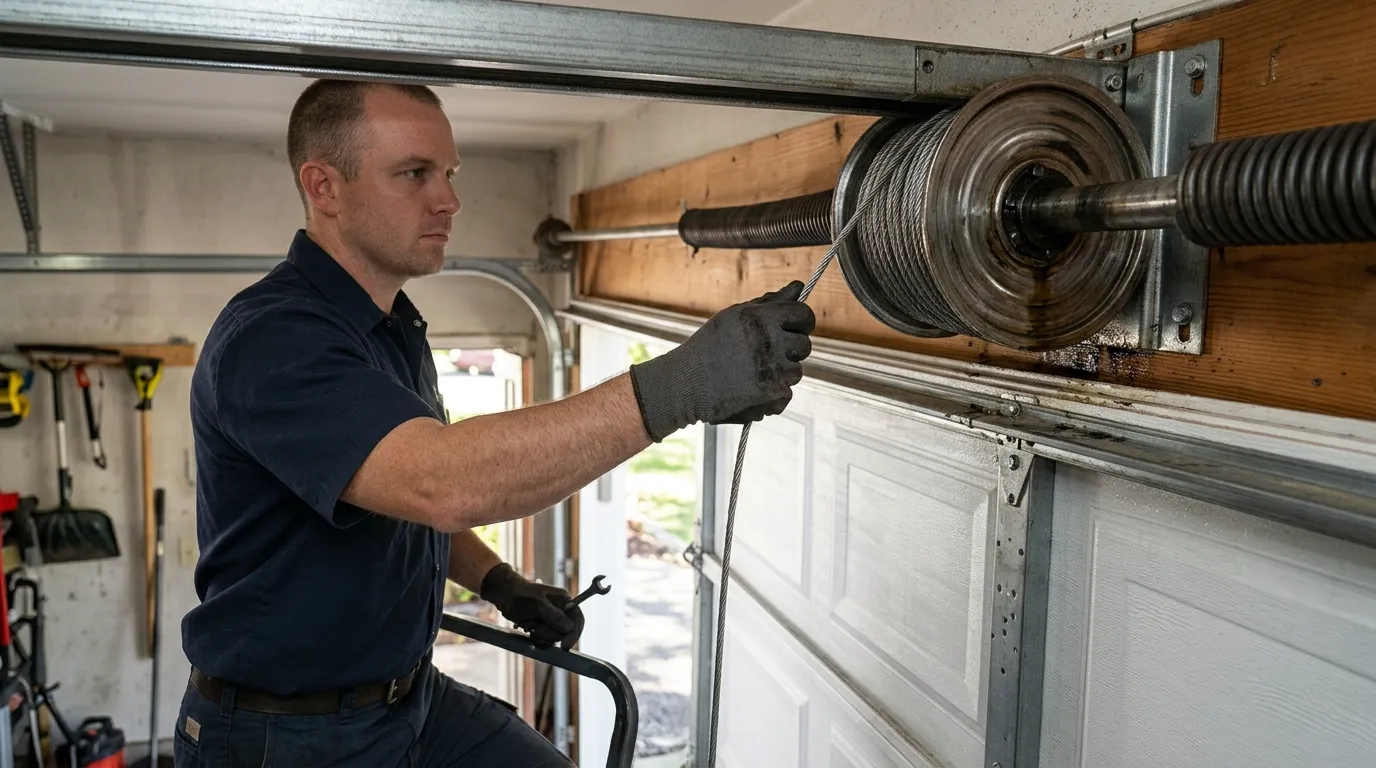
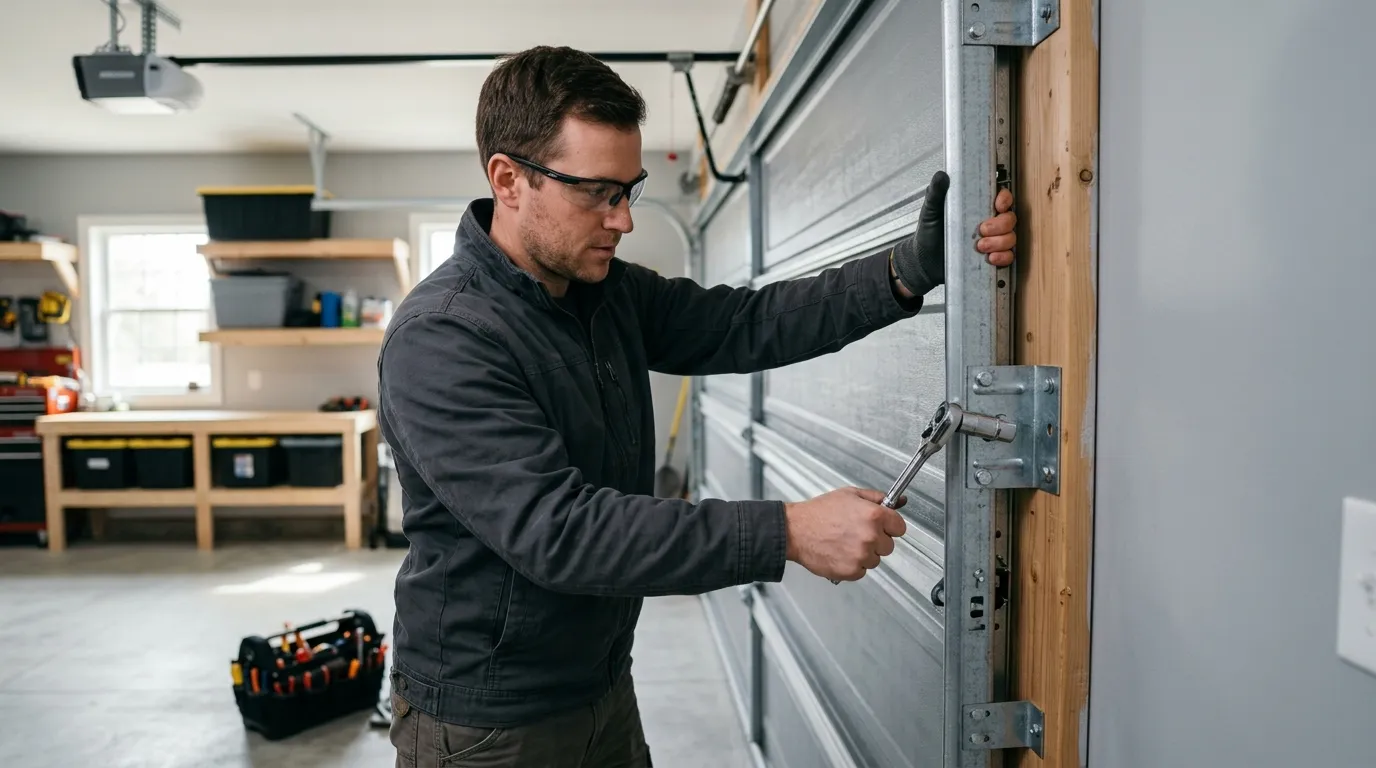
Diagnosis first, always. We check the wall control, the safety sensors, the travel limits, and the drive mechanism in that order, because that's the order failures actually happen in, not the order that's convenient to sell.
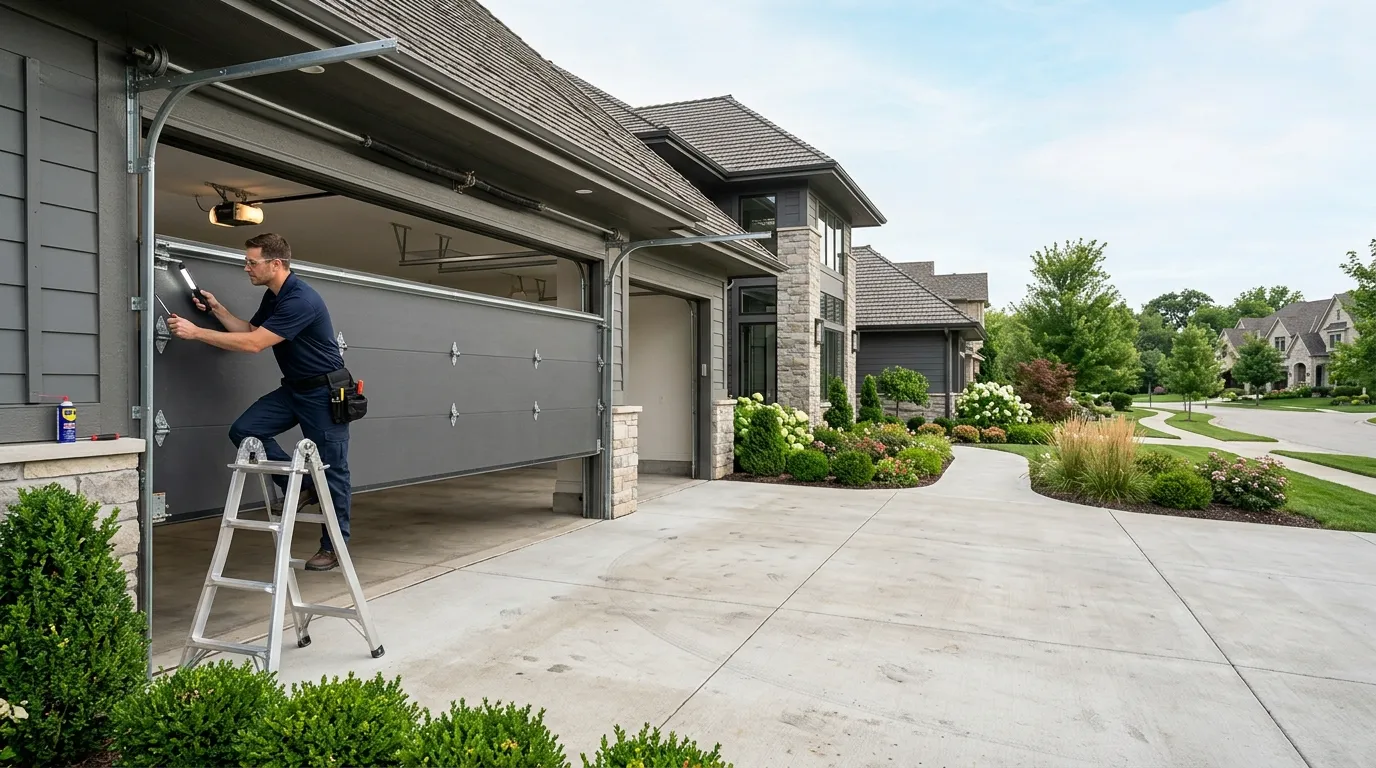
If it's a sensor alignment issue - common in this climate band as brackets shift with seasonal temperature swings - that's a short visit. Realign, test, done. If it's a drive gear worn down inside a chain-drive unit from an original builder installation, that's a part swap inside the housing, not a full opener replacement, and we'll show you the worn gear before we throw it out.
If the logic board is dead on a unit old enough to match the 1974-2006 housing stock common here, and the manufacturer doesn't support that board anymore, we'll say so and quote a new opener instead of pretending a workaround exists. We don't replace a whole unit to fix a $40 sensor bracket, and we don't quote a sensor fix on a board that's actually dead. The goal is telling you which one you actually have.