
What You Are Seeing
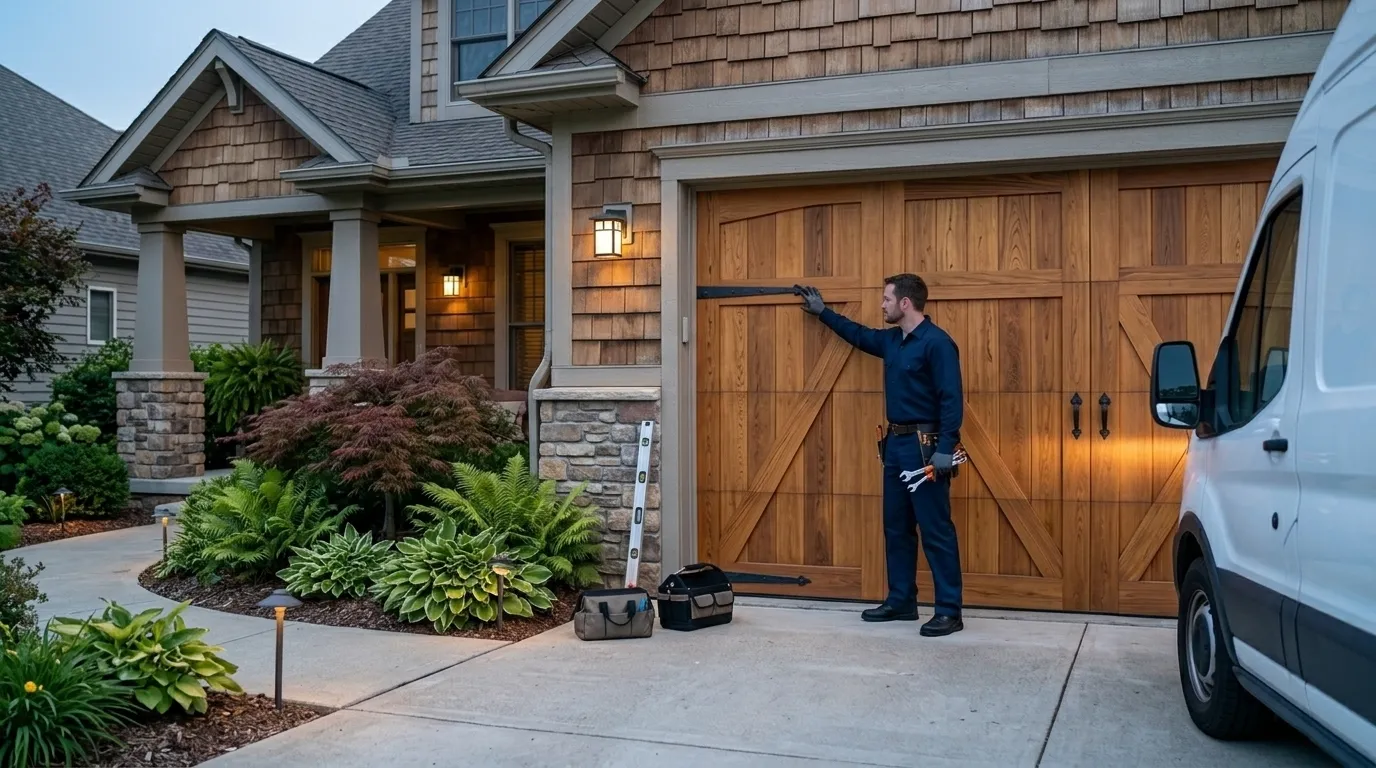
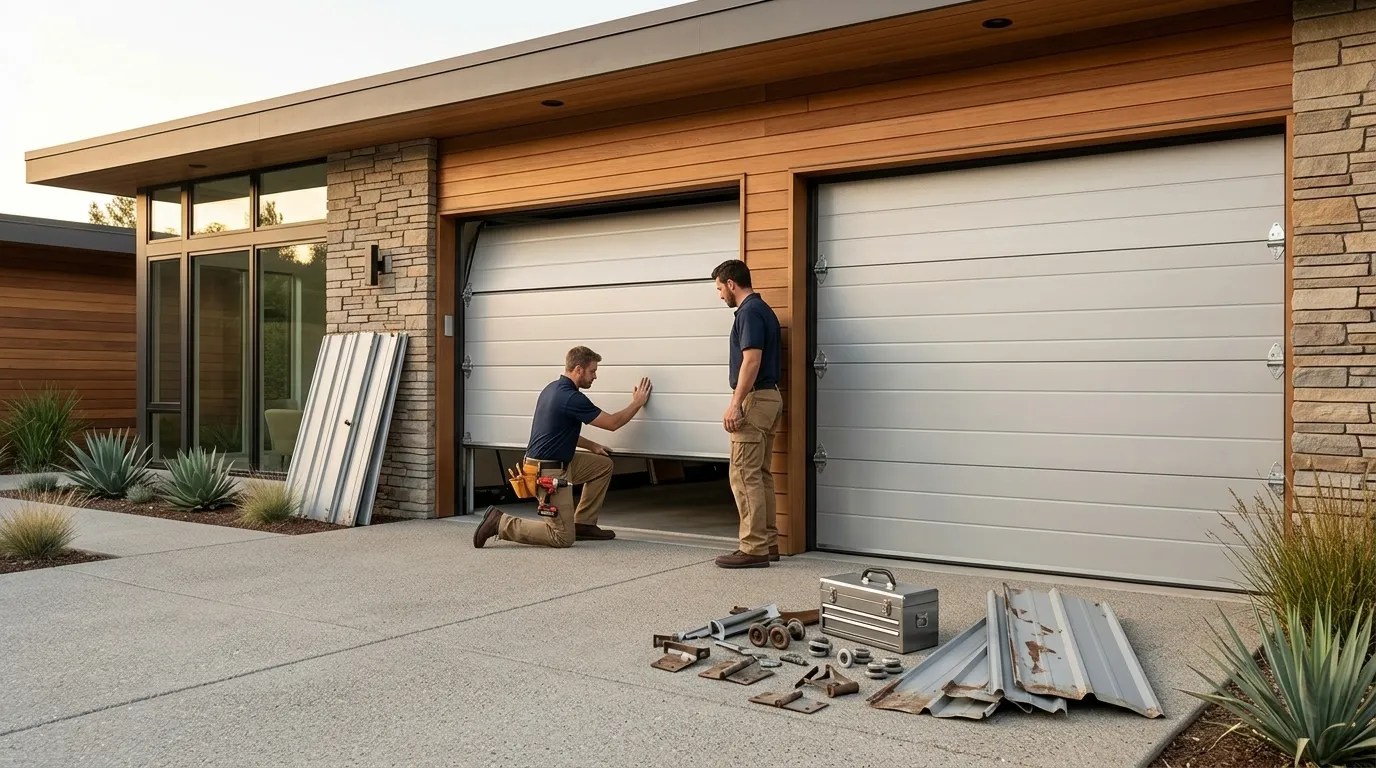
Most houses in Weddington went up around 1998, and the garage doors that came with them are steel sectional units, usually the 16-foot double or a pair of 9-foot singles, hung on torsion springs sized for the door weight of that era. These aren't the light aluminum or wood-panel doors you'd find on an older street. They're heavier, insulated in a lot of cases, and built to last decades if the spring and hardware underneath get looked at now and then. The problem is that nobody looks at them. A door installed in 1998 is now old enough that its original torsion spring has been through more open-close cycles than it was rated for, even if the door itself still looks fine from the driveway. The steel panels hold up. The spring, the cable, and the rollers don't age at the same rate as the sheet metal around them, and that's where the wear actually shows up first - not in the part you can see.
Why This Fails Locally
Weddington sits in a cold-moderate climate band, which means the grease in a 25-year-old torsion spring's coil gets stiff on the cold mornings and the door pulls harder off the floor than it should. On a door built to the standards of 1998, that stiffness shows up as a slow rise, a bang at the top of the track, or a spring that finally lets go on some ordinary Tuesday. The other piece is that a lot of these doors have never had the spring re-tensioned since installation. Nobody expects to touch a garage door spring on a 20-something-year cycle, so it doesn't happen. Add in rollers that were nylon-and-steel builds from the same era, and you get a door that's technically original but running on parts that have quietly lost half their working life.
The DIY Question
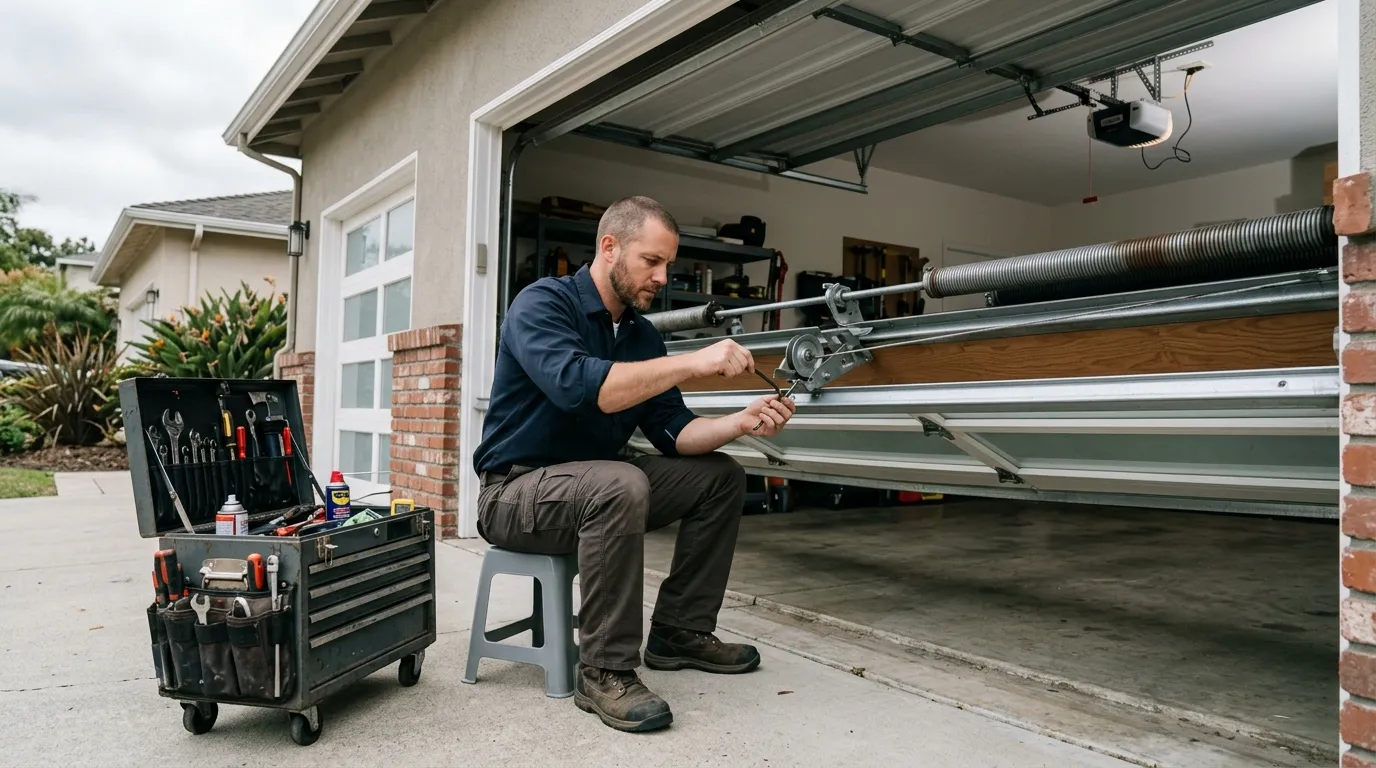
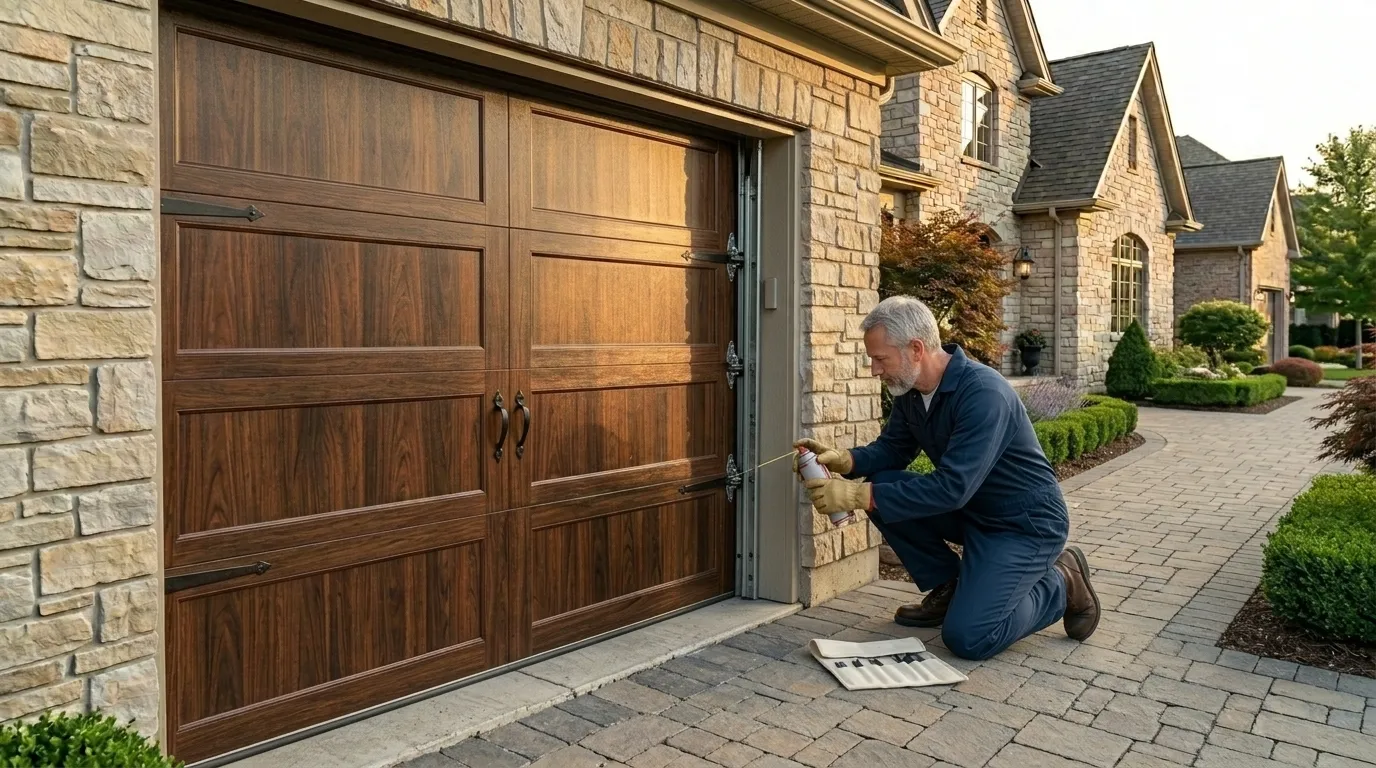
A torsion spring holds real force, enough to break a hand or worse, and it's not a weekend project even for someone comfortable with tools. What you can do yourself: wipe down and lightly lubricate the rollers and hinges twice a year, check that the door reverses when it meets resistance, and look at the cables for fraying. What you shouldn't do: loosen or adjust the spring itself, or try to true up a track that's pulled away from the wall. If your door is original to a 1998 build and you've never had the spring serviced, that's the one thing worth having a second set of eyes on before it fails on its own schedule instead of yours.
What the Fix Involves
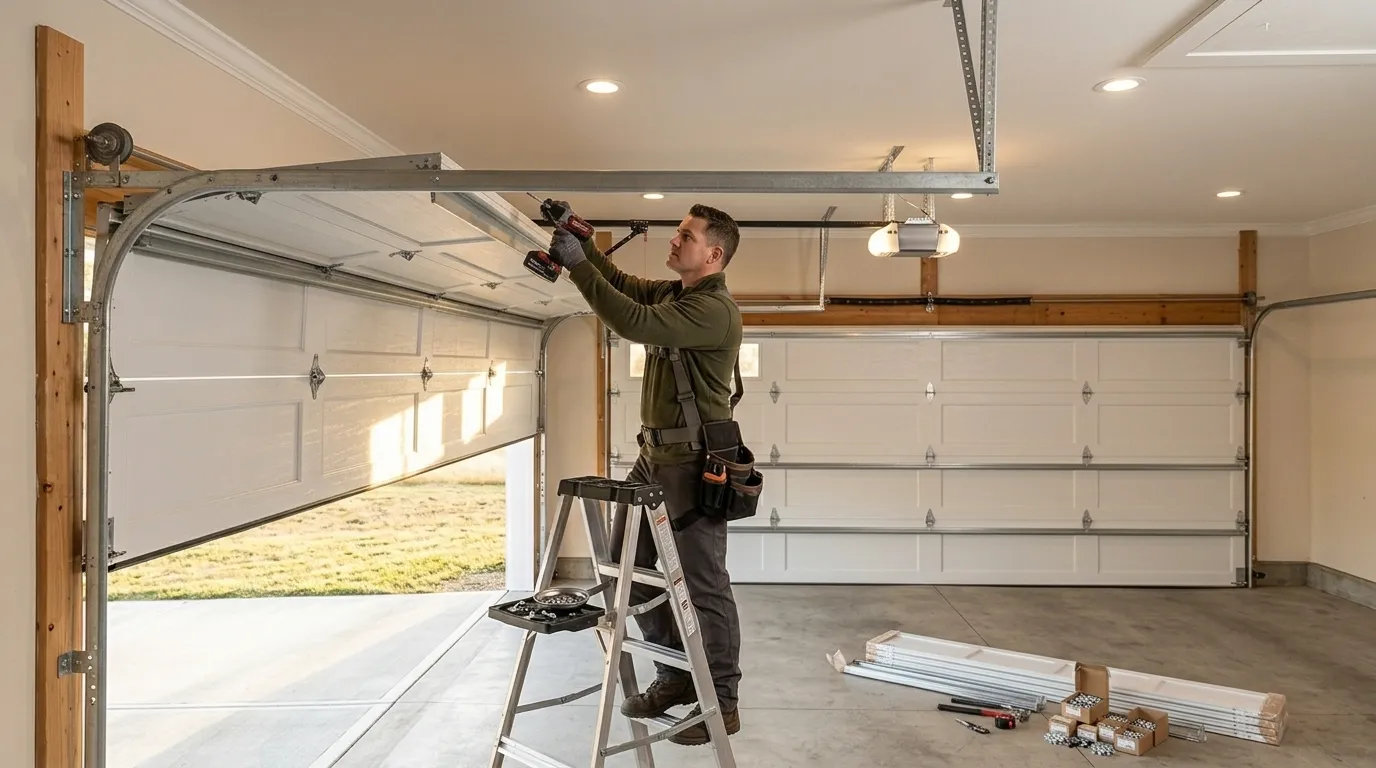
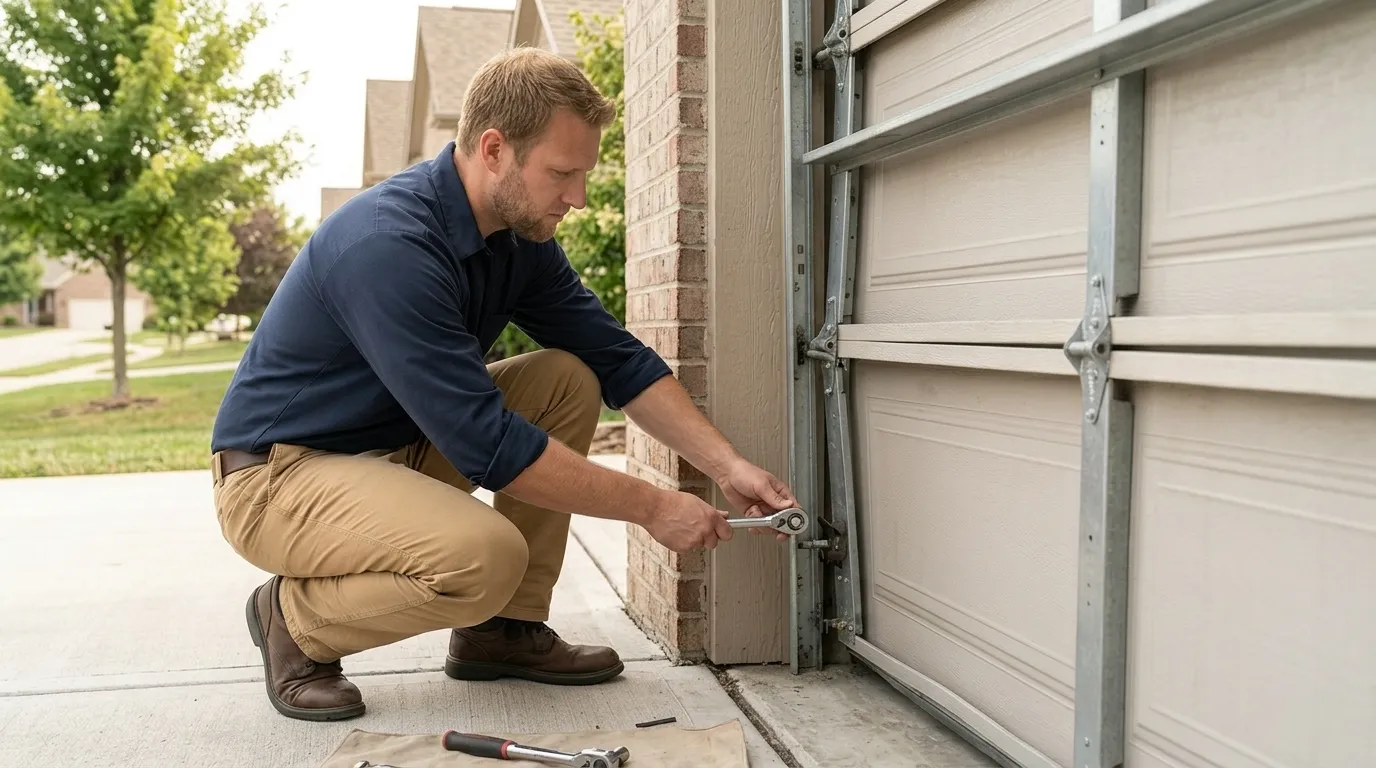
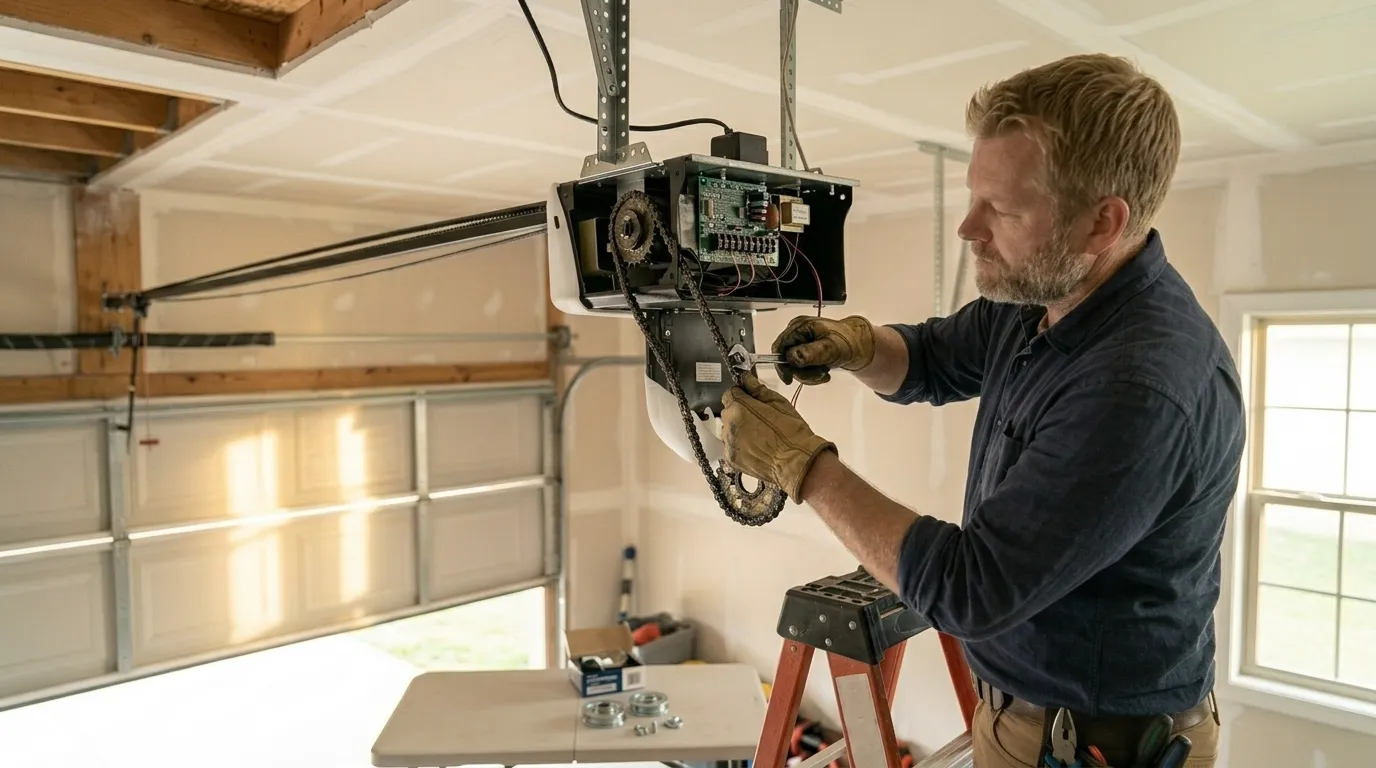
A standard maintenance visit on a door this age covers the torsion spring tension and wear, the cable condition, roller and hinge lubrication, and a track alignment check, since steel doors from the late 90s often have tracks that have shifted slightly over two decades of use. We travel out from Matthews, about 7 miles, so we schedule Weddington visits in blocks rather than same-hour drop-ins. If the spring shows heavy wear or the door is already sagging at one corner, we'll say so plainly rather than just topping off the grease and calling it done - a lubed spring that's near the end of its life is still a spring near the end of its life.