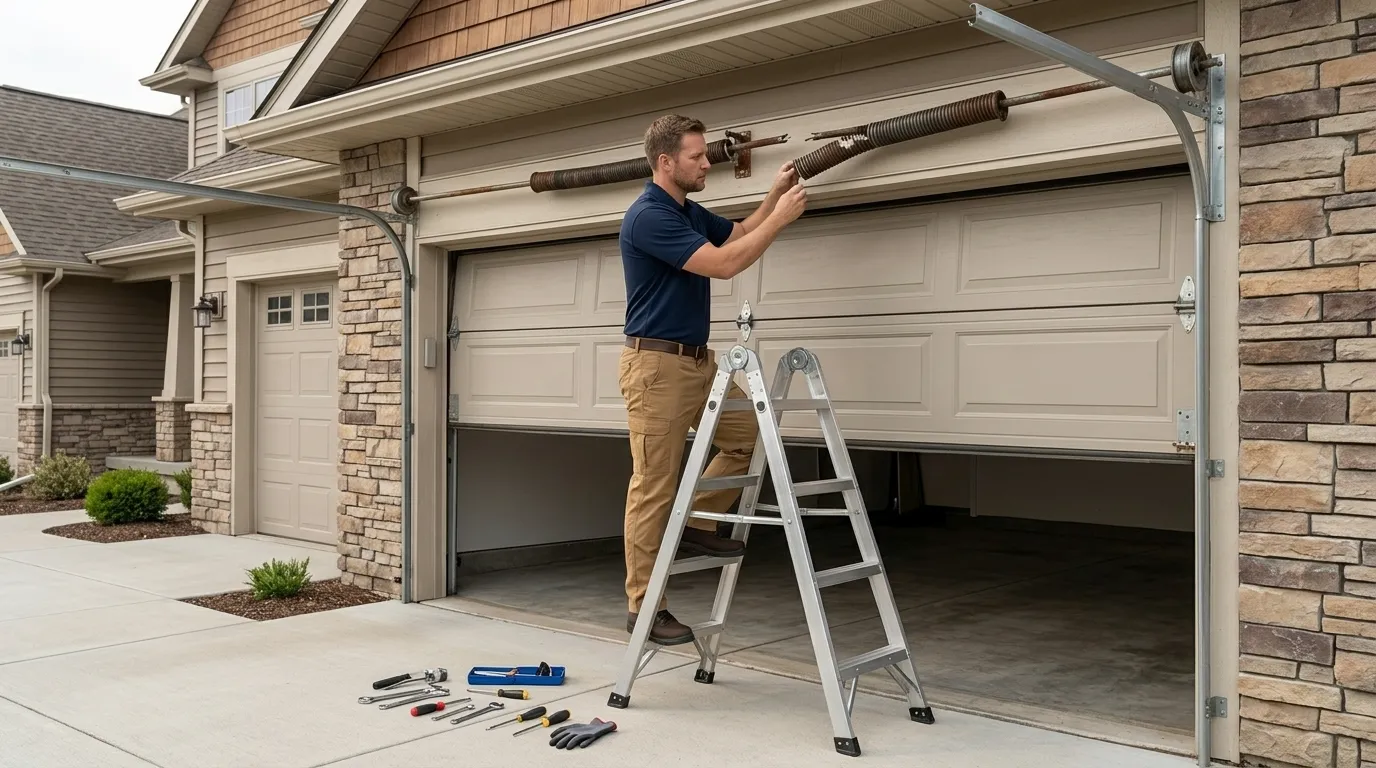

Where This Job Goes Sideways
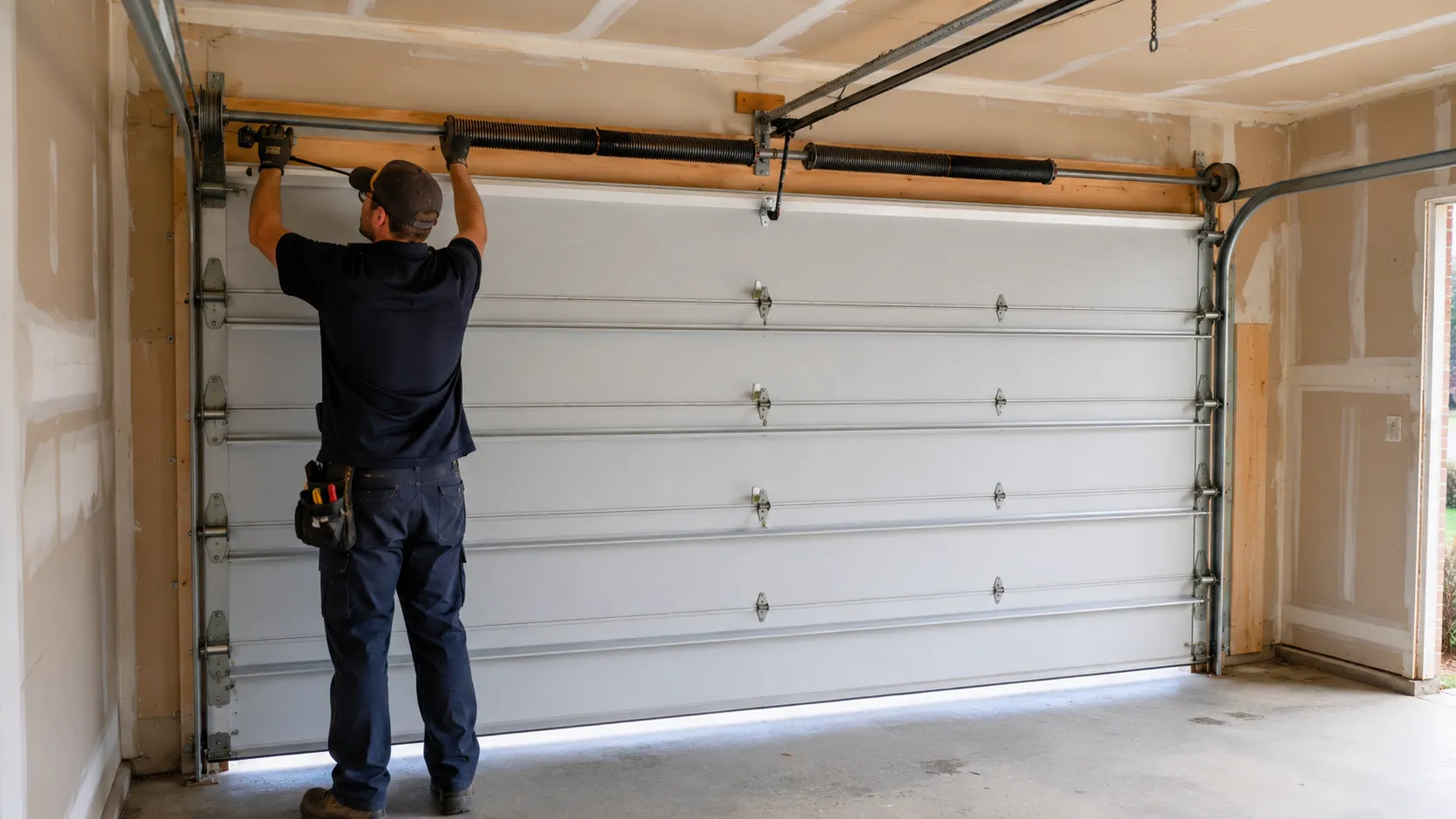
The fault we see most in Mint Hill isn't a snapped cable or a bent track - it's a torsion spring that's been wound to the wrong tension because someone guessed at the door weight instead of checking it. Mint Hill's housing stock centers on 1991, which puts most of these garages in the era of steel sectional doors matched to standard torsion springs rated for a specific door weight and height. When a spring on one of these doors fails, it's almost always fatigue failure - the coil has done its 10,000-cycle job and given out - not a manufacturing defect.
What that means for a repair call: we're not hunting for an odd size. A door built to spec in 1991 uses hardware that's still commonly available, unlike some older or newer stock elsewhere in the area. The failure mode is predictable - one spring goes, the door won't lift past a foot or two, and the opener strains against dead weight until something else gives. Catch it at the spring, and the job stays a spring job. Ignore it for a few weeks of forcing the opener, and you're looking at a cable, a bent track, or a burned-out motor on top of it.
Stocked Parts
For a service area with 10,194 households and a median build year of 1991, the torsion spring sizes that fail most often are the ones we carry on the truck without a special order - standard wire gauge, standard wind length, matched to the door heights common in homes from that build window. That covers the bulk of what we run into on a Mint Hill call.
Where it gets slower: heavier insulated doors, oversized doors on wider garages, or anything custom that got swapped in later. Those springs sometimes have to come from a supplier, and that's the honest limitation here - we won't pretend every job closes same-visit. If your door is original to a 1991-era build with standard dimensions, we're usually done in one trip. If it's been upgraded to something wider or heavier since, we tell you that on-site before we start, not after.
The DIY Question
Don't. A wound torsion spring holds enough stored energy to break fingers, and the winding bars and tension gauge involved aren't things most homeowners keep in a toolbox. This isn't a caution we add for liability - it's the actual injury pattern for this repair nationally, and it's why we price it as a service call, not a parts sale.
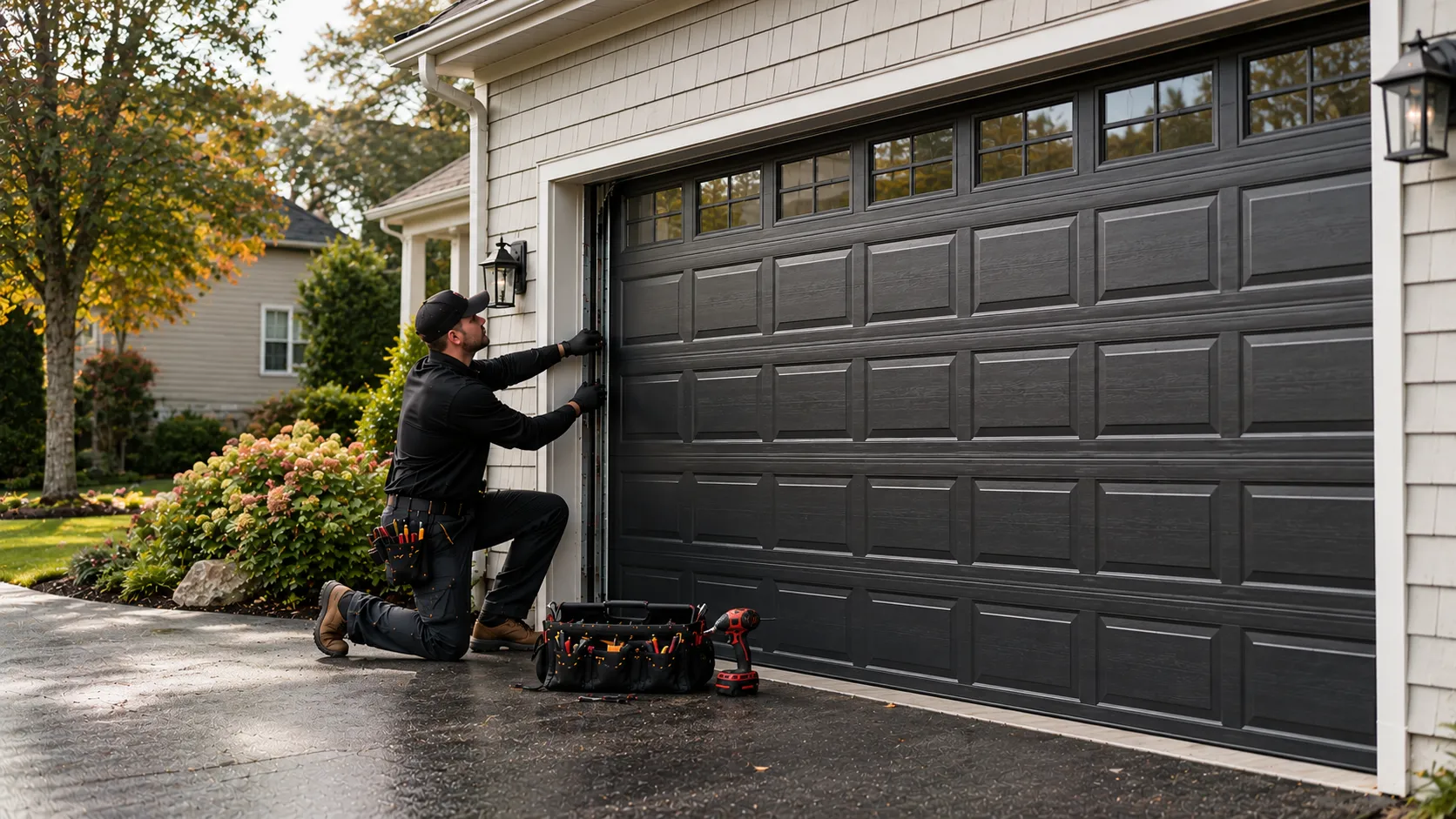
What you can safely do yourself: check whether the door is balanced by disconnecting the opener and lifting it by hand partway - it should hold its position, not slam down or fly up. If it doesn't, that's a spring problem and it's time to call it in rather than keep running the opener against it. For Mint Hill, that's a 5-mile trip from our Matthews shop, and we bring the standard sizes that match most homes built around 1991 with us.