Where This Job Goes Sideways
Start with the money, because it changes the conversation. Harrisburg's median household income sits at $143,393, well above the $88,203 median across the rest of the service area. That gap matters for one reason: at this income level, homeowners here reach the repair-or-replace line faster. A $400 spring job on a door that's already sagging, rusting at the bottom panel, and running an opener from the same era doesn't make sense to someone who can just replace the whole unit and move on. We see more straight-to-replacement calls out here than patch jobs.
The other number that matters is the build year. Harrisburg's median home went up around 2006 - a good eight years newer than the 1998 median across the wider coverage area. That means the garage doors going bad right now aren't 1980s single-layer steel; they're early-2000s builder-grade doors, often still on their original torsion springs and original chain-drive openers, now pushing past the point where the seals crack and the panels start to bow. The failure mode here is less "broken part" and more "the whole door is done."
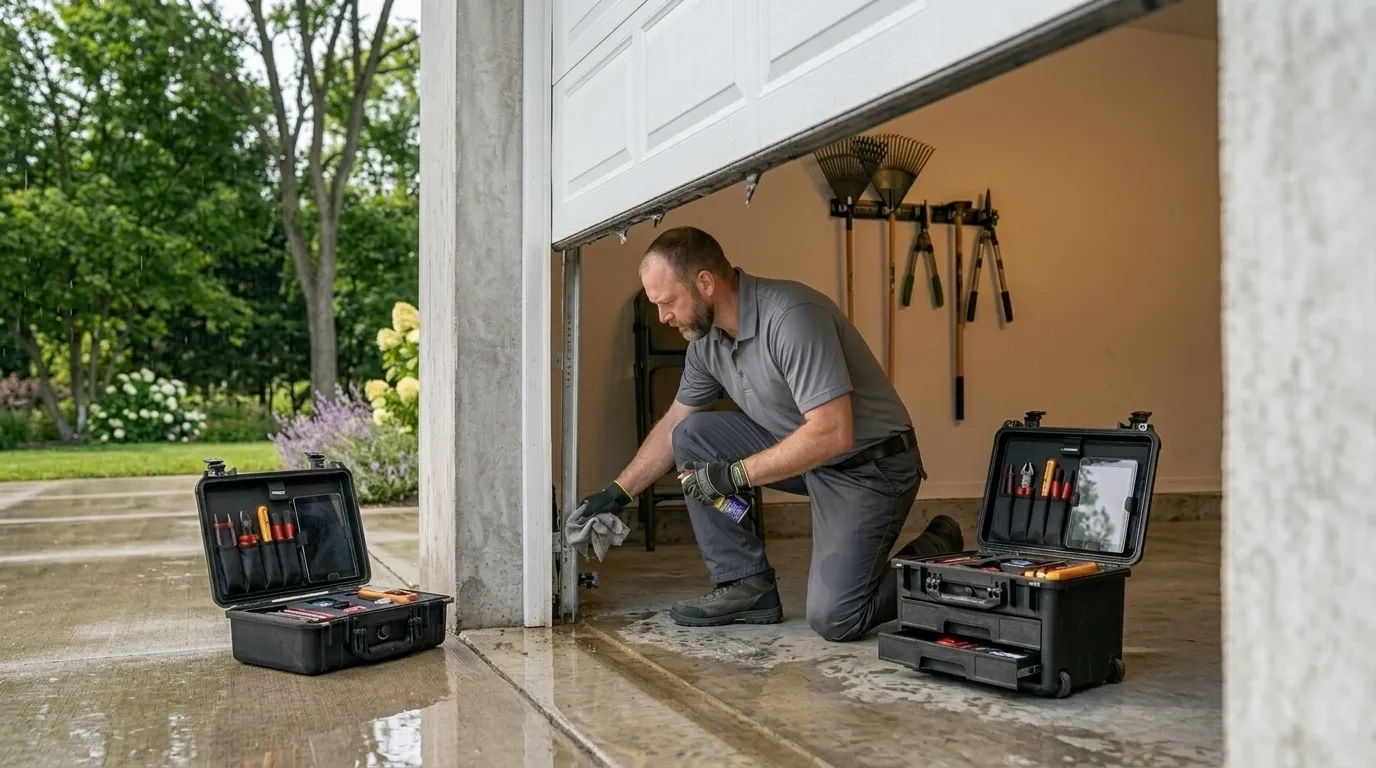
One honest note: not every sagging door needs full replacement. If the track and springs are sound and it's just a bent panel, we'll say so instead of selling a new unit.
What the Fix Involves
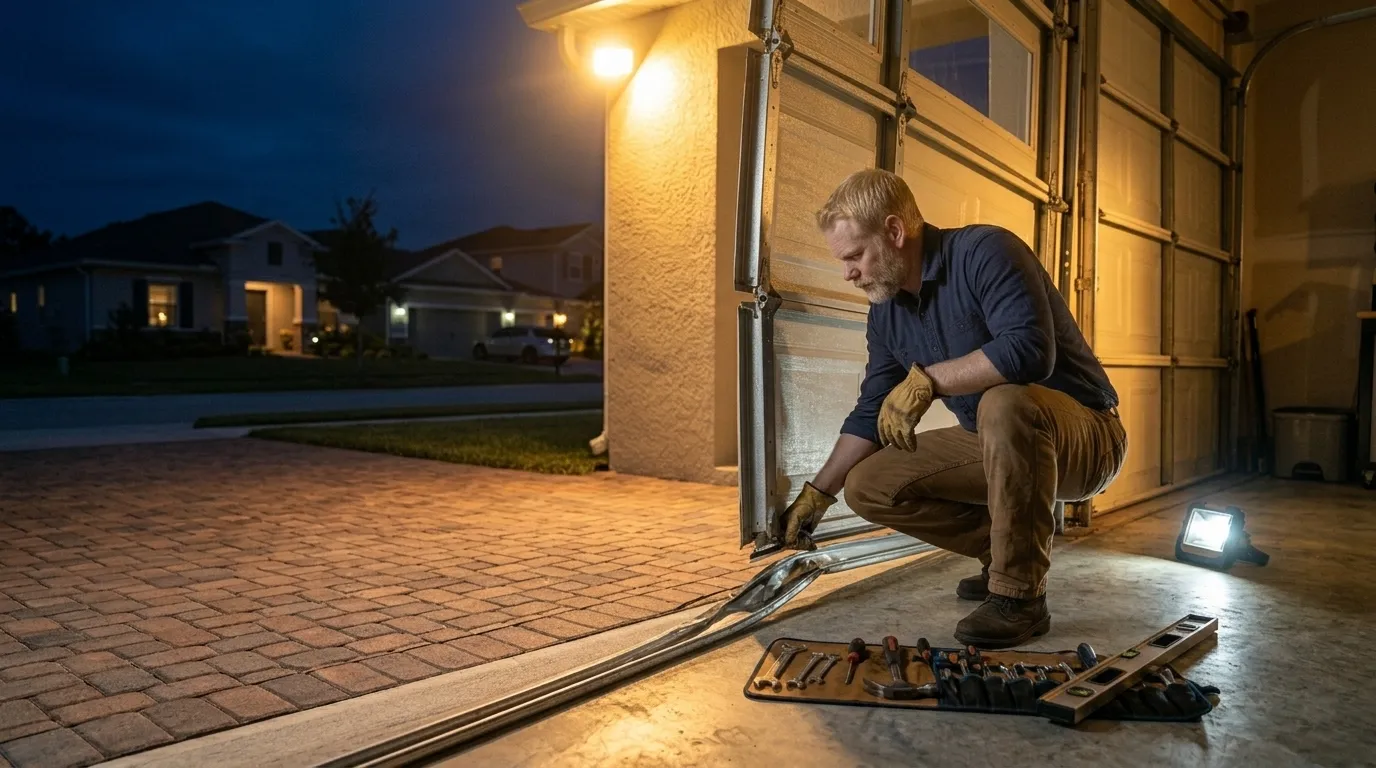
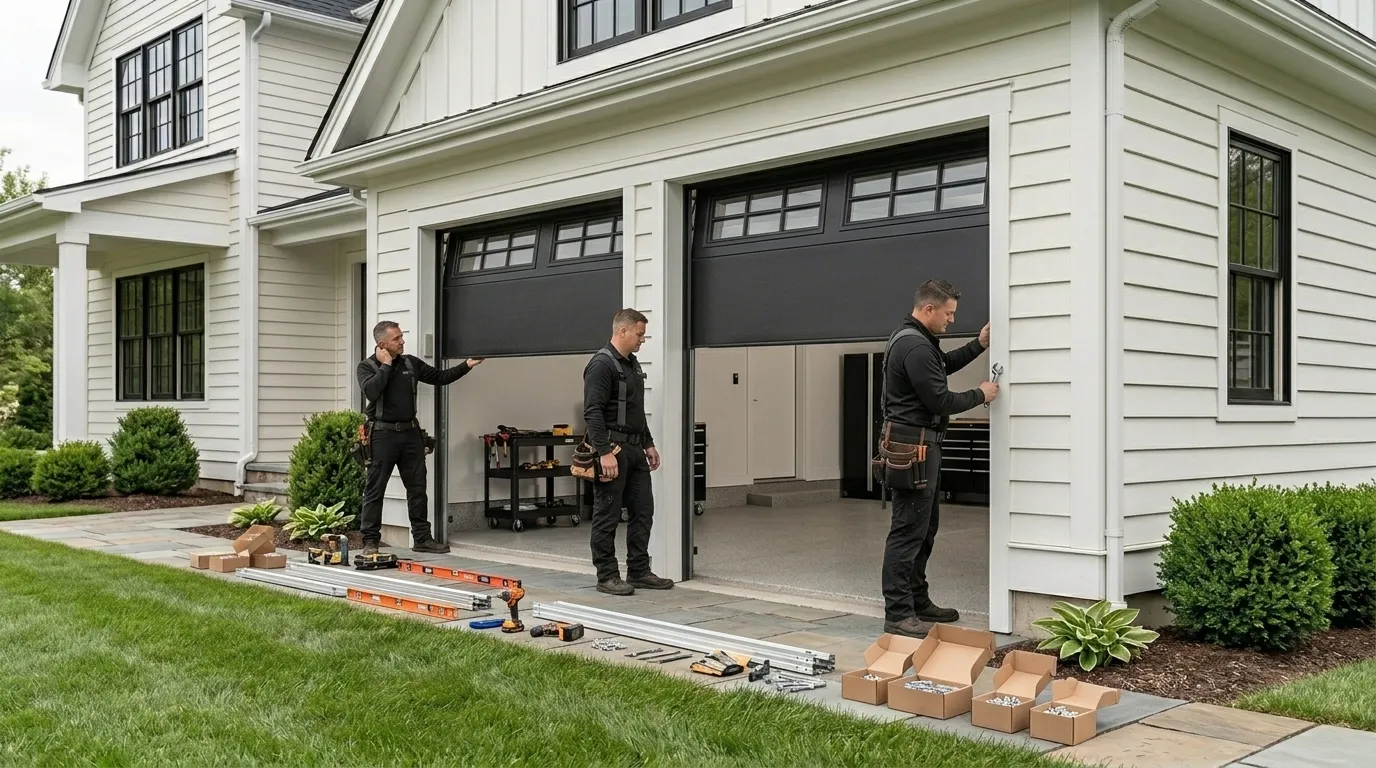
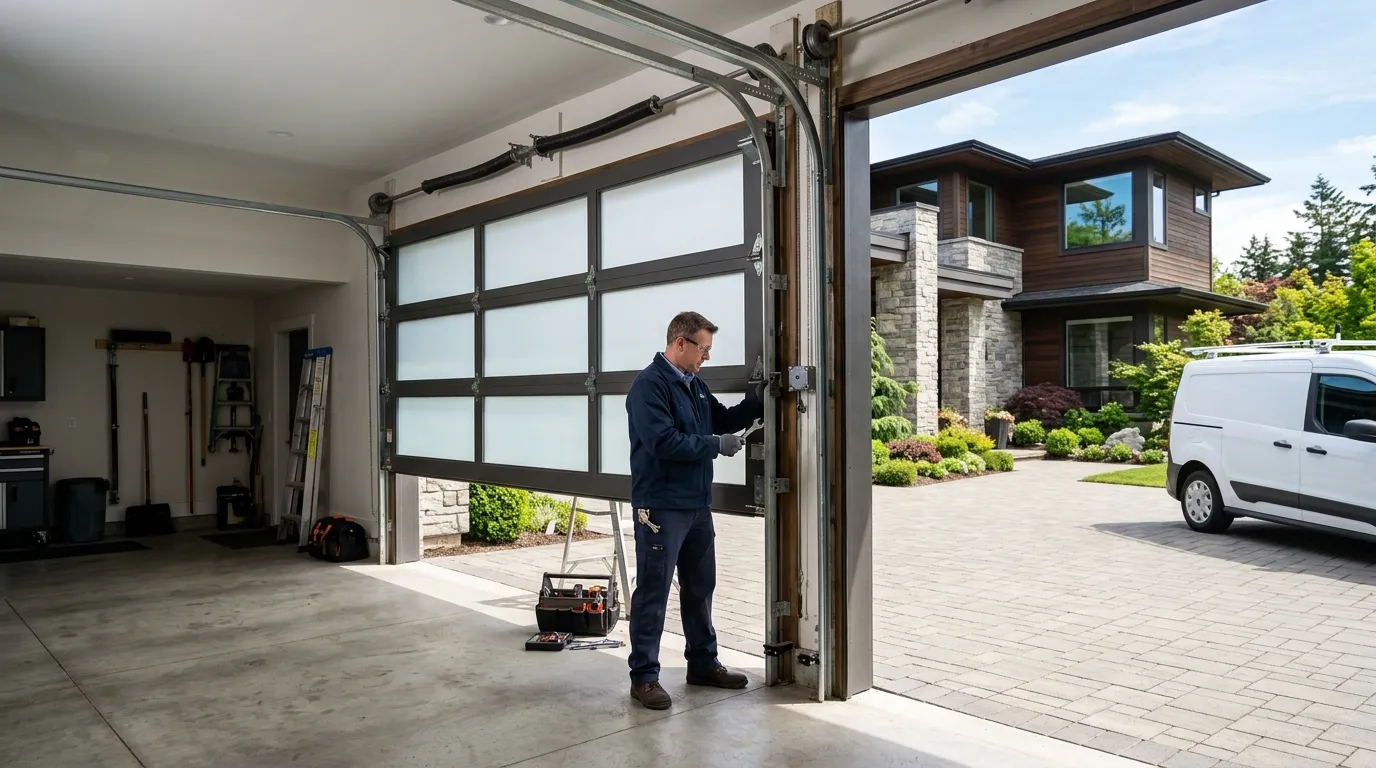
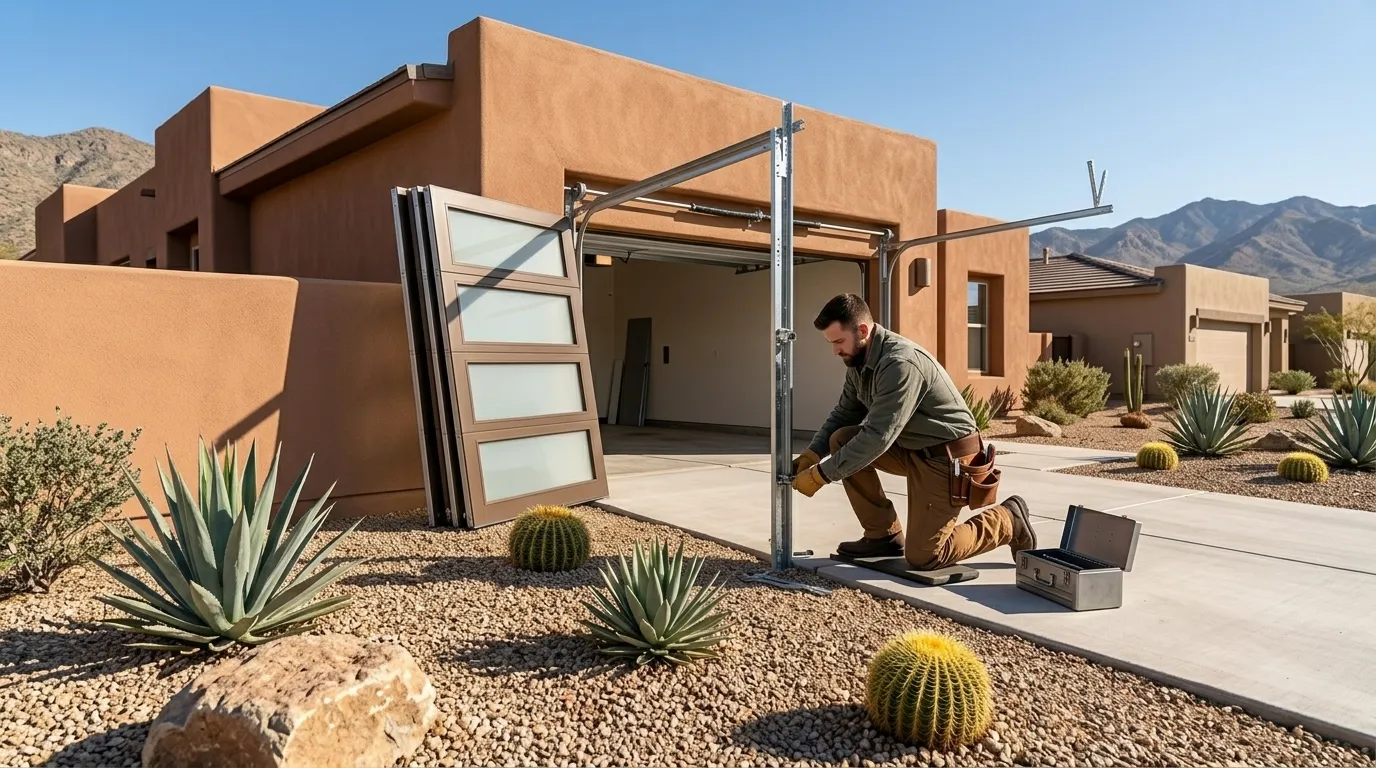
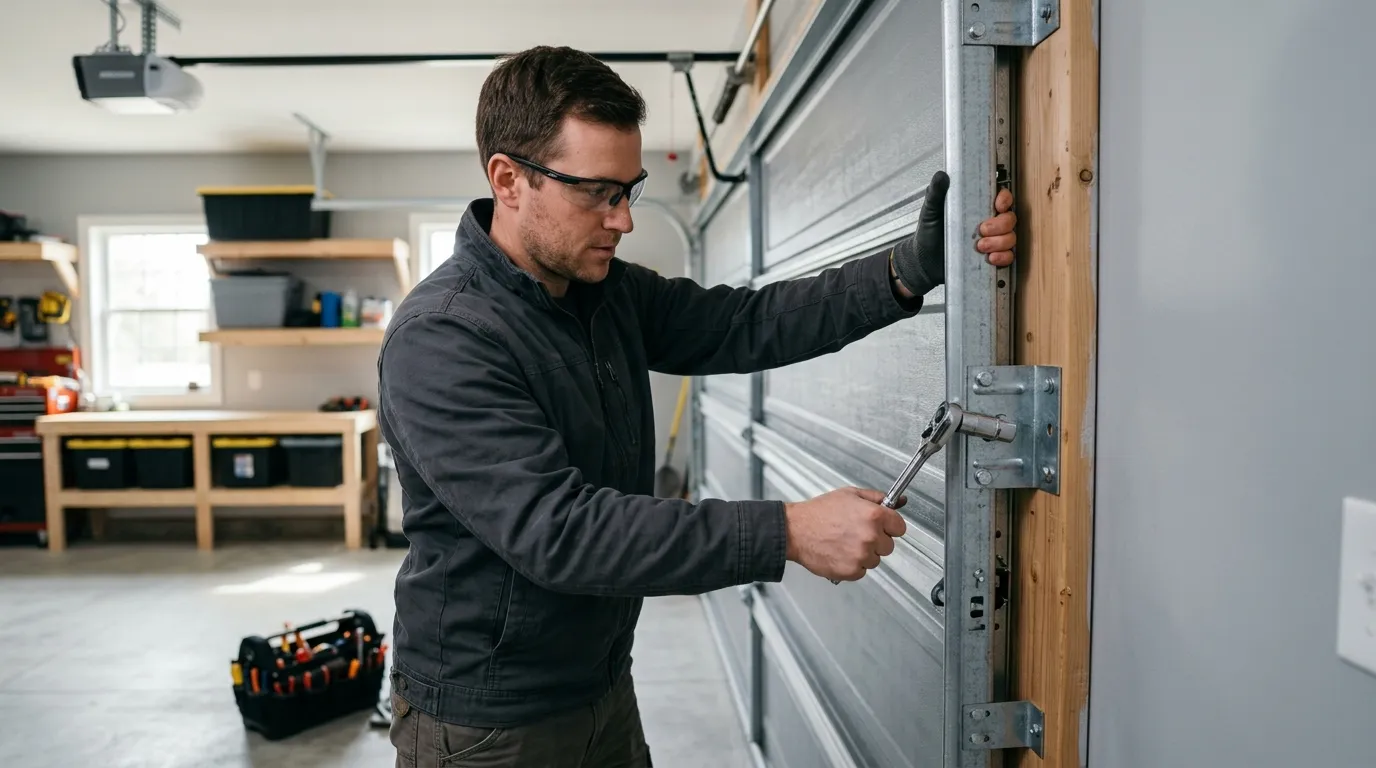
A new install starts with pulling the old door and hardware down to the track brackets, checking the header and jamb for square, and confirming the opening still matches a standard size - most 2000s-era construction here used conventional widths, so this is usually straightforward. From there it's new track, new springs sized to the door's actual weight (not whatever was on the old unit), and the door itself.
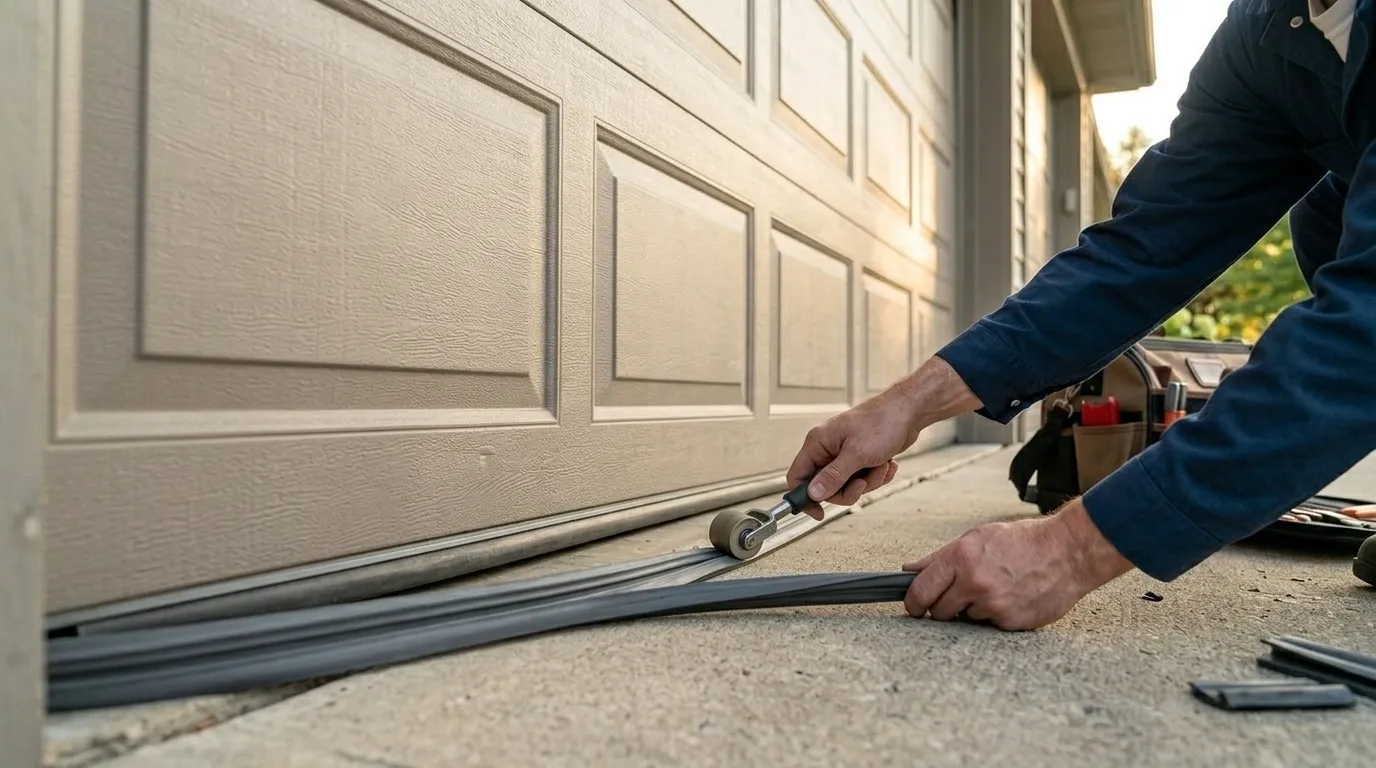
Given the climate band here - cold-moderate, with real freeze-thaw swings through the year - insulation is worth discussing rather than skipping. A lot of the doors going bad right now were built with minimal insulation and thin weatherstripping, which is part of why they're failing now: two decades of temperature cycling on cheap seals. Stepping up to an insulated door doesn't cost much more at install time, and it's a fair trade for a garage that shares a wall with living space.
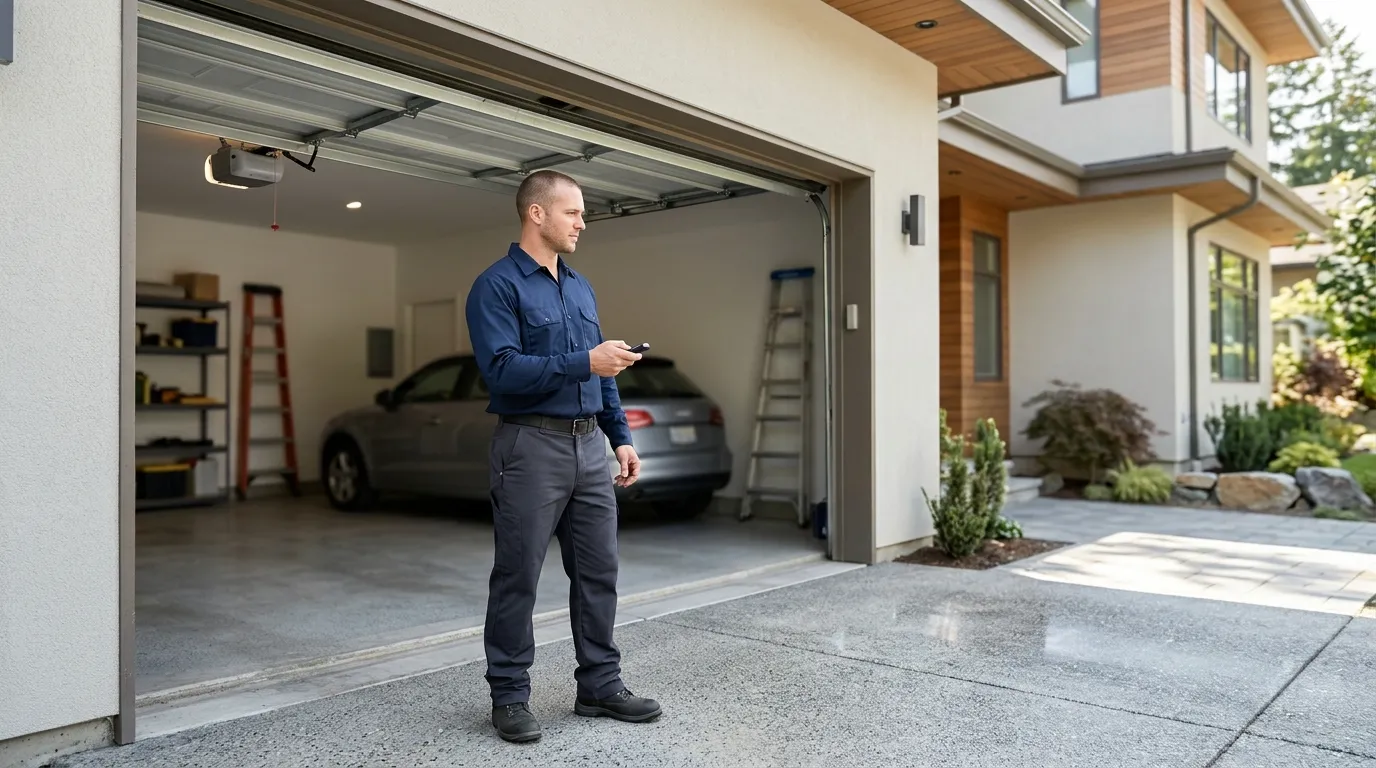
We also handle disposal of the old door and hardware as part of the job, so you're not left with a steel door in the driveway. Openers get tested against the new door weight before we call it done - an opener sized for a lighter door will strain and burn out early, which is a common issue on these older units.
The DIY Question
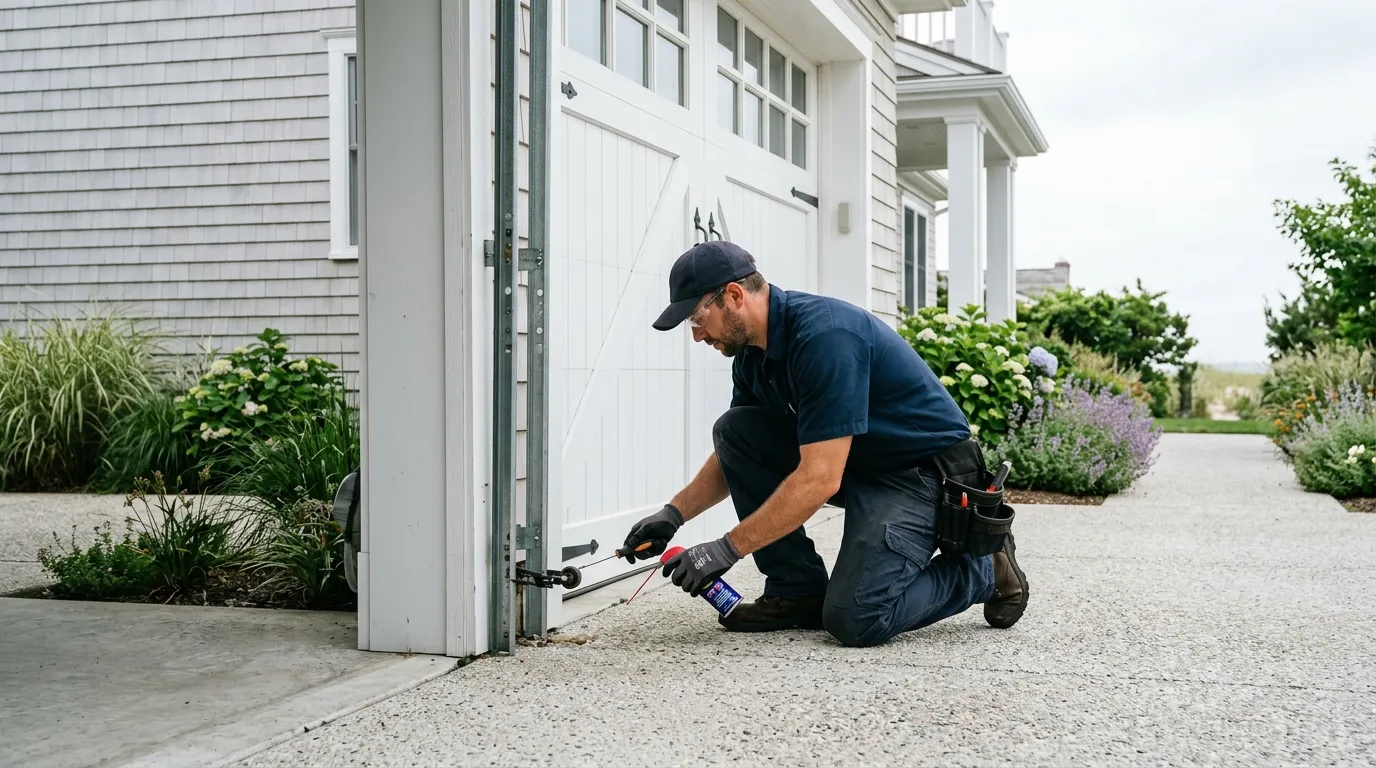
Swapping panels or hanging a lightweight garage door yourself is possible if you're handy. Setting torsion springs, on the other hand, isn't a weekend project - a spring under full tension can put someone in the hospital, and the specialized bars needed to wind it safely aren't something most garages have lying around. Same goes for track alignment on a double-wide door: get it a quarter-inch off and the door binds or the opener strains within weeks.
Where Harrisburg specifically complicates DIY: because most doors here are from the same construction wave, the springs and openers going bad right now are often the original units, sized to a door that may not match what a big-box replacement door weighs. Guessing at spring tension on a mismatched door is how people end up back on the phone a month later with a worse problem than they started with.
If you want to handle the demo and disposal of the old door yourself to save on labor, say so up front - that's a reasonable way to trim the bill, and we'll price the install around it.
Stocked Parts
Standard door sizes and hardware for a build era like Harrisburg's - conventional single and double openings, common torsion spring sizes, standard track - are the kind of thing that sits on the truck already. Given how much of the housing stock here landed in that same early-2000s window, the parts that fail are predictable, and we plan the truck around that.
Where it gets slower is custom widths, non-standard insulated panel options, or matching an unusual color or window-insert pattern on an existing door. Those go on order, and the honest answer is we can't promise a same-day turnaround on anything that has to be special-ordered - that's a manufacturer lead time issue, not something a local trip solves faster.
If your priority is getting the garage sealed up fast, a standard door install is the quicker path. If you're set on a specific look or insulation spec that isn't standard, we'll tell you upfront what the wait looks like before you commit to it.