Where This Job Goes Sideways
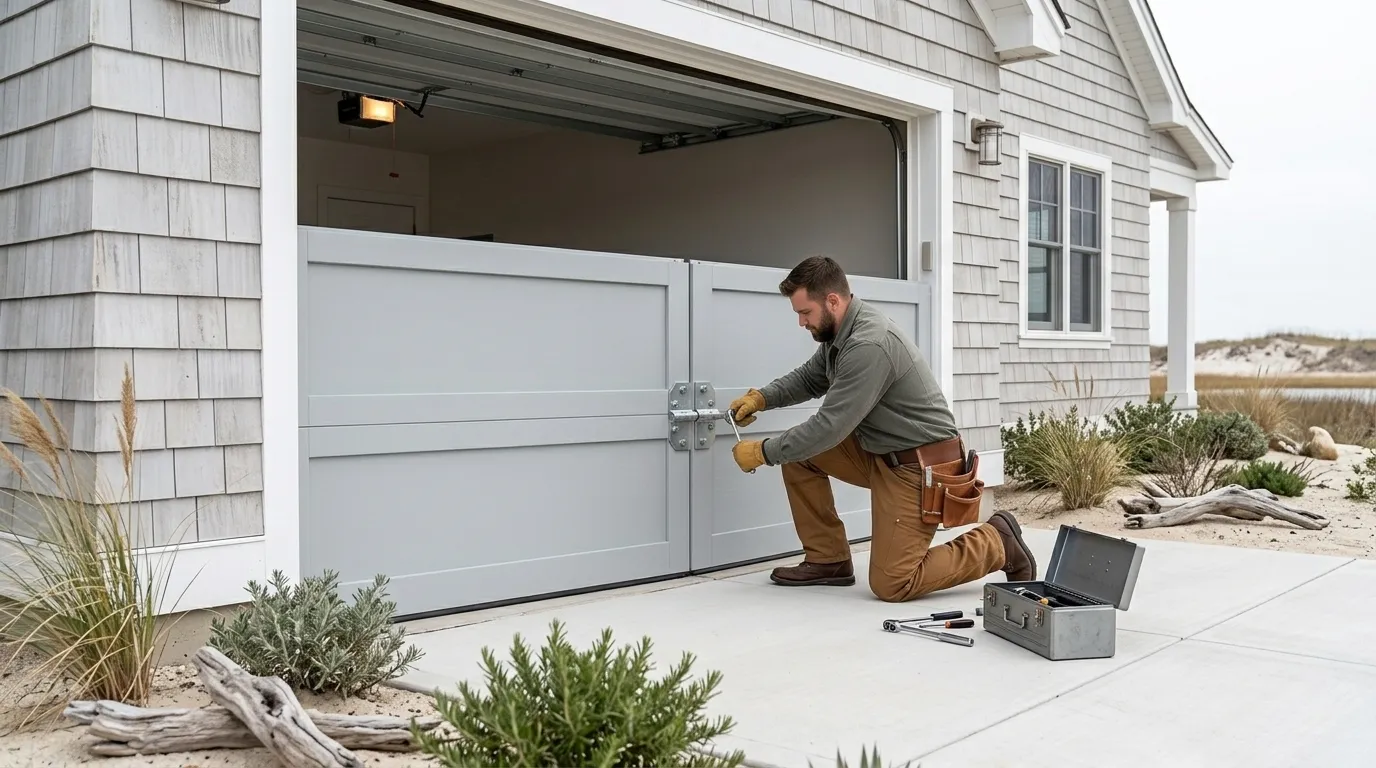
Most of the calls we take out of Harrisburg aren't about a torsion spring snapping on some hand-cranked panel from decades back. They're about an opener that stopped listening to the remote, or a safety sensor that's throwing a blinking light and refusing to close the door at all. That's not random. Harrisburg's housing stock runs newer than most of the territory we cover, with a median build year of 2006 - the newest of the seventeen areas on our route. Homes going up that late came standard with an automatic opener and a photo-eye safety sensor already wired in at the base of the track, not bolted on years later the way it happened across the older 1974-2006 stock elsewhere in the service area.
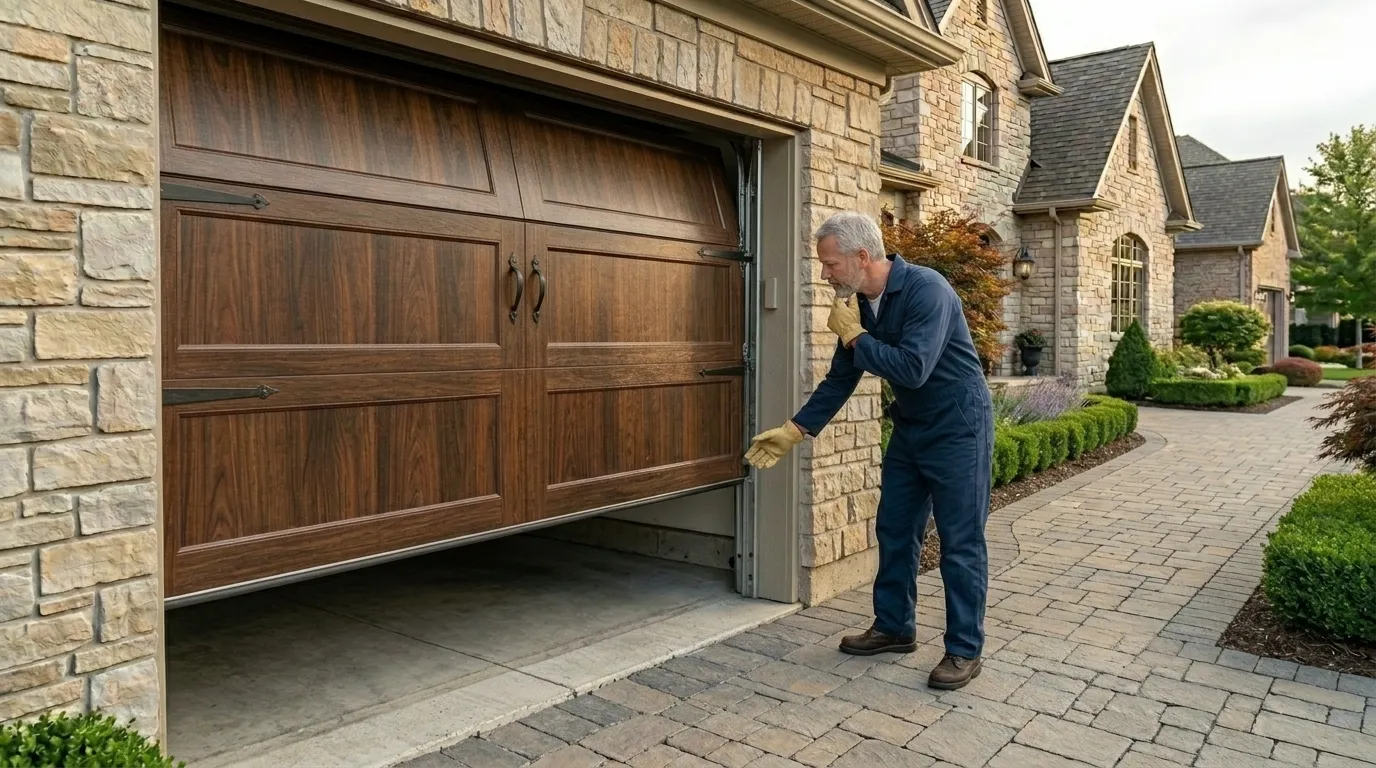
That changes what breaks. A door that's never been hand-operated tends to fail at the opener logic board, the sensor alignment, or the drive gear inside the unit - not at hand-wound hardware nobody's touched since installation. When we get a call that the door won't move at all, our first guess in Harrisburg isn't a broken spring. It's a sensor knocked out of alignment or a circuit board that's finally given out after running daily cycles for close to two decades.
What the Fix Involves
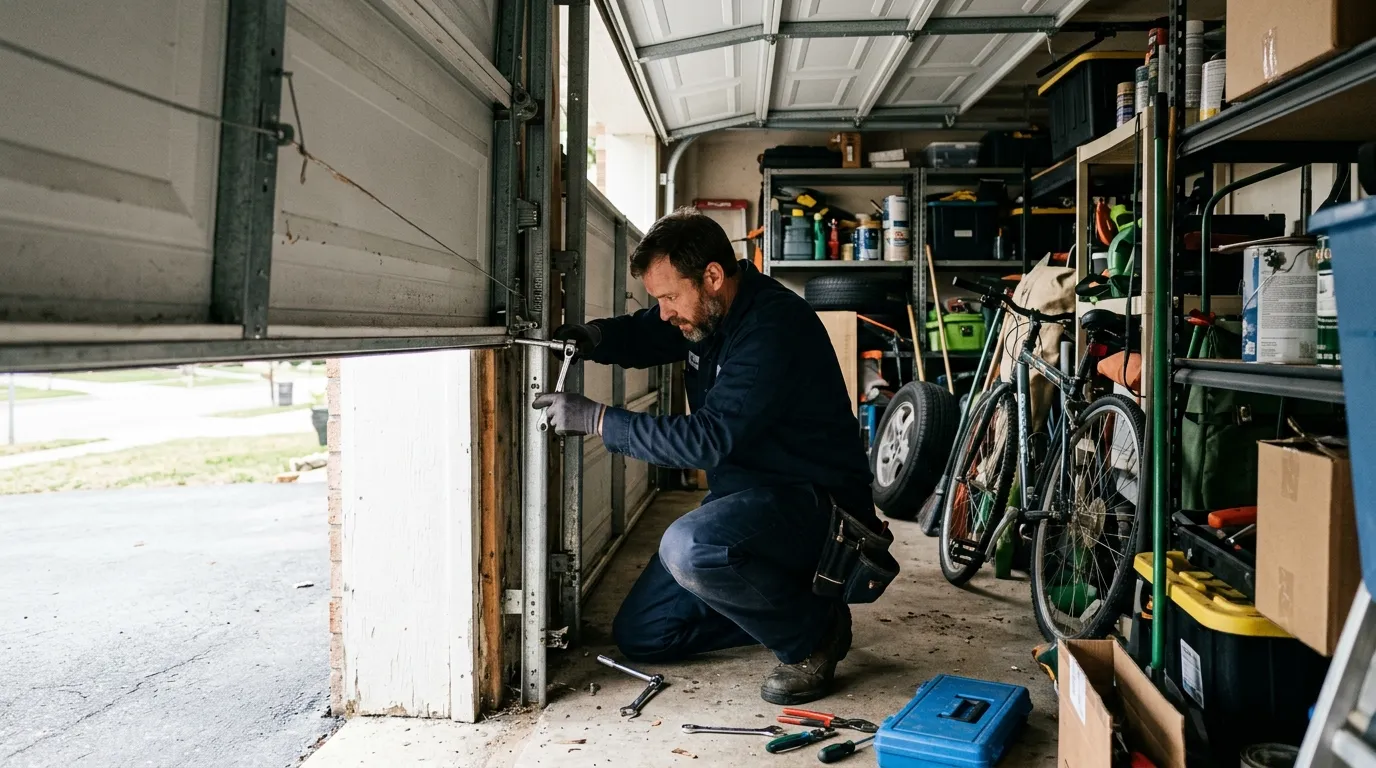
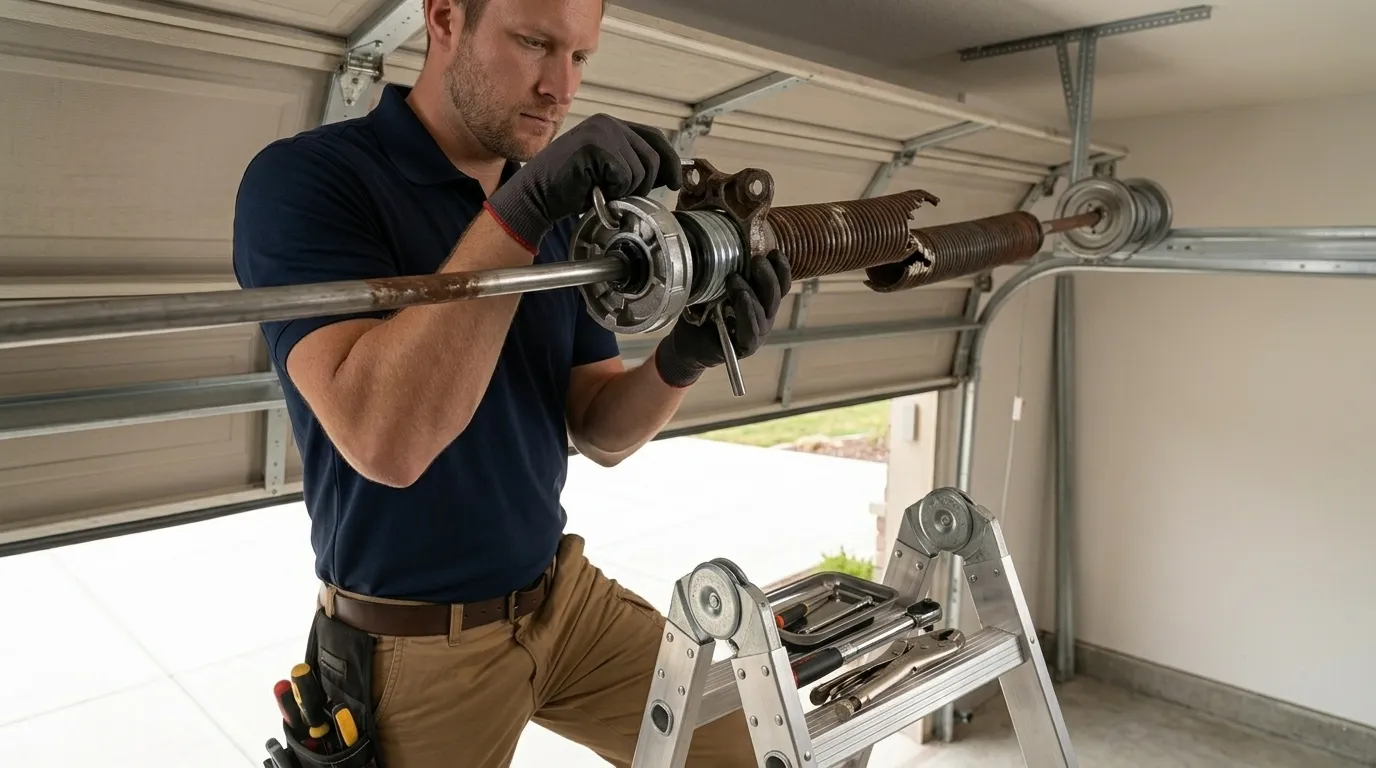
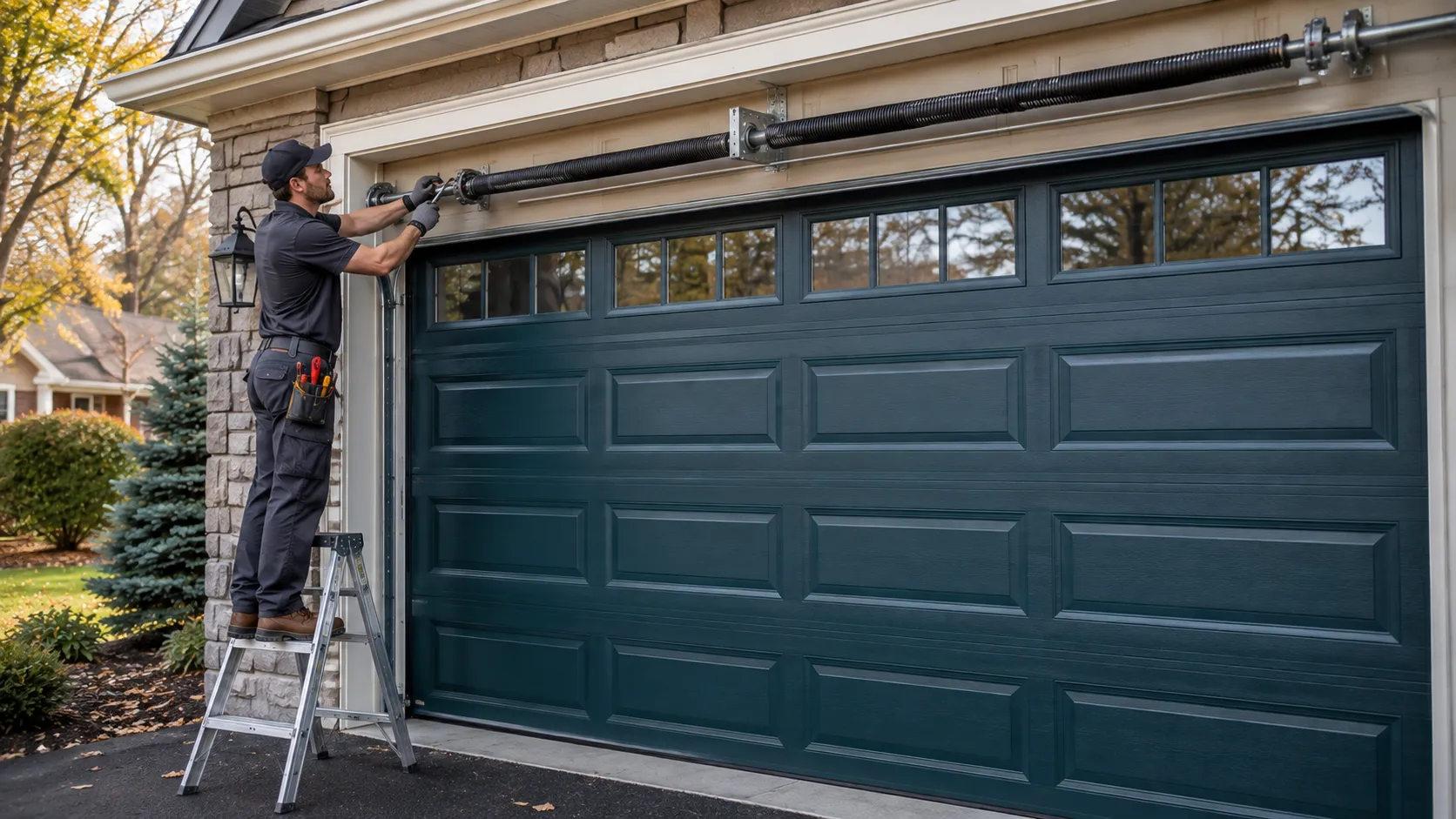
Insulated steel doors built into a 2006-era garage still use torsion springs, just sized for a heavier, insulated panel than the single-layer doors common in older sections of the territory. When one of those springs goes, the fix is a straight swap - matched wire gauge, matched wind, both springs on a double door even if only one broke, because the other is on borrowed time.
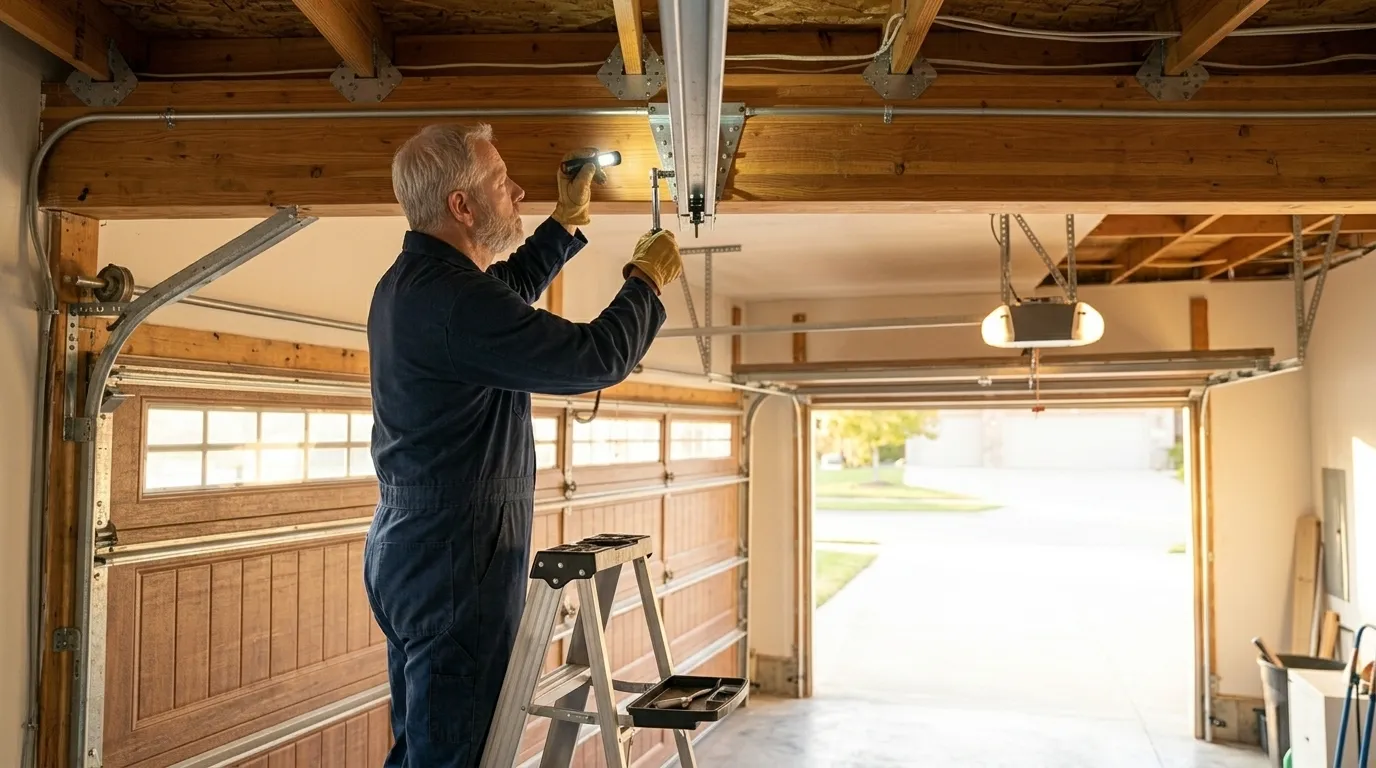
Opener work is a bigger share of the Harrisburg call sheet than it is elsewhere. That usually means a logic board replacement, a drive gear and sprocket kit if the motor runs but the door doesn't move, or re-terminating and re-aiming the photo-eye sensors at the bottom of each track. Wall controls and keypads wired in at construction sometimes need re-pairing to a new opener rather than replacement outright - cheaper, and it works more often than homeowners expect.
We won't push a full opener swap if a board repair or a sensor realignment solves it. We will tell you straight when the unit's old enough, or damaged enough, that patching it is throwing good money after bad - that call goes the other way about as often as not.
The DIY Question
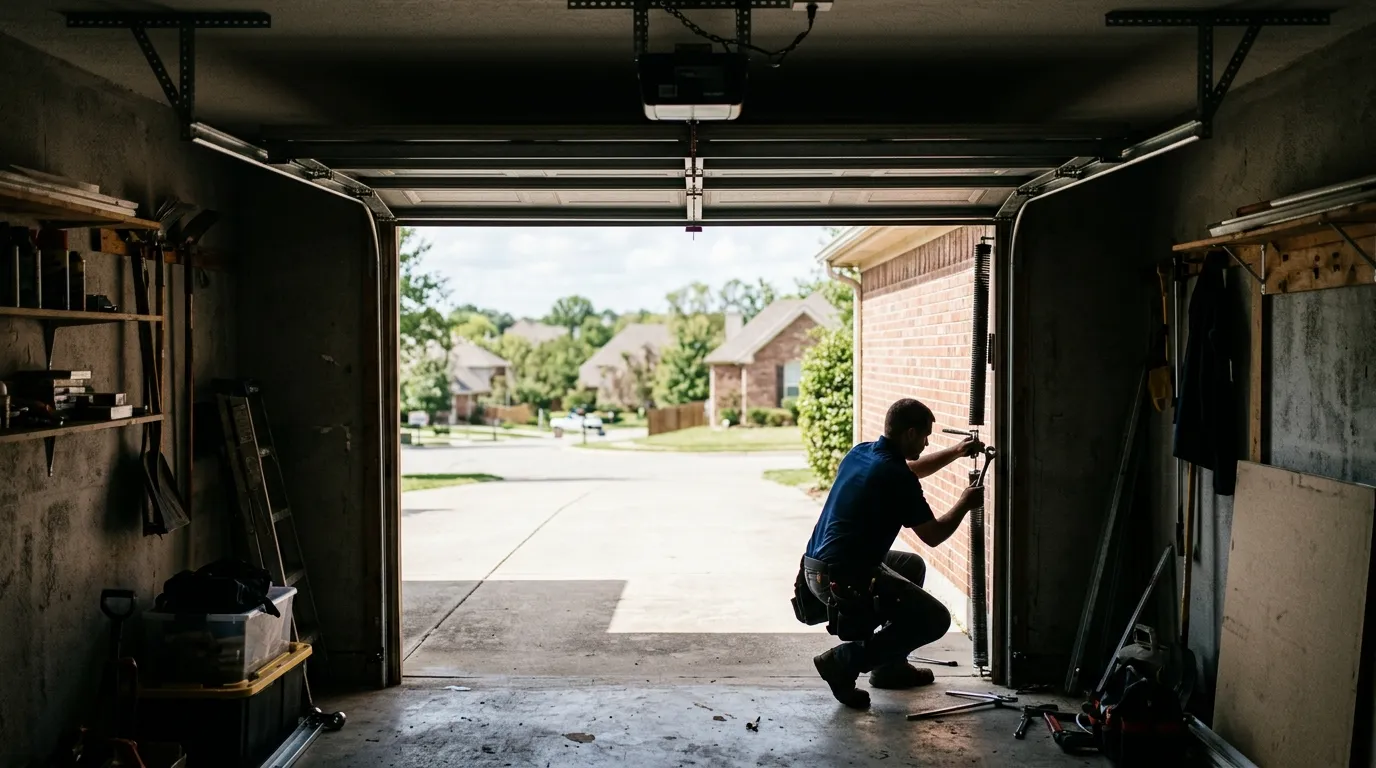
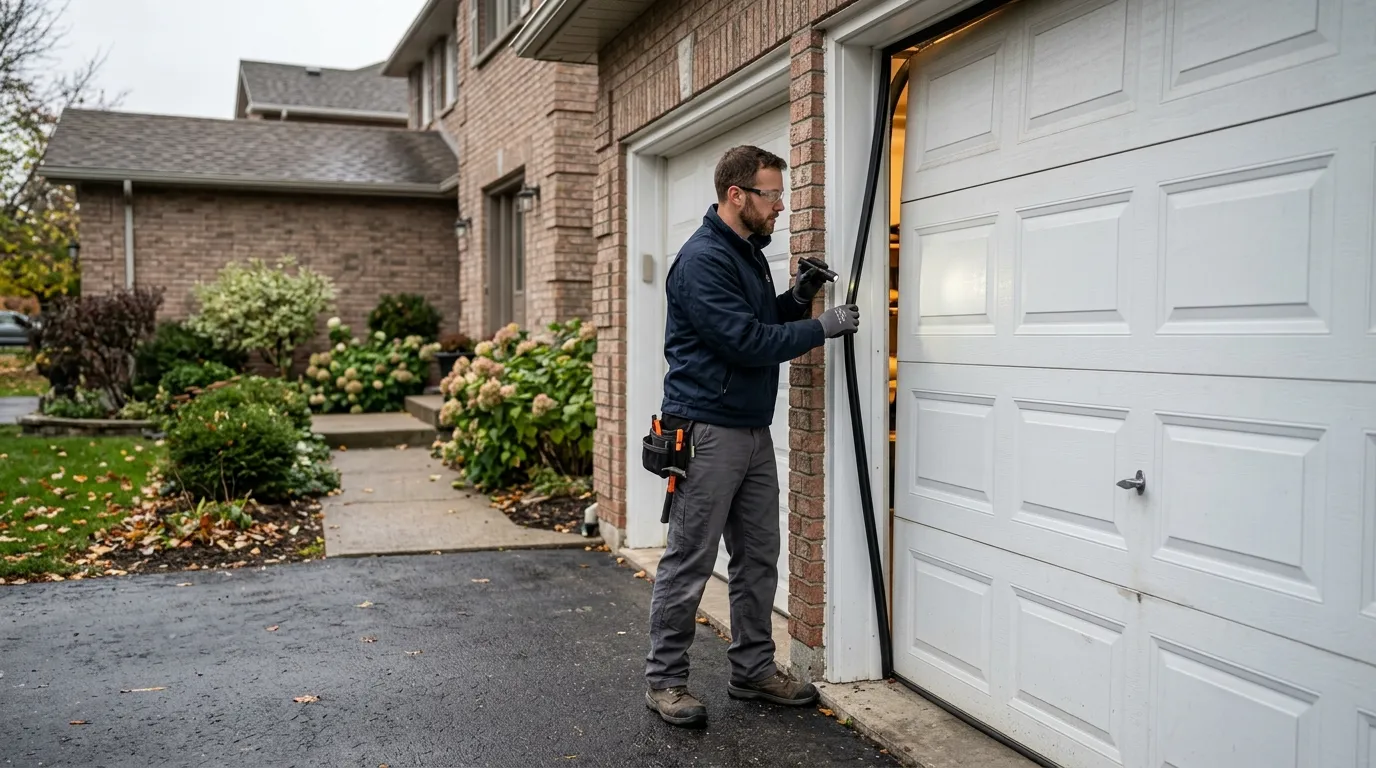
Some of this is safe to check yourself before you call anyone. If the door won't close and a light on the opener unit is blinking, look at the two sensor eyes near the bottom of the tracks - a spider web, a stray box, or a shifted bracket is enough to trip them, and wiping the lenses or nudging them back into alignment fixes it more often than homeowners expect. That's a five-minute job, not a truck call.
What isn't safe to do yourself: touching a torsion spring under tension, or opening an opener's logic board housing while it's still plugged in. Torsion springs on an insulated double door carry enough stored force to break bones or worse if the winding cone slips. That's not us being cautious for liability's sake - it's genuinely dangerous work that needs the right bars and clamps, every time.
Our honest limit here: we don't do cosmetic panel matching for older discontinued door lines. If a single panel's dented and the rest of the door is an obsolete style, we'll tell you a full door replacement is the real fix rather than hunting for a panel that isn't made anymore.
Stocked Parts
The truck carries opener logic boards and drive kits sized for the residential units common in Harrisburg's 2000s-era construction, matched photo-eye sensor pairs, and torsion springs cut for insulated double and single doors rather than the lighter springs older uninsulated doors need.
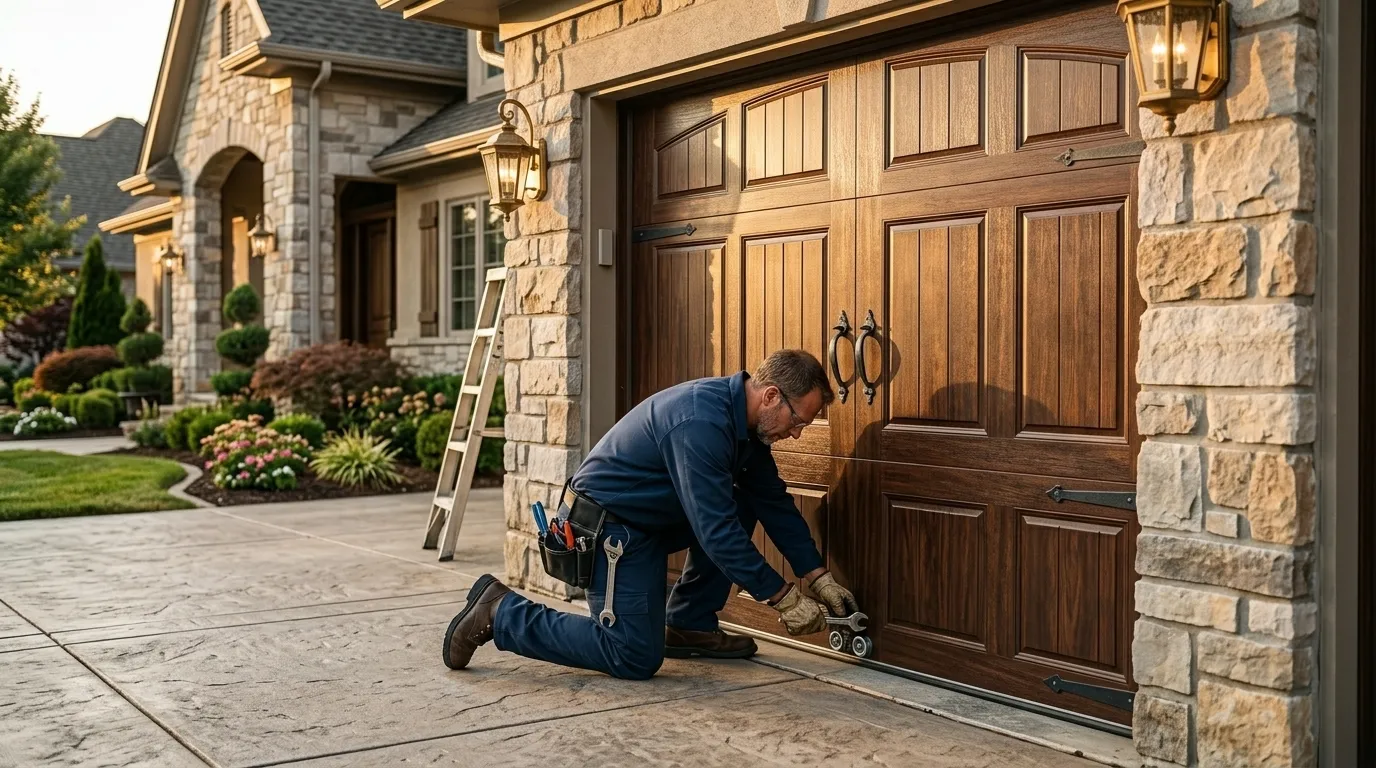
The region sits in a cold-moderate climate band, and that matters more for these newer insulated doors than people assume - the foam core and steel skin expand and contract at different rates through winter freeze-thaw cycles, which is a common reason a door that closed fine in October starts binding on the track by January. We carry track hardware and roller sets to address that without waiting on a special order.
What we don't carry on the truck: parts for door models pulled from production years ago, or panel sections for discontinued color-matched lines. Those get special-ordered, and the wait is on the manufacturer's schedule, not ours - worth knowing before you assume any fix happens same-day.