Where This Job Goes Sideways
Harrisburg is a smaller town than most of what we cover - about 5,804 households - which means the call volume out here is lighter than in the denser parts of the territory, but the work itself skews different, not less. The median home in Harrisburg was built around 2006, well past the 1974-2006 range that covers most of the wider service area. That's a newer town, and it shows up in the doors.
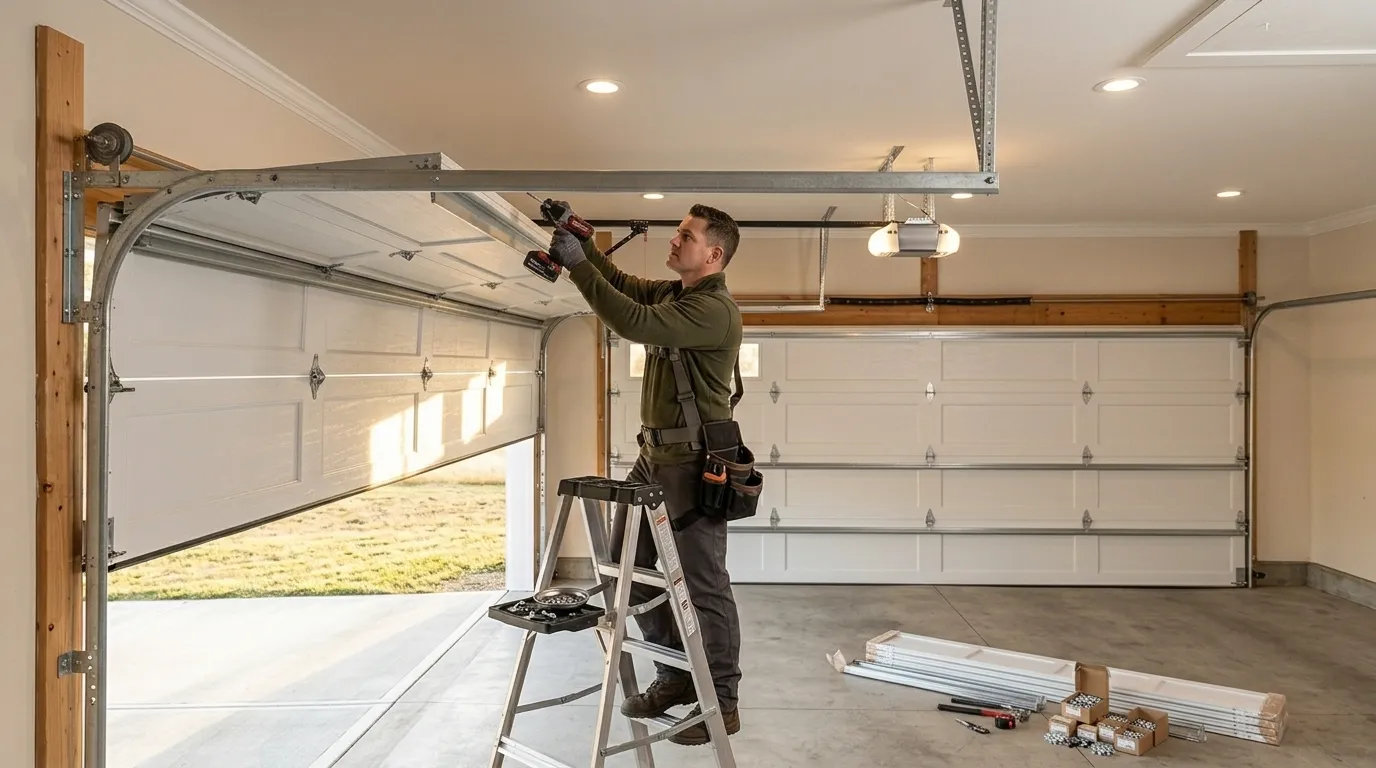
Where older stock gives us worn torsion springs and hand-me-down openers, Harrisburg's doors are mostly original steel sectional units on factory openers with safety sensors and rolling-code remotes - the stuff that started standard in the mid-2000s. The failures we see out here tend to be the opener logic board losing its mind, a photo-eye sensor knocked out of alignment, or a plastic idler pulley that was never built to run twenty years. Springs do fail eventually even on newer doors, but we're usually the first ones replacing them, not the third.
Harrisburg sits about 14 miles from our shop in Matthews, so if you're calling about a door that's making noise at 6 a.m. on a Tuesday, we're not around the corner - plan for a scheduled visit rather than a same-hour drop-in.
What the Fix Involves
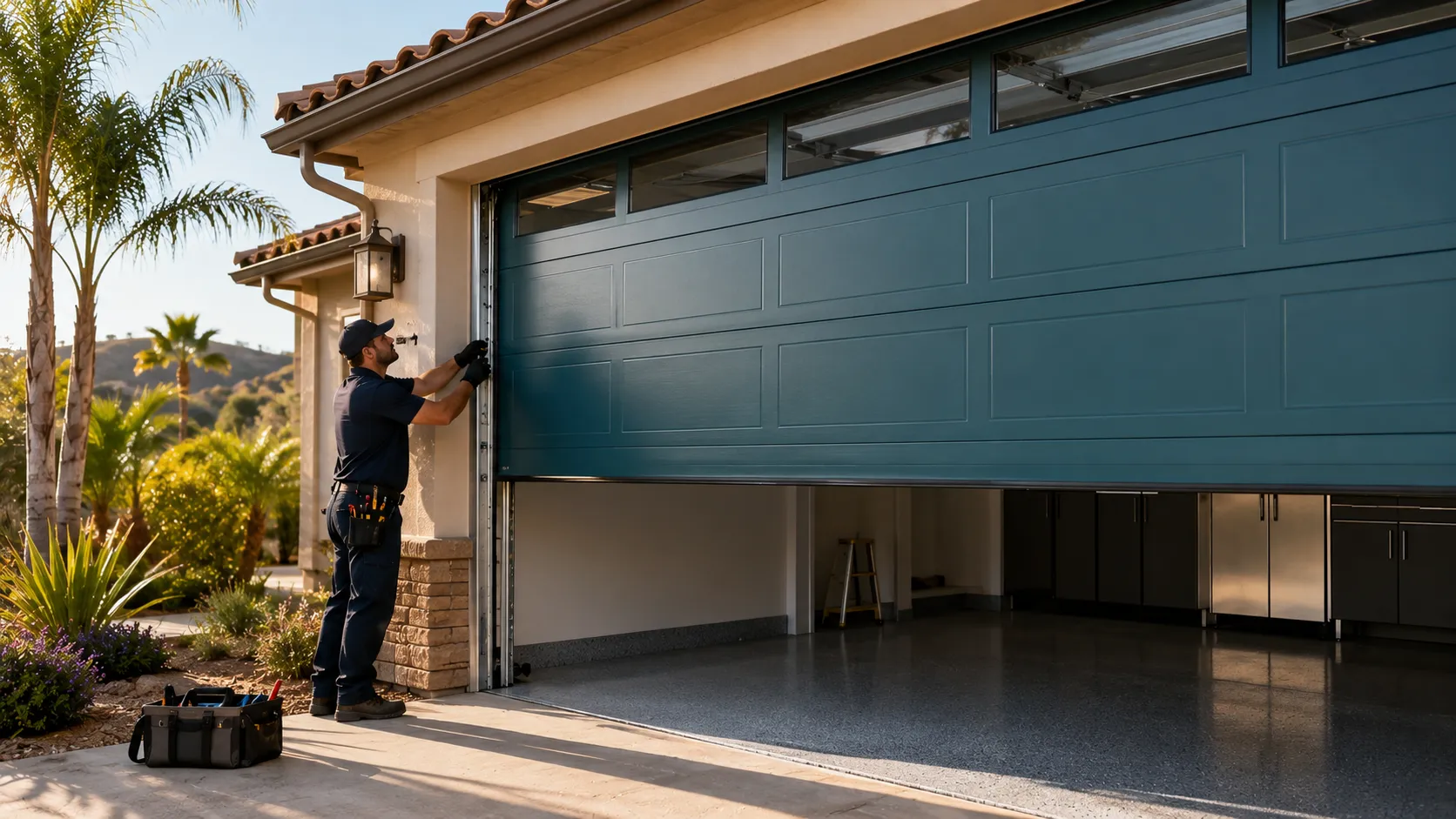
For a 2006-era door, most repairs start with the opener, not the spring. If the logic board is throwing a code or the remote stopped syncing, we're testing the circuit board, the wall control, and the receiver before we touch anything mechanical. Photo-eye sensors on doors this age are usually the factory pair, and after fifteen-plus years the wiring insulation gets brittle enough that a sensor reads fine on the bench but drops the signal once it's mounted back at the bracket - that's a wiring fix, not a sensor swap, and it's worth knowing the difference before you pay for a new sensor you didn't need.
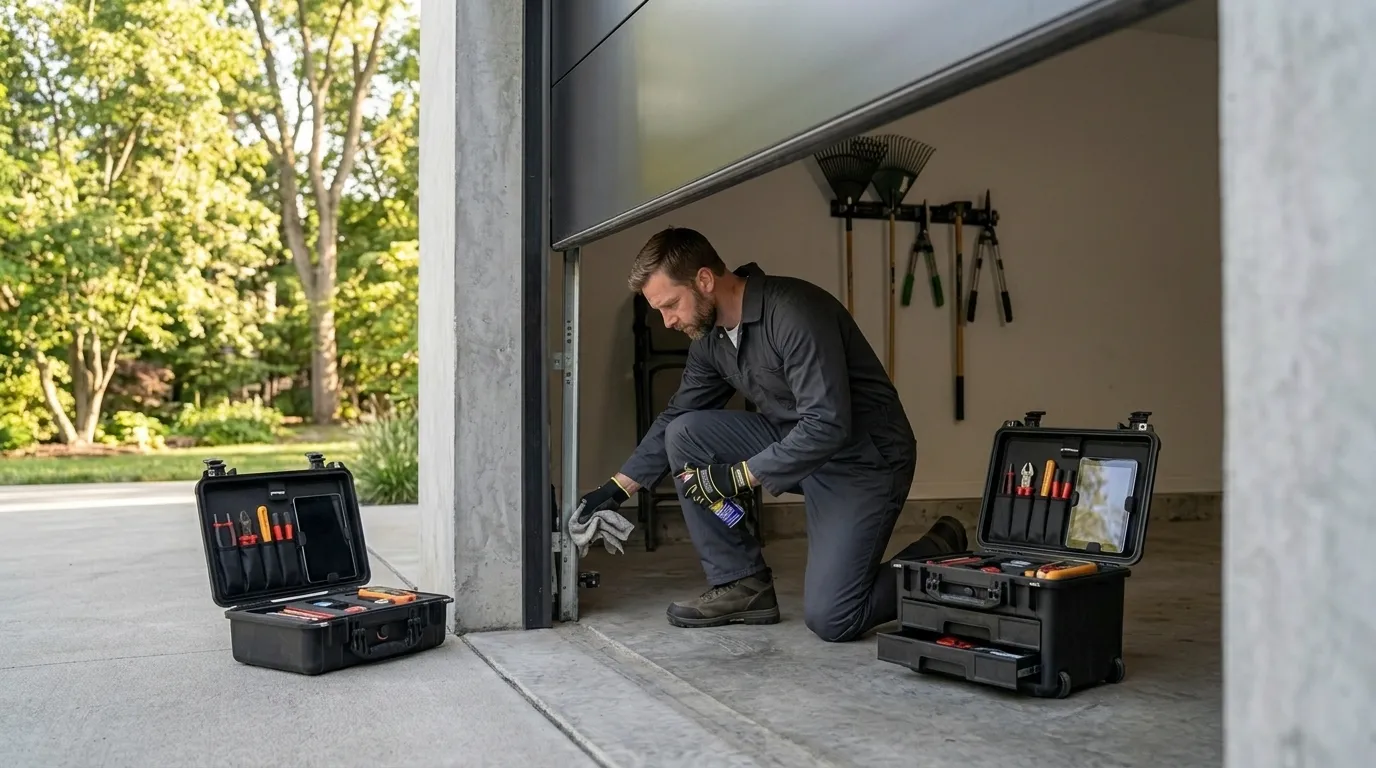
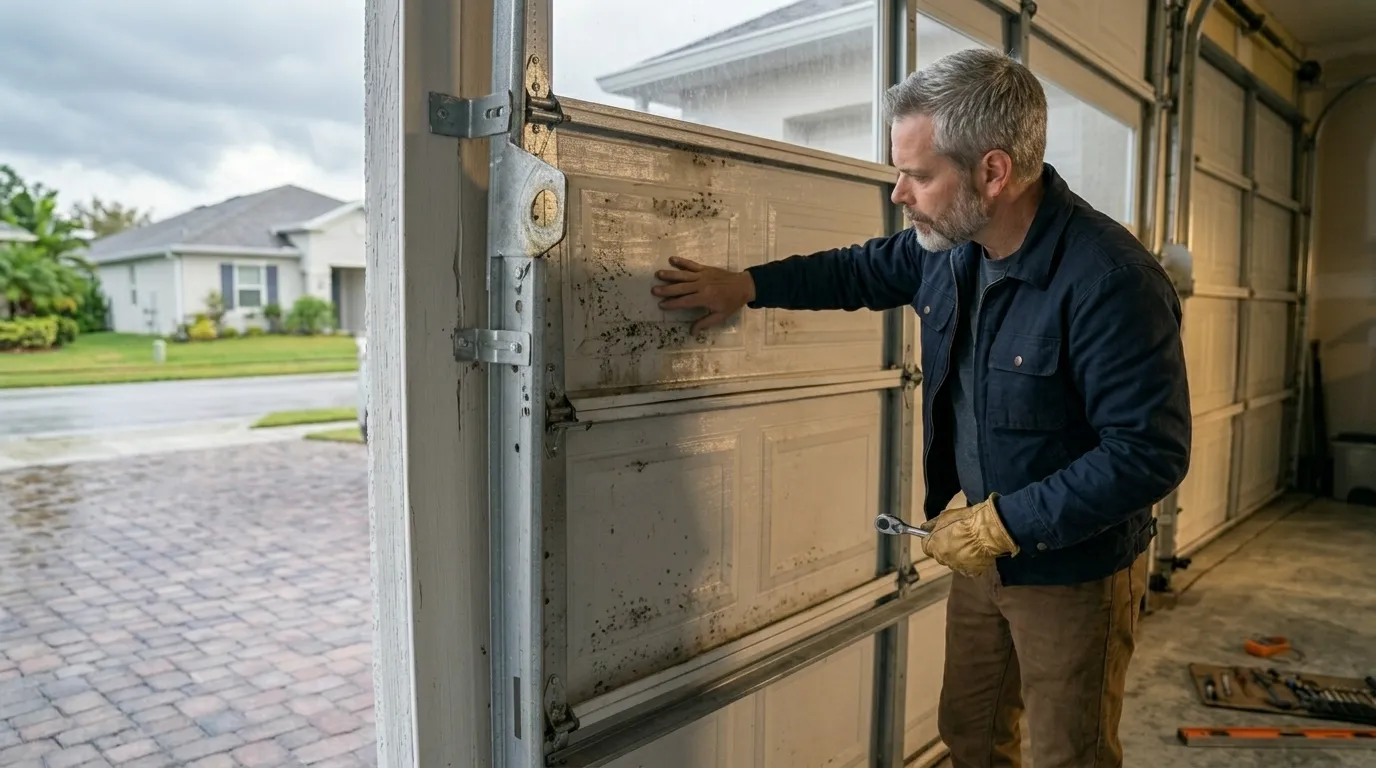
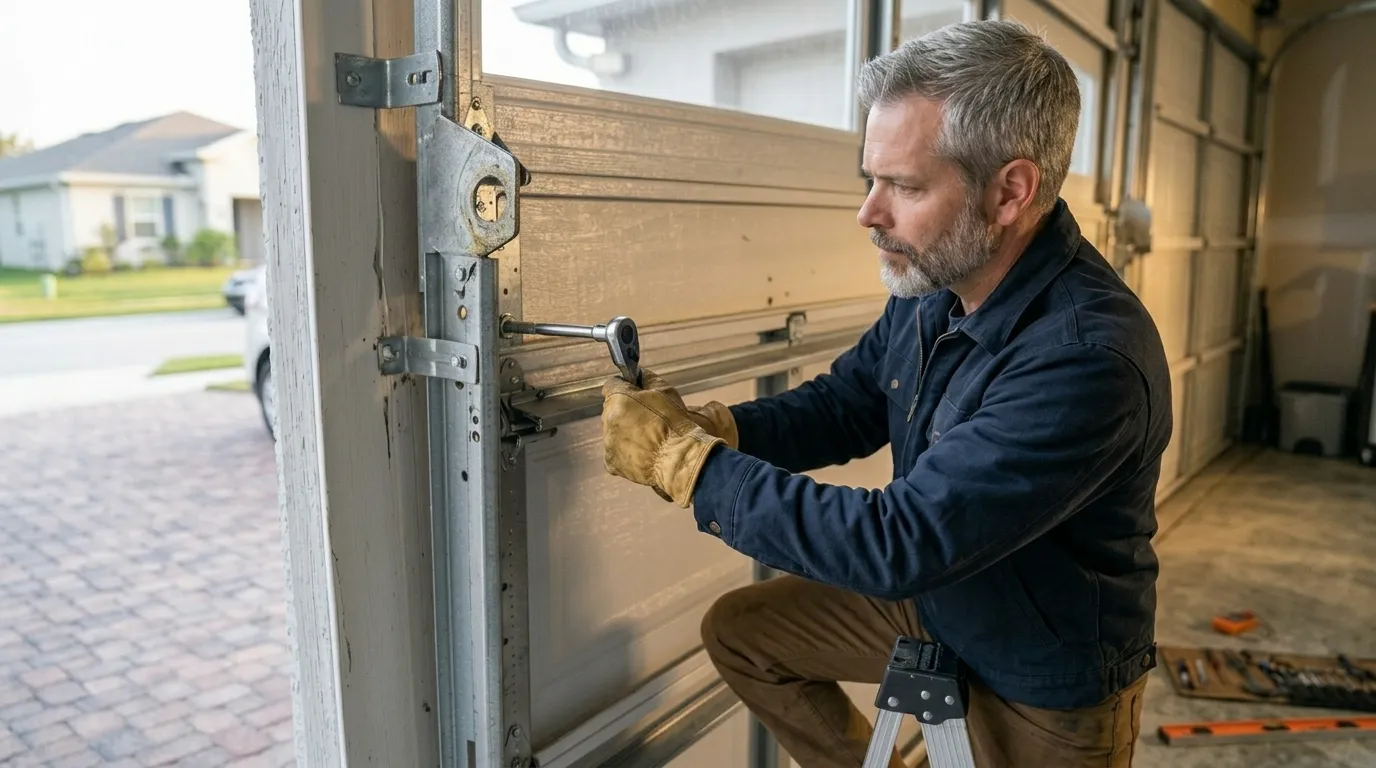
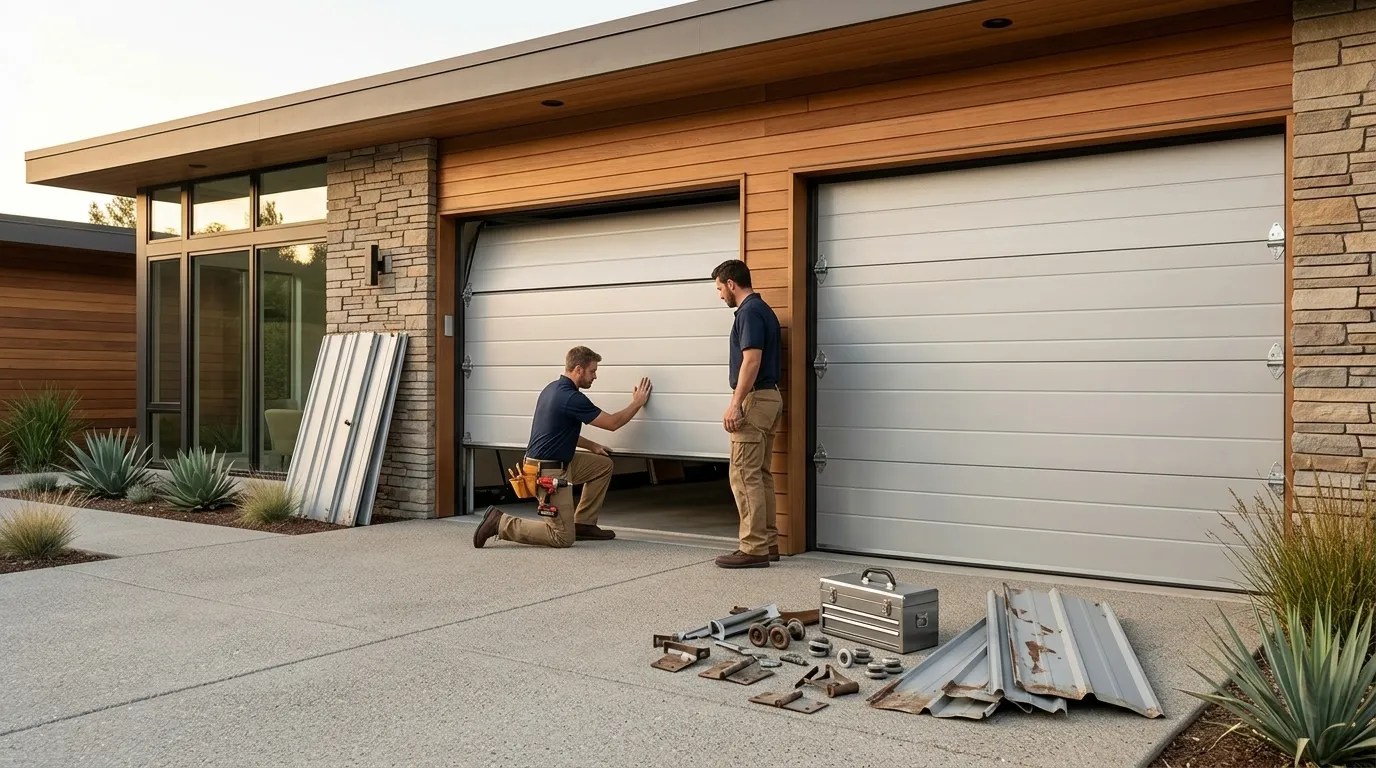
Rollers and hinges on original steel sectional doors from this build era are usually still the stock nylon rollers, and by year fifteen to twenty they're the first thing to go loud. That's a straightforward swap, done in one visit, no ordering involved.
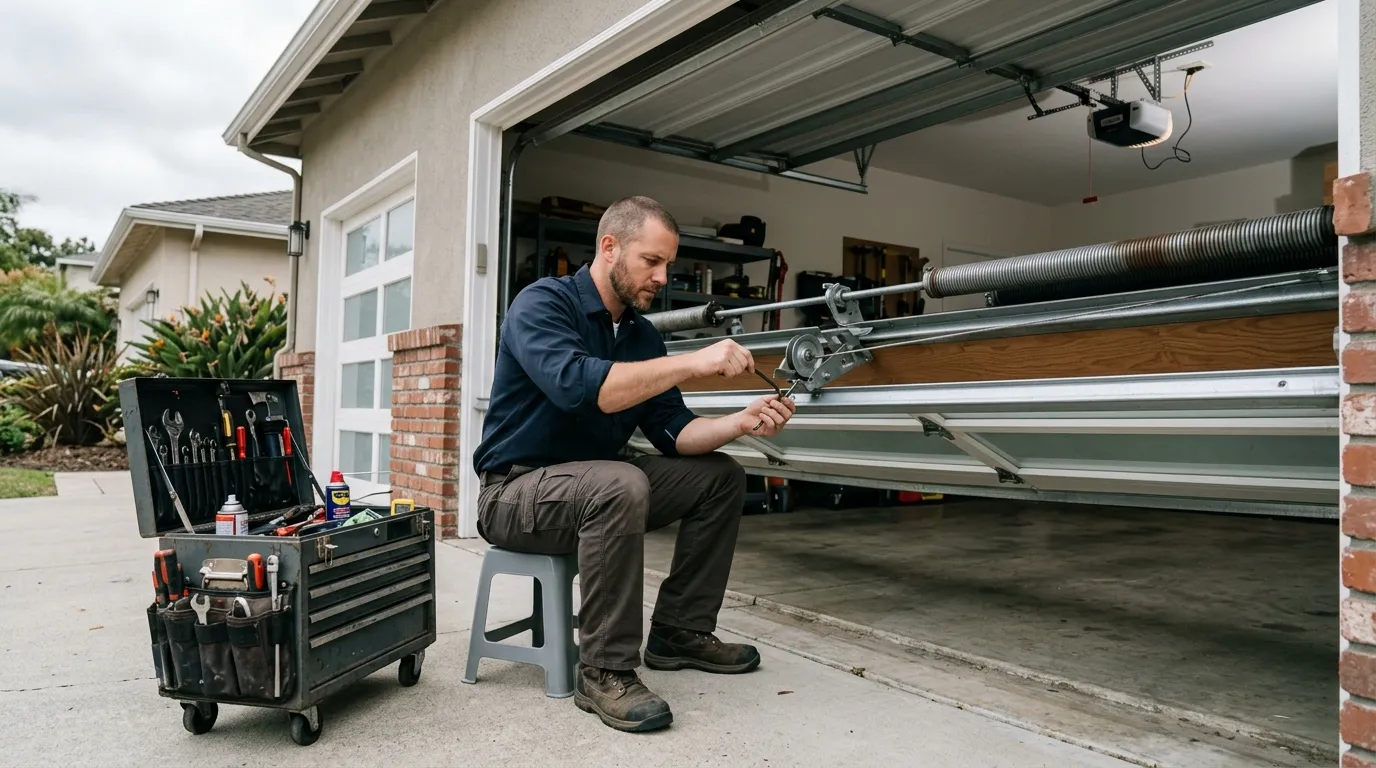
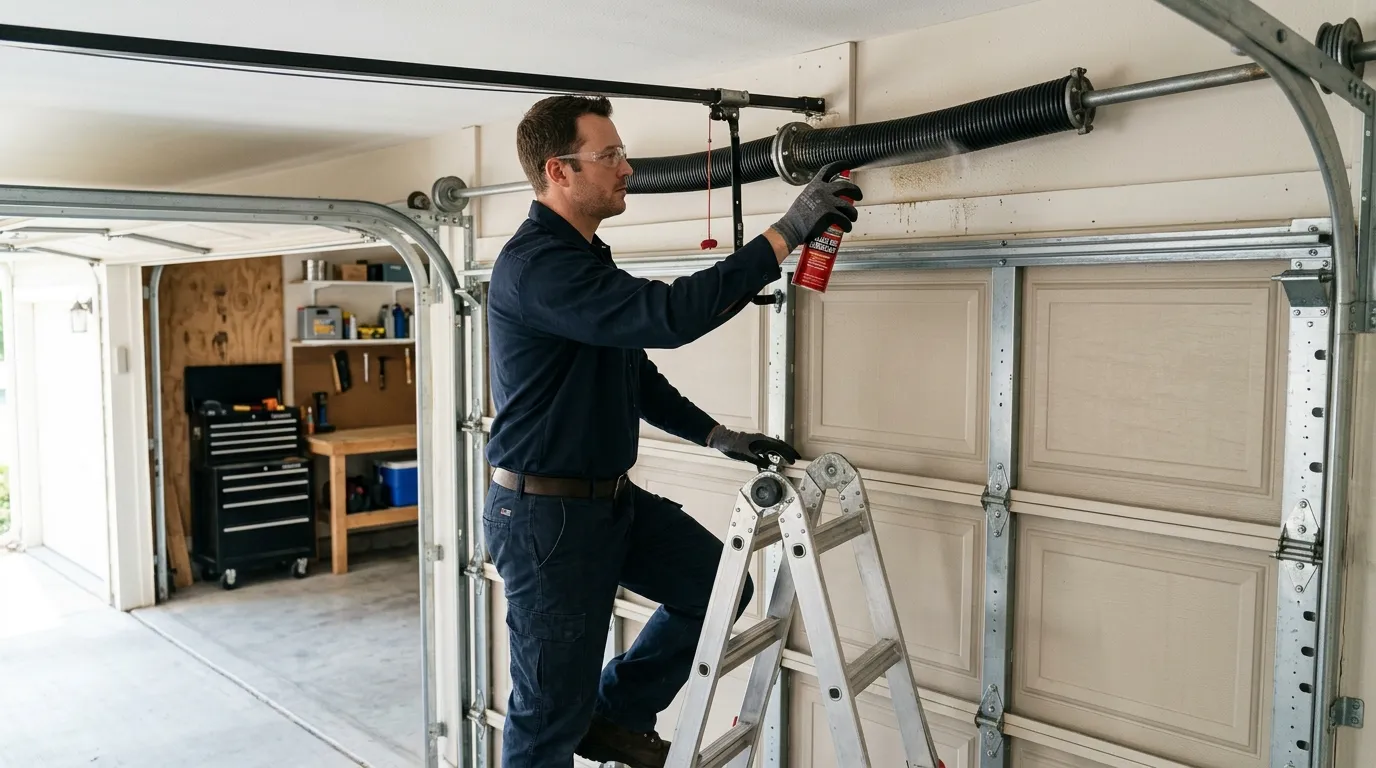
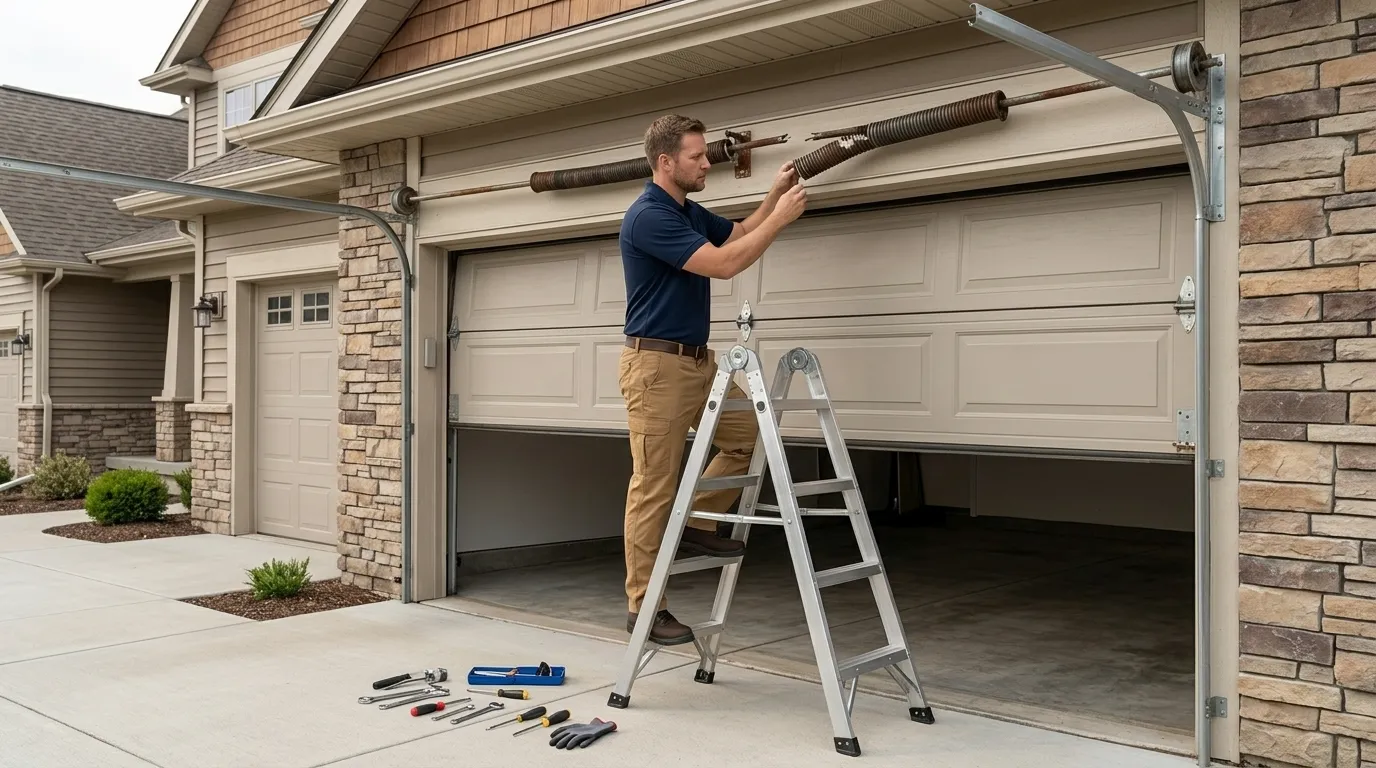
Springs are the exception on newer stock - most Harrisburg doors we've worked haven't needed one yet, but when a torsion spring does go on a door this age, it's almost always the original spring finally reaching the end of its cycle count, and we replace it as a pair regardless of which side broke.
The DIY Question
Swapping a remote battery, tightening a loose bracket bolt, or cleaning dust off a photo-eye lens - fine, do it yourself, it's five minutes and no risk. Realigning the photo-eye sensors on a door this age is also reasonable if you're patient, since it's usually a matter of loosening the mounting screw and nudging the bracket until the light goes solid.
What we don't recommend touching yourself: anything involving the torsion spring, even on a door this young. A spring under load that lets go while you're working on it can break a wrist or worse, and the tools to wind it safely aren't something most garages have lying around. If your opener's logic board is bad, replacing it yourself is possible but the part has to match your exact drive system - order the wrong board and you've spent money on something that won't mount.
Stocked Parts
Because Harrisburg's stock is mostly one era - factory steel sectional doors on mid-2000s openers - we carry the rollers, hinges, and standard photo-eye sensor pairs that fit that generation on the truck. Logic boards are more brand-specific and not something we stock for every opener line, so if yours needs one, that's usually a follow-up visit once the part's in. Torsion springs we carry in common sizes, but we still measure on-site before cutting a replacement, since even doors built the same year can carry different spring specs depending on the door's weight and track configuration.