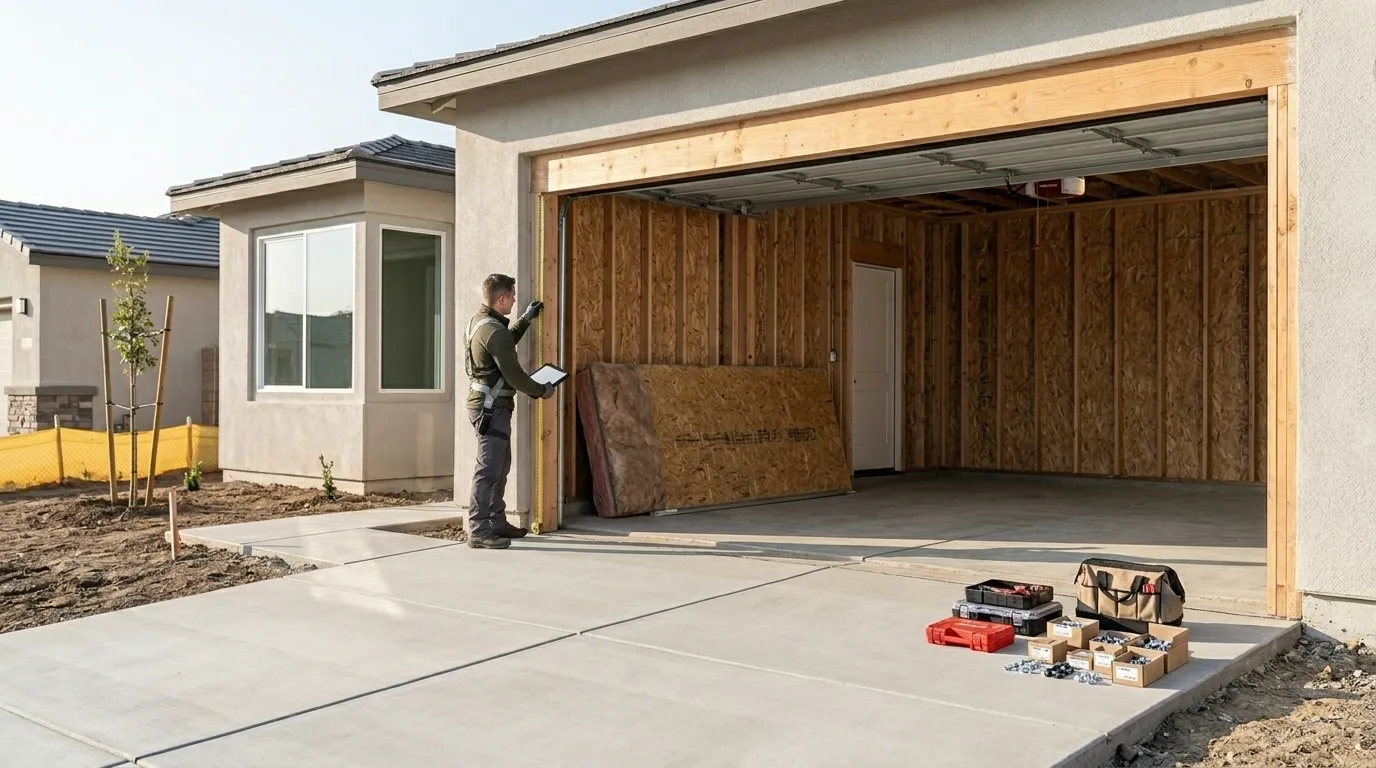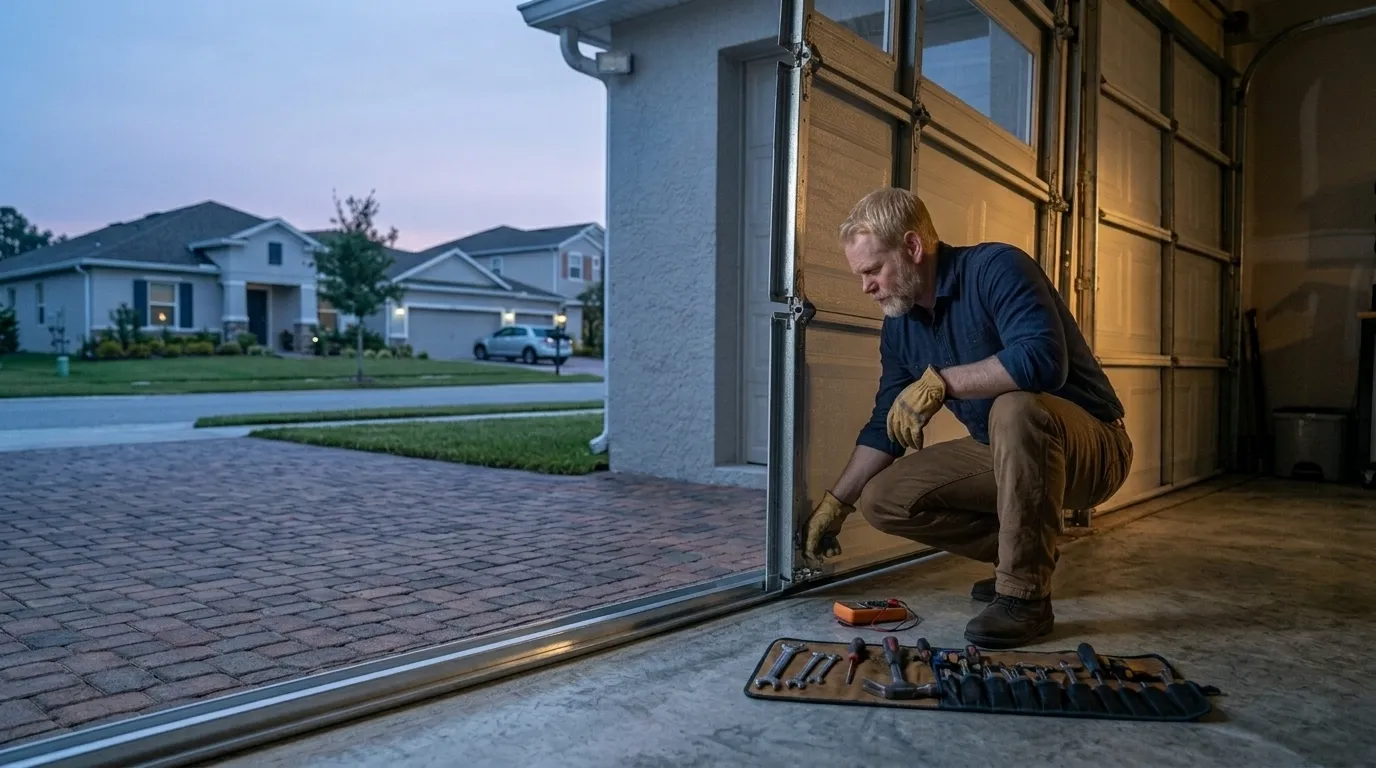
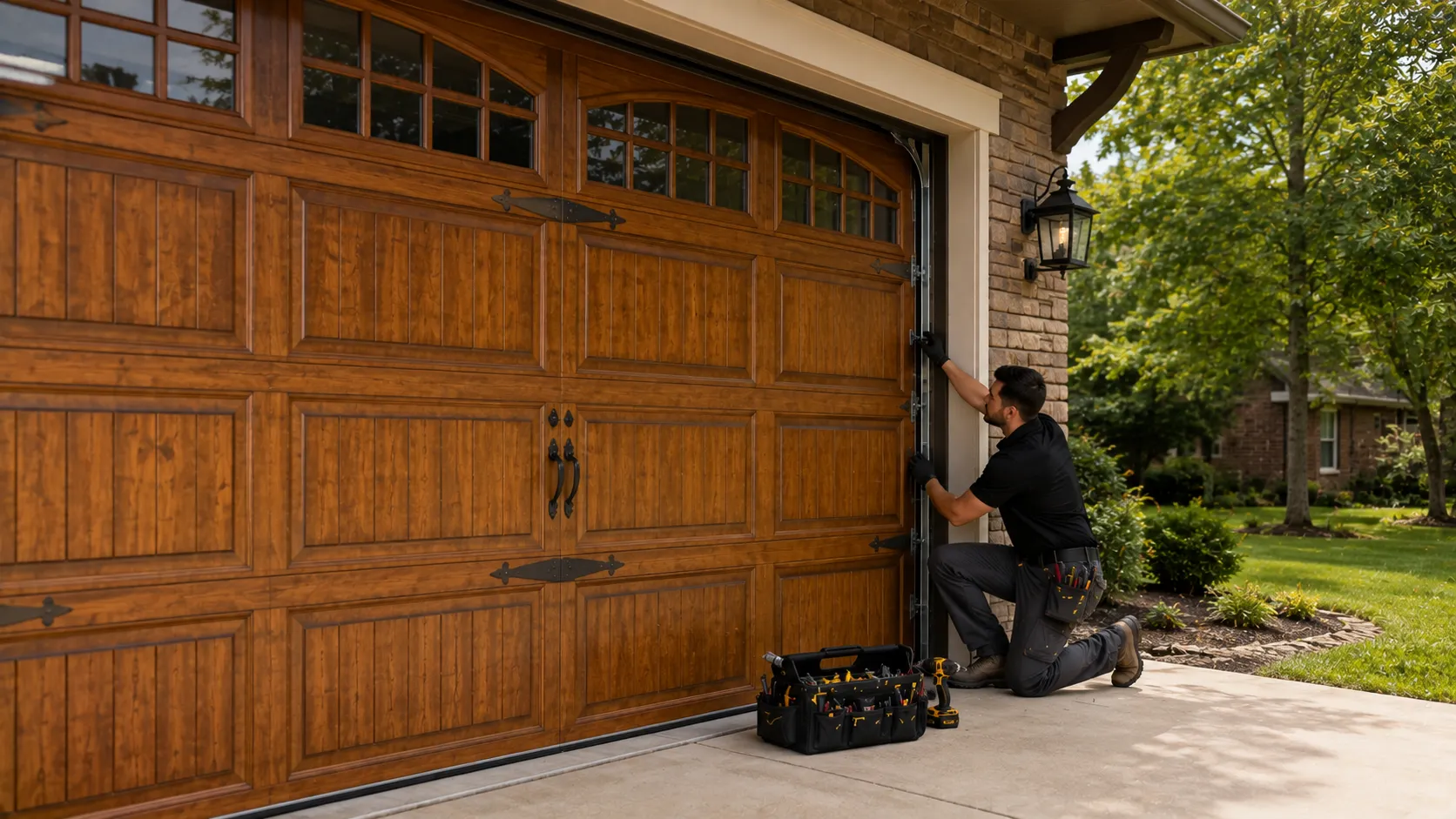
What You Are Seeing
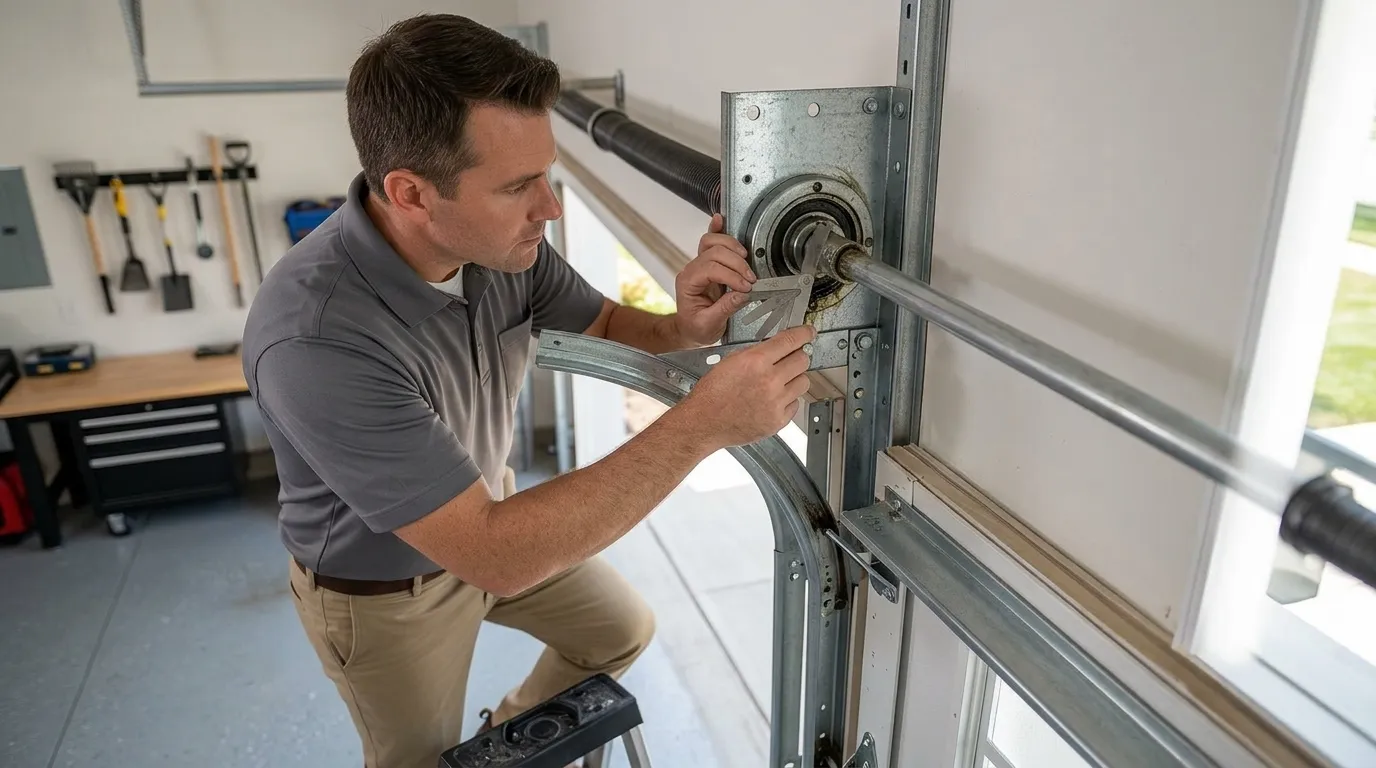
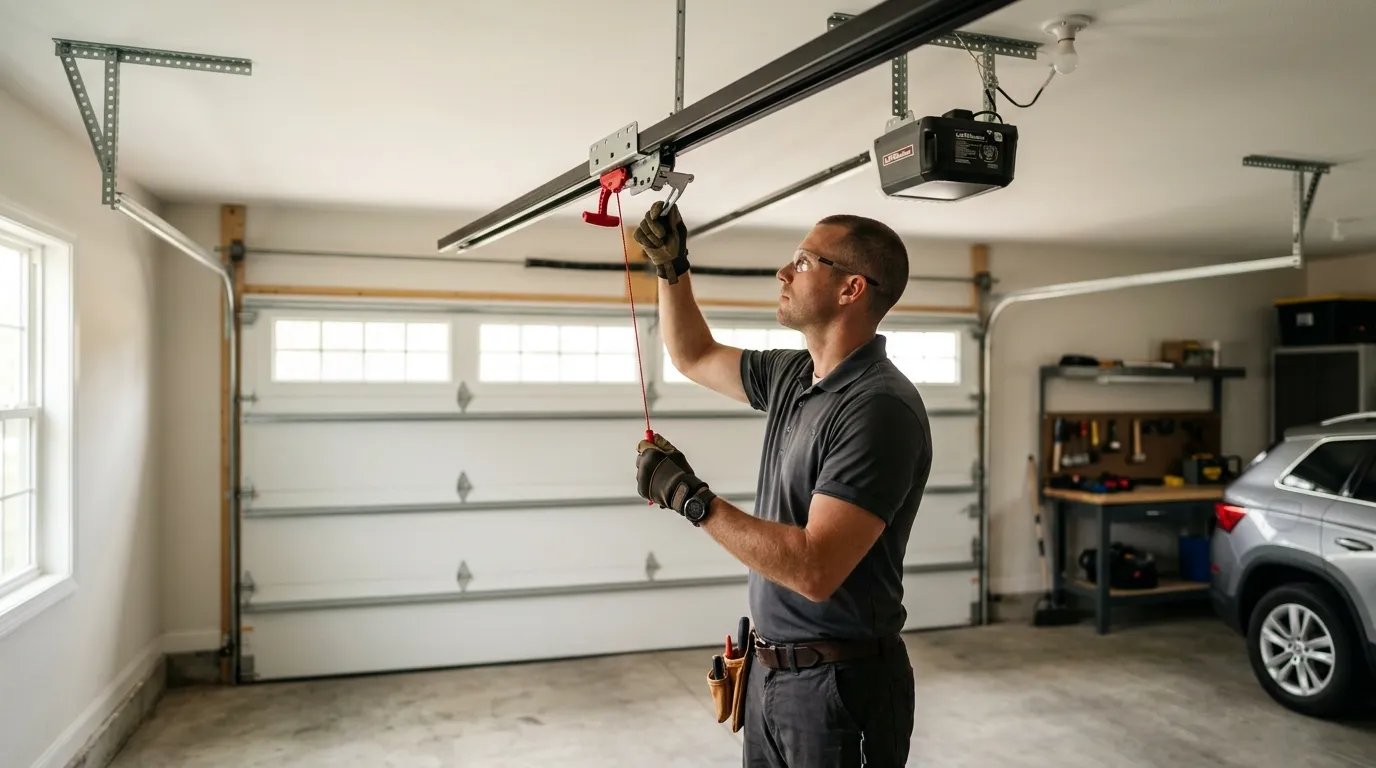
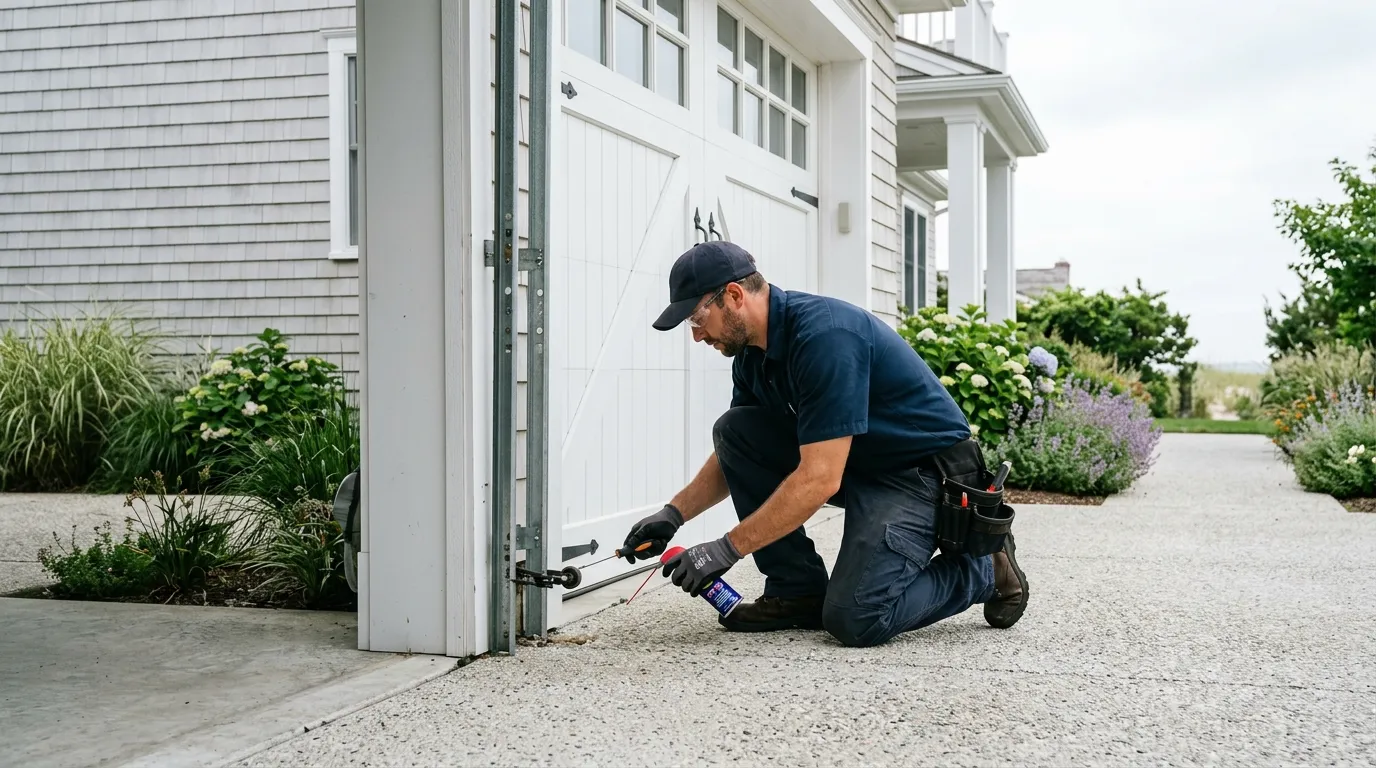
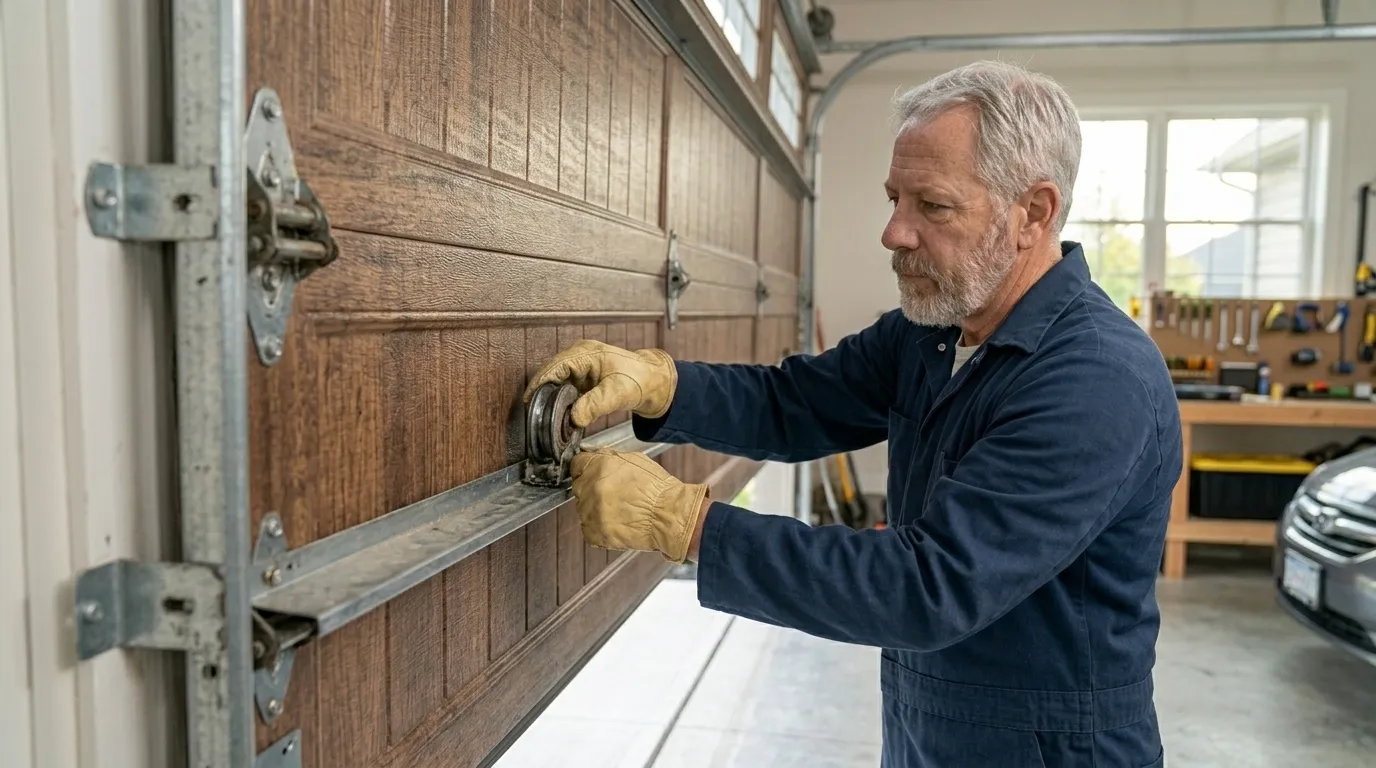
Unionville is a small place - about 2,431 households - which means the fault we see here isn't spread across every decade of construction like it is in a bigger town. Most of these houses went up around 1993, sitting inside the wider area's 1974-2006 build-out. That narrows things down. A door installed when a 1993 house was framed is now past 30 years old, and the torsion springs on that original door are almost certainly not the ones that came with it - springs rated for a few thousand cycles don't last three decades of daily use. What you're likely seeing is a second or third spring on original hardware, or an opener from the late 90s or early 2000s that's missing the safety reversal sensors required on newer units. Because the housing here clusters tightly around one era, the failures cluster too: torsion spring fatigue, dry-rotted rollers, and drums worn from years of an unbalanced door. It's a small enough area that the pattern repeats house to house rather than varying block to block.
Getting It Booked In
We run this call out of Matthews, about 11 miles from Unionville. There's no branch or drop point here - a truck comes from Matthews to your driveway. That distance doesn't change what we can fix, but it does mean we're not swinging by on a whim between other stops in the neighborhood the way we might in a denser part of the service area. Tell us what the door is doing (won't open, opens partway, makes a bang when it fails) when you call, since that helps us bring the right spring size or roller stock instead of guessing. We don't advertise a same-day guarantee for Unionville specifically, so ask when you call what the schedule looks like that week.
Time on the Job
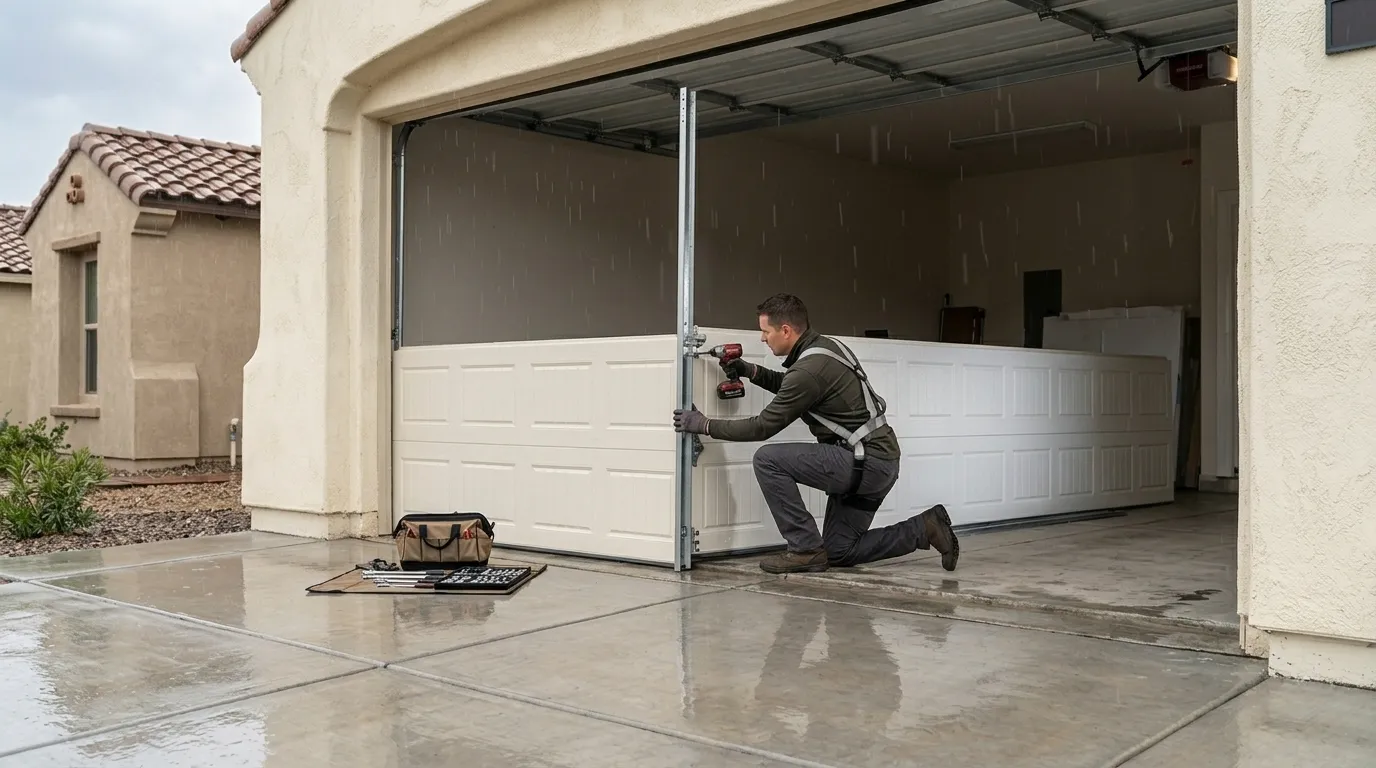
A straight torsion spring replacement on a standard double door usually runs under two hours once we're on site, parts in hand. Add time if the drums or cables need replacing too, which is common on doors this age, or if the opener needs a matching part we don't carry on the truck and have to source. We don't give a blanket number here because a job on a 1993 door with original hardware tends to take longer than the same repair on a door installed in the last ten years - there's more to inspect and more that's worn past spec. Straightforward repairs are usually done same visit; anything needing a special-order part means a second trip.
Why This Fails Locally
The area sits in a moderate cold climate band, and that matters for spring life more than most owners expect. Metal fatigues faster with repeated cold-to-warm cycling through the winter months, and a spring that's already 30 years past its install date has less give left to handle that stress. Combine that with a housing stock concentrated around 1993 - meaning a lot of doors are hitting spring end-of-life around the same window - and you get a town where the calls bunch up by season rather than trickling in evenly. It's not that the door is used harder here; it's that the age of the stock and the climate both push failures toward late winter and early spring, when the temperature swings hardest on hardware that's already tired.