What You Are Seeing
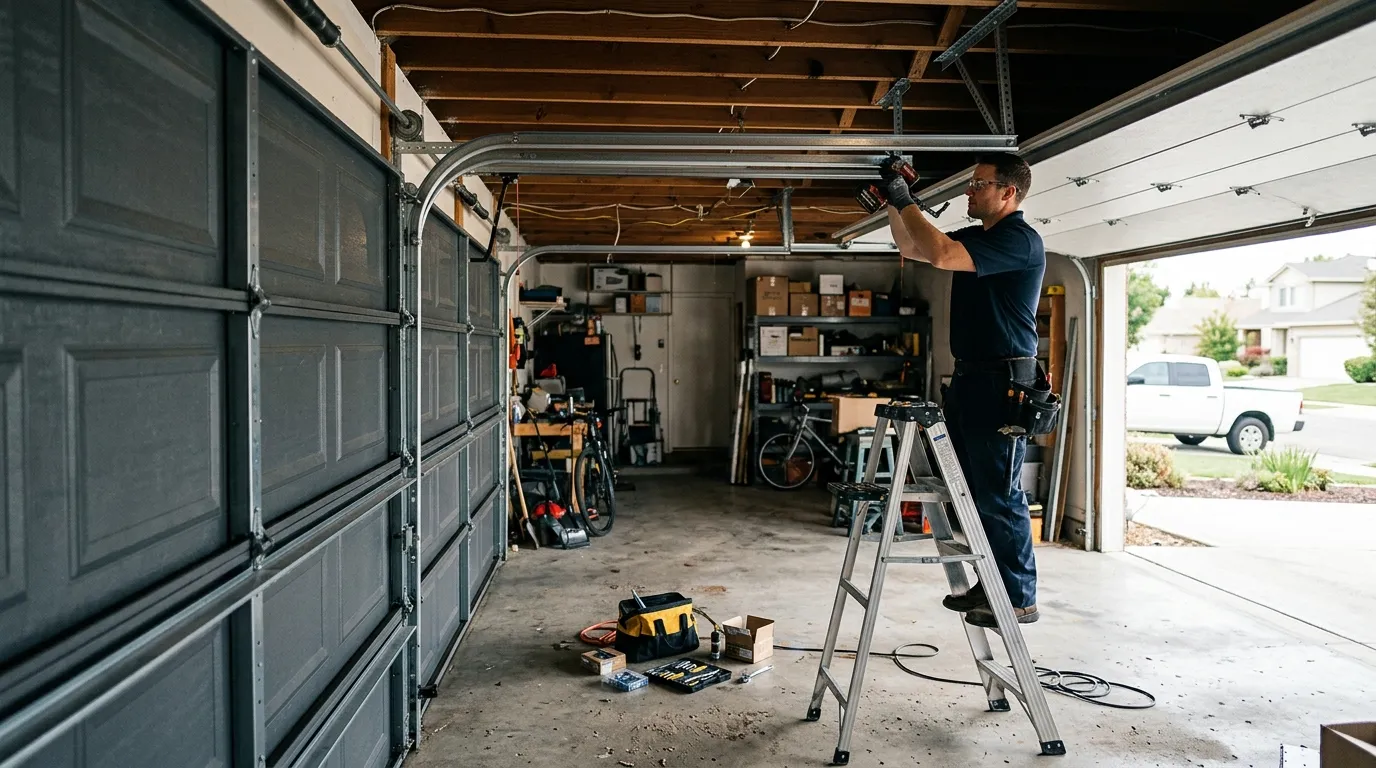
Unionville's houses cluster around a median build year of 1993, which puts most of this town's garage doors and openers in their third decade. That's old enough that the original torsion spring, the original steel rollers, and in a lot of cases the original chain-drive opener are still hanging there doing the job they were installed to do. Nobody swaps a spring on a schedule - they swap it when it snaps. If your door came with the house, there's a decent chance nothing on that track has been touched since a crew put it in during the Clinton administration.
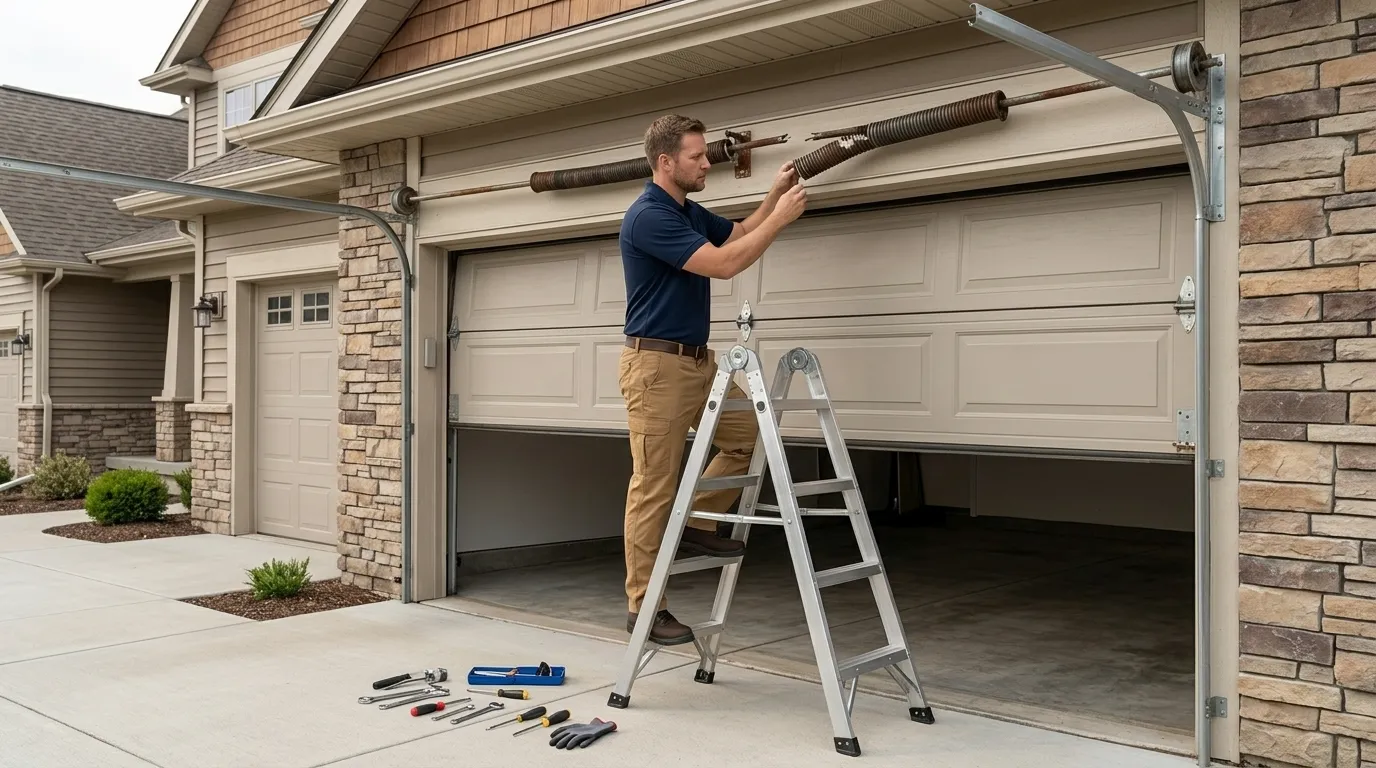
What you're seeing when it fails is usually one of two things: a torsion spring that finally lets go, loud, sometimes with the door dropping fast, or a cable that's frayed for years finally parts under tension. Either one can happen with the door standing open, half open, or shut - it depends on where in the cycle the spring was when it gave. If the door won't move at all and the opener motor hums but nothing turns, that's a broken spring, not a busted opener, and it's not a DIY fix.
Getting It Booked In
Matthews Garage Door Pros runs this call from Matthews, about 11 miles from Unionville. There's no branch office or drop-in counter here - a truck comes out from Matthews when you call, the same as it would for any of the other communities in this service area. Have the door's approximate age and whether it's a single or double door ready when you call; on a house from the early-to-mid 1990s that's usually enough to tell the estimator whether it's carrying one long torsion spring or two, which changes what's on the truck.
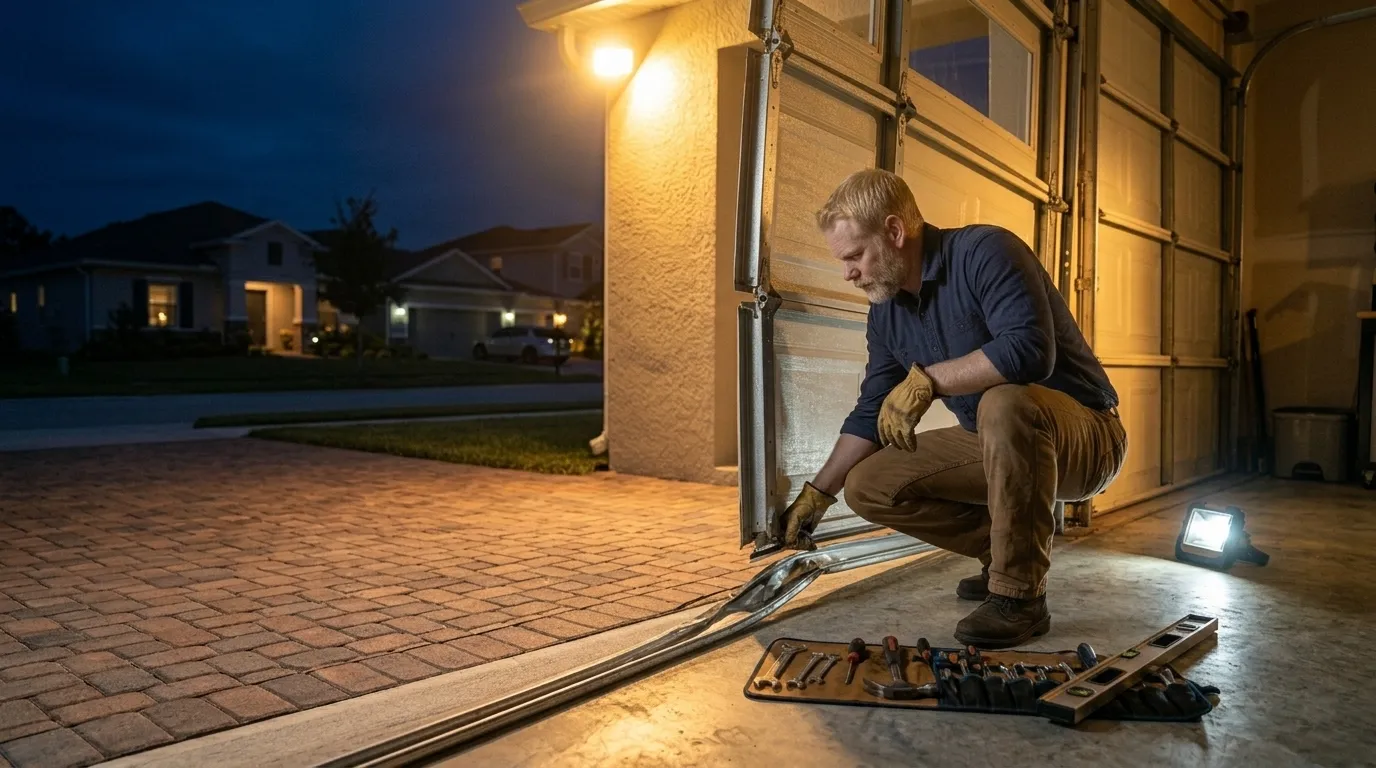
If the door is jammed shut with a car inside, say so up front - that call gets prioritized differently than a door that's stuck open overnight. Off-hour emergency calls cost more than a scheduled morning visit; ask what that difference is before you commit if the situation isn't a true lockout.
Time on the Job
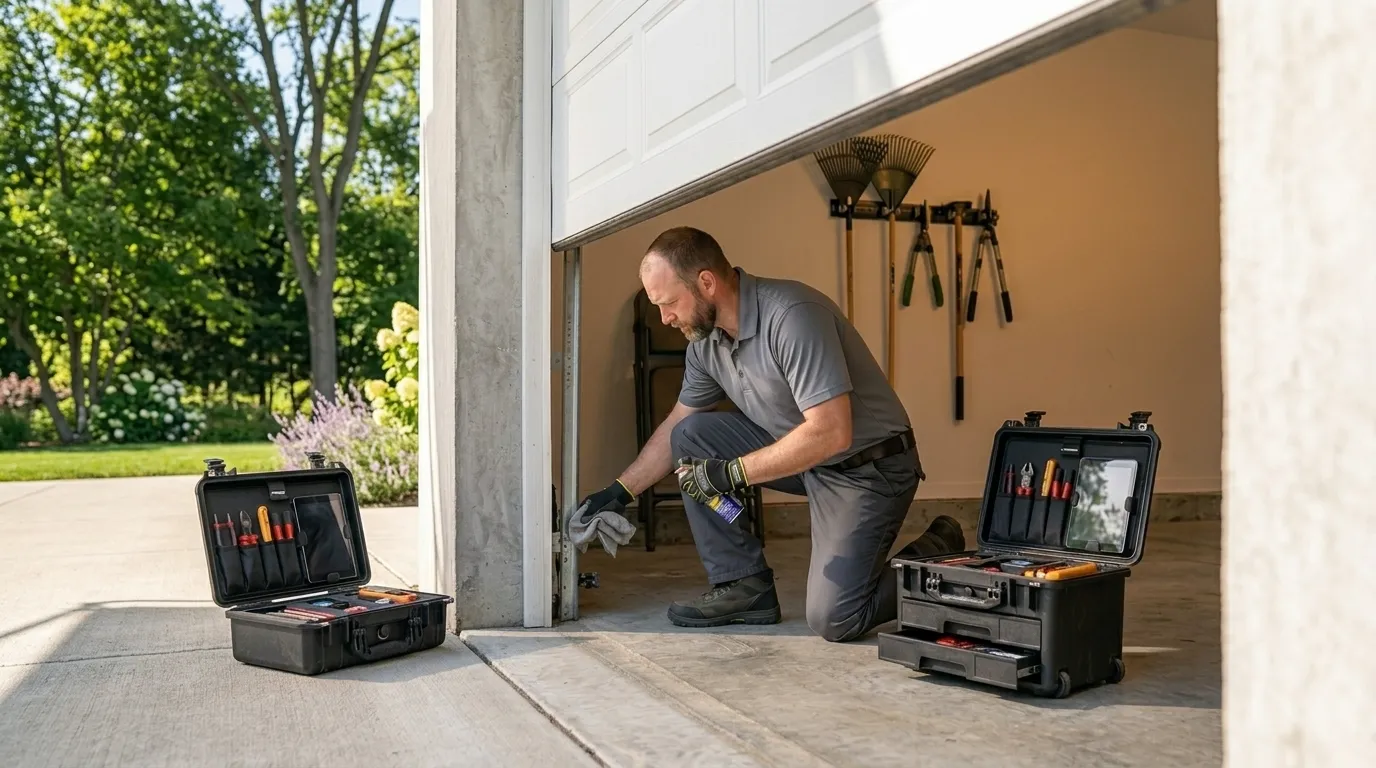
A straight spring replacement on a single-spring residential door, once the truck is on-site, is usually a same-visit job - an hour or so of hands-on time. Doubling that up for a two-spring door, or finding that the drums or bottom brackets need replacing too because they've been under load with a failing cable for months, pushes it longer. We don't carry every obsolete bracket size on the truck; if your door uses a hardware pattern that stopped shipping years ago, that part may need to be ordered, and that's the honest limitation here - not every 1990s-era part is sitting on the shelf.
Why This Fails Locally
Unionville sits inside a service area where the broader housing stock runs 1974 to 2006 with a median around 1998, and this town's own median of 1993 lands squarely in that window - older than some of the newer pockets, younger than the 1970s builds elsewhere in the area. That means the torsion hardware here is a specific generation: heavier-gauge springs than the newest houses use, but not the ancient extension-spring setups you'd find on a 1970s garage. Parts availability follows that curve too - common for this era, but not universal.
With 2,431 households and a median income of $92,009, Unionville runs a bit above the wider service area's $88,203 median. That doesn't change how a spring fails, but it does tend to mean people replace a tired opener and hardware together rather than patching one part at a time, since a full door and opener update is more within reach here than in lower-income pockets of the same 30-year housing band.