Time on the Job
Stallings' housing stock centers on a 2002 median build year, a full four years newer than the 1998 median across the broader Matthews service area, which means this town leans harder on factory torsion springs than the older mix of doors farther out. Builders in that stretch weren't installing extension springs on side rails anymore - torsion bar over the header, wound to match a standard steel door, was the norm. That hardware was solid for its day, but a torsion spring doesn't last forever regardless of how well it was made. Most are rated for somewhere around 10,000 cycles, and a door that goes up and down four times a day starts closing in on that number faster than owners expect.
What that means on a service call: we're not chasing exotic or custom setups here. We're dealing with a fairly consistent generation of factory torsion springs, wound to spec for a standard two-car steel door, now aging out roughly on schedule. That consistency is actually useful - it means we know what we're likely to find before the truck is in the driveway, though we still measure and confirm on site rather than guess.
Where This Job Goes Sideways
The failure that catches people off guard isn't the spring snapping - most owners hear that happen and know exactly what it is. It's the slow give: a door that used to float up with one hand now needs both arms, or an opener that groans and strains before it lifts at all. That's a spring losing tension gradually, not all at once, and it's common on doors from the 2002-era stock now well into their second decade of daily cycles.
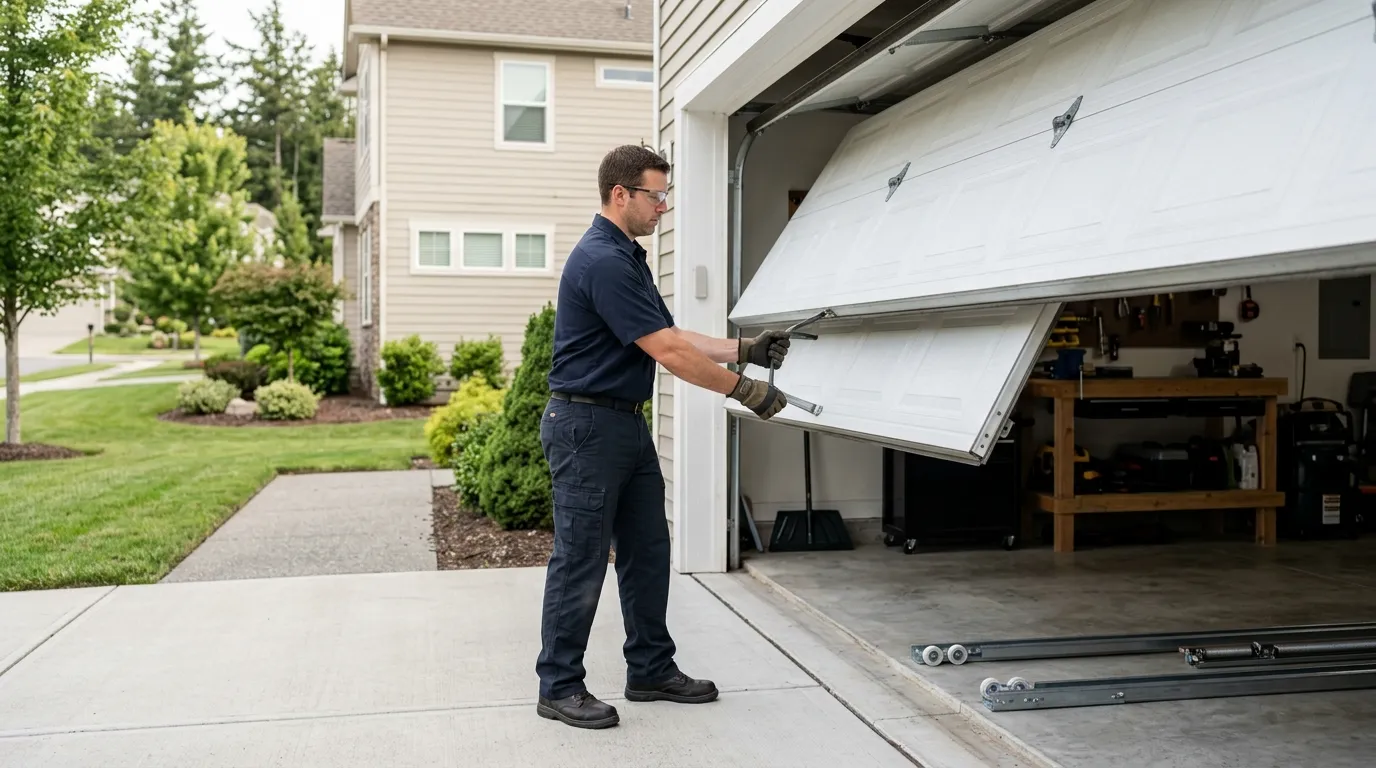
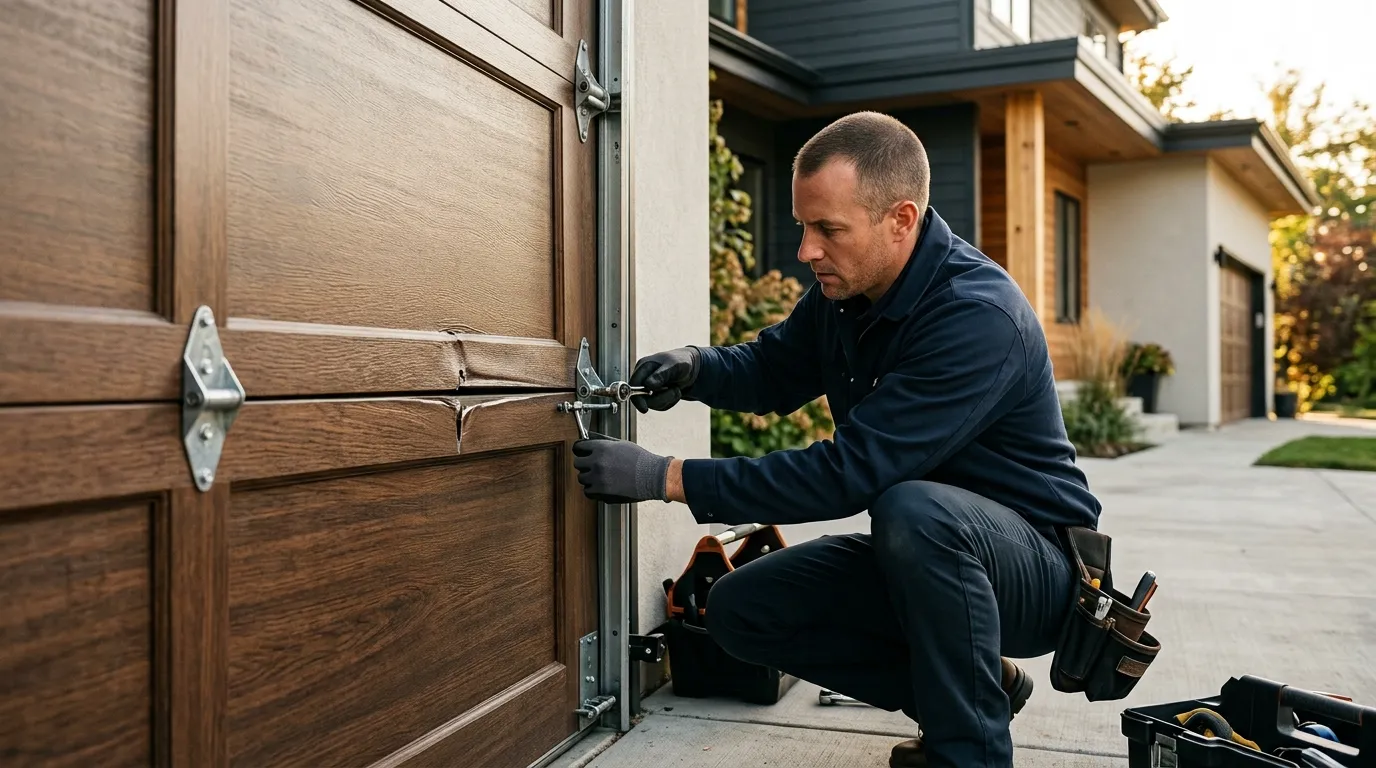
The other place this goes wrong is when someone tries to save a call and adjusts the spring themselves, or has a handyman do it without the right winding bars. A torsion spring under tension is not a DIY fix - it's the single most common cause of serious injury in residential garage work, and we've seen doors damaged further by attempts to loosen or reset a spring without the right tools. If a spring has already let go, the safest move is to leave the door down, unplug the opener, and call it in rather than force it open.
Getting It Booked In
We run this call out of Matthews, and Stallings sits about 3 miles away - close enough that it's one of the shortest drives on our board, closer than Hemby Bridge or Mint Hill at 5 miles. We don't keep a separate branch or drop location in Stallings itself; every job here is dispatched from the same shop that covers the rest of the territory, so what you're booking is a truck coming a short distance, not a local storefront.
When you call, tell us what the door is doing - won't budge, opens uneven, made a loud bang - and whether the opener still runs. That tells us whether we're bringing spring stock for a standard torsion setup or need to look closer once we're there. We don't quote a fixed response time here because that depends on the day's schedule, but a 3-mile run means Stallings isn't waiting behind a longer haul to somewhere out at.
What the Fix Involves
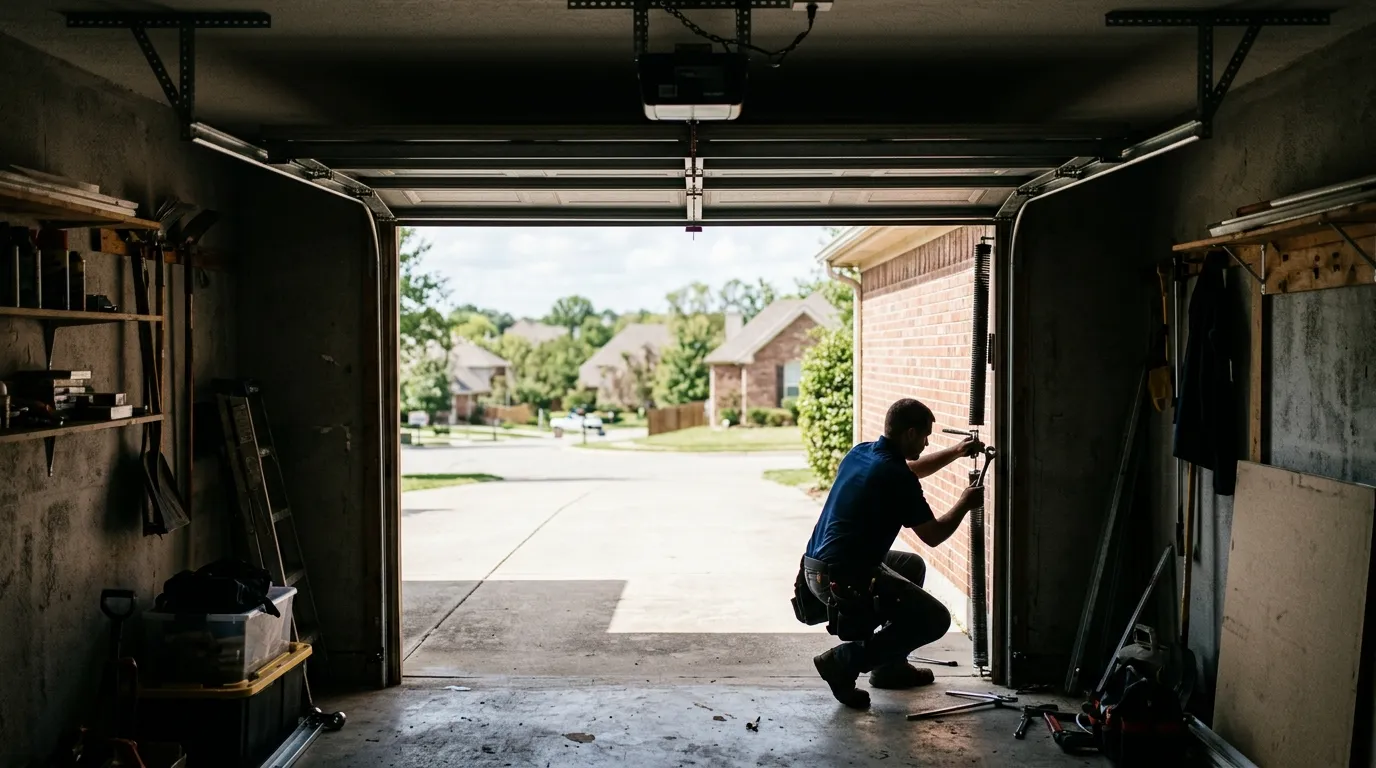
Because Stallings homes cluster around a 2002 median build year, the springs going into their second or third wind-down now are largely the factory-installed torsion units that shipped standard on doors built through the mid-2000s. The job itself is straightforward on paper: unwind and remove the old spring, confirm the door weight and drum spacing haven't been altered by a prior repair, and wind in a replacement matched to that weight rather than just swapping in whatever's on the truck. Getting the wind count wrong is what leaves a door feeling heavy on one side even after a spring gets replaced.
One honest limit: if the torsion bar, drums, or cable ends show wear alongside the spring, we're not going to replace just the spring and call it done - that's a callback waiting to happen. We'll price the additional hardware separately and explain why before touching anything. And if the door itself is original to a 2002 build and the track or hinges are shot, sometimes the more honest answer is that replacement makes more sense than another patch.