Time on the Job
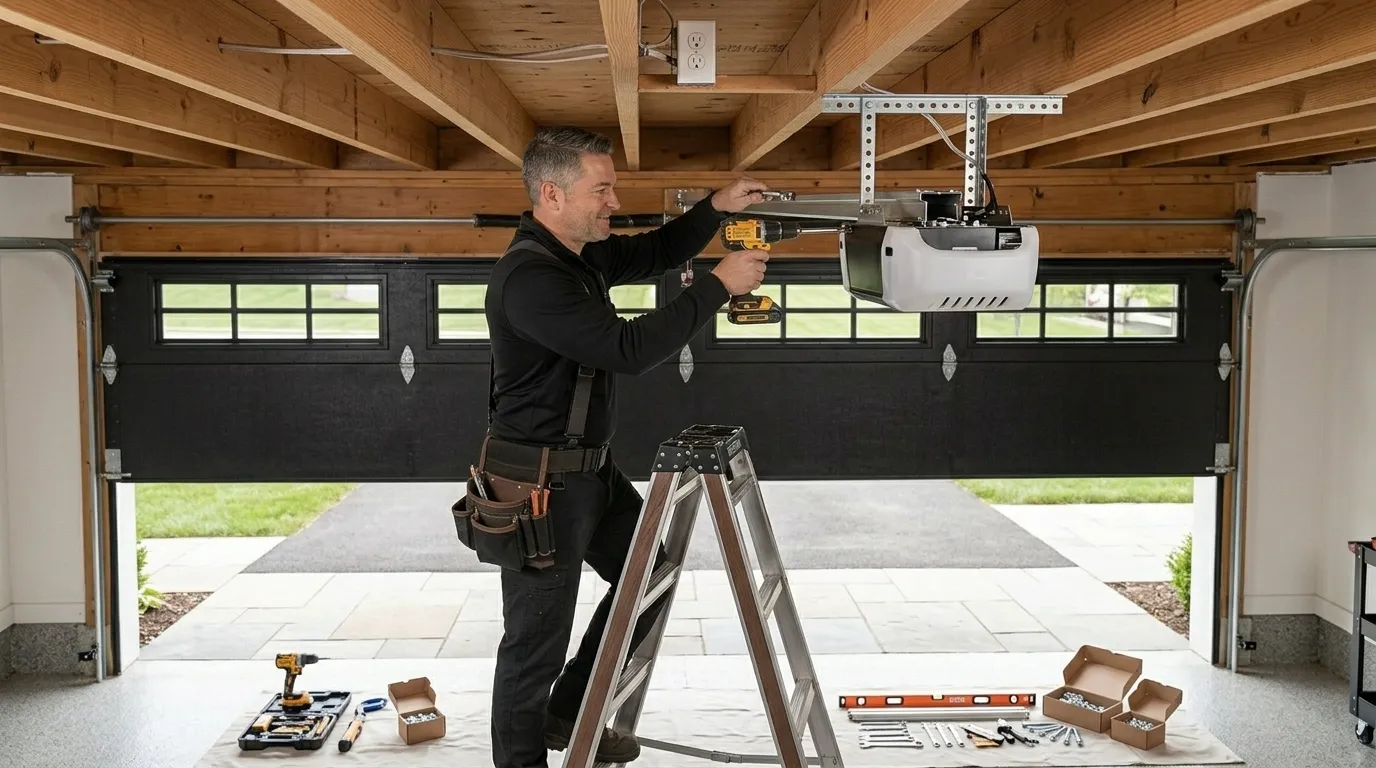
Most of the emergency calls we get out of Stallings aren't from the door itself - they're from the opener. Houses here went up mostly after 2000, well past the era of simple relay-switch openers, and that means circuit boards, logic boards, and safety-sensor wiring that a homeowner can't just bypass with a screwdriver. When one of those boards fails at 6pm on a Friday, the door either won't move at all or it reverses itself the second it touches the floor.
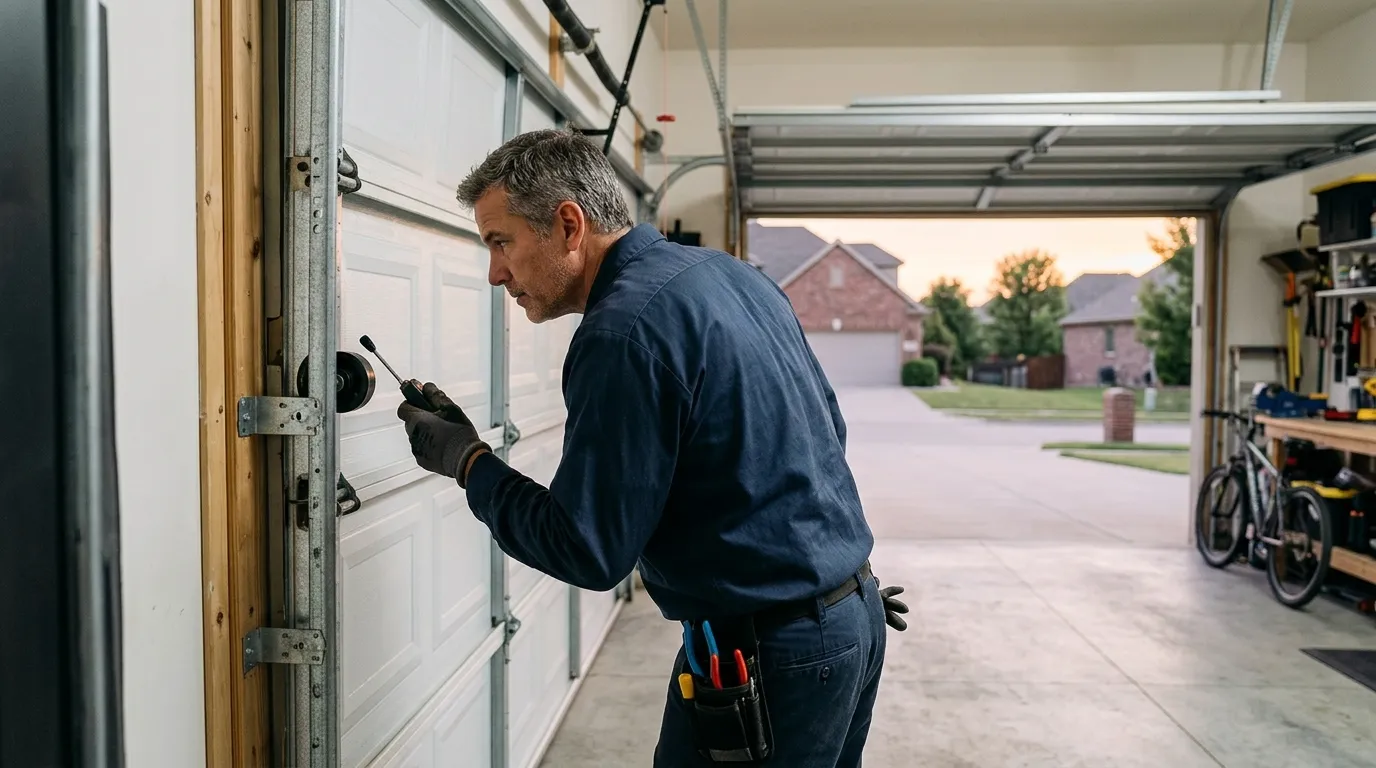
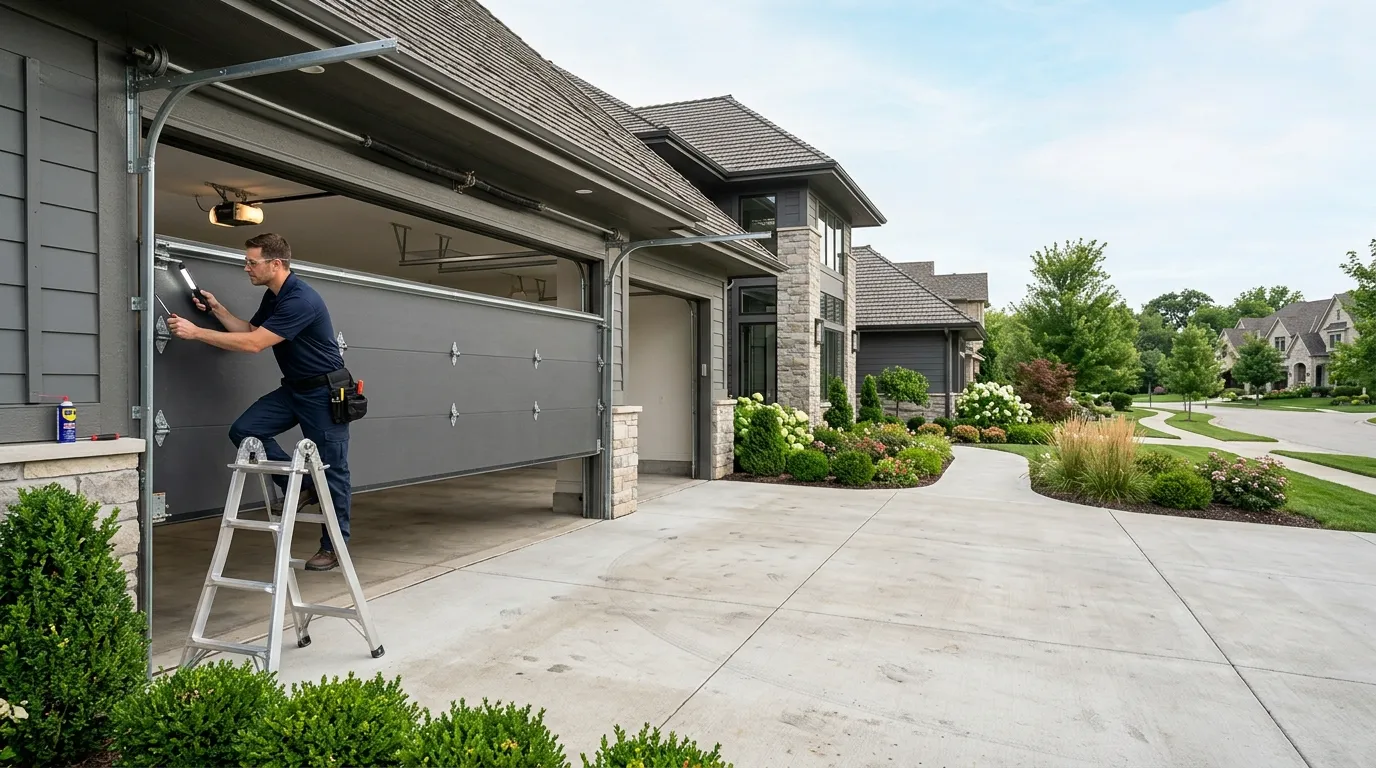
Across the wider service area the housing stock runs 1974 to 2006, but Stallings itself sits at the newer end of that - median build year around 2002. That's late enough that most garages here run steel doors on extension springs with a photo-eye safety reversal system, not the older torsion setups you'd find on a 1980s build. When that photo-eye gets knocked out of alignment (a bike leaned against it, a box shoved too close), the opener won't close the door at all, and it reads to most homeowners as "the door is broken" when it's really a two-minute sensor fix once we're on site.
We drive out from Matthews, about 3 miles away, so we're not sitting on a truck already parked in the neighborhood. That's worth knowing before you call - we're close, but we're not local-based here.
Where This Job Goes Sideways
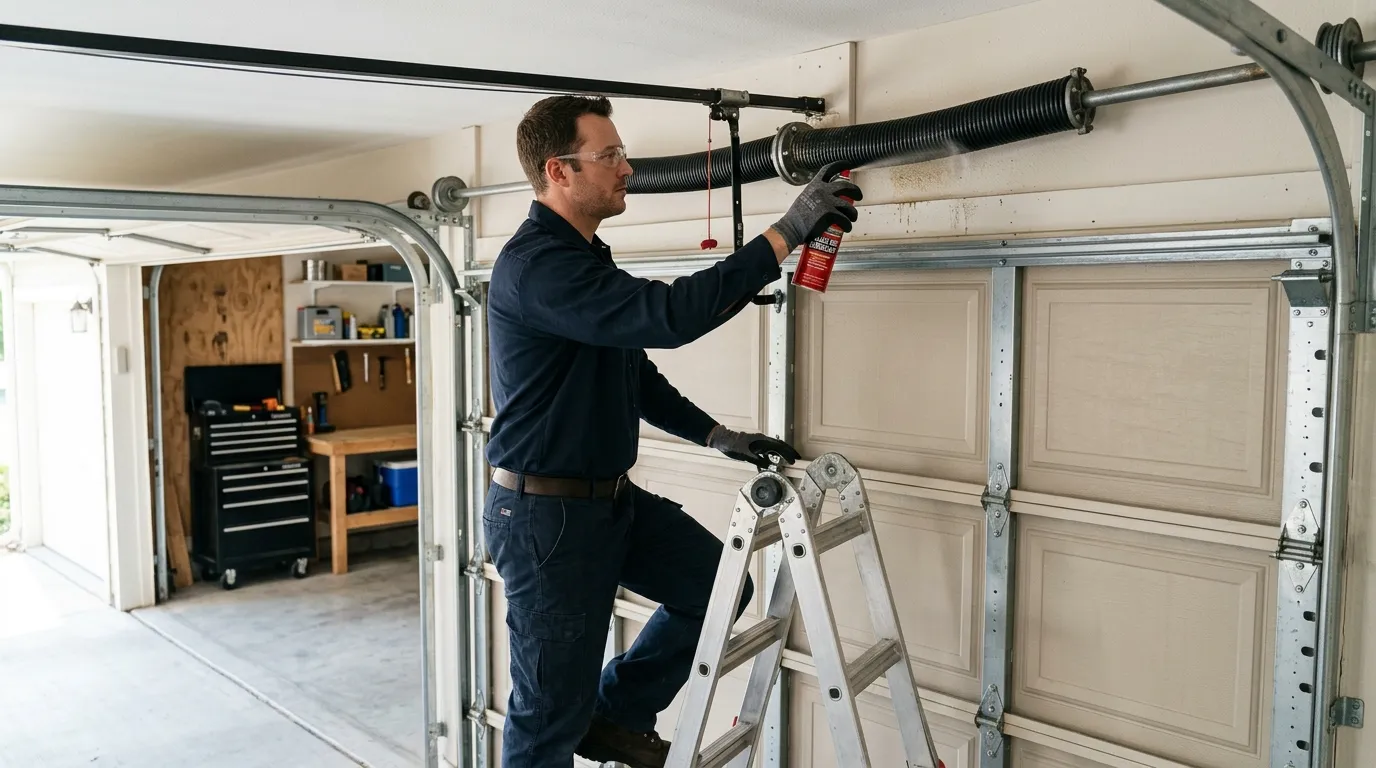
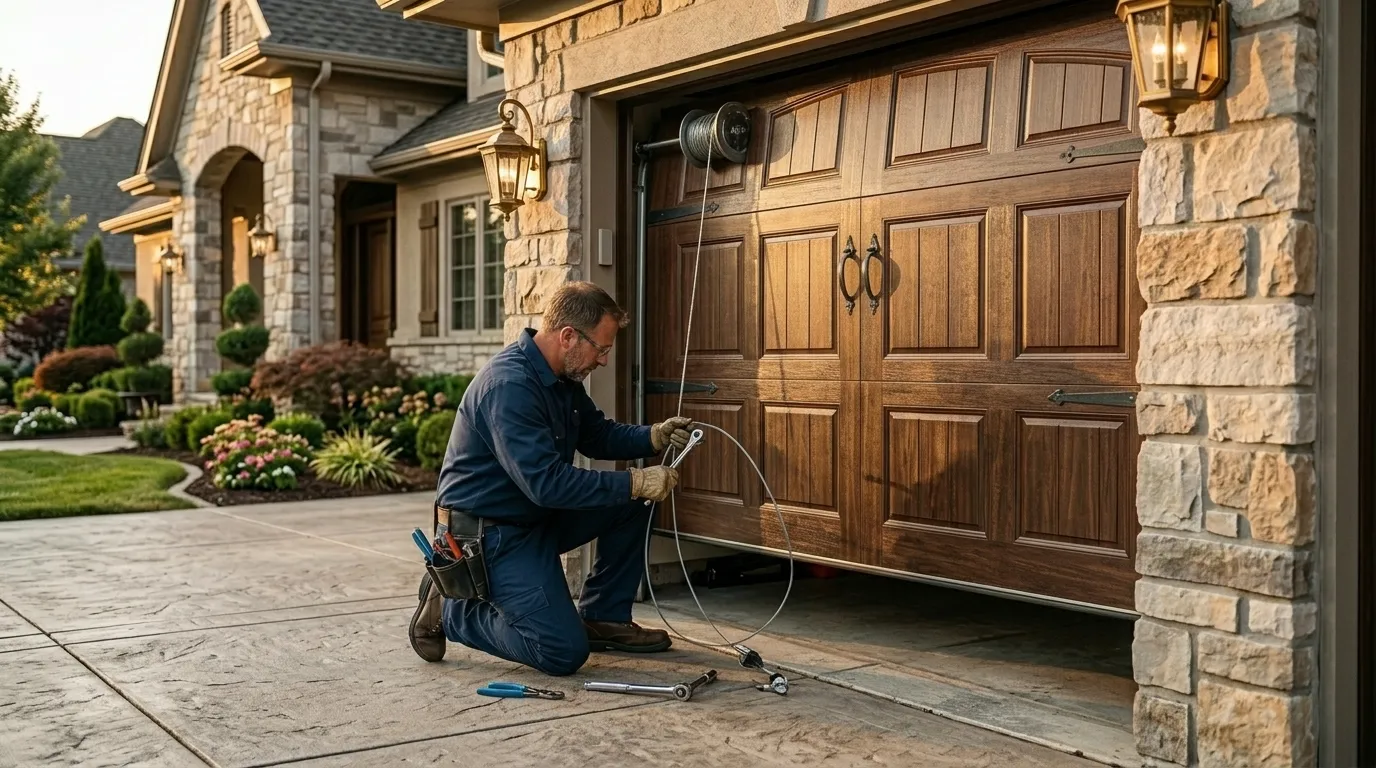
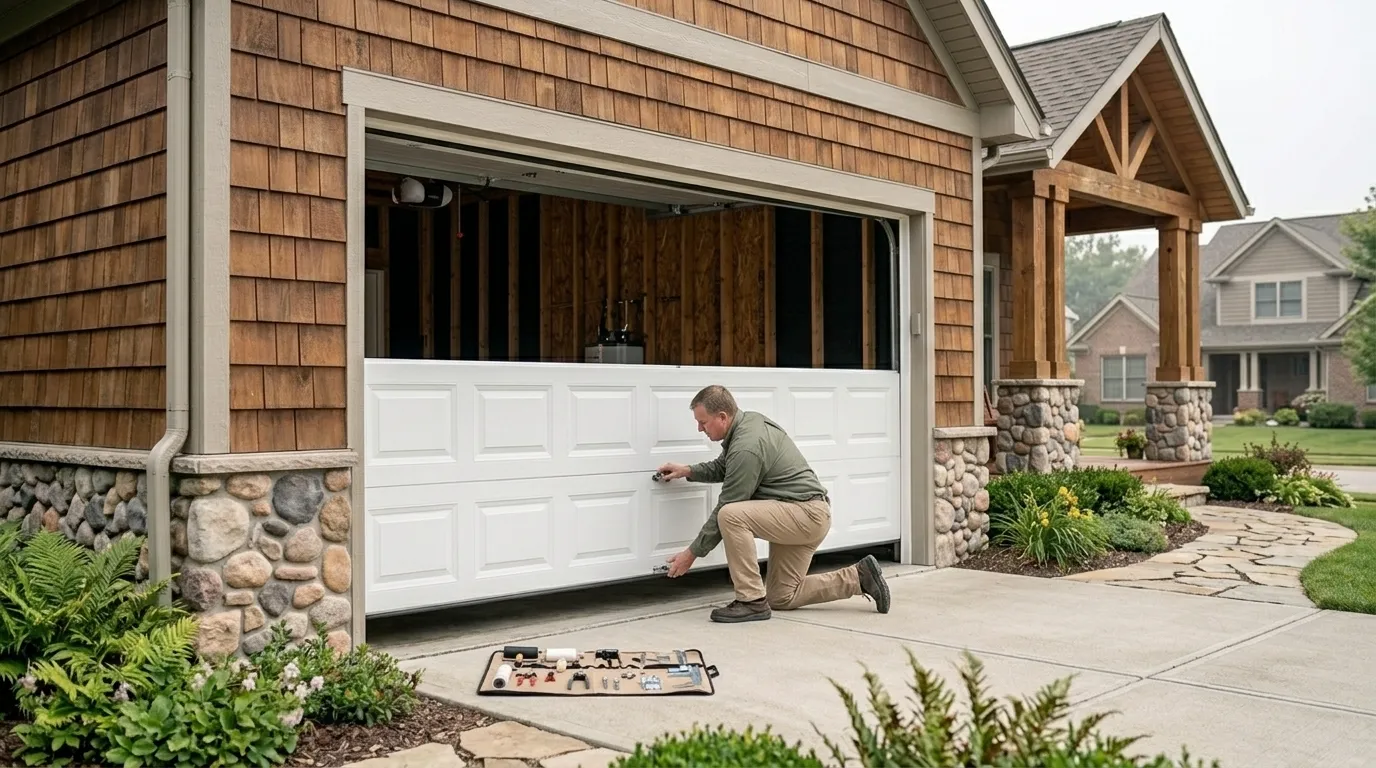
The fault we see most in this build era is a stretched or fatigued extension spring on a double-wide door - common on the wider garages that came standard with early-2000s construction. The door gets heavy on one side, the opener strains to compensate, and eventually the drive gear inside the opener strips trying to do the spring's job. By the time someone calls, the symptom is usually "the door opens two inches and stops," and the actual damage is now two problems instead of one.
The other spot this goes wrong: safety sensor wiring run along a garage wall that's been drilled into for shelving, storage racks, or a workbench - again, typical of finished garages in newer construction. A nicked wire doesn't always kill the opener outright; sometimes it just makes the door refuse to close on humid days, which reads as random and gets ignored until it's a full lockout.
We won't pretend every emergency call is a quick fix. If the drive gear's already stripped from someone forcing the door by hand, that's a parts wait, not a same-visit repair - we tell you that up front rather than promise a fix we can't deliver that day.
Getting It Booked In
Tell us what the door is actually doing - won't open, opens partway and stops, closes then reverses, or dead silent when you hit the button. That narrows down whether we're looking at a spring, a stripped gear, or a sensor issue before we even load the truck out of Matthews.
If you can, check whether the small LED lights on the two sensors near the bottom of the tracks are lit and steady rather than blinking - that one detail alone saves diagnostic time on site. We're about 3 miles out, so getting to you isn't the issue; getting the right parts on the truck the first time is what keeps a repair to one visit instead of two.
What the Fix Involves
For a stripped opener gear, we're replacing the internal drive gear kit, not the whole unit, assuming the motor and logic board test fine - most 2000s-era openers are worth repairing rather than replacing outright. For a photo-eye issue, it's realignment and a wiring check, sometimes a sensor swap if the housing's cracked.
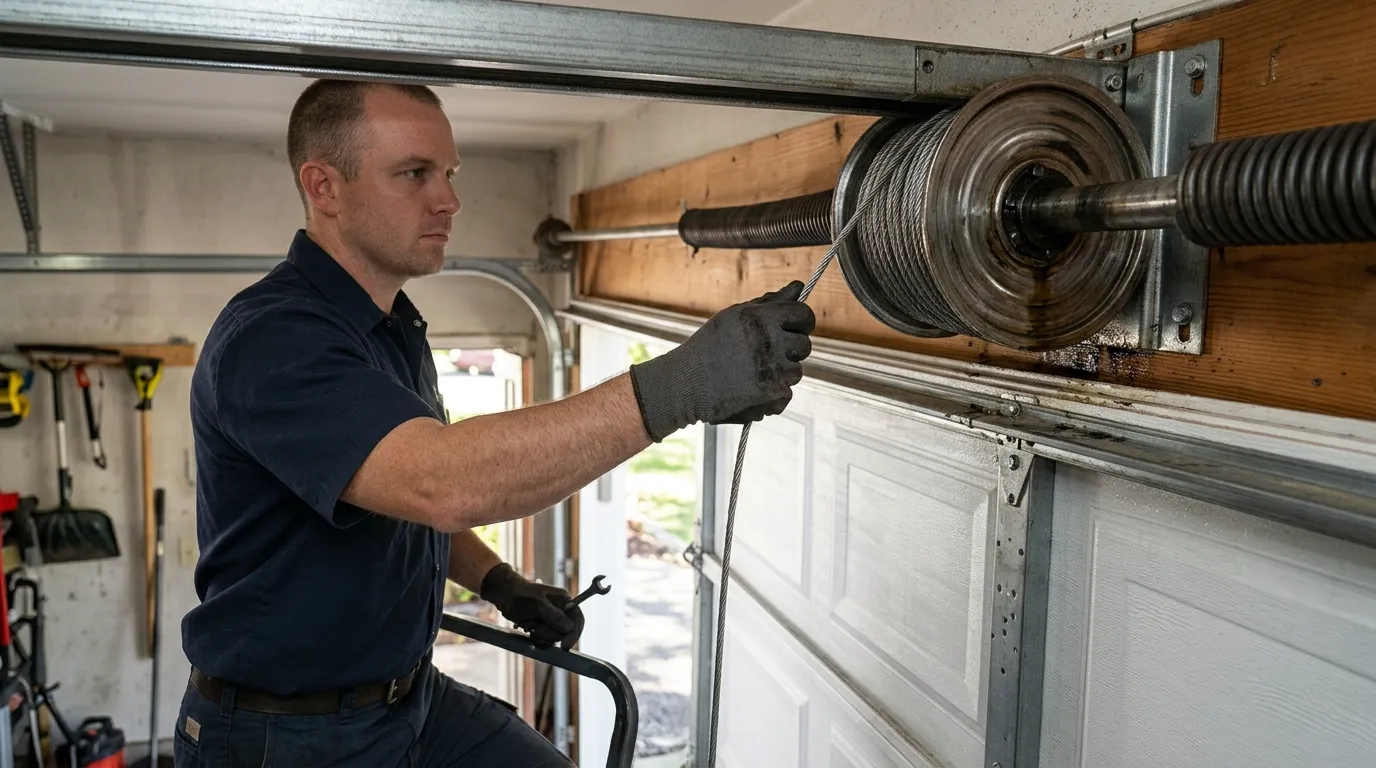
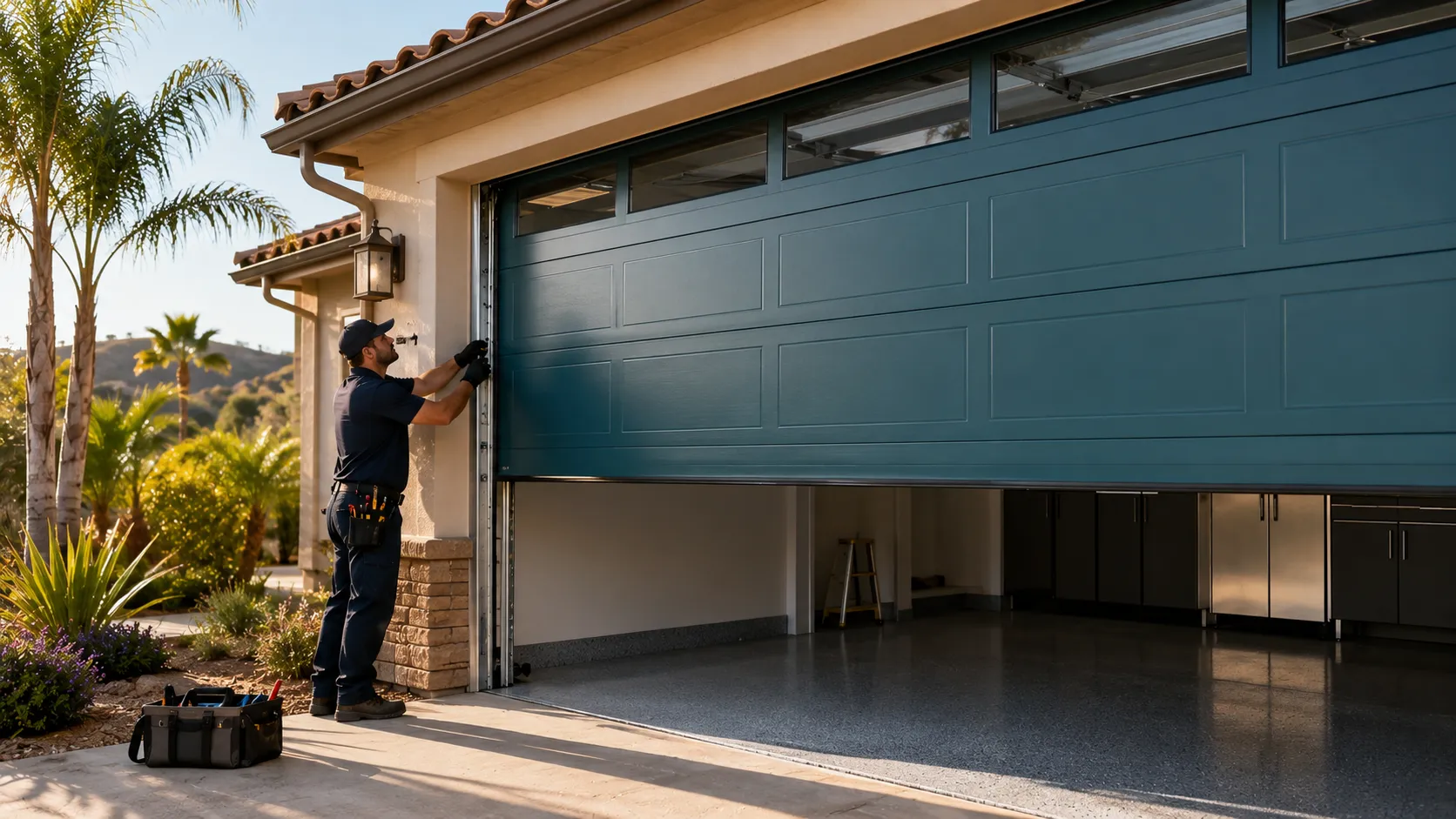
Extension spring replacement on a double door means matching the spring weight to the door's actual size and material - steel insulated doors common in newer Stallings construction carry differently than older wood doors, so we don't guess at spring rating, we measure.
One limitation worth saying plainly: if a board is fried and the model's discontinued, the replacement part can be a special order, not a same-day part. We'll tell you that on the call, not after we've already made the trip.