Getting It Booked In
Hemby Bridge sits about 5 miles out from our Matthews shop, and we run maintenance visits out there on the same routes we use for calls closer in. There's no branch or drop box in Hemby Bridge itself - we come from Matthews, and the drive is short enough that it doesn't change what we can get done in one visit.
What does change is what we expect to find when we get there. The median home in Hemby Bridge went up around 1974, which puts it near the front edge of the wider service area's 1974-2006 build window rather than the middle of it. A door installed in the mid-1970s was almost certainly a torsion-spring setup on steel track, but the springs, drums, and end bearings from that era were built to specs that manufacturers don't run anymore. A tune-up on a house like that isn't the same job as a tune-up on a 1998-built house three towns over, even though both fall under the same maintenance visit on paper.
When you call, tell us roughly how old the house is if you know it. That one detail changes what we bring on the truck.
Stocked Parts
We carry the rollers, cables, and standard torsion springs that cover most of what rolls through this area, but original 1970s hardware is where maintenance sometimes turns into a small parts hunt. Drum sizes, spring wire gauges, and even track profiles shifted more than once between the early 1970s and the 1990s, and a house built in 1974 can have hardware that doesn't match what's on the shelf at the supply house today.
Most of the time this isn't a problem - nylon rollers and standard-lift cable fit almost anything regardless of the door's age, and that's most of what a maintenance visit replaces. It becomes a problem only on the rare original spring or a bent original track section, where we may need to order a part rather than swap it same-visit. That's the honest limitation: we won't pretend every 50-year-old part is sitting in stock, because it usually isn't.
We do carry lubricant and hardware rated for cold-moderate climate swings, which matters here - steel track and spring coils that go through repeated freeze-thaw cycles need a heavier-bodied grease than what most homeowners have in the garage, and we use that on every visit regardless of the door's age.
What the Fix Involves
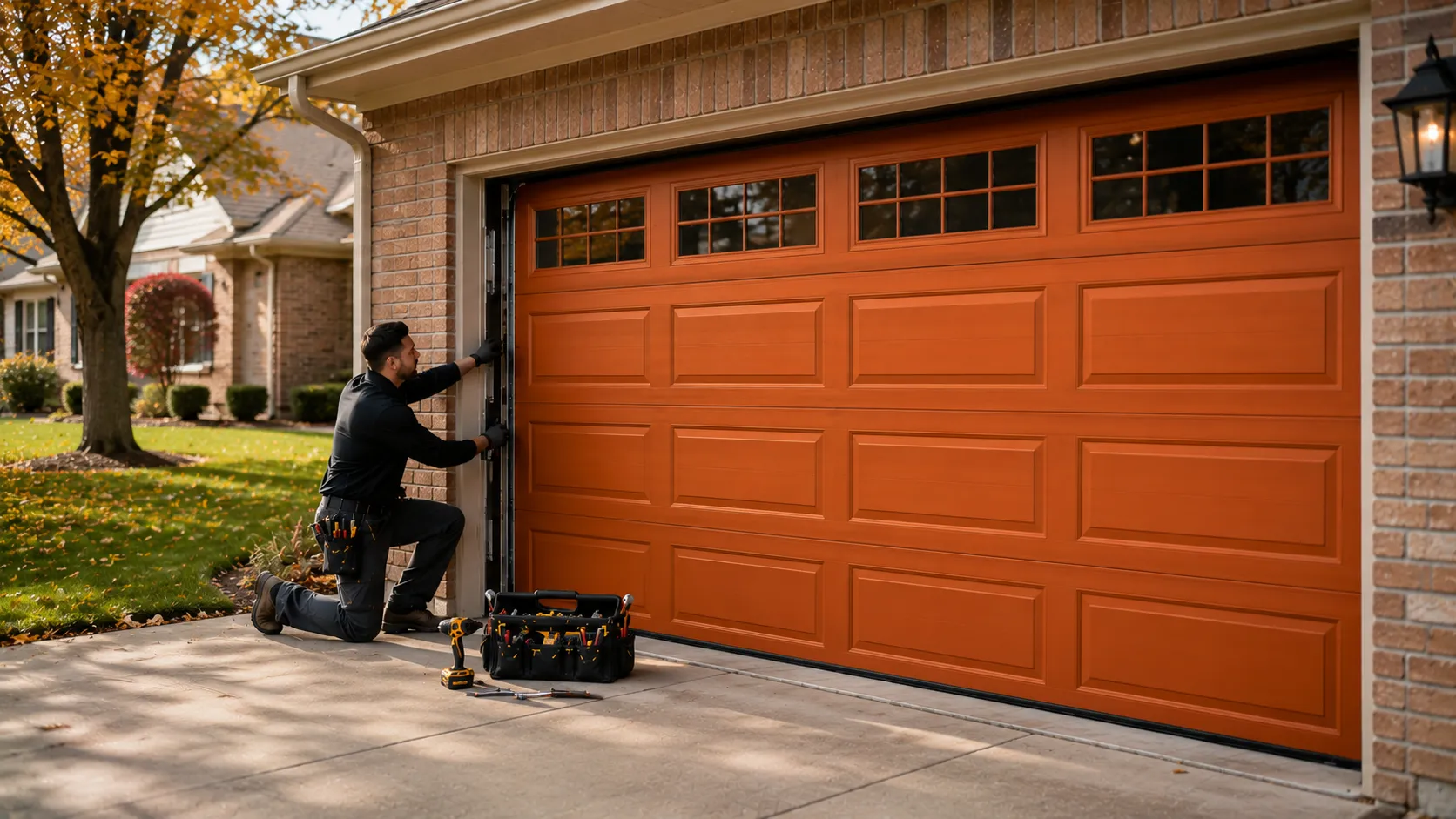
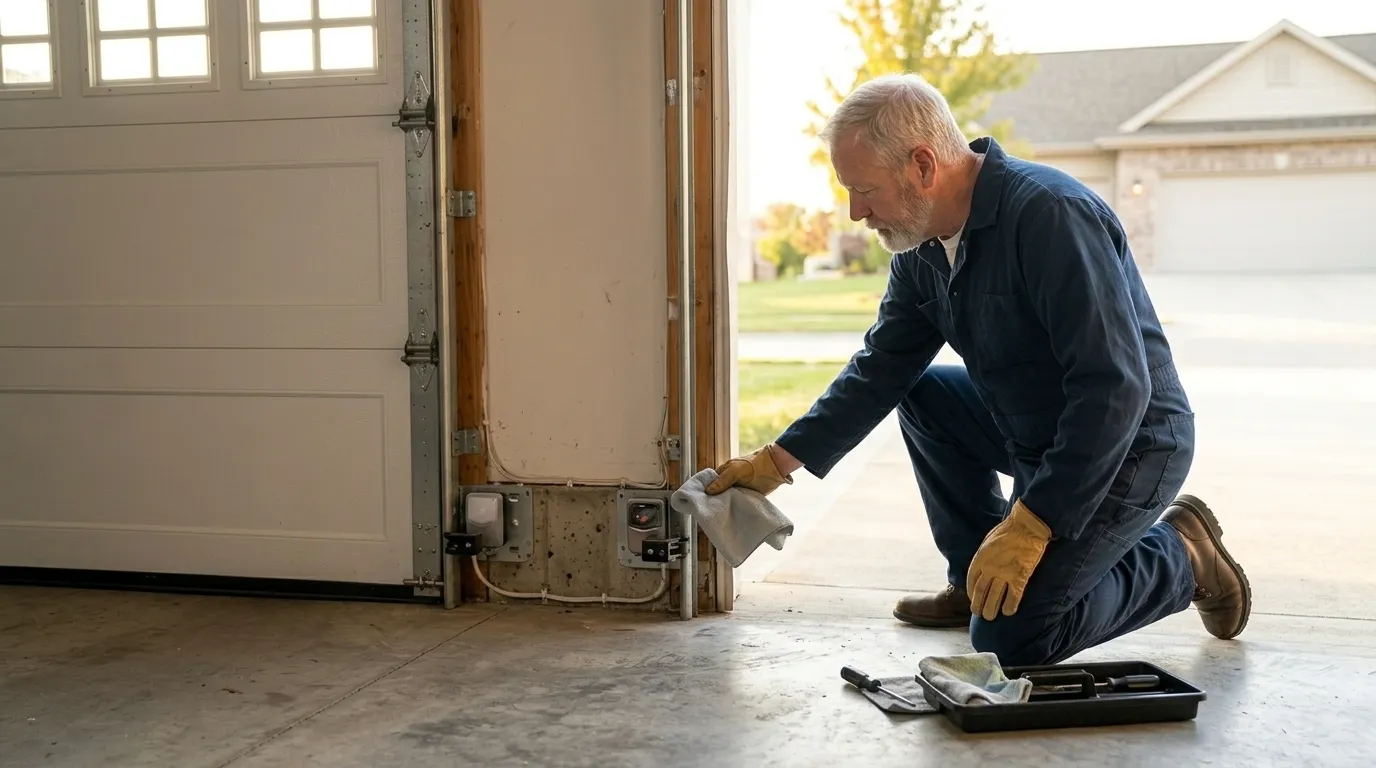
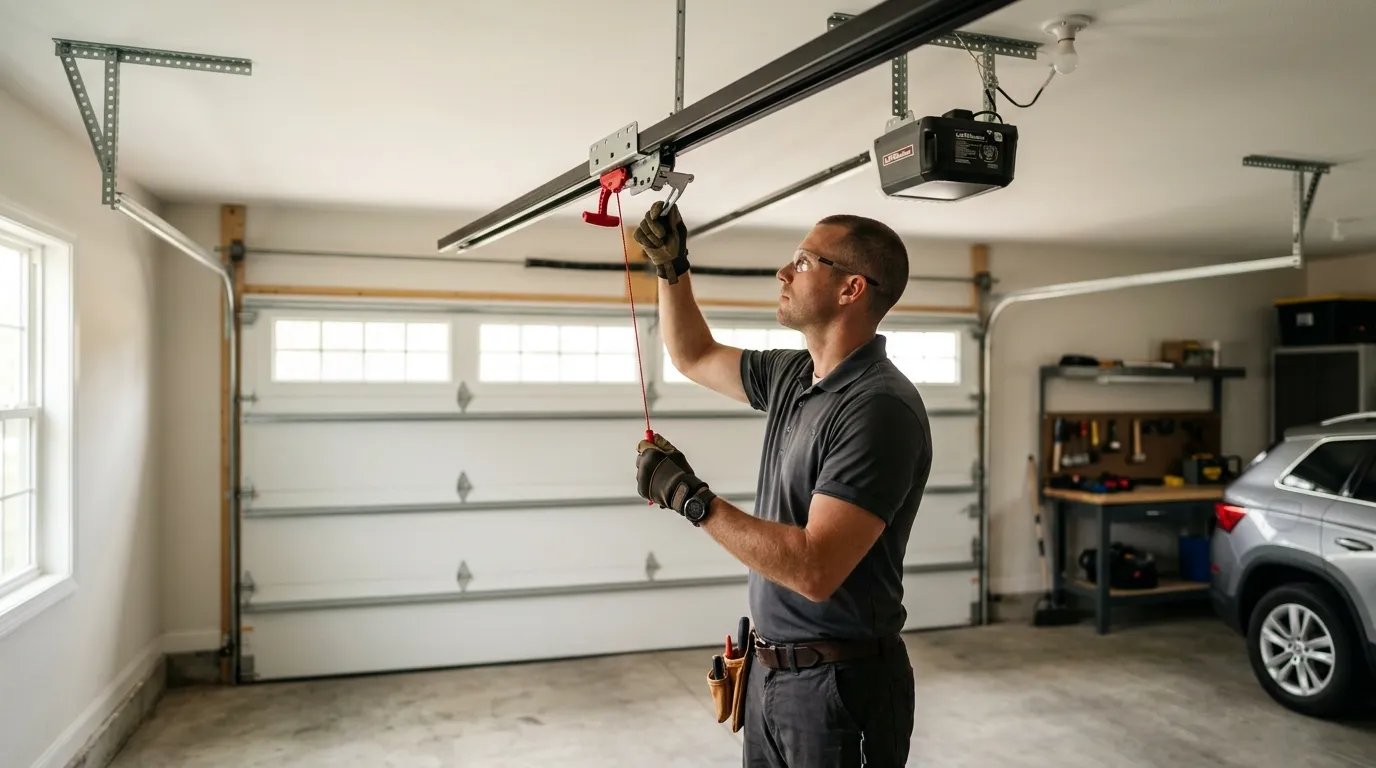
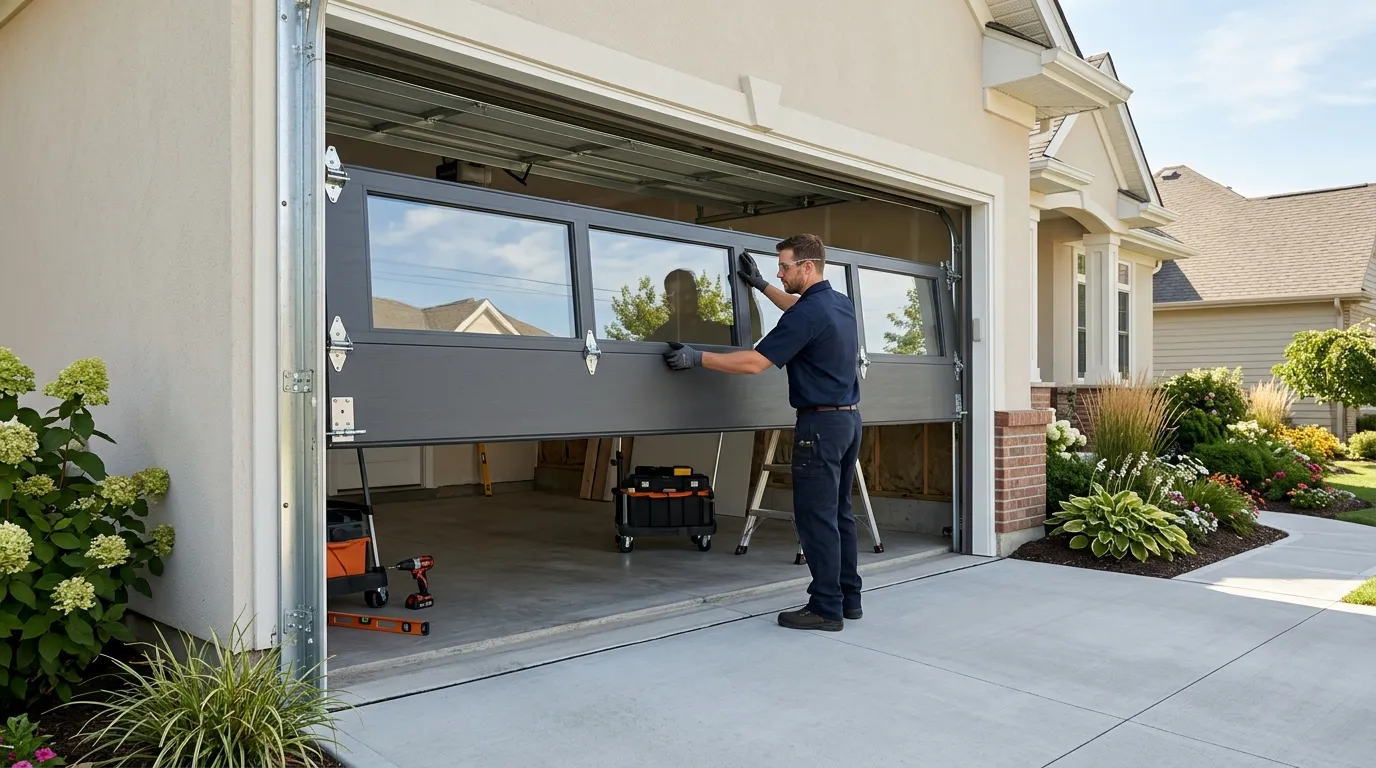
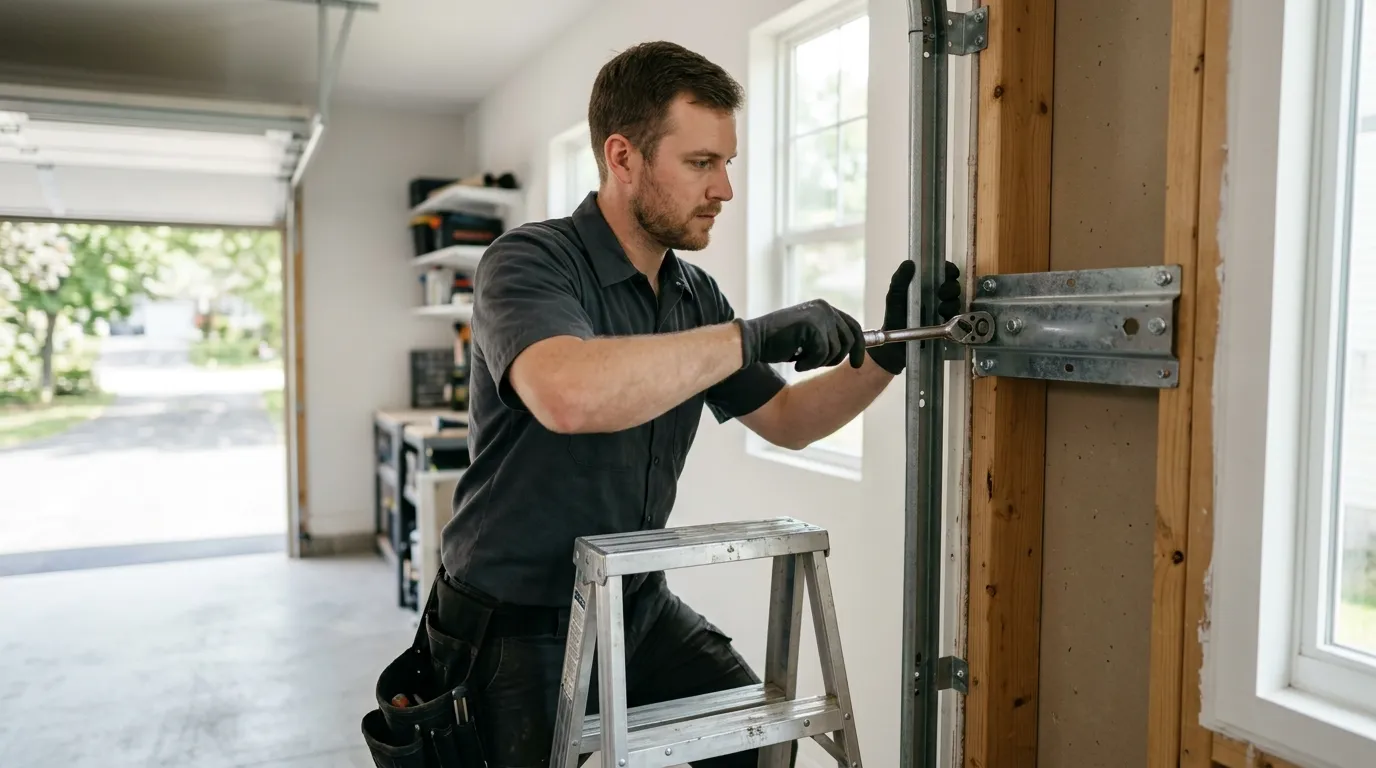
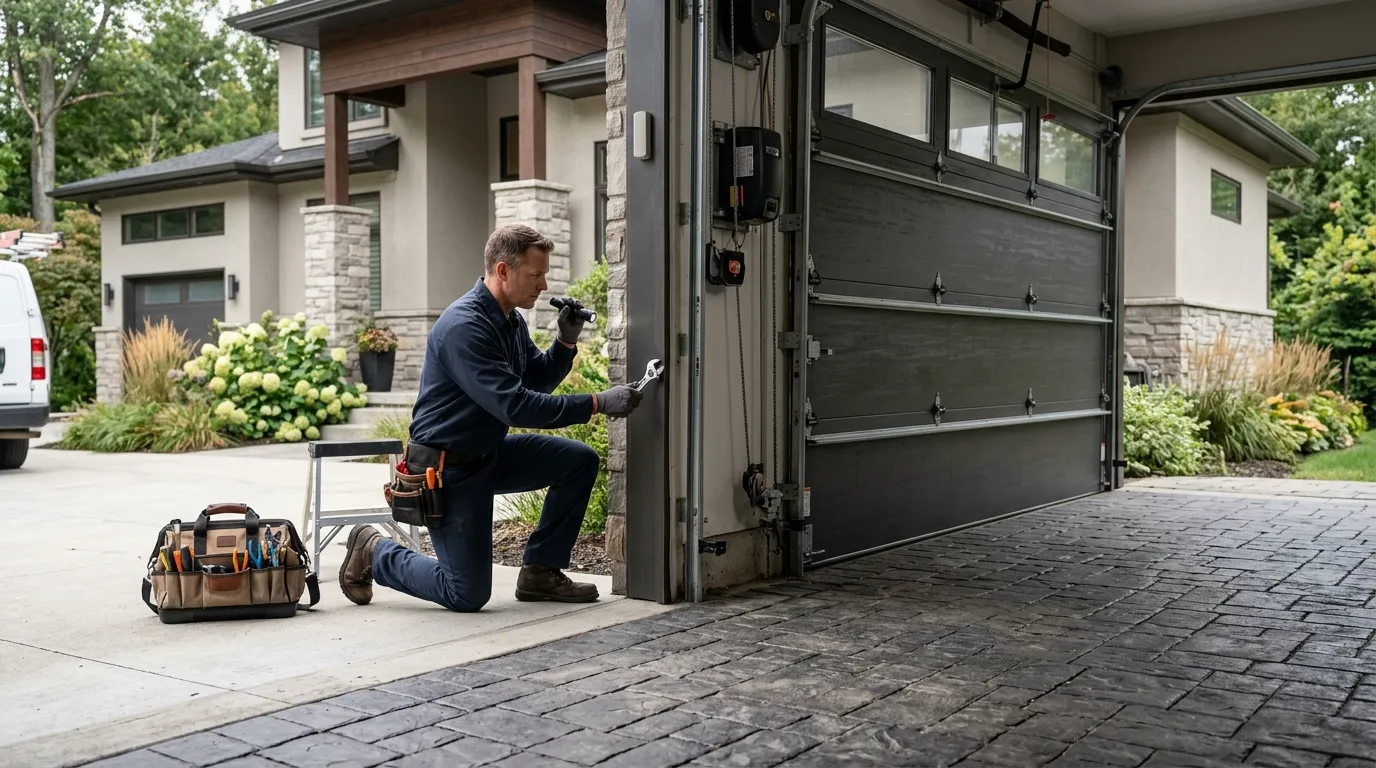
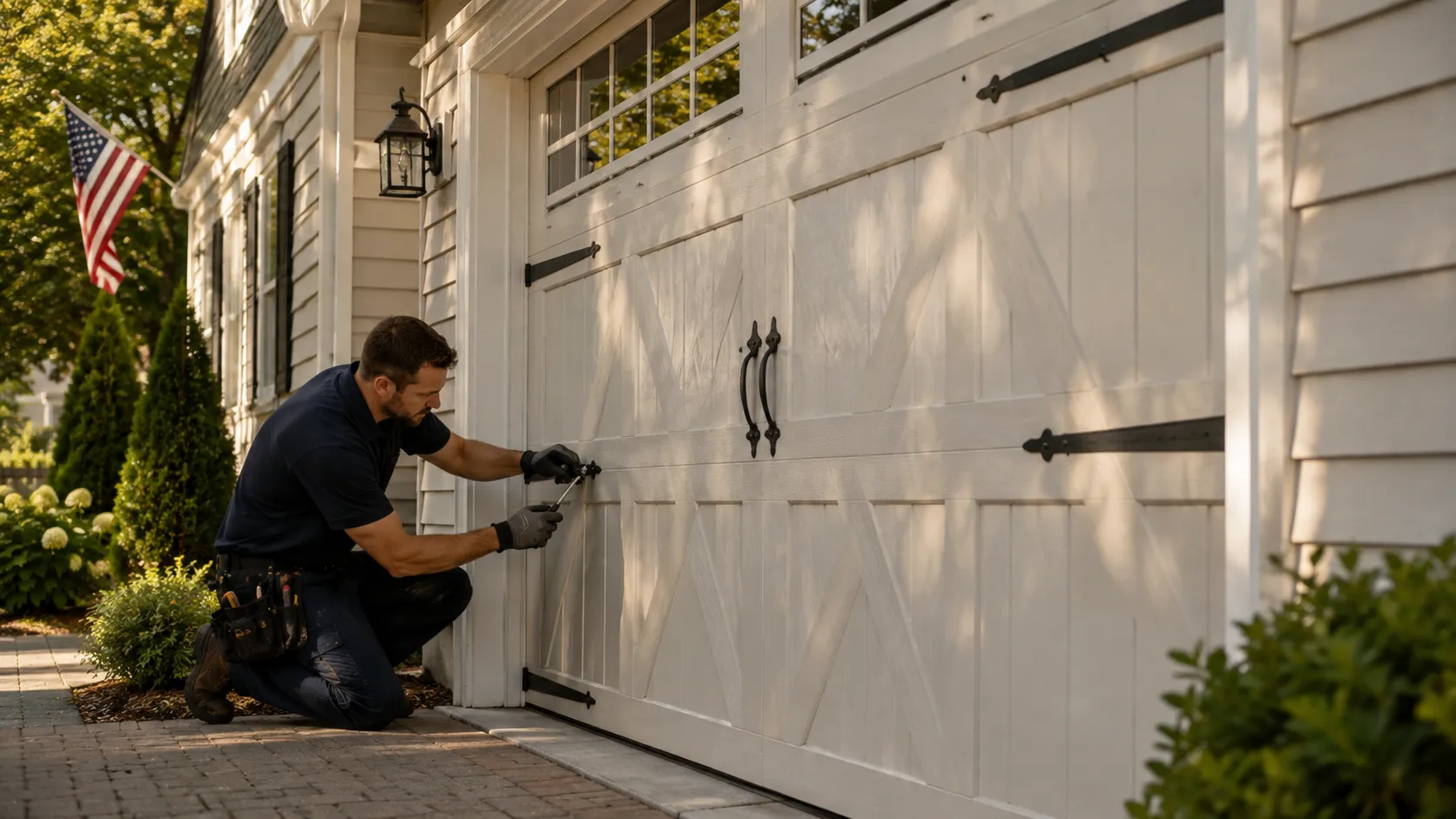
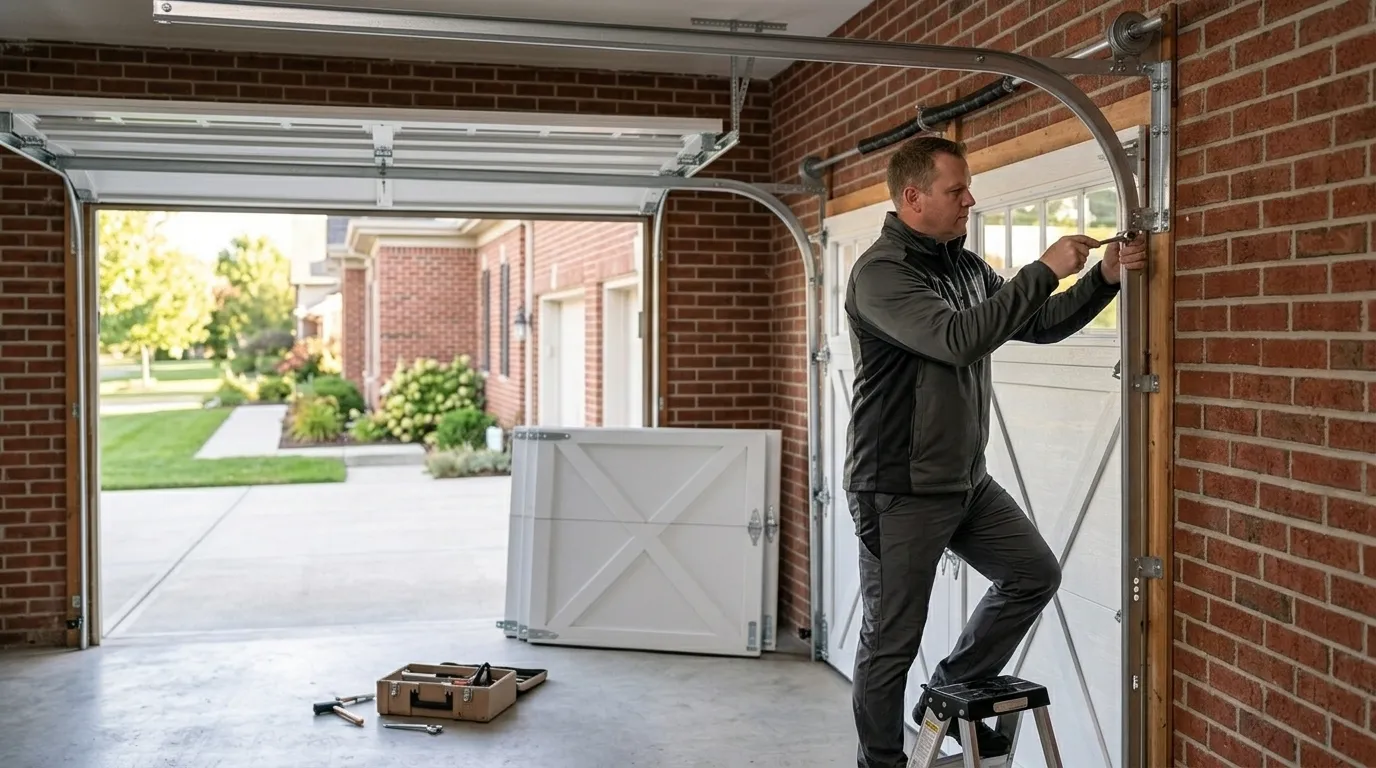
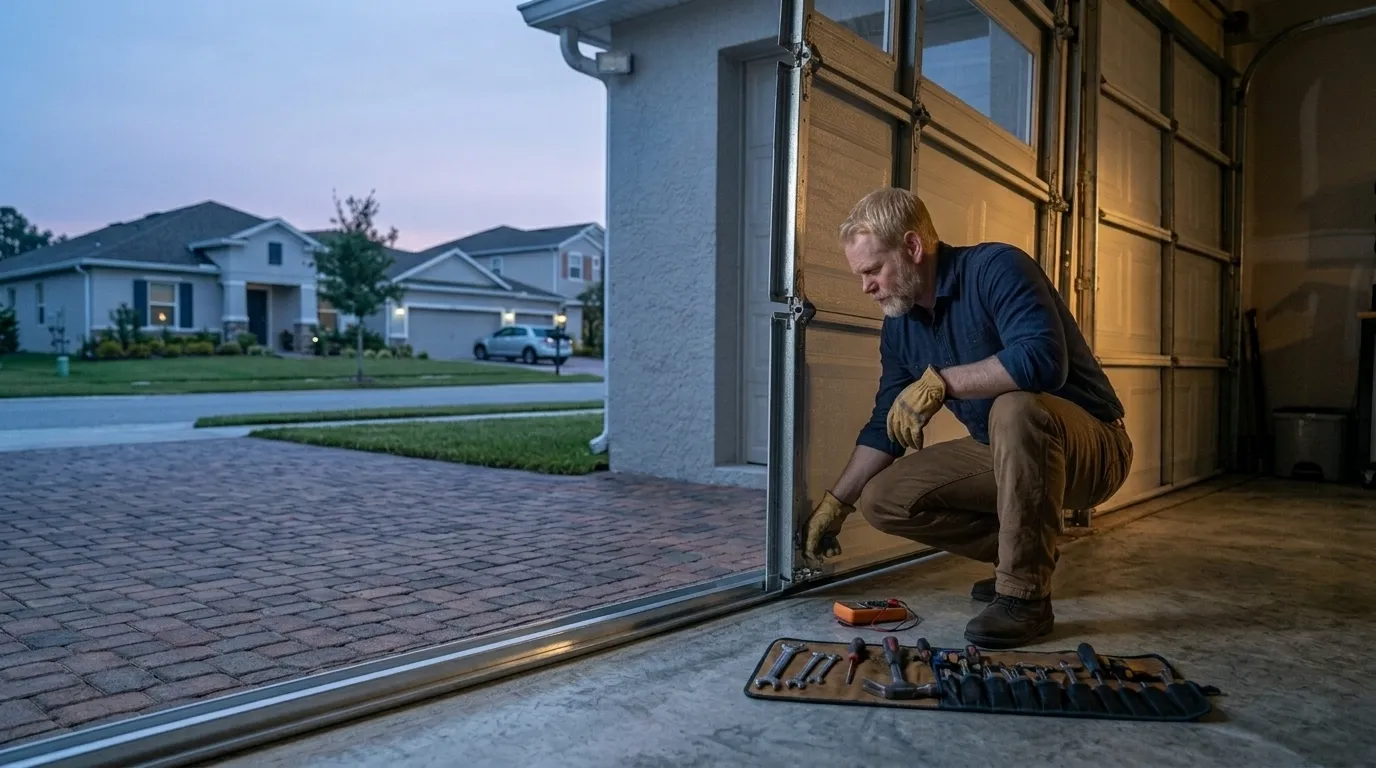
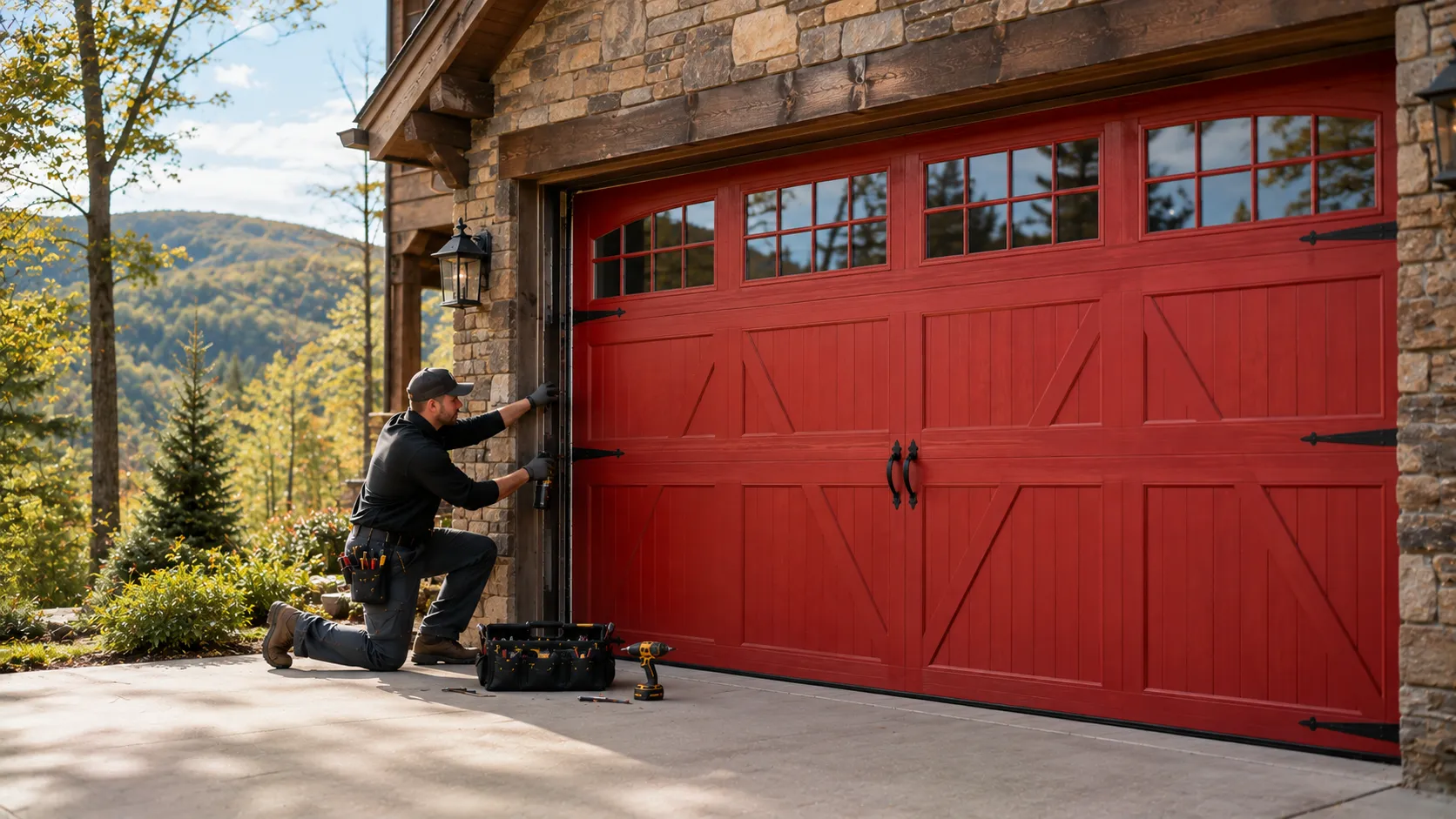
A standard visit covers spring tension, track alignment, roller condition, cable wear, and opener force settings - the same checklist regardless of the town, but the findings differ by house age. On a 1974-era door, we're paying closer attention to original torsion springs for rust and coil spread, since fifty-year-old steel behaves differently under load than a spring installed in the 1990s. We also check end bearing plates more closely, since older doors were often hung with hardware that's worn thinner than a 2000s install.
Cold-moderate winters mean the grease we use has to hold up through freeze-thaw cycling without stiffening, so we re-lubricate hinges and track at every visit rather than assuming last year's coat is still doing its job. If a spring shows wear that's past adjustment - coil separation, visible rust pitting, a stretched gap - we'll say so and quote the repair separately rather than force a fix into a maintenance visit where it doesn't belong.
See our Hemby Bridge area page for what else we cover nearby, or check the broader Matthews maintenance page for how this service works across the rest of the area.