Getting It Booked In
Hemby Bridge sits about 5 miles out from our Matthews base, and the first thing we ask when the call comes in is the age of the house, not just the address. Across the wider service area the housing stock runs 1974 to 2006 with a median around 1998, but Hemby Bridge itself skews to the earlier end of that range, closer to the 1974 mark. That matters before a truck ever leaves the yard, because a door and opener from the early build years is a different job than one from a 2004 build, and we want to know which one we're driving to.
We don't keep a branch in Hemby Bridge - every job here is dispatched from Matthews, 5 miles away. That's not a problem for scheduling, but it does mean we're not the crew to call if you need someone standing in the driveway in ten minutes. We book the visit, confirm the door type over the phone if we can, and load the truck accordingly so the first trip is the only trip.
With around 780 households in Hemby Bridge, we're not working off a huge sample, but the pattern holds: houses from the mid-1970s through the early 1980s carry original garage hardware more often than the newer pockets closer to town, and that's the detail that shapes what we bring.
Stocked Parts
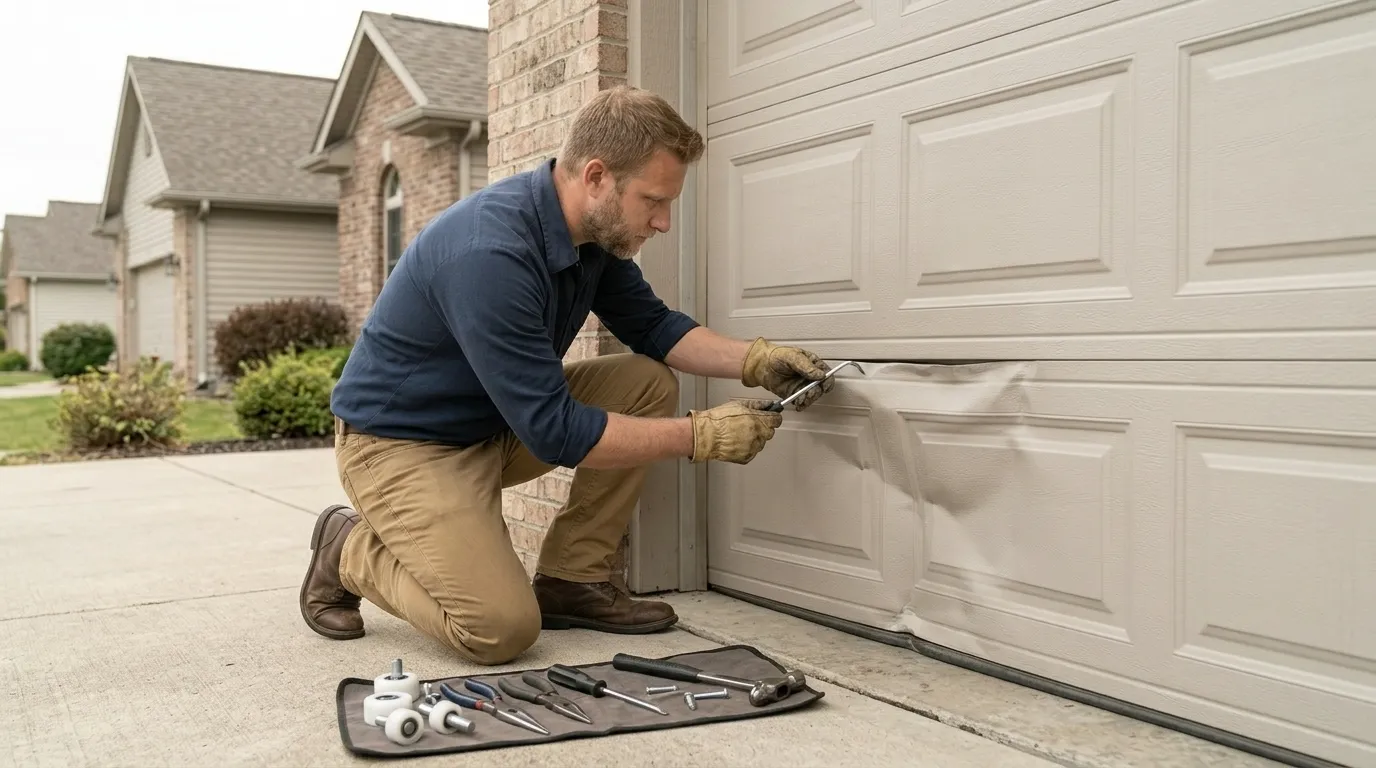
Because Hemby Bridge leans older than the area's 1998 median build year, we carry extension and torsion springs sized for early-1970s to mid-1980s door weights, not just the newer standard sizes that fit a 1998-2004 build. Original openers from that era often ran on hardware that newer universal parts don't always match cleanly - older rail styles, older sensor mounts - so we stage a mix rather than assume the newer stock covers it.
We also carry standard rollers, cables, and torsion drums that fit either era, since plenty of Hemby Bridge doors have already been through one replacement cycle and now run newer guts on an older frame. That's common in a house this age: the door got swapped in the 2000s, the track stayed original, and the two don't always play well together.
One honest limit: if a house has a genuinely obscure opener model from that early build window - something discontinued decades ago - we may need to order the part rather than pull it off the truck. We'd rather tell you that up front than pretend every job closes in one visit.
What the Fix Involves
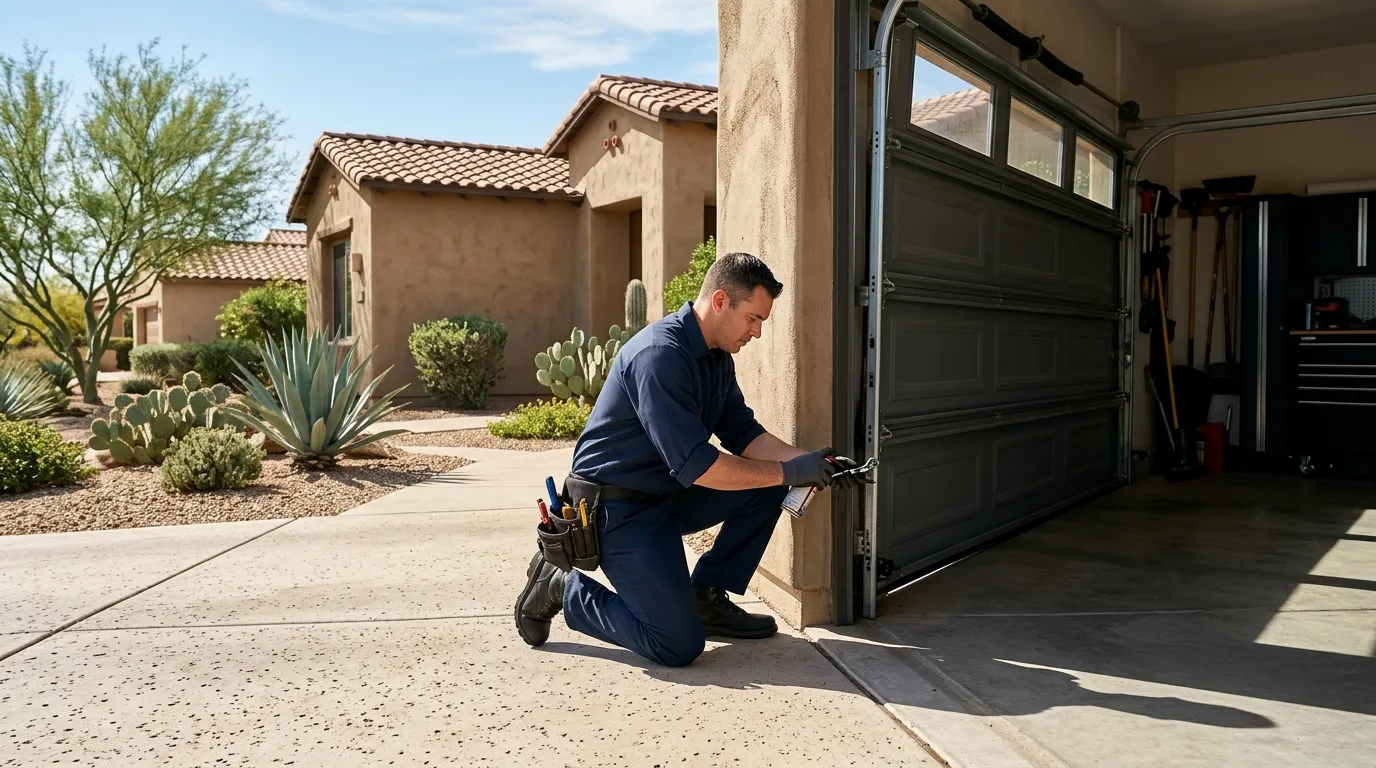
On a Hemby Bridge door built closer to 1974 than to the area's 1998 median, the most common failure we see is a torsion spring that's simply outlived its wind cycles - older steel, more years of temperature swing under the cold-moderate climate band this area sits in, and the metal fatigues. Swapping it means matching the wind direction and wire gauge to the original drum, which is one more reason we ask the build year before we quote.
On newer builds within the service area, closer to that 1998 median, we're more often chasing an opener sensor or a logic board than a spring. Different failure, different fix, different parts on the truck.
We don't do cosmetic panel matching on discontinued colors from that era - if a single panel needs replacing on a door that old, we'll tell you honestly whether it can be color-matched or whether the whole door needs to go. That's the one place where a 50-year-old door and a repair truck don't always agree, and we'd rather say so than promise a match we can't deliver.