The DIY Question
Fairview sits about 11 miles from our shop in Matthews, and the houses out here skew older than most of the neighborhoods we cover. The service area as a whole has a median build year of 1998, but Fairview's stock centers on 1987 - a decade earlier. That matters for the DIY question, because a door installed in the late '80s is more likely to be running original hardware: a single torsion spring rated for a lighter door, steel tracks that have shifted with the house settling, and an opener that predates modern safety reversal standards.
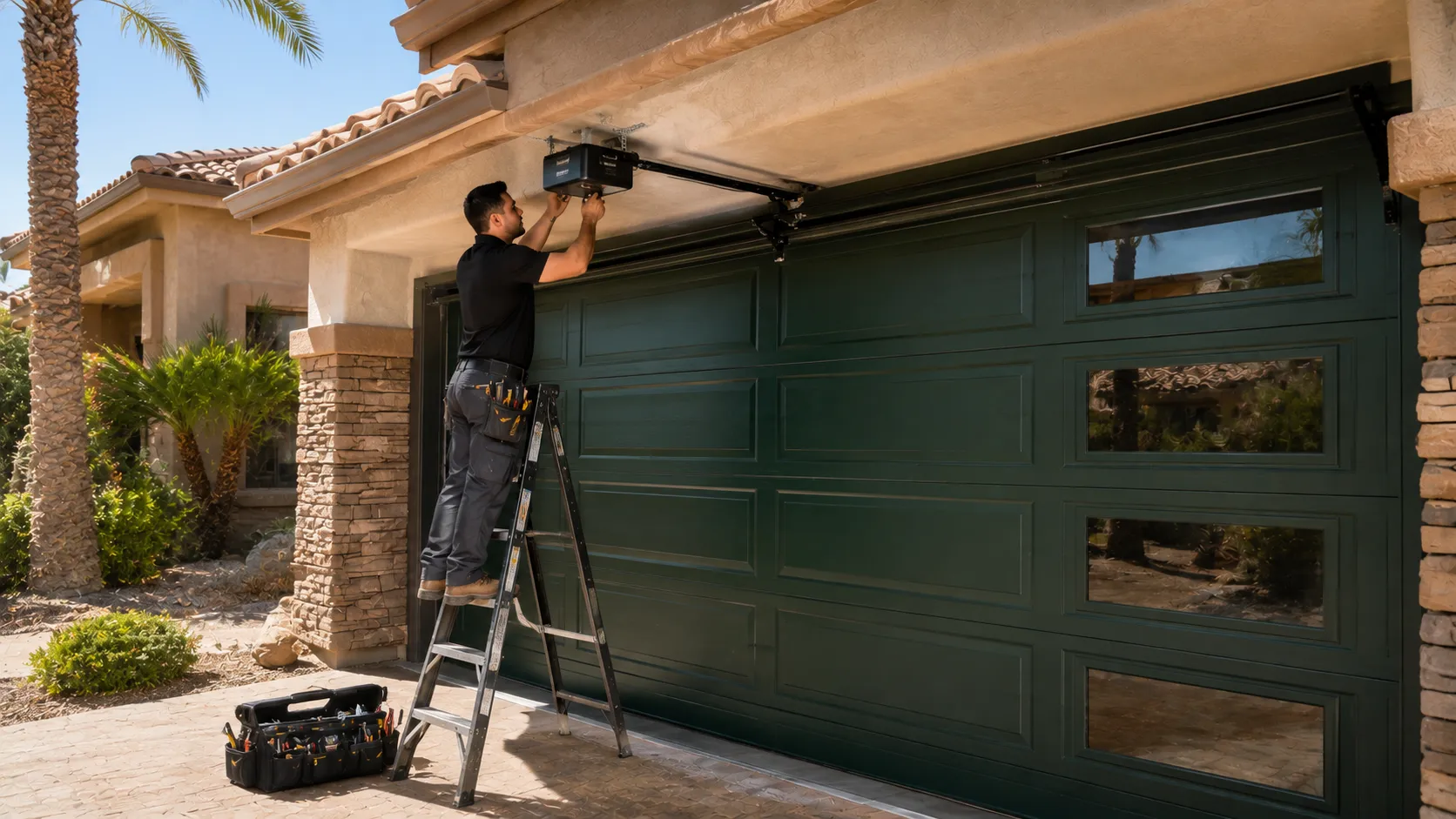
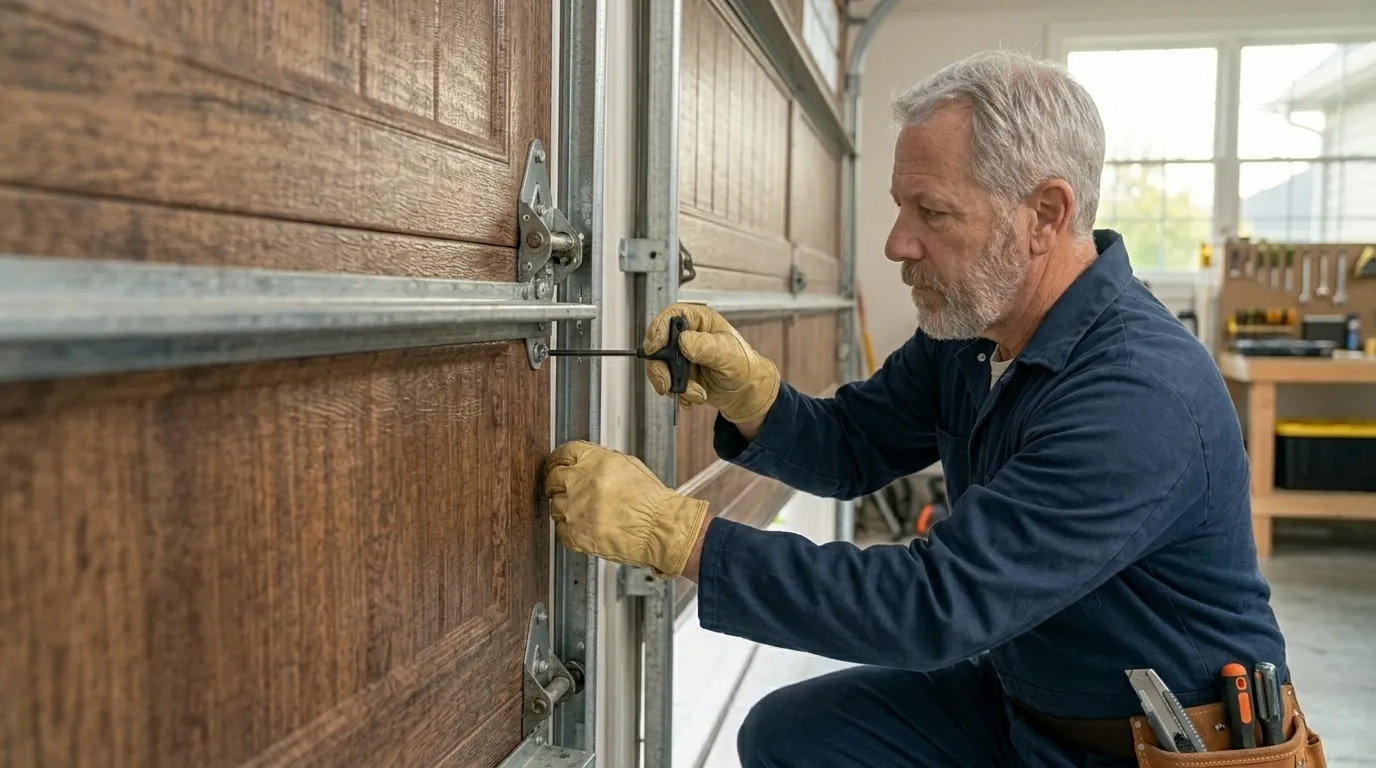
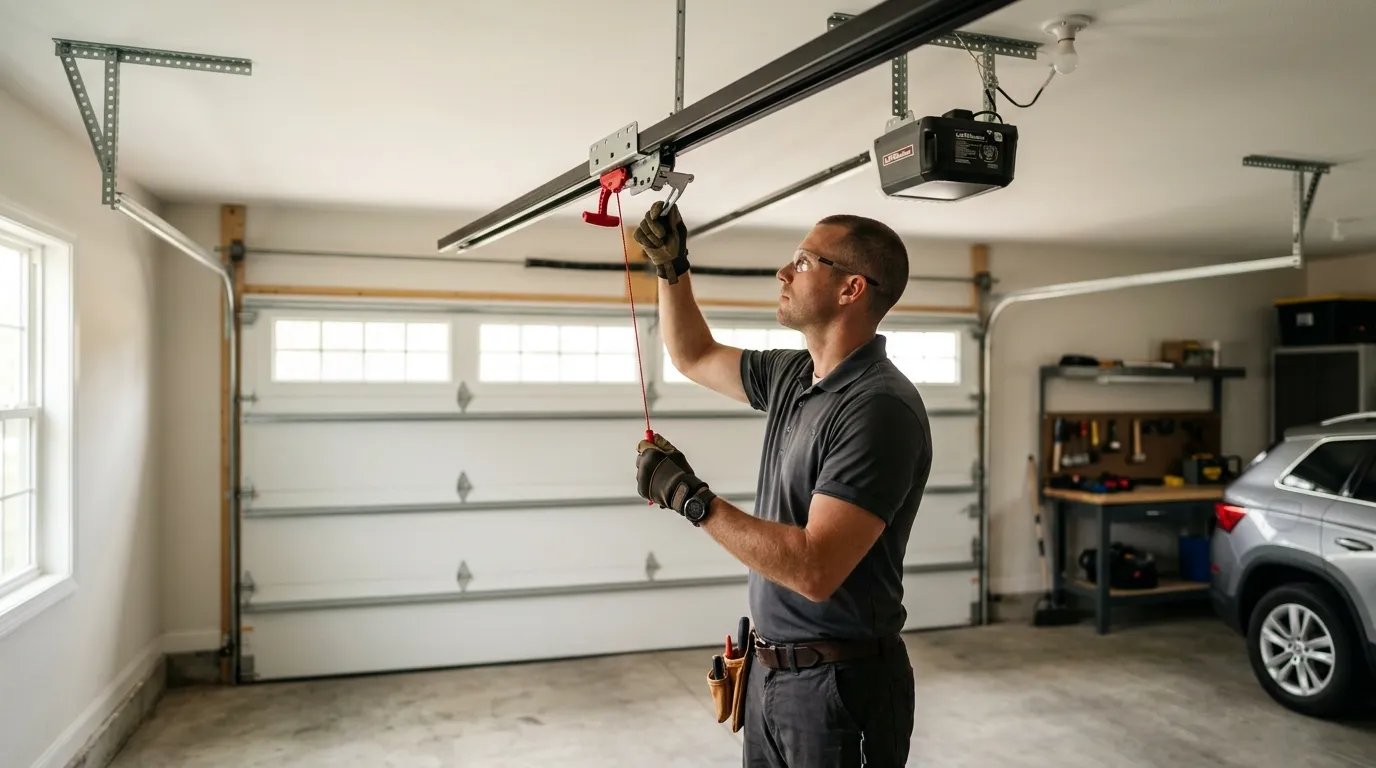
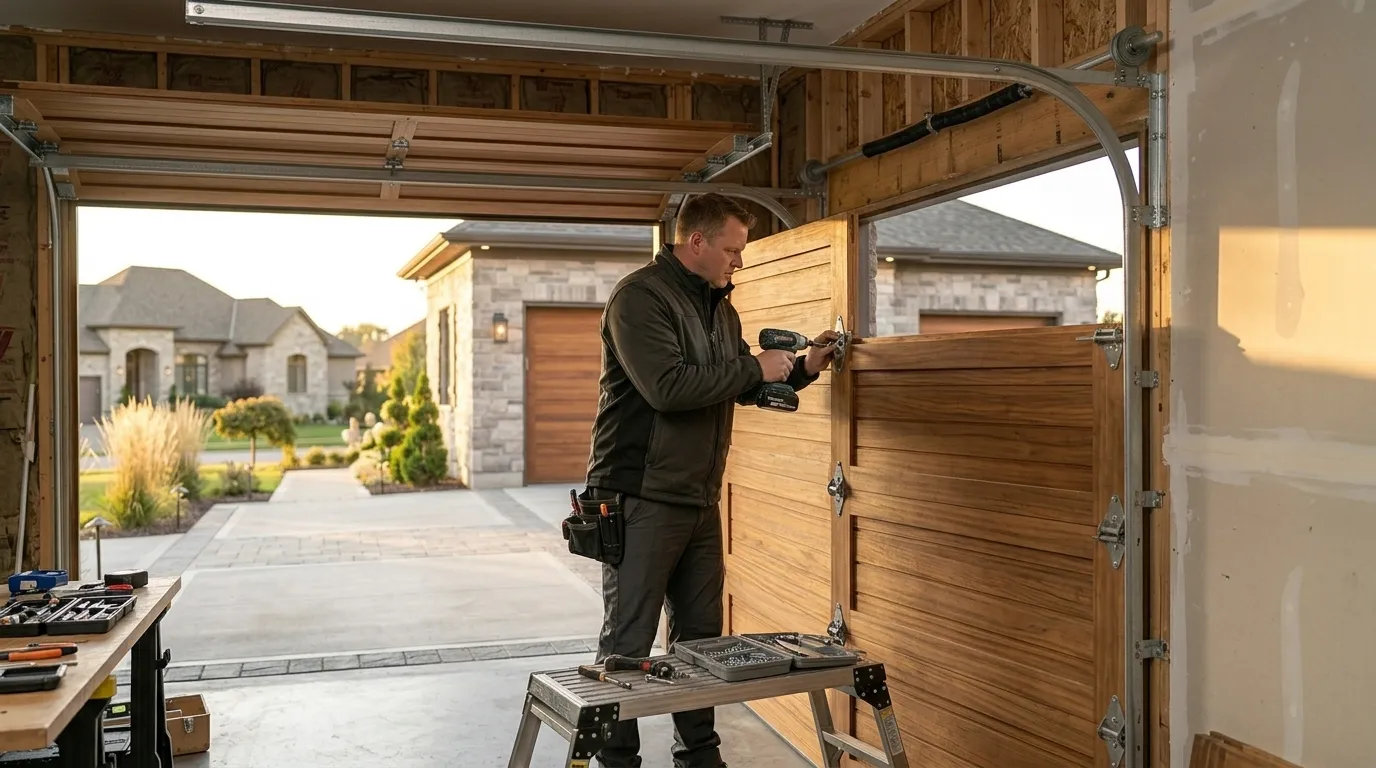
If you're looking at a broken spring on a door that age, swapping it yourself isn't a great idea. The winding cones on older torsion setups are a different diameter than what's sold at most hardware stores now, and the spring wire gauge doesn't always match new stock. Adjusting cable tension or replacing a bottom bracket on a door this old also means working around bolt patterns that current kits don't always fit cleanly. Lubricating hinges, tightening loose roller brackets, and checking weatherstripping are fine to do yourself. Torsion spring work and full opener swaps on a house from this era usually aren't a one-afternoon fix, especially without matching parts on hand.
Time on the Job
A job in Fairview takes longer to plan for than one closer to the shop, simply because of the 11-mile drive from Matthews - there's no branch out here, so every call is a trip. Once we're on site, the work itself depends heavily on what's actually installed. Doors built around the 1987 median in this pocket often have single-spring torsion systems rather than the dual-spring setups common in homes built after the mid-90s. That's a faster spring swap in some cases, but if the drum or shaft is worn, sourcing a matching replacement can add time to the visit rather than the drive.
We don't stock every obsolete part on the truck for older hardware, so a repair on a door from this era occasionally turns into two visits - one to diagnose and measure, one to install once we've got the right spring or bracket. That's the honest limitation: newer doors in the area's 1998-median neighborhoods are usually same-visit jobs. Fairview's older stock isn't always.
What You Pay
Across the service area, median household income runs around $88,203, and Fairview tracks close to that at roughly $89,417 for the roughly 1,200 households here - not a market where we see people chasing the cheapest possible fix at the cost of doing it twice. For older doors like the ones common in this area, that usually means it's worth pricing a full spring and hardware refresh rather than patching one component, since the parts are already worn as a set.
We don't have a fixed price list to hand out here, because the cost depends on what's actually wrong and what parts a specific door needs - especially on hardware from the 1980s where matching a part isn't automatic. What we can tell you is that a straightforward spring replacement costs less than an opener replacement, and an opener replacement costs less than a full door swap. If a technician tells you a repair is close to the cost of replacement, on a door this age that's often true rather than a sales pitch.